

The word on the label is doing a lot of work. Satin is a weave, not a fibre, so a satin pillowcase can be woven from polyester, from rayon derived from bamboo, or from mulberry silk, and those three feel similar for the first night and behave completely differently by the tenth wash. That is why two pillowcases that look identical in a photograph can sit at opposite ends of the shelf, and why the closure and the wash instructions tell you more than the front of the packet does. We sorted 7 satin pillowcase options from ZIMASILK, BLISSFORD, Bedsure and more by fibre, weave weight, closure and how they survive laundry.
Our top pick is the Bedsure Satin Pillowcase Queen Set of 2 for pairing a properly slippery satin face with an envelope closure and a two-piece set, which is the combination most people actually need. Below we separate the polyester satins from the real silk so you can decide which trade you are making. For the rest of the bedroom, our home and kitchen section covers what goes around it.

Pros
- Sold as a set of two, so you can rotate one through the wash
- Envelope closure has no hardware to catch hair
- Neutral silver grey does not show every trace of a night cream
- Slippery satin face gives the low friction the category is bought for
- Queen sizing at 20 by 30 inches suits most standard bed pillows
Cons
- Polyester satin does not breathe, so it can warm up under the cheek
- Fabric softener and hot drying will dull the slip permanently
The Bedsure queen set is the most straightforward answer to what most people are actually shopping for: a slippery pillowcase, two of them, and nothing complicated about the closure. It is polyester woven in a satin structure, so the surface behaves the way the category promises even though the fibre is not silk.
The envelope closure is the right call for a pillowcase you sleep on rather than one you dress a bed with. There is no zip to sit near your face, nothing that can catch a strand of hair, and nothing that can fail while the fabric is still good. A queen pillow seats properly and the flap holds it without strain.
Buying two is more useful than it first appears. These fabrics want washing more often than the cotton case they replace, because creams and oils sit on the surface rather than soaking in, and having a second case means the first is never on the bed past its turn.
The limitation is the fibre. Polyester feels cool the moment you touch it, then holds the heat it collects, so anyone who sleeps hot will notice it warming under their cheek in a way silk does not. Keep it away from fabric softener and hot dryers, both of which dull the slip for good.
Bottom line: the sensible default in this category, and the set to buy if you are buying one.
- Fibre: polyester, satin weave
- Size: queen, 20 by 30 inches
- Quantity: set of two
- Closure: envelope
- Colour shown: silver grey
- Care: cool gentle machine wash, no fabric softener, low heat drying
Buy this if you want the friction reduction without the cost and the care routine of silk, and if you would rather have two cases than one premium one. It suits anyone whose main complaint is bedhead or sleep creases. Skip it if you sleep hot and wake up warm, where a breathable fibre is the point of the purchase, and skip it if you specifically want a natural fibre against your skin.
Wash cool on a gentle cycle, ideally inside a mesh bag so the satin does not catch on zips elsewhere in the load. Skip fabric softener entirely, since it coats the filaments and dulls the exact slip you paid for. Dry on low or line dry, because a hot dryer flattens the sheen permanently and can pull the seams out of square. Wash it more often than a cotton case, as creams and oils sit on the surface rather than absorbing.

Pros
- Two-piece queen set with an envelope closure
- Smooth satin face with a definite slip rather than a soft matte finish
- Dark grey is more forgiving of marks than black
- Straightforward machine care
Cons
- Polyester construction, so breathability is limited
- Darker colours show skincare residue and can bleach where benzoyl peroxide touches them
BEDELITE sits right alongside the Bedsure set in intent and construction, and the useful way to separate them is on hand and colour rather than on features. This is a polyester satin queen pair with an envelope closure, which is the standard configuration in this part of the category.
The face has a definite slip to it rather than the softer, more matte finish some cheaper satins have, and that matters because the slip is the functional property. Hair moves across it instead of catching, and a cheek resting on it for hours is not being pressed into a textured weave.
The envelope closure keeps the construction simple. Nothing to break, nothing near your face, and a pillow that seats without strain. In a queen size the flap has enough depth to hold a standard bed pillow through a restless night.
Colour is the thing to think about. Dark grey looks good on a made bed and it is more forgiving than black, but any dark satin shows a night cream mark clearly, and any coloured fabric will bleach where an acne treatment containing benzoyl peroxide touches it. That is a laundry consideration rather than a fault.
Bottom line: a solid alternative to the Bedsure set, chosen on colour and hand rather than on any missing feature.
- Fibre: polyester, satin weave
- Size: queen, 20 by 30 inches
- Quantity: set of two
- Closure: envelope
- Colour shown: dark grey
- Care: machine wash cool, tumble low
Choose this over the Bedsure set on colour preference and on the feel of the fabric rather than on features, since the two are configured the same way. Choose a silk case instead if breathability is the reason you are shopping, and choose a zipped case if your pillow works its way out of an envelope flap. If you use benzoyl peroxide at night, buy the palest colour in the range rather than the dark grey.
Put the envelope flap at the far side of the bed rather than the open edge facing out, so the pillow cannot work its way toward you overnight. Give the case a light shake and smooth it flat when you make the bed, because a taut satin surface has fewer wrinkles to press into your face than a loose one. If you apply leave-on skincare, allow a few minutes before lying down, since these fabrics hold product on the surface rather than absorbing it.

Pros
- Real mulberry silk rather than a satin weave in polyester
- Grade 6A on both sides rather than silk on the sleeping face only
- Breathes and stays cool, which polyester satin does not
- Hidden zipper keeps the pillow completely still
Cons
- Sold as a single piece, so a pair costs twice what the listing shows
- Needs cool washing with a mild detergent and flat drying
This is the entry in the list that is actually silk rather than a satin weave in another fibre, and the difference is not a marketing distinction. Mulberry silk is a protein filament that absorbs a little moisture and moves heat away from the skin, so it feels cool without the clamminess that polyester can develop under a warm cheek.
Grade 6A on both sides is the specification worth noticing. Plenty of silk pillowcases put silk on the sleeping face and something cheaper on the underside, which is a legitimate saving if you know about it and a disappointment if you do not. Both faces means you can flip it without thinking.
The hidden zipper suits the material. Silk is slippery enough that a pillow will migrate inside an envelope flap, and a recessed zip holds it taut, which also means fewer wrinkles pressed into your face. Check the pull runs smoothly, since the zip is the part most likely to fail before the fabric does.
The two costs are real. It is a single piece, so building a pair costs twice what the listing suggests, and the care routine is stricter: cool water, a mild detergent, no bleach or enzyme-heavy formulas, and drying flat away from direct sun.
Bottom line: the pick for hot sleepers and for anyone who wants the natural fibre rather than the weave.
- Fibre: 100 percent mulberry silk
- Grade: 6A on both faces
- Size: queen, 20 by 30 inches
- Quantity: single piece
- Closure: hidden zipper
- Care: cool gentle wash with mild detergent, dry flat out of direct sun
Wash in cool water with a detergent formulated for silk or a very mild one, and keep it away from bleach and enzyme-heavy formulas, which attack protein fibres. Hand washing is safest; a mesh bag on a delicate cycle is the usual compromise. Dry flat and out of direct sunlight, which fades the colour and stiffens the hand. If you iron, use the lowest setting on the reverse side. Close the zip before washing so the slider cannot catch the fabric.
Buy this if you sleep hot, if a natural fibre matters to you, or if you have tried polyester satin and found it warmed up overnight. It suits someone willing to run a gentler wash cycle for it. Skip it if you want two cases without paying twice, if your laundry routine is a single hot wash for everything, or if your only requirement is the low friction surface, which polyester satin provides at a fraction of the outlay.

Pros
- Two-piece queen set at the accessible end of the category
- Envelope closure with nothing to catch hair
- Consistent satin face with a clear slip
- Simple machine care
Cons
- Black satin shows skincare residue clearly and can bleach from acne treatments
- Polyester fibre, so it warms up under the cheek over a full night
The Love's cabin set is the value entry here and it earns that by not trying to be anything else. Two queen cases, satin weave polyester, envelope closure, no extra features and no silk claims.
What it delivers is the property people actually buy this category for, which is low surface friction. Hair slides instead of catching, and a face that spends hours on it is not being pressed into a textured cotton weave. On that measure it does the same job as the more expensive polyester satins.
Two pieces matter more at this end of the market than at the top. Satin wants washing often because it holds creams and oils on the surface, and a spare case means the bed is never made with one that has done too many nights.
The black colourway is the thing to weigh. It looks good and it is the reason many people choose it, but dark satin shows every mark from a night cream, and any coloured fabric will bleach where an acne treatment containing benzoyl peroxide touches it. If that is your routine, choose the palest option instead.
Bottom line: the value pick, and enough pillowcase if friction is the only thing you are solving.
- Fibre: polyester, satin weave
- Size: queen, 20 by 30 inches
- Quantity: set of two
- Closure: envelope
- Colour shown: black
- Care: gentle machine wash, avoid fabric softener
Buy this if you want to find out whether a satin pillowcase makes a difference to you before committing to silk, or if you need a pair for a spare room or a child's bed. It is also the sensible choice if cases get lost or worn quickly in your house. Skip it if you sleep hot, and skip the black colourway specifically if you use rich night creams or an acne treatment.
Choose this over the Bedsure and BEDELITE sets on price and colour, since all three are configured the same way. Step up to a rayon from bamboo set if you want more breathability without silk care, and step up to mulberry silk if heat is your actual complaint. If you are not sure whether the category suits you at all, this is the sensible one to try first.

Pros
- Zipper holds the pillow completely still overnight
- White colourway avoids the bleaching problem with acne treatments
- Sold as a pair rather than a single piece
- Standard sizing suits a standard pillow without a loose tail
Cons
- A zip near the head can catch hair if it is not well recessed
- Polyester satin, so breathability is limited
The BLISSFORD pair is the answer to the one real complaint about envelope closures, which is that a pillow can work its way out of a shallow flap over a restless night. A zip holds it exactly where you put it, and a taut case has fewer wrinkles to press into your face.
White is a more practical colour here than it first sounds. It cannot bleach, so an acne treatment containing benzoyl peroxide leaves no visible mark, and it does not advertise a night cream the way a black satin does. The trade is that it shows dirt, which is a reason to have two.
Standard sizing is worth checking against your pillow. A standard pillow in a queen case leaves a loose tail that folds under your shoulder, so if your pillows are standard, this is the size that fits properly rather than the one that merely covers.
The zip is the part to inspect. A well-recessed zip set into the seam is invisible from the sleeping side; a proud one can catch hair and is the single most common failure point on an otherwise good case. It is also worth closing the zip before it goes in the machine.
Bottom line: the pick if your pillow keeps escaping an envelope flap, and the safe colour choice for a skincare routine.
- Fibre: polyester, satin weave
- Size: standard
- Quantity: set of two
- Closure: zipper
- Colour shown: white
- Care: machine wash cool, close the zip before washing
Close the zip before it goes into the machine, since an open slider catches satin and pulls threads. Wash cool inside a mesh bag and skip fabric softener, which dulls the slip. Dry on low or line dry, because heat flattens the sheen. Check the zip pull occasionally for a rough spot: a burr on the slider is what snags hair, and it is easier to catch early than to live with. Store the cases flat rather than folded around the zip.
Position the zipped edge at the outer side of the bed rather than toward the middle where your head sits, so it stays well away from your face and hair. Zip it fully closed each time, since a partly open zip is exactly what catches a strand. If your pillow is a tight fit, work it in from one corner rather than forcing the whole width, which is what strains the zip tape at the ends.

Pros
- Rayon from bamboo breathes better than a polyester satin
- Smooth, dry-feeling surface rather than a slick plastic one
- Two-piece queen set with an envelope closure
- Ordinary machine care rather than silk care
Cons
- Not as slippery as a true satin weave, so friction reduction is less pronounced
- Black colourway shows skincare residue and bleaches from acne treatments
This is the middle path in the list. Rayon derived from bamboo is a regenerated cellulose fibre, and in a pillowcase it gives a smooth, dry-feeling surface that breathes considerably better than polyester without asking for silk care instructions.
Breathability is the reason to consider it. The most common complaint about polyester satin is that it feels cool for a minute and then holds heat under the cheek. A cellulose fibre moves moisture, so it stays comfortable longer through the night, which is the practical difference people notice.
It is worth being clear that it is not sold as a satin weave, and the surface reflects that: it is smooth and cool but not as outright slippery as a satin face. If your reason for shopping is bedhead and sleep creases, that is a real trade against the satins here.
Everything else is conventional and easy. Queen sizing, a set of two, an envelope closure with nothing to catch, and an ordinary cool machine wash. The black colourway carries the same caveats as any dark bedding around night creams and acne treatments.
Bottom line: the choice if heat is your complaint but silk care is not something you will keep up.
- Fibre: 100 percent rayon derived from bamboo
- Size: queen, 20 by 30 inches
- Quantity: set of two
- Closure: envelope
- Colour shown: black
- Care: cool machine wash, tumble low
Choose this if the polyester satins felt warm to you and mulberry silk feels like too much to look after. Choose a satin weave instead if outright slip is the point, since that is where this one gives ground. Choose silk if you want maximum breathability and are willing to run a gentle cycle. As with any dark bedding, pick a pale colourway if benzoyl peroxide is part of your routine.
Buy this if you sleep warm, want a smooth cool pillowcase, and want to keep washing it with the rest of the bedding. It suits households that will not follow a special care routine no matter what the label says. Skip it if you specifically want the slippery satin face for hair, and skip the black option if leave-on skincare is part of your evening.

Pros
- Mulberry silk rather than a satin weave in polyester
- Standard sizing fits a standard pillow without a loose tail
- Hidden zipper keeps the case taut
- Breathable and cool against the skin
Cons
- Single piece, so a pair costs twice the listed amount
- Needs cool washing and flat drying rather than an ordinary cycle
This is the standard size silk option, and sizing is the reason to look at it. A standard pillow in a queen case leaves a loose tail that folds under your shoulder, and a case cut to twenty by twenty six inches simply fits, which matters more on silk than on cotton because loose silk wrinkles readily.
The fibre does what silk does. It breathes, it stays cool under a cheek through the night rather than warming up the way polyester can, and it has a soft give to it that a satin weave in a filament fibre does not quite reproduce.
The hidden zipper is the sensible closure for a fabric this slippery. An envelope flap struggles to hold silk in place, while a recessed zip keeps the case taut and the surface smooth. Close it before washing so the slider cannot catch the fabric.
Two practical notes. It is a single piece, so a pair is twice the outlay, and the care routine is the silk one: cool water, a mild detergent, no bleach, dried flat away from sun. If your laundry is a single hot wash for everything, this is not the pillowcase for your house.
Bottom line: the silk option for a standard pillow, chosen on fit as much as on fibre.
- Fibre: mulberry silk
- Size: standard, 20 by 26 inches
- Quantity: single piece
- Closure: hidden zipper
- Colour shown: haze blue
- Care: cool gentle wash, mild detergent, dry flat
Measure the pillow before ordering rather than trusting the label on the pillow packet, since fill compresses over time and an older standard pillow can be shorter than it started. Fit the case with the zip toward the outer edge of the bed, smooth it flat when you make the bed so the surface is taut, and let leave-on skincare settle for a few minutes before lying down, since silk holds product on the surface rather than absorbing it.
Wash cool with a silk-specific or very mild detergent, and avoid bleach and enzyme-heavy formulas, which break down protein fibres. Use a mesh bag on a delicate cycle if you are not hand washing, and close the zip first. Dry flat out of direct sunlight, which fades the dye and stiffens the fabric. Iron only on the lowest setting from the reverse side, and keep it away from rough surfaces and jewellery, since a pulled thread on silk does not recover.
How to Choose a Satin Pillowcase
Six things decide whether you keep one of these on the bed or quietly go back to cotton. Read the first section even if you skip the rest, because the satin and silk confusion is behind most of the disappointment in this category.
Satin Is a Weave, Silk Is a Fibre

Satin describes how the threads are interlaced, with long floats on the surface that catch the light and give the smooth, slippery face. Any fibre can be woven that way. Most pillowcases sold as satin are polyester, some are rayon derived from bamboo, and a smaller number are mulberry silk, which is a protein fibre from silkworms and a different material entirely.
The surface behaviour is genuinely similar, and that is not marketing. A satin weave in polyester gives you the low friction that the whole category is sold on, so hair slides across it instead of catching, and a face pressed into it for hours does not get the creasing that a textured cotton leaves. If low friction is your only requirement, polyester satin delivers it at a fraction of the cost of silk.
Where they part company is everything else. Silk is a natural protein fibre that absorbs a little moisture and moves heat away from the skin, so it feels cool without feeling clammy. Polyester is a plastic filament: it feels cool to the touch on contact, but it does not breathe in the same way, so people who sleep hot often find it warms up and stays warm under their cheek. Rayon from bamboo sits between the two, more breathable than polyester and far cheaper than silk.
Momme Weight for Silk, and What to Read Instead for Satin
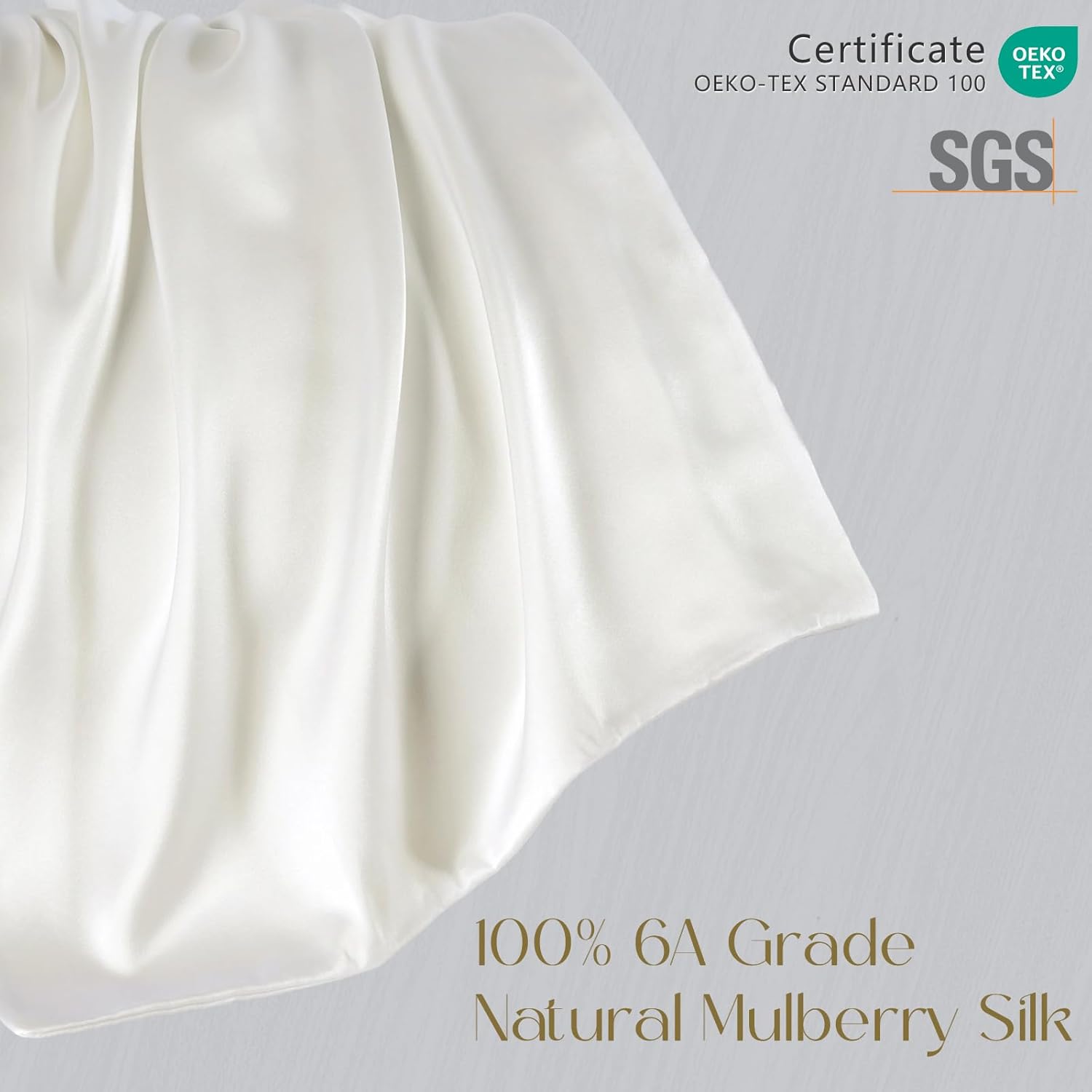
Silk is measured in momme, which is a weight per unit area rather than a thread count. Nineteen momme is the usual entry point for bedding, twenty two is the common mid weight, and twenty five is thick and heavy. Below nineteen the fabric is thin enough that it snags easily and wears through at the corners, which is where a cheap silk pillowcase usually fails first.
Grade is the second silk number, written as 6A or similar. It refers to the length and uniformity of the filaments, with longer, more even filaments giving a smoother, stronger fabric. Grade 6A on both sides is a claim worth checking, because some pillowcases use silk on the sleeping face and a cheaper backing on the underside, which is a reasonable saving as long as you know that is what you are buying.
Polyester satin has no equivalent standard, which is why the numbers on those packets are so inconsistent. What you can read instead is the hand of the fabric in owner photographs, whether the case is described as heavyweight or lightweight, and whether the maker mentions the weave at all. A satin that is too light lets the pillow pattern show through and starts to pill along the seams within a few months.
Envelope Closure, Hidden Zipper, or Open End

An envelope closure is a flap of fabric that folds back inside the case and holds the pillow in place with no hardware at all. It is the most common design here and the most forgiving: nothing to break, nothing to catch hair, and it takes a slightly oversized pillow without straining. The pillow can creep out of a shallow envelope on a restless night, which is the one complaint.
A hidden zipper holds the pillow completely still, which is why the silk pillowcases here favour it. The zip is set into the seam so it does not sit against your face, and a well-made one is invisible from the sleeping side. The risks are hair catching in the teeth if the zip is not properly recessed, and the zip being the first thing to fail on an otherwise good case, so look for a smooth pull and a covered end stop.
An open end is the plainest option and is fine for a pillow that fits snugly. It is also the easiest to launder because there is nothing to snag in the machine. If you turn a lot in the night, or the case is on the generous side for the pillow, choose the envelope or the zip instead, since a pillow that works its way half out is a nightly annoyance rather than an occasional one.
Sizing, and Why Sets Are Not All Two Pieces
Standard is around twenty by twenty six inches and queen is around twenty by thirty, and the difference is only in the length, which matters because a standard pillow in a queen case leaves a loose tail that folds under your shoulder. Measure the pillow rather than trusting the label on the pillow packet, since fill compresses over time and an old standard pillow can be shorter than it started.
Count the pieces before you buy. Polyester satin is usually sold as a set of two, which is what most beds need, while silk is frequently sold as a single piece because of the cost. Two listings that look like the same price can therefore be twice apart in real terms, and the quantity is often buried in the title rather than shown on the image.
If you use a body pillow or a king pillow, check that the size actually exists in the range rather than assuming, because satin lines are often made in standard and queen only. And if you are buying to sleep on rather than to dress the bed, a slightly snug case is better than a loose one: fabric that is taut has fewer wrinkles to press into your cheek. More bedroom picks are indexed in our article archive.
Colour, Dye Transfer and Skincare Products
Dark satins are the ones to think twice about. A deep black or navy polyester satin can transfer a little colour on the first few washes, and more relevantly it shows every trace of a night cream or a self tanner, which is exactly what people using those products want to avoid on their bedding. Mid greys and neutral tones are the practical compromise and are why silver grey is the volume seller in this category.
Leave-on skincare is worth a specific thought. Oils and rich creams sit on a satin surface rather than soaking in the way they do on cotton, so they can leave a slick patch and, over time, a dulled area on the weave. That is not a fault in the pillowcase, it is the low absorbency doing what it is supposed to do, but it means a satin case wants washing on a shorter cycle than the cotton one it replaced.
Benzoyl peroxide deserves a warning of its own, since it bleaches fabric on contact and will leave pale marks on any coloured pillowcase, satin or otherwise. If it is part of your evening routine, buy white or a very pale colour and accept it, rather than buying black and being annoyed. This is a laundry and colour issue rather than a skin one, and nothing here is a substitute for advice from a professional about a skin condition.
Washing, Drying and How Long the Slip Lasts
Polyester satin is the easy one. A cool machine wash on a gentle cycle in a mesh bag, no fabric softener, and a low tumble or a line dry. Softener is worth avoiding specifically because it coats the filaments and dulls the slip, which is the whole reason you bought the case. Heat is the other enemy: a hot dryer will flatten the sheen permanently and can shrink the seams out of square.
Silk asks for more. Cool water, a detergent formulated for protein fibres or a very mild one, no bleach, no enzyme-heavy formulas, and never a hot wash. Hand washing is safest, a mesh bag on a delicate cycle is the usual compromise, and drying flat away from direct sun preserves both the colour and the hand. Iron on the lowest setting from the reverse side if you iron at all.
Expect the slip to fade over time in all of them, faster in polyester than in silk. Pilling at the seams, a chalky feel where a cheek rests, and threads pulled by a stray fingernail are the normal end of life. Buying a set of two and rotating them roughly doubles how long each one stays smooth, which is a quiet argument for the two-piece sets over a single premium case. Our health and household section covers the laundry products that go with them.
| Fibre | Feel | Breathability | Care | Usually sold as |
|---|---|---|---|---|
| Polyester satin | Slippery, cool on first contact | Low, can warm up under the cheek | Cool machine wash, no softener, low heat | Set of two |
| Mulberry silk | Soft with a slight give, stays cool | High | Cool gentle wash, mild detergent, dry flat | Single piece |
| Rayon from bamboo | Smooth and dry to the touch | Medium to high | Cool machine wash, low heat | Set of two |
Why You Should Trust Us
We build these lists from published specification and from the pattern of what long-term owners report, rather than from the copy on the packaging. For every pillowcase here we checked the declared fibre rather than the word satin, the momme weight and grade where silk is claimed, the closure type and whether a zip is recessed, the exact dimensions, how many pieces are in the listing, and the maker’s own wash instructions.
We set aside near-identical listings that differ only in colour or that share a parent listing, so every entry is a genuinely different pillowcase rather than the same one counted twice. Where a listing uses the phrase similar to silk, we treat that as a description of the weave and say what the fibre actually is, because that distinction is the single most common source of disappointment in this category.
Final Thoughts
Best overall is the Bedsure Satin Pillowcase Queen Set of 2. It gets the practical things right at once: a properly slippery satin face, an envelope closure with nothing to catch, two pieces so you can rotate them through the wash, and a neutral colour that does not advertise every trace of a night cream.
Best value is the Love’s cabin Satin Pillowcase Set of 2. It covers the same ground in queen size with an envelope closure, and if what you want is the friction reduction rather than a natural fibre, it delivers exactly that without asking you to think about momme weight at all.
For specific needs, the ZIMASILK Mulberry Silk pillowcase is the pick if you sleep hot and want a fibre that breathes, since polyester satin is where most of the complaints about warming up come from, and the BLISSFORD zipped pair is the choice if your pillow keeps creeping out of an envelope flap. The Bedsure rayon from bamboo set is the middle path if you want more breathability than polyester without silk care instructions, and the standard size Mulberry Silk case with a hidden zipper suits a standard pillow that a queen case leaves loose. More bedroom and household picks sit in our category index.
Satin Pillowcase FAQs
Is a satin pillowcase the same as a silk one?
No, and the confusion is built into the words. Satin is a weave with long surface floats that give the slippery face, and it can be woven from any fibre. Silk is a natural protein filament. A polyester satin pillowcase gives you a very similar surface at a much lower cost, while silk adds breathability and a different feel against the skin. When a listing says similar to silk, it is describing the weave and telling you the fibre is not silk, which is useful once you know to read it that way.
Does a satin pillowcase actually help with hair and creases?
The mechanism is friction, and that part is straightforward. A satin surface offers far less resistance than a woven cotton, so hair slides rather than catching and dragging, and a face resting on it for hours is not being pressed into a textured weave. What people notice most often is less bedhead in the morning and fewer sleep lines that take a while to settle. It is a surface effect on the outside of hair and skin rather than a treatment, and anything to do with a scalp or skin condition is a question for a professional rather than for bedding.
What momme weight should I look for in silk?
Nineteen momme is the sensible floor for a pillowcase and twenty two is the comfortable middle, giving a fabric with enough body to resist snagging without feeling heavy. Twenty five momme is noticeably thicker and holds up longest, at a weight some people find warm. Below nineteen the fabric is thin enough that a fingernail can pull a thread and the corners wear through early. Check whether the momme figure applies to both faces, since some cases use silk on the sleeping side only.
How do I wash one without ruining it?
For polyester satin, a cool gentle machine cycle inside a mesh bag, no fabric softener because it dulls the slip, and a low tumble or a line dry away from direct heat. For silk, use cool water with a mild or silk-specific detergent, keep it away from bleach and enzyme-heavy formulas, and dry it flat out of the sun. Wash either more often than you washed the cotton case it replaced, since these fabrics do not absorb night creams and oils, they hold them on the surface. Our health and household picks cover suitable detergents.
Envelope closure or zipper in 2026?
Choose the envelope if you want the simplest thing that cannot break, if your pillow is a comfortable fit, and if the idea of hair near a zip bothers you. Choose the hidden zipper if your pillow works its way out of an envelope flap overnight, or if you want the case to stay perfectly taut, which also means fewer wrinkles against your face. Whichever you pick, look at how the closure is finished: a shallow envelope flap and an exposed zip end are the two details that separate a case you keep from one you replace.








Write Your Review
No reviews yet. Be the first to share your experience!