

A trout stream punishes tackle that is too big. The fish hold in thin, clear water, they spook at a heavy splash, and the spinners, spoons and float rigs that catch them weigh almost nothing. That is why the search for the best rod reel combo for trout keeps landing inside one narrow window of gear: a rod between five and seven feet, a spinning reel in the 1000 to 2500 class, and line rated somewhere between 4 and 8 pounds. Our top pick is the Okuma Voyager Spinning Travel Kit for its 6 foot medium-light rod that breaks into five short sections and a size 20 reel already rated for 4 to 8 pound line.
This shortlist covers 9 matched outfits from Okuma, Wakeman, KastKing and more, refreshed for September 2026. Every one of them arrives as a complete set, so the reel is already paired to a blank that can load up with a 1/16 ounce lure instead of fighting it. We ranked them on real customer ratings, review depth and how closely the published specs line up with small trout water, not on marketing copy. If you prefer to throw tiny lures on a casting reel, our guide to the best baitcasters for light lures covers that side of the shelf. Everything below is spinning or spincast gear that a first-time angler can pick up and use the same afternoon.

Pros
- Rod splits into five sections of roughly 16 inches and rides in a padded case
- Size 20 reel is rated for 4 to 8 pound line, the exact trout window
- Medium-light graphite blank loads with 1/16 to 3/8 ounce lures
- Kit includes a tackle box, so the whole outfit travels as one unit
- Cork handle and aluminum oxide guides on a compact travel rod
Cons
- Single ball bearing reel feels coarser than multi-bearing designs
- Five ferrules soften the action slightly next to a two-piece rod
- Included tackle assortment is minimal and needs supplementing
The Okuma Voyager is a travel kit rather than a single rod. You get a 6 foot medium-light graphite blank that separates into five sections of about 16 inches, a size 20 spinning reel, a small tackle box and a padded case that holds all of it. That format is aimed at the angler who wants one trout outfit that can live in a suitcase, a daypack or the back of a truck without a rod tube.
The specs land almost exactly on trout requirements. Medium-light power loads with the 1/16 to 3/8 ounce spinners and spoons that catch stream fish, the reel is rated for 4 to 8 pound line, and the 5.0:1 gear ratio picks up slack fast enough to keep a small spinner turning as it swings below you. Aluminum oxide guides and a cork handle are more than most travel kits in this class bother with.
The compromises are the ones every multi-piece rod carries. Five joints mean the blank recovers slightly slower than a one-piece or two-piece rod, so very light takes register a fraction later. The reel runs a single ball bearing, so the retrieve feels less refined than a 7+1 or 9+1 design, and the included tackle is a starter assortment rather than a real spinner selection.
Bottom line: no other combo here matches every trout number while still fitting in carry-on luggage, which is why it takes the top spot for anglers who fish away from home.
- Rod: 6 feet, 5-piece graphite, medium-light power
- Section length: roughly 16 inches when broken down
- Lure rating: 1/16 to 3/8 ounce
- Reel: size 20 spinning, 5.0:1 gear ratio, 1 ball bearing
- Line rating: 4 to 8 pounds
- Line capacity: about 155 yards of 4 pound, 110 yards of 6 pound, 80 yards of 8 pound
- Included: rod, reel, small tackle box, padded travel case
- Handle: cork with aluminum oxide guides
This is the pick for anglers who fish trout somewhere other than their home water: a hiker walking into a creek, a traveller who wants a rod in the suitcase, or anyone who keeps an outfit in a car trunk year round. It is also a sound first combo for an adult, because nothing about the setup has to be replaced when your skills improve.
It is less suited to the angler who only ever fishes one local stream from the truck. If the rod never needs to break down, a two-piece graphite combo will give you a crisper blank for the same money.
Line up the guides carefully as you seat each ferrule, sighting down the blank from the butt before you fish. A slightly twisted section is the most common reason a multi-piece rod casts poorly.
Seat the joints firmly but do not force them, and pull them apart straight rather than twisting. A wrap of candle wax on the male ferrule stops sections from loosening as you cast, and a rinse in fresh water at the end of a trip keeps grit out of the joints.
Respool the reel with fresh 4 or 6 pound monofilament before the first outing, and store the case somewhere dry rather than in a hot vehicle, since heat is what ages line and cork more quickly than anything else.

Pros
- Collapses into its own butt section for a pack or a carry-on
- Arrives as a complete kit with line, lures, hooks and a carrier bag
- Offered in several lengths and reel sizes for different water
- Carbon and fiberglass blend keeps the rod light for a telescopic
- One of the most reviewed trout-capable combos on the market
Cons
- Telescopic joints need rinsing and drying or they stick
- Included line and lures are starter grade and worth replacing
- Action is duller than a ferruled rod of the same power
PLUSINNO built this kit around one idea: everything a new angler needs, in one box, collapsed small enough to carry. The rod is a telescopic carbon and fiberglass composite that slides into its own butt section, and the kit adds a spinning reel, line, a handful of lures and hooks, plus a zippered carrier bag that holds the lot.
For trout, the shorter lengths in the range are the ones to choose. A rod around 5.9 or 6.9 feet with the smaller reel option gives you a setup light enough for 1/16 ounce spinners while still collapsing to something you can strap to a daypack. The composite blank keeps the weight down compared with the all-fiberglass telescopics that dominate this end of the market.
Telescopic rods carry two well known compromises and this one is no exception. Sand or river grit in the joints will make sections stick or creep closed, so the rod needs a rinse and a full dry before you collapse it. The action is also softer through the middle than a two-piece rod, which costs you a little bite detection on a drifted bait.
Bottom line: for the angler who wants a complete, packable outfit rather than a precision instrument, this kit gives the most usable gear per dollar in the roundup.
- Rod: telescopic carbon fiber and fiberglass composite
- Lengths: several options starting around 5.9 feet
- Collapsed size: fits a daypack or carry-on luggage
- Reel: spinning, size scales with the rod length chosen
- Included: line, assorted lures, hooks and terminal tackle
- Carry: zippered carrier bag
- Use: freshwater and light saltwater
The kit ships with the telescopic rod, a matched spinning reel, a spool of line, a small assortment of lures and hooks, and a zippered bag sized for the collapsed rod. That is enough to fish a stocked pond the day it arrives, which is the point of buying a kit rather than assembling one.
Treat the tackle as a starting point. The line is worth swapping for fresh 4 or 6 pound monofilament, and a few quality inline spinners will out-fish the included assortment on moving water. The bag, on the other hand, is genuinely useful and is what keeps the collapsed rod from getting knocked around in a pack.
Extend the rod from the tip down, twisting each section gently until it locks, and line the guides up as you go. Collapse it in the reverse order with a light pull rather than a hard twist.
On a stream, cast a 1/16 ounce inline spinner upstream and retrieve just fast enough to feel the blade turning. The soft telescopic tip is an advantage here, because it cushions the strike when a trout hits a treble hook at speed.
Back the drag off until line slips under moderate hand pressure. A slightly loose drag costs you nothing on trout and saves the light line the kit ships with.

Pros
- IM6 graphite blank is far more sensitive than budget fiberglass
- Stainless guides with ceramic rings protect light line
- Reel runs 9+1 shielded bearings at a 5.2:1 gear ratio
- EVA handle with a fighting butt for longer sessions
- Wide range of lengths and reel sizes from the same platform
Cons
- Listing also covers casting builds, so the spinning size must be selected carefully
- Two-piece format does not pack down for hiking
- Graphite reel frame flexes if you run heavy drag pressure
The Centron is KastKing's entry-level combo, and for trout the 6 foot spinning build with a size 2000 reel is the configuration that matters. The rod is a two-piece IM6 graphite blank with stainless guides and ceramic rings, and the reel pairs 9+1 shielded bearings with a 5.2:1 gear ratio and an anti-twist line roller.
What that buys you is feel. Graphite transmits a soft take on a drifted worm or the tick of a spinner blade catching weed in a way fiberglass simply cannot, and the ceramic guide inserts stop light line from fraying where it exits the rod. The EVA handle with a fighting butt is a small thing that makes a long afternoon of casting less tiring.
The catch is that this listing spans a large family. The same product page carries casting builds and rods as long as 8 feet with size 5000 reels aimed at catfish and salmon, so you have to select deliberately if trout is the target. The reel body is graphite rather than aluminum, which keeps the weight low but flexes under heavy drag settings you would never use on a trout anyway.
Bottom line: the cheapest way in this roundup to get real graphite sensitivity, provided you pick the 6 foot spinning size and keep the drag reasonable.
- Rod: 2-piece IM6 graphite blank
- Spinning lengths: 6 feet up to 8 feet depending on model
- Guides: stainless steel frames with ceramic rings
- Handle: EVA with fighting butt
- Reel sizes: 2000 through 5000
- Bearings: 9+1 shielded ball bearings
- Gear ratio: 5.2:1
- Features: anti-twist line roller, graphite frame, aluminum spool
This suits the angler who fishes from a vehicle and wants to feel what the lure is doing. If your trout water is a tailwater, a stocked lake or a creek you can drive to, the two-piece format costs you nothing and the graphite blank rewards you every cast.
It is the wrong pick if you need the rod to disappear into a pack, or if the combo is going to a young child. In those cases the telescopic kits and the spincast option in this roundup make more sense.
Select the spinning version, not the casting version, and take the shorter rod with the smallest reel offered if trout is the priority. A 6 foot rod with a size 2000 reel is the trout configuration.
Longer builds in this family are aimed at bigger water and heavier fish, so a 7 foot medium with a 3000 makes sense only if you plan to chase bass with the same outfit. Check the power rating printed above the handle before the first trip, since it tells you the lure weight the blank is designed to cast.

Pros
- Fiberglass blank is forgiving on light line and hard to break
- Collapses down for storage in a trunk or a closet
- Reel arrives pre-spooled so it fishes straight out of the box
- EVA handle stays grippy with wet hands
- Cheap enough to keep as a loaner rod for guests
Cons
- Fiberglass is heavier and much less sensitive than graphite
- Reel is a basic design with a coarse drag
- Factory line has a memory set and should be replaced
The Wakeman Strike Series is the budget bank rod of this roundup. It is a 78 inch fiberglass blank, roughly 6.5 feet extended, that collapses for storage, with an EVA handle and a spinning reel that arrives already spooled. The brand lists it for walleye, bass and trout, and on a stocked lake or a wide slow river that is a fair description.
Fiberglass has a real advantage on trout that gets forgotten in the chase for sensitivity. It bends deep and recovers slowly, which cushions treble hooks and keeps 4 pound line from popping when a fish thrashes at the net. It also survives being stood on, shut in a door or handed to a beginner, which is why this rod earns its place as a spare.
The compromises are obvious in the hand. The blank is heavy for its length, bite detection through a drifted bait is vague compared with a graphite rod, and the reel is a simple design with a drag that adjusts in coarser steps than the KastKing or Okuma reels here. The line it arrives with is best replaced before the first trip.
Bottom line: not the rod you reach for on a technical stream, but a genuinely sensible outfit to keep in the trunk, hand to a guest or send to a lake with a teenager.
- Rod: 78 inches, about 6.5 feet, fiberglass
- Format: collapsible for storage
- Handle: EVA
- Reel: spinning, pre-spooled from the factory
- Target species listed: walleye, bass, trout and panfish
- Use: freshwater bank and boat fishing
Buy this as a second or third rod rather than as your only one. It is the outfit you keep for the friend who shows up without gear, for a first rod for a teenager, or for bank fishing days where the rod gets laid in the mud and leaned against a rock.
Anglers who fish small clear streams with tiny spinners will notice the weight and the vague tip within an hour. For that water the graphite combos or the ultralight telescopic options in this list are worth the step up.
Fiberglass takes abuse but the guides do not. Check the inserts for cracks each season by running a cotton swab around the ring, since a chipped insert will shred light line in a single trip.
Collapse the rod only after it is dry, and store it out of direct sun, because ultraviolet light is what eventually chalks the finish on cheap blanks. Loosen the drag fully between trips so the washers do not take a compression set, and wipe the reel foot and stem with a dry cloth after fishing.

Pros
- Ships with a spare rod tip, the part travel rods break first
- KastFlex IM6 graphite blanks are light and sensitive
- Reel runs a 7+1 bearing system at a 5.2:1 gear ratio
- Stainless guides with ultra thin zirconium rings
- Spinning builds from 6 feet 2 inches to 7 feet cover creek and lake work
Cons
- Reel drag range is built for bass duty, far beyond what trout need
- Two-piece format still needs a rod tube for travel
- You must choose the medium-light size for genuine trout use
The Spartacus II answers a problem every travelling angler knows: the tip section is what breaks, usually in a car door or a tent zipper, and a broken tip ends the trip. KastKing ships this combo with a second tip of the same action in the box, which turns a ruined weekend into a five minute swap.
The rest of the package is a well specified entry combo. The blanks are KastFlex IM6 graphite, the guides are stainless with thin zirconium rings that are kind to light line, and the spinning reel runs a 7+1 bearing system at 5.2:1. Spinning builds run from 6 feet 2 inches to 7 feet in powers from medium-light through medium-heavy, with size 2000 and 3000 reels.
For trout you want the shorter, lighter end of that family. The medium-light build with a size 2000 reel is a proper light spinning outfit; the medium-heavy sizes exist because this platform is also sold to bass anglers, and their 22 pound maximum drag is more than any stream trout will ever ask for. The rod still needs a tube to travel, since two pieces do not fit a daypack.
Bottom line: the sharpest buy here for an angler who splits time between trout and bass and wants insurance against a broken tip.
- Rod: 2-piece KastFlex IM6 graphite with an extra tip section
- Spinning lengths: 6 feet 2 inches, 6 feet 8 inches, 7 feet
- Powers: medium-light, medium, medium-heavy
- Guides: stainless steel with ultra thin zirconium rings
- Reel sizes: 2000 and 3000
- Bearings: 7+1 MaxiDur system
- Gear ratio: 5.2:1
- Maximum drag: 22 pounds
The spare tip is the feature worth paying for. Keep it in the rod sock rather than at home, because the whole point is that the replacement is with you when the accident happens on the water.
Swap tips the same way you seat any ferrule: push straight, sight down the guides to align them, and give the joint a quarter turn only if the fit is loose. If a broken section leaves the blank stuck in the ferrule, a rubber band gives you grip to pull it free without crushing the tube.
Because both tips share the same action, the rod casts identically whichever one is fitted, so nothing about your timing changes mid trip.
This is the combo for the angler whose season does not stop at trout. Buy the 6 feet 2 inch medium-light with a size 2000 reel and it fishes spinners on a stocked creek in spring, then handles a farm pond and light bass work through summer.
If you fish nothing but small trout streams with 1/16 ounce hardware, a dedicated ultralight will be sweeter in the hand. And if the rod has to fit inside a backpack, the telescopic options in this roundup are the better format.

Pros
- 6 foot length is the all-round compromise for creek and pond
- Split ComfortGrip handle keeps the rod balanced and light in hand
- Reel converts between right and left hand retrieve
- Fiberglass blank shrugs off the knocks that break graphite
- Simple enough that a beginner can rig it without help
Cons
- Fiberglass gives up sensitivity to the graphite combos here
- Does not break down small enough for a backpack
- Drag adjusts in coarser steps than premium reels
Zebco built the Roam as a general purpose freshwater combo, and the 6 foot spinning version lands neatly in the middle of trout requirements. The blank is fiberglass, the handle is a split ComfortGrip design with a soft touch knob, and the reel can be converted to left hand retrieve without tools.
The appeal is durability and simplicity. A fiberglass rod at this length is close to unbreakable in normal use, which matters when the combo lives in a truck or gets handed around a family. The split grip keeps the weight down and puts your rear hand right on the blank, so the outfit feels lighter than the material suggests.
Where it gives ground is feel and reach. A drifted bait registers less clearly than it would on the IM6 graphite combos here, and at 6 feet with a fiberglass tip you are not going to reach the far bank of a wide tailwater with a 1/16 ounce spinner. The drag works but adjusts in bigger increments than a premium reel, so set it before you cast rather than mid fight.
Bottom line: an honest, durable all-rounder for ponds, stocked lakes and easy stream access, and a sensible first spinning combo for an adult beginner.
- Rod: 6 feet, fiberglass
- Handle: split ComfortGrip with soft touch knob
- Reel: spinning, supplied matched to the rod
- Retrieve: changeable right or left hand
- Use: general freshwater, ponds, lakes and streams
The Roam suits the angler who wants one rod for whatever swims locally: trout in spring, panfish in summer, the occasional bass off a dock. It is also a good choice for households where the combo will be shared, because there is nothing on it that a beginner can damage through inexperience.
Anglers chasing wild trout in clear water, or anyone who needs a packable rod, will be better served by the graphite and telescopic options above it in this list.
Rinse the reel with fresh water after any trip near salt or heavy silt, then dry it before storage. Back the drag off between outings so the washers keep their shape.
Because the retrieve is convertible, check that the handle is fully seated and the retaining nut is snug before you fish, since a partly seated handle is the usual cause of a wobble that gets blamed on the gears. A drop of reel oil on the handle knob and line roller once a season keeps both turning freely.
Pros
- Graphite telescopic blank is lighter than fiberglass equivalents
- Zippered carrier bag protects the collapsed rod in a pack
- Sold in several lengths so you can size it to trout water
- Hardware is specified for freshwater and light saltwater use
- Collapses in seconds without breaking the outfit down
Cons
- Telescopic joints must be rinsed and dried or they seize
- Guides need aligning every time the rod is extended
- Larger sizes in the range carry more reel than a trout angler needs
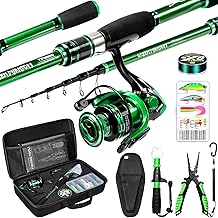
The Ghosthorn combo is a travel outfit with a graphite telescopic blank rather than the fiberglass most packable rods use. That single choice is what makes it interesting: graphite keeps the collapsed weight down and gives the rod more recovery than a glass telescopic, so casting a small spinner feels less like waving a broom.
Everything else is aimed at portability. The rod slides into itself, the reel comes matched to the blank, and the kit includes a zippered carrier bag that protects the guides while the rod is in a pack. The brand specifies the hardware for freshwater and saltwater, which in practice means the guide frames and reel components tolerate the odd splash of salt if you rinse them.
The limits are the usual telescopic ones plus one of its own. Grit in the sections will make the rod stick or collapse mid cast if you fish sandy banks without rinsing it, and the guides sit on individual sections so they need lining up each time you extend the rod. Some sizes in the range pair a larger reel than a trout angler wants, so pick the shorter build.
Bottom line: the choice for anglers who hike, cycle or fly to their water and want graphite feel from a rod that still fits in a bag.
- Rod: telescoping graphite
- Lengths: several options in the range
- Reel: spinning, supplied with the rod
- Included: zippered carrier bag
- Use: freshwater and light saltwater
- Format: collapses into its own butt section
Rinse the extended rod in fresh water, wipe each section, and let it dry fully before collapsing. Sand trapped between sections is what ruins telescopic rods, and it takes only one careless pack down to score the blank.
Carry the rod in the supplied bag with the reel detached if you are cramming it into a full pack, since side pressure on a seated reel foot is a common way to crack a reel seat. Store it extended or loosely collapsed at home rather than jammed tight, which keeps the joints from binding.
Extend from the tip section down, twisting each joint a few degrees as it seats, and sight along the guides to line them up before you tie on. A twisted guide train is the main reason a telescopic rod casts badly.
Collapse in the reverse order with a straight pull. If a section is stuck, warm it in your hands and twist gently rather than pulling harder, since brute force is what snaps a thin graphite section.
Keep the reel loaded with 4 to 6 pound line for trout, and hook a small snap swivel to a guide instead of the tip ring when you walk between pools.

Pros
- Ugly Tech composite blank survives car doors and rock strikes
- Push-button spincast reel cannot backlash or tangle a bail
- Tackle assortment included so a beginner can fish on arrival
- Clear tip design shows soft bites visually
- Carries the strongest customer rating in this roundup
Cons
- Spincast reels cast very light lures shorter than spinning reels
- Drag is coarser than an open face reel of the same class
- Not the outfit for technical fishing on clear streams
The Ugly Stik Complete kit is not built to win a casting competition. It is built so that a beginner catches a fish on the first outing, and every choice reflects that: a composite rod that will not snap when it gets stood on, a push-button spincast reel with nothing to tangle, and a small tackle assortment so nobody has to shop twice.
The blank uses the Ugly Tech construction and clear tip that made the brand famous. That clear section is genuinely useful for a new angler, because a soft take on a worm shows up as a visible bend before it is ever felt. Combined with a pre-spooled reel, the kit removes most of the ways a first trip goes wrong.
What you give up is range and refinement. A closed face reel drags line over a fixed cone, so a 1/16 ounce spinner will not travel as far as it would off an open face spool, and the drag adjusts in coarser steps. On a small stocked pond none of that matters. On a clear stream where the fish sit thirty feet away and spook at movement, it does.
Bottom line: the right first rod for a child or an adult who has never fished, and a poor choice for anyone already comfortable with a spinning reel.
- Rod: Ugly Tech composite with clear tip section
- Format: compact rod suited to younger anglers
- Reel: push-button spincast, supplied pre-spooled
- Included: starter tackle assortment
- Use: stocked ponds, lakes and easy bank access
This is the kit to buy for a child, a grandchild or an adult friend who has never held a rod. The push-button reel means the first cast happens in under a minute, and the tackle in the box covers worm and bobber fishing for stocked trout and panfish.
Experienced anglers should treat it as a loaner rather than a personal outfit. If you already cast a spinning reel comfortably, the open face combos in this roundup will put a lure further and land it more softly.
For stocked trout, a small float above a single hook baited with a worm or a dough bait is the highest percentage rig on this outfit. Set the float so the bait hangs a foot or two off the bottom and let the wind move it.
Press and hold the button, swing the rod forward, and release at eye level. Beginners who release late drive the bait into the water at their feet, so a single lesson on release timing is worth more than any tackle upgrade.
Check the drag by pulling line off the front by hand before the first cast, and replace the factory line at the end of the first season.

Pros
- Micro build collapses to about 19 inches, the smallest here
- Ultralight power on the micro version suits 1/64 to 1/8 ounce lures
- QuickSet anti-reverse and a front adjustable drag
- Retrieve converts between right and left hand
- EVA handle keeps grip when hands are wet
Cons
- Fiberglass telescopic blank is heavier than a graphite rod
- Small spools hold limited line, so long runs need a tighter drag
- Two very different sizes share the listing, so check what you order
This is the Zebco 33 name on a telescopic rod with an open face spinning reel rather than the push-button design most people associate with the badge. Two configurations share the family: a micro build that collapses to roughly 19 inches and extends to 5 feet with a size 05 reel, and a 6 foot build carrying a size 30.
The micro version is the one that earns a place on a trout list. Ultralight power with a moderate fast action, a reel rated for line in the 2 to 6 pound range and a lure rating down around 1/64 of an ounce make it a genuine small stream outfit, and nothing else here packs smaller. Front adjustable drag, QuickSet anti-reverse and a convertible retrieve are more features than the format usually offers.
The blank is fiberglass, so it is heavier than a graphite telescopic and slower to recover, and the small spool means a strong fish can take a meaningful share of your line if the drag is set too loose. Because two sizes sit under one listing, check the reel size and rod length in the option you select before ordering.
Bottom line: the most packable ultralight setup in this roundup, well suited to hikers and to anglers who want a rod that lives in a glovebox.
- Rod: telescopic fiberglass with EVA handle
- Micro build: extends from about 19 inches to 5 feet
- Larger build: 6 foot rod
- Reel sizes: 05 on the micro build, 30 on the 6 foot build
- Micro reel line rating: about 2 to 6 pounds
- Micro lure rating: about 1/64 to 1/8 ounce
- Gear ratio: 4.3:1 with all metal gears
- Features: front adjustable drag, QuickSet anti-reverse, changeable retrieve
Buy the micro build if you hike into small streams, ride a bike to the water or want an ultralight outfit that lives in a pack or a glovebox. Collapsed to about 19 inches it goes places a two-piece rod never will, and ultralight power is exactly right for wild trout on tiny spinners.
The 6 foot size 30 version is a different animal, closer to a general pond combo for panfish and stocked fish. Anglers wanting sensitivity for drifted bait should look at the graphite combos in this roundup instead.
Confirm which configuration you are ordering. The micro build with the size 05 reel is the trout choice; the 6 foot version with a size 30 reel is aimed at broader freshwater use.
Fill the micro reel with 4 pound monofilament rather than the maximum rating, since a small spool casts light lures better when the line is thin and the spool is filled to just below the lip. Set the drag light and let the rod do the work, because an ultralight blank absorbs surges that a tight drag would transfer straight to the knot.
How to Choose a Rod and Reel Combo for Trout
A combo removes the hardest part of buying trout tackle, which is matching a reel to a blank that was never designed to carry it. The trade-off is that you inherit whatever pairing the brand chose, so the specs on the box matter more than the name on the rod. These are the six things worth checking before anything else.
Rod Length: Why Trout Combos Stop Around Seven Feet
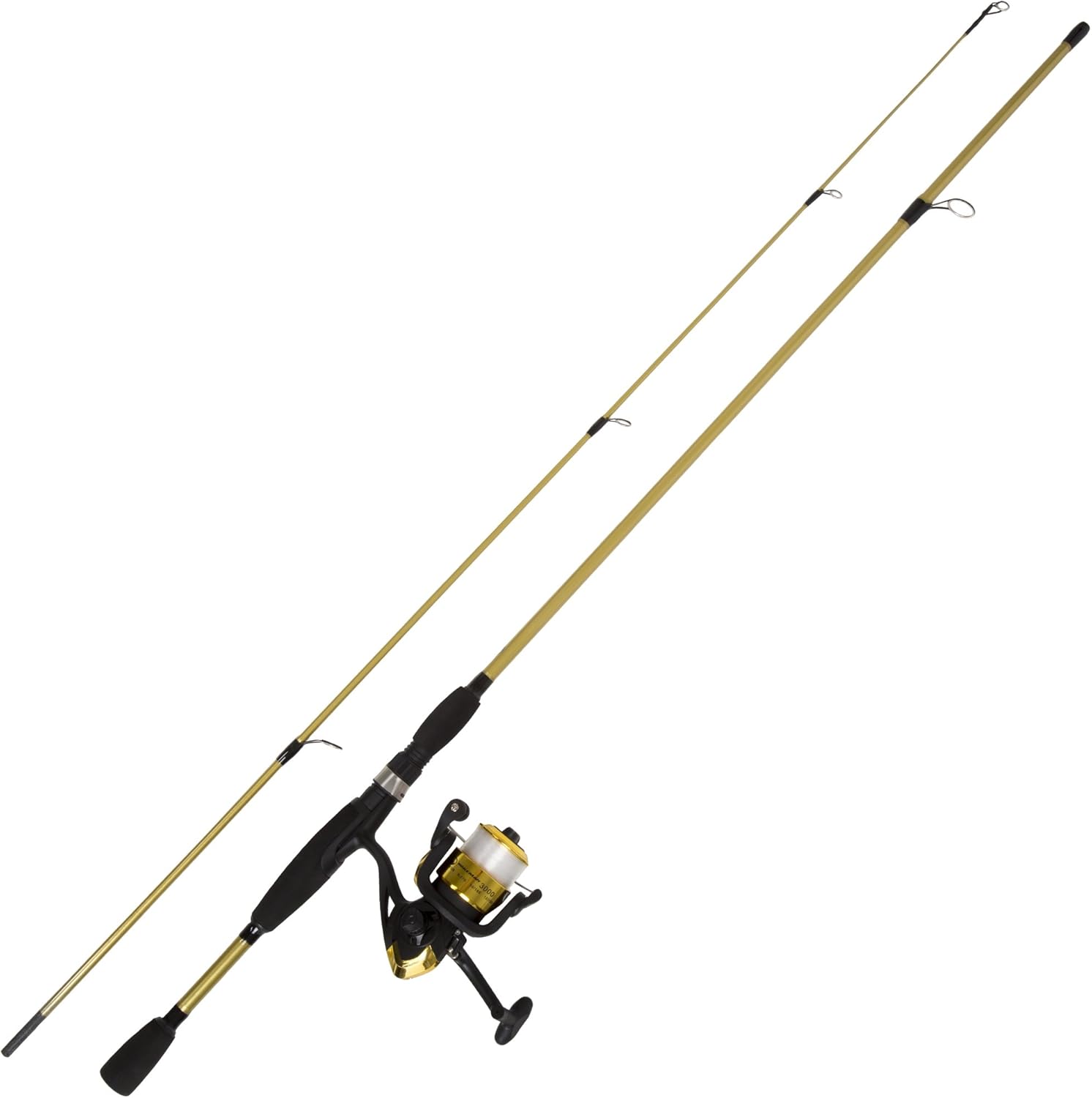
Most trout water is small water. Brushy banks, overhanging alders and a canopy that closes in over the run make a long rod a liability. A blank in the 5 foot to 6 foot range keeps the tip clear of branches and lets you flip a spinner sidearm under cover, which is where the better fish usually sit. On creeks narrow enough to jump across, shorter is genuinely better.
Open water flips the logic. On a tailwater, a stocked lake or a wide riffle, a 6 foot 6 inch to 7 foot rod buys you casting distance with a light lure, better line control when you are drifting bait under a float, and more reach to steer a fish around a rock. Past 7 feet the accuracy drops off in tight cover and the blank starts overpowering the 1/16 ounce lures trout eat most of the year.
If one outfit has to cover both situations, 6 feet is the honest compromise, which is exactly where the Okuma Voyager and the Zebco Roam land. Anglers who fish a mix of creeks and reservoirs often prefer the KastKing Spartacus II because its spinning builds run from 6 feet 2 inches up to 7 feet, so you can size the same platform to the water you actually fish.
Power and Action: Ultralight or Light, Rarely Medium
Power describes how much force it takes to bend the blank. Trout lures usually weigh between 1/32 and 3/8 of an ounce, and an ultralight rod is built to load with the lighter half of that range while a light or medium-light rod handles 1/8 to 3/8 ounce spinners and small crankbaits comfortably. A medium blank simply never loads with that weight, so casts fall short and the rod has no give left when a fish surges at the net, which is how hooks tear free of a soft trout mouth.
Action describes where the blank bends. A moderate or moderate-fast rod flexes deeper into the blank, which cushions treble hooks and keeps light line from popping on a headshake. A fast action concentrates the bend near the tip, which helps when you are twitching a jig or setting a single hook but is less forgiving with hardware. For trout, moderate-fast is the safer default unless you fish jigs almost exclusively.
Material sets the personality of the blank. Fiberglass, used on the Wakeman Strike Series and the Zebco Roam, is heavier and slower but very forgiving and nearly indestructible in a car door. Graphite, including the IM6 blanks on the KastKing Centron and Spartacus II, is lighter and far more sensitive, so you feel a soft take on a drifted bait, at the cost of being easier to break if you high-stick a snag.
Reel Size and Line Rating: The 1000 to 2500 Window
Spinning reels are numbered by spool size, and most brands write it either as 1000, 2000 and 2500 or as 10, 20 and 30. For trout, that whole window works and almost nothing outside it does. A size 20 reel like the one on the Okuma Voyager holds roughly 155 yards of 4 pound line or 80 yards of 8 pound line, which is far more than any stream trout will ever take. Step up to a 4000 and you have added weight to the wrong end of a light rod, so the outfit feels tip-light and dead in the hand.
Drag quality matters more than the bearing count printed on the box. With 4 pound line you are relying on the drag to start smoothly the instant a fish runs, because any hesitation on start-up puts the whole load on the knot. Gear ratio is the other number worth reading: the 5.0:1 on the Okuma and the 5.2:1 on both KastKing reels pick up slack fast enough to keep a spinner working as it swings downstream.
Whatever the reel arrives spooled with should be treated as a starter line. Factory line sits on the spool for months and takes a memory set, so it comes off in coils that hurt casting distance and hook-setting. Fresh 4 or 6 pound monofilament, or a fluorocarbon leader on a mono backing, is the single cheapest upgrade you can make to any combo on this list.
Telescopic, Multi-Piece or Two-Piece: How the Combo Travels

Telescopic rods collapse into their own butt section, which is why the PLUSINNO, Ghosthorn and Zebco 33 kits end up in so many packs. A collapsed rod rides in a daypack or a carry-on and comes out ready in seconds, which matters when the good water is a mile up the trail. The trade-off is grit: sand in the joints makes sections stick or slip, so a rinse and a full dry before collapsing is part of owning one. If you are gearing up for that kind of walk in, our roundup of outdoor backpacks built for trail and travel pairs neatly with a packable rod.
Multi-piece travel rods take a different route. The Okuma Voyager splits into five sections of roughly 16 inches and rides in a padded case with its reel and a small tackle box, so the whole outfit fits inside a suitcase. Because each section is a true ferruled joint, the blank keeps an action much closer to a one-piece rod than a telescopic design manages, and the guides stay in a fixed alignment instead of needing to be twisted straight every time.
Two-piece rods, the format used by the KastKing Centron and Spartacus II, give you the most blank quality for the money because there is only one joint to compromise the taper. They fit in a car, a truck bed or a rod tube but not in a backpack. Choose by the walk in: telescopic for hiking, multi-piece for flying, two-piece for anything you can drive to.
Spinning or Spincast: Match the Reel to the Angler
An open-face spinning reel is the default for trout because the line leaves a fixed spool with almost no resistance, which is what lets a 1/16 ounce spinner fly. It also gives you a front or rear drag with real adjustment range, and you can flip the handle to the other side for a left-hand retrieve on almost every model here, including the Zebco Roam.
Closed-face spincast reels, the push-button design on the Ugly Stik Complete kit, trade distance for simplicity. Nothing tangles, nothing needs a bail flip, and a child or a gloved hand can cast one on the first try. The cost is casting range with very light lures and a coarser drag, so they suit stocked ponds, worm-and-bobber fishing and young anglers far better than they suit a technical stream.
Baitcasting reels are the wrong tool here unless you have a dedicated finesse setup, since a standard casting reel needs lure weight to turn the spool. If that is the direction you are heading for bass and heavier work, our breakdown of Lew’s baitcasting reels explains where those reels start to make sense. For trout on 4 pound line, spinning wins on nearly every stream in the country.
What Comes in the Box, and Where Budget Combos Cut Corners

Full kits, such as the PLUSINNO telescopic set, the Ugly Stik Complete kit and the Okuma Voyager, arrive with line, terminal tackle and a bag or case. For a first outfit that is genuinely useful, because it removes a second shopping trip and gives a beginner enough hooks, weights and lures to fish the same weekend. Just do not expect the included lures to replace a proper spinner selection once you get serious.
Corners get cut in three predictable places on inexpensive combos: guide inserts, the reel seat and the handle knob. Stainless guides with ceramic or zirconium rings, which both KastKing combos specify, protect light line from the abrasion that plain metal frames cause. A loose reel seat will let the reel foot rock under load, and a hard plastic knob gets slippery the moment your hands are wet.
One accessory belongs in the same order as the combo. Many trout waters restrict anglers to single barbless hooks, and swapping the trebles on your spinners is far easier with a proper pair of split ring pliers than with fingernails on the bank. A spare rod tip, which the Spartacus II includes in the box, is the other quiet insurance policy on a travel rod.
Here is how the 9 combos compare on the specs that decide whether an outfit belongs on trout water.
| Combo | Rod build | Length as listed | Reel | Suits |
|---|---|---|---|---|
| Okuma Voyager Travel Kit | 5-piece graphite, medium-light | 6 ft | Size 20 spinning, rated 4 to 8 lb line | Travel and backpack trout trips |
| PLUSINNO Telescopic Kit | Telescopic carbon and glass composite | Several lengths from about 5.9 ft | Spinning, size scales with the rod | A first outfit that arrives ready to fish |
| KastKing Centron | 2-piece IM6 graphite | From 6 ft | Spinning from size 2000, 9+1 bearings | Graphite sensitivity on a tight budget |
| Wakeman Strike Series | Collapsible fiberglass | 78 in, about 6.5 ft | Compact spinning, arrives spooled | Bank fishing and a spare loaner rod |
| KastKing Spartacus II Twin-Tip | 2-piece IM6 graphite plus spare tip | 6 ft 2 in to 7 ft in spinning builds | Spinning size 2000 or 3000, 7+1 bearings | One combo for trout and bass |
| Zebco Roam | Fiberglass with split grip handle | 6 ft | Spinning, right or left hand retrieve | Durable all-round pond and stream duty |
| Ghosthorn Travel Combo | Telescoping graphite | Multiple lengths | Spinning, packed in a carrier bag | Hiking, vacations and hike-in creeks |
| Ugly Stik Complete Kit | Ugly Tech composite, compact rod | Compact 2-piece | Spincast with a tackle assortment | Beginners, kids and stocked ponds |
| Zebco 33 Telescopic | Telescopic fiberglass | 5 ft micro or 6 ft build | Spinning, size 05 or size 30 | The most packable ultralight setup |
Why You Should Trust Us
We build these shortlists from live Amazon listing data rather than from press releases. Every candidate is pulled through our product pipeline, filtered to a 4.0 star rating or better with a review base deep enough to be meaningful, then scored on rating strength, review volume and availability. That first pass tells us which combos real buyers have kept rather than returned.
The second pass is editorial and specific to trout. We read the published specs of every surviving combo against the requirements of small, clear water: rod length under 7 feet, ultralight to light power, a reel in the 1000 to 2500 class, and a line rating that tops out around 8 pounds. Combos aimed at surf, catfish or heavy bass work were dropped even when their ratings were strong. We do not claim to have fished each of these outfits on a stream, and where a listing covers several sizes we say so instead of quoting one configuration as if it were the only one.
Final Thoughts
The Okuma Voyager Spinning Travel Kit is our best overall pick because it is the only outfit here that hits every trout requirement without a compromise: a 6 foot medium-light graphite blank, a size 20 reel rated for 4 to 8 pound line, and a five-section build with a padded case that fits in a suitcase or a daypack. It is the combo you can keep in the trunk all season and still take on a plane.
For the best value, the PLUSINNO Telescopic Rod and Reel Combo Kit gives a new angler the most usable gear in one box, since the carbon and glass telescopic blank, the spinning reel, line, lures and a carrier bag all arrive together. If the outfit is for a child or a complete beginner, the Ugly Stik Complete Kit is the easier choice, because a push-button spincast reel removes every tangle a bail arm can create. And if packability is the whole point, the Zebco 33 telescopic combo collapses smaller than anything else here while keeping a true spinning reel.
Anglers who also chase bass or panfish should look hard at the KastKing Spartacus II Twin-Tip, which ships with a spare rod tip and comes in spinning builds from 6 feet 2 inches to 7 feet, so one purchase covers a stocked creek in spring and a farm pond in summer. Whichever one you pick up, respool it with fresh 4 or 6 pound line before the first trip. More gear picks for the water and the trail are collected in our sports and outdoors coverage.
Frequently Asked Questions
What size reel should I use for trout?
Stay between 1000 and 2500, which some brands write as size 10 through size 30. A 2000 or size 20 reel is the sweet spot for stream and stocked-lake trout: it balances a 5 to 7 foot light rod, and it holds well over 100 yards of 4 to 6 pound line, which is more than any trout is going to take from you. Larger reels add weight without adding capacity you will ever use, and the extra spool diameter makes light line lay poorly.
How long should a rod reel combo for trout be?
Five to seven feet covers virtually every trout situation. Pick 5 to 6 feet for brushy creeks where accuracy under branches matters more than distance, and 6 feet 6 inches to 7 feet for open tailwaters, reservoirs and float fishing where you want casting range and line control. If you fish both, a 6 foot rod is the compromise that gives up the least on either end.
Is a telescopic rod strong enough for trout?
Yes. Trout rarely put more than a couple of pounds of pressure on a blank, and a telescopic rod rated for light or ultralight lures has a wide margin over that. The real weakness of a telescopic design is not strength but grit in the joints and a slightly duller action than a ferruled rod, so rinse the sections in fresh water and let them dry fully before collapsing the rod. Backcountry anglers who hike in for water usually find that the packability outweighs the small loss in feel, and if that is your kind of trip our guide to backcountry water purification is worth reading alongside this one.
Do I need to replace the line that comes on a trout combo?
Usually yes, and it is worth doing before the first outing. Factory line sits under tension on a warehouse spool for months, so it comes off in tight coils that cost you casting distance and cushion your hook sets. Fill the spool with fresh 4 or 6 pound monofilament for bait and spinners, or run a fluorocarbon leader off a mono backing in very clear water where trout inspect everything.
Are spincast combos still worth buying in 2026?
For the right angler, absolutely. A push-button reel cannot backlash, needs no bail arm and can be cast one-handed by a child or with cold, gloved hands, which is exactly why the Ugly Stik Complete kit remains a first-rod staple. What you give up is casting distance with very light lures and drag smoothness on a hard run, so an experienced angler working a clear stream with 1/16 ounce spinners will get more out of an open-face spinning combo.
Write Your Review
No reviews yet. Be the first to share your experience!