

Film photography stopped being a niche hobby the moment a new generation discovered that a plastic camera and a drugstore roll can produce images no phone filter quite replicates. The catch is that the word “affordable” means two different things in film: what the body costs once, and what every roll costs forever. This shortlist of 8 cheap 35mm film cameras covers both sides of that math, with picks from Kodak, Ilford, RETO and more that people actually buy, load and reshoot rather than admire in a display case. Our top pick is the Kodak Ektar H35 for its half frame design, which doubles the number of photos you get from a single roll while keeping operation down to one button.
Every camera below is a real 35mm film body, not a digital lookalike with a retro shell. Some are single use models you shoot once and hand over at a lab counter, some are reusable plastic bodies you will still be loading in five years, and a few shoot half frame, panoramic or ultra wide images that a normal camera cannot. We updated this list for October 2026 using live customer ratings and review volume, and you can browse more of our camera coverage in the electronics category if you want to compare these against digital options first.

Pros
- Half frame format roughly doubles the pictures you get from every roll
- Focus free operation means there is nothing to set before you shoot
- Built in flash handles indoor and evening pictures
- Light enough to carry in a jacket pocket all day
- Reusable body, so you only keep buying film
Cons
- Half frame negatives are smaller, so grain shows more in big prints
- Fixed aperture and single shutter speed leave no creative control
- Some labs charge extra to scan half frame rolls correctly
The Kodak Ektar H35 is the camera that made half frame shooting popular again, and it is the easiest recommendation on this list for anyone starting out. It is a small plastic reusable body with a fixed focus lens, a single shutter speed and a flash you switch on with a ring around the lens. You load a roll of 35mm film, wind the thumb wheel and press the shutter, and that is the whole operation.
What makes it special is the half frame format. Each press exposes half of a normal frame, so a 36 exposure roll returns roughly 72 pictures instead of 36. Because labs charge per roll, that single design decision cuts your cost per picture almost in half, which matters far more over a year than the price of the body. The frames come out vertical, which happens to be the right shape for phones and social feeds.
The limitations are honest ones. Half frame negatives are physically smaller, so scans show more grain and large prints look softer than full frame work. The lens has one aperture and one shutter speed, so the flash is not optional once you step indoors or shoot after sunset. A few smaller labs still handle half frame scanning awkwardly, so it is worth asking before you send your first roll.
Bottom line: if you want to shoot a lot of film without the developing bill spiralling, the Ektar H35 is the best value proposition in cheap film photography right now, and it is genuinely fun to carry.
- Type: reusable 35mm film camera
- Format: half frame, roughly 72 shots per 36 exposure roll
- Lens: fixed focus, focus free operation
- Flash: built in, powered by one AAA battery
- Film and battery: not included
- Body: lightweight plastic, pocket sized
Best suited to a first time film shooter who wants volume, and to anyone who found that a full frame camera made them ration their shots. It is also a strong travel companion because it weighs so little and nobody treats it as valuable.
It is less suited to someone who wants to make large prints or who needs the cleanest possible scan quality from every frame.
Load a roll of ISO 400 film in the shade, wind until the frame counter starts moving, and switch the flash on any time you are indoors or in shade. Stay within about three metres of your subject when the flash fires.
Remember that every press only uses half a frame, so the counter climbs quickly. Rewind fully before opening the back, then hand the roll to a lab and ask specifically for half frame scanning.

Pros
- Film is already loaded, nothing to set up at all
- Built in flash covers indoor and evening pictures
- One of the most widely trusted single use cameras available
- Cheap enough to hand out at events without worry
- Nothing to break, charge or configure
Cons
- Cannot be reloaded, so the shell is discarded after one roll
- Only 27 exposures before it is finished
- Fixed exposure means low light without flash fails
The Kodak FunSaver is the single use camera most people have held at some point, and it remains the default choice for events. It arrives sealed with a roll of film already inside and a flash built into the front. You wind the wheel until it clicks, press the flash charge button if you need it, and shoot. When the counter runs out, the whole camera goes to a lab, which opens it in the dark and develops the film.
Its appeal is the total absence of decisions. There is no battery to buy, no film to load, no focus and no settings, so it can be handed to a child, a guest or a wedding table without instructions. That is also why people buy them in quantity: twenty guests with FunSavers produce a set of pictures nobody would have taken with their phones.
The limitations are structural. You get 27 exposures and then it is finished, and the shell cannot practically be reloaded. Exposure is fixed, so the flash is mandatory anywhere that is not bright daylight, and it only reaches a few metres. Developing is still a separate cost after the fact, which surprises first time buyers who assume the purchase covers everything.
Bottom line: the safest choice when the camera needs to work in someone else's hands with zero explanation.
- Type: single use 35mm camera
- Format: full frame 35mm
- Exposures: 27 per camera
- Flash: built in, charged by a button
- Film: preloaded, not removable by the user
- Developing: hand the whole camera to a lab
Put one on each table at a wedding or party and you collect a set of candid pictures from angles no hired photographer reaches. The same logic works for school trips, hen parties and family reunions.
Write a short note next to each camera reminding guests to press the flash button indoors, which is the single most common reason event pictures come back dark.
Wind the thumb wheel until it stops, hold the flash button until the ready light glows, then press the shutter. Stay within roughly three metres of your subject when using the flash.
Do not open the camera yourself under any circumstances, since daylight will destroy the exposed film. Take the whole camera to a lab and ask for scans if you want digital files.

Pros
- Coated aspheric glass lens is noticeably sharper than plain plastic optics
- Half frame format roughly doubles the shots per roll
- Bulb mode plus tripod thread enables genuine long exposures at night
- Built in star filter adds a night effect without extra accessories
- Still a one button camera despite the extra features
Cons
- Costs more than the original H35 it replaces
- Half frame negatives show more grain when enlarged
- AAA battery and film are both sold separately
The Ektar H35N is Kodak's answer to the main criticism of the original H35: that its simple plastic lens was too soft for anyone who wanted their film photos to look intentional rather than accidental. The N model swaps in a coated aspheric glass element, and the difference shows up immediately in contrast and corner detail. It remains a focus free camera with a single shutter speed, so it is no harder to use than its predecessor.
Its real party trick is the pair of features nobody expects at this level: a bulb mode and a tripod socket. Together they let you hold the shutter open for seconds at a time, which is the only way to shoot city lights, star trails or light painting on a camera this simple. The removable star filter turns point lights into four point flares, an effect that is charming in moderation and easy to switch off when it is not wanted.
The compromises are the same as every half frame camera. Negatives are half the usual area, so grain is more visible and very large prints lose bite. The flash is short range, roughly effective across a table rather than a room. Film and a AAA battery are both extra purchases, so budget for those alongside the body.
Bottom line: this is the camera to buy if you want half frame economics without accepting half frame softness, and the night shooting features make it the most capable body on this list by a clear margin.
- Format: half frame 35mm, 18mm by 24mm
- Lens: 22mm coated glass and aspheric element
- Focus: fixed, focus free
- Flash: built in, powered by one AAA cell
- Extra modes: bulb exposure, removable star filter
- Mounting: standard tripod thread
- Included: camera only, film and battery sold separately
Load a 400 speed roll, wind until the counter reads one, and shoot in daylight with the flash off. Switch the flash on for anything indoors or after dusk and stay within a few paces of your subject. For bulb mode, mount the camera on a tripod, hold the shutter down for the length of the exposure, and keep your hands off the body while it is open.
Suited to anyone moving past their first roll who wants sharper results and a reason to keep shooting after dark. It is also the sensible pick for a traveller who wants one small camera to cover daytime scenes and evening city lights without carrying anything else.

Pros
- Slightly wider 31mm lens takes in more of the scene
- Built in flash on a simple switch
- Full frame 35mm negatives that any lab handles
- Comes from a film maker with deep black and white expertise
- Simple enough for a complete beginner
Cons
- Fixed f/9 aperture struggles in anything but good light
- Single 1/120 second shutter speed offers no flexibility
- Viewfinder is basic and shows only an approximation of the frame
The Ilford Sprite 35 II is the alternative to the Kodak branded bodies that dominate this category, and it comes from a company whose reputation was built on black and white film rather than cameras. The specification is refreshingly plain: a 31mm fixed focus lens at f/9, a shutter fixed at one one hundred and twentieth of a second, and a flash you turn on with a switch.
That 31mm focal length is a little wider than most cameras here, which suits group pictures, interiors and street scenes where you want more of the scene in the frame. Everything from roughly a metre away to the horizon falls within acceptable focus, so there is nothing to adjust. It shoots full frame 35mm, so scans are standard and clean.
The f/9 aperture is the honest limitation. It is a daylight lens, and without the flash your indoor pictures will be underexposed. Buyers also note that the viewfinder is a simple window that only approximates the final frame, so tight compositions need a margin for error. Load it with a fast black and white film and shoot outdoors and it produces exactly the grainy, contrasty look people buy film for.
Bottom line: the pick for black and white shooters and for anyone who wants a slightly wider view than the standard cheap point and shoot.
- Type: reusable 35mm film camera
- Format: full frame 35mm
- Lens: 31mm fixed focus, f/9
- Shutter: fixed at 1/120 second
- Flash: built in, battery powered
- Film and battery: not included
Pair it with a fast black and white film and the fixed exposure works in your favour, because black and white stock tolerates a wide range of light and the grain is part of the look.
Shoot on bright days with strong shadows for the most striking results, and use the flash indoors to lift faces out of the gloom.
Pick the Sprite over the Kodak M35 if you want the wider 31mm view or plan to shoot black and white regularly. Pick the M35 instead if colour snapshots of people are your main use.
Frame slightly loose through the viewfinder, since what you see is not exactly what the film records.
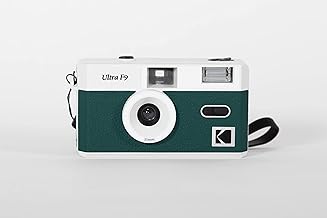
Pros
- Full frame negatives keep grain low and scans clean
- Retro body styling that stands out in photos as well as in them
- Built in flash covers indoor and evening snapshots
- Simple wind and shoot operation with no settings
- Light enough to carry every day without a case
Cons
- Plastic lens is soft toward the frame edges
- Single shutter speed limits shooting to good light or flash range
- No focusing, so close up subjects come out soft
The Ultra F9 is Kodak's straightforward reusable point and shoot, and it earns its place by doing the obvious things without fuss. It shoots full frame, so a 36 exposure roll gives you 36 images at the standard negative size, which keeps grain modest and gives labs plenty of area to scan. The 31mm lens is wide enough for group shots and interiors without distorting faces.
Handling is as basic as it gets. There is a wind wheel, a shutter button, and a switch for the flash. Nothing else. That simplicity is a genuine strength for a camera you hand to friends at a party, because there is no setting anyone can get wrong. The retro body finish also has a practical benefit: it is easy to spot in a bag full of dark objects.
Where it falls short is optical. The plastic lens softens noticeably at the edges and flares when pointed toward the sun, and with fixed focus there is a minimum distance below which faces go mushy. Keep about a metre between you and your subject and the results are consistent.
Bottom line: a dependable everyday film camera for daylight and flash lit scenes, best chosen by someone who values full frame negatives over the extra shots a half frame body would give.
- Format: full frame 35mm, 36mm by 24mm
- Lens: 31mm fixed focus wide angle
- Focus: fixed, no focusing required
- Flash: built in with manual switch
- Power: one AAA cell
- Film: standard 35mm colour or black and white
- Body: lightweight plastic, reusable
Choose this over a half frame camera if you plan to print your images or want the cleanest possible scans, and choose a half frame model instead if getting the most photos per developing charge matters more. Pair it with 400 speed film for the widest range of usable conditions, and pick up spare AAA cells since the flash is what drains them.
Keep the camera out of direct heat and never open the back until the film is fully rewound, since exposing a shot roll to light ruins every frame. Wipe the lens with a soft cloth only, and remove the battery if the camera will sit unused for months to avoid leakage inside the compartment.

Pros
- Ships with a starter roll of 400 speed film included
- Half frame format stretches that roll to around 36 exposures
- Built in flash handles indoor and evening frames
- Reusable body rather than a sealed single use shell
- Compact enough for a coat pocket or small bag
Cons
- Fewer customer reviews than the established camera brands
- Plastic lens produces soft, lomography style images
- AAA battery is not supplied with the camera
This camera solves a small problem that stops a lot of people from ever shooting film: you buy a body, then discover you also need to source a roll before you can take a single picture. The 1 Shot arrives with a roll of 400 speed black and white film in the box, so it is ready to shoot the day it lands.
Mechanically it is a half frame point and shoot in the familiar mould. Each press exposes half of a standard frame, so the bundled 18 exposure roll returns around 36 images and any 36 exposure roll you buy later returns around 72. There is a built in flash on a manual switch, a wind wheel, and nothing else to operate. Black and white film suits the soft plastic lens well, since grain and contrast read as intentional rather than as a shortcoming.
The main caveat is that this is a less established name than Kodak or Ilford, with a correspondingly smaller pool of customer feedback behind it. Build quality is light plastic, so it wants a little care in a bag. A AAA cell is still a separate purchase despite the film being included.
Bottom line: the cheapest realistic way to find out whether you enjoy film, because it removes both the film purchase and the per photo cost from the equation on your first roll.
- Format: half frame 35mm, 18mm by 24mm
- Focus: fixed focus, no adjustment
- Flash: built in, manual switch
- Power: one AAA cell, not included
- Included film: one roll of ASA 400 black and white, 18 exposures
- Frames from included roll: around 36
- Body: reusable plastic, multiple colour options
Aimed squarely at first time film shooters and at anyone buying a gift for someone curious about analogue photography. It is also a reasonable second camera to keep loaded with black and white while a main body carries colour film.
Load the supplied roll in subdued light, wind until the counter starts, and shoot outdoors first while you learn the flash range. Switch the flash on indoors and keep subjects within a couple of paces. Rewind fully before opening the back, then take the roll to any lab that handles black and white processing.

Pros
- 22mm lens captures far more of a scene than typical compacts
- Extremely light and slim, easy to carry all day
- Reusable body with no batteries needed at all
- Distinctive wide angle look that phones cannot mimic
- Simple wind and shoot handling
Cons
- No flash, so it is unusable indoors or after dusk
- Wide lens exaggerates perspective at close range
- Corner softness and vignetting are pronounced
The Ultra Wide and Slim is the most single minded camera on this list. It has no flash, no battery compartment and no settings, because it was designed for one job: capturing wide scenes in strong daylight. The 22mm lens takes in dramatically more than the 31mm or 35mm optics found on most cheap film cameras, which changes how you compose rather than just how much fits in.
Used the way it was intended, on a bright day outdoors, it produces images with deep saturation, heavy corner vignetting and a slightly warped sense of space that people either love immediately or never warm to. Because nothing needs power, it weighs almost nothing and is the easiest camera here to carry every single day.
The limitations are absolute rather than gradual. Indoors, at dusk, or on a heavily overcast day, there is not enough light for the fixed aperture and shutter, and frames come back too dark to save. It is also unforgiving at close range, where the wide lens stretches faces at the edges of the frame.
Bottom line: a specialist daylight camera that rewards being paired with a flash equipped body rather than being asked to cover everything on its own.
- Format: full frame 35mm
- Lens: 22mm ultra wide, fixed focus
- Flash: none
- Power: no battery required
- Film: standard 35mm, 400 speed recommended
- Body: slim reusable plastic, multiple colours
- Intended use: bright daylight only
Best used on hikes, beaches, city walks and any scene where you want the whole environment in frame rather than a single subject. Keep the sun behind or beside you, since the uncoated lens flares readily, and step back further than feels natural to avoid distorting people at the frame edges.
Buy this as a second camera rather than a first one. If you only want to own a single cheap film body, choose a flash equipped model instead, then add this when you know you enjoy shooting wide. Load 400 speed film even in bright weather, since the fixed exposure leaves little margin once light drops.

Pros
- Switchable panoramic and cinematic aspect ratios
- 22mm wide lens suits landscapes and large groups
- Built in flash unlike most wide angle plastic cameras
- Lens cover protects the optic in a bag
- Reusable body that takes any standard 35mm film
Cons
- Panoramic masking crops the negative, so scans are smaller
- Newest model here with limited customer feedback so far
- Battery and film are both separate purchases
Panoramic film cameras were once an expensive novelty, and the PANO brings the format down to the same bracket as ordinary plastic point and shoots. A switch masks the frame into either a wide panoramic strip or a slightly less extreme cinematic ratio, and the 22mm lens behind it is wide enough to make both formats worth using rather than merely available.
What separates it from other wide angle cheap cameras is the built in flash. Most ultra wide plastic bodies are daylight only, which restricts them to half the day. Here you can shoot a group indoors or a street scene at dusk and get something usable back, which makes the camera far more practical on a trip.
Two things to keep in mind. Masking works by blocking part of the negative, so a panoramic frame uses less film area than a full frame image and enlarges less comfortably. And as the newest model in this roundup, it has accumulated fewer customer ratings than the established Kodak and Ilford bodies, so long term reliability is less proven.
Bottom line: the most interesting camera here for anyone who shoots landscapes or large groups, and the only one that offers a genuine panoramic look without a serious jump in spending.
- Format: 35mm with panoramic and cinematic masking
- Lens: 22mm wide angle, fixed focus
- Flash: built in
- Power: one AAA cell, not included
- Extras: integrated lens cover, easy mode switch
- Film: standard 35mm, sold separately
- Body: reusable plastic, multiple colours
Panoramic framing suits coastlines, mountain ridges, city skylines and long dinner tables where a normal frame would force you to choose what to leave out. Hold the camera level, since a tilted horizon is far more obvious in a wide strip than in a standard rectangle, and switch to cinematic mode when a subject needs a little more height.
Keep the lens cover closed whenever the camera is in a bag, since the front element sits close to the surface. Rewind completely before opening the back, and store the camera away from heat and humidity, both of which degrade any film left loaded inside.
How to Choose Among Cheap 35mm Film Cameras
Cheap film cameras are simple by design, so the differences between them are few but they matter enormously to how your photos come out. Almost none of these bodies let you set aperture or shutter speed. What you are really choosing is a fixed recipe: one focal length, one aperture, one shutter speed, and a decision about whether a flash fires. Understanding that recipe before you buy is the difference between a roll of keepers and a roll of dark blurry frames.
Single Use Versus Reusable Bodies

A single use camera such as the Kodak FunSaver arrives with film already loaded and sealed inside. You shoot the roll, you hand the whole camera to a lab, and the lab breaks it open to develop the negatives. There is nothing to learn, nothing to load, and nothing to break. That makes it the safest option for a wedding table, a festival weekend or a first roll where you have no idea what you are doing yet.
A reusable body such as the Ilford Sprite 35-II or the Kodak Ultra F9 costs more once and then costs nothing again. You buy rolls separately, wind them in yourself, and shoot as often as you like. If you expect to go past three or four rolls, the reusable body is cheaper within the first year and stays cheaper forever after. It also means you choose the film stock, which is by far the biggest influence on how your pictures look.
The middle ground is worth knowing about too. Several reusable models now ship with a starter roll in the box, which removes the awkward first trip to a shop before you can take a single frame. The 1 Shot Half Frame camera does exactly that, and it is a reasonable way to find out whether you enjoy film at all before committing to a shelf of rolls.
Full Frame, Half Frame and Panoramic Formats

Standard 35mm cameras expose the full 36mm by 24mm rectangle, so a 36 exposure roll gives you 36 photos. Half frame cameras like the Kodak Ektar H35 and Kodak Ektar H35N split each of those rectangles in two, exposing an 18mm by 24mm vertical frame. The immediate effect is that the same roll yields roughly 72 pictures, and since developing is charged per roll rather than per frame, your cost per photo drops by close to half.
The tradeoff is resolution. A half frame negative is smaller, so grain shows up more readily and very large prints lose some crispness. For phone sized viewing, social posts and standard prints, most people never notice. Half frame images also come out vertical by default when you hold the camera normally, and labs often return them as side by side pairs on one scan, which is a look some photographers deliberately chase.
Panoramic and ultra wide models sit at the other extreme. The RETO PANO masks the frame into a long letterbox strip, and the RETO Ultra Wide and Slim uses a 22mm lens that pulls in far more of a scene than the usual 31mm to 35mm lens. Both are specialist tools rather than everyday cameras, and both reward bright outdoor light more than any other camera on this list.
Flash, Light and Where You Can Actually Shoot
This is the single most common reason a first roll disappoints. Fixed focus plastic cameras typically sit around f/8 to f/11 with a shutter near 1/120 of a second. That combination is built for daylight. Indoors, in shade or after sunset, there simply is not enough light reaching the film, and the frames come back nearly black.
A built in flash solves this, and it is the feature most worth paying attention to. The Kodak FunSaver, Ektar H35, Ektar H35N, Ilford Sprite 35-II and 1 Shot Half Frame all include one. The RETO Ultra Wide and Slim, by contrast, is a daylight camera with no flash at all, which is a deliberate design choice rather than an omission. Flash range on cameras this size is short, roughly the width of a dinner table, so treat it as a tool for people close to you rather than for lighting a room.
Film speed is the other half of the equation. A 400 speed film gives you far more room in overcast weather and indoor light than a 200 speed film, and it is the standard recommendation for every camera here. Some models, including the Ektar H35N, add a bulb mode and a tripod socket so you can hold the shutter open for long night exposures, which is the only genuine low light capability in this price bracket.
Lens Quality and Sharpness

Most cameras in this category use a single element plastic lens. It is soft toward the corners, it flares when you point it near the sun, and it produces the slightly dreamy look people associate with lomography. That is a feature for some buyers and a frustration for others, so it pays to know which camp you are in before ordering.
A small number of models upgrade the glass. The Kodak Ektar H35N uses a coated aspheric lens rather than plain plastic, which visibly tightens up contrast and edge detail compared with its predecessor, and it adds a built in star filter for point light sources at night. The Ilford Sprite 35-II uses a 31mm f/9 optic that is honest and consistent rather than characterful. If you want images that look sharp rather than stylised, those two are the ones to look at.
Running Cost: Film and Developing
The body is the small expense. Every roll you shoot has to be bought, then developed, then scanned if you want digital files, and those three charges repeat forever. Local labs, mail in labs and drugstore counters all differ, and colour negative film is generally cheaper to process than black and white or slide film because the process is standardised.
This is where format choice pays off in real money. If you shoot a roll a month on a full frame camera, you pay twelve developing charges a year for around 432 pictures. On a half frame camera, the same twelve charges cover roughly 864 pictures. Nothing else in this category changes your long term spending as much. Our articles hub tracks deals across camera gear if you want to keep an eye on film and accessory pricing.
| Camera | Type | Format | Flash | Best for |
|---|---|---|---|---|
| Kodak Ektar H35 | Reusable | Half frame | Yes | Most photos per roll |
| Kodak FunSaver | Single use | Full frame | Yes | Events and first rolls |
| Kodak Ektar H35N | Reusable | Half frame | Yes | Sharper images, night effects |
| Ilford Sprite 35-II | Reusable | Full frame | Yes | Straightforward everyday use |
| Kodak Ultra F9 | Reusable | Full frame | Yes | Retro styling, daylight snaps |
| 1 Shot Half Frame | Reusable | Half frame | Yes | Starting out with film included |
| RETO Ultra Wide and Slim | Reusable | Full frame | No | Wide daylight scenes |
| RETO PANO | Reusable | Panoramic | Yes | Landscapes and group shots |
Build, Size and Batteries
Every camera here is plastic and light enough to forget in a jacket pocket, which is exactly why people carry them and why they get used. Weight is rarely above a few hundred grams, and none of them need a case. The flip side is that none of them are weather sealed and none will survive being dropped on concrete repeatedly.
Batteries are worth checking before you order. Reusable models with a flash almost always run on a single AAA cell that is not included in the box, and the same is true of the Ektar H35, Ektar H35N, RETO PANO and 1 Shot Half Frame. Single use cameras arrive with their battery already sealed inside. Buying a multipack of AAA cells alongside the camera saves a frustrating first evening. You can find more everyday gear in our category directory.
Why You Should Trust Us
We build these lists from data rather than press releases. Every camera here was pulled from live Amazon listings, then filtered on verified customer ratings and review volume so that models with thin or unproven feedback do not make the cut. We then score each product with the same weighting we apply across the site, which balances average rating against how many people left that rating, so a strong score from thousands of buyers outranks a perfect score from a handful.
From there we curate by hand. We removed film rolls, accessories and digital cameras that surfaced alongside genuine film bodies, and we cut duplicate colour variants of the same camera so that each entry represents a genuinely different buying decision. Specifications quoted above come from manufacturer listings, and where a feature such as flash coverage or lens type materially changes what you can shoot, we say so plainly rather than repeating marketing language.
Final Thoughts
Best overall goes to the Kodak Ektar H35. It is the camera that gets the fundamentals right for a beginner: one button, a usable flash, a reusable body, and a half frame format that quietly halves the running cost that would otherwise drive people away from film after two rolls. If you only buy one camera from this list and want it to still be in your bag next year, buy that one.
Best value is the 1 Shot Half Frame camera. It bundles a roll of 400 speed black and white film in the box, shoots half frame so that roll stretches to around 36 exposures, and asks nothing of you beyond a AAA battery. For anyone who wants to find out whether film photography suits them before spending further, it is the lowest friction entry point here. If you want a sharper picture instead, the Kodak Ektar H35N is the upgrade, with a coated aspheric lens, a bulb mode and a tripod socket for night work.
For specific uses, the Kodak FunSaver remains the right answer for events where cameras get passed around and occasionally dropped, the RETO Ultra Wide and Slim is the one to take on a bright hike, and the RETO PANO handles group shots and landscapes that no other camera in this bracket can frame. If you want a narrower look at pocketable models, our guide to cheap point and shoot film cameras goes deeper on that style, and the electronics section covers the digital alternatives.
Frequently Asked Questions
Is a cheap 35mm film cameras still worth buying in 2026?
Yes, provided you are buying it for the look and the experience rather than for convenience. A plastic 35mm camera gives you grain, soft corners, unpredictable flash falloff and a delay between shooting and seeing results, all of which are the point. What it will not do is replace a phone for quick everyday snapshots, so most people end up carrying both.
What film should I load into a cheap 35mm film cameras?
A 400 speed colour negative film is the default answer for every reusable camera on this list. It handles bright sun, overcast days and flash lit indoor scenes without complaint, and it is the cheapest film type to develop because standard colour processing is available almost everywhere. Save 100 or 200 speed film for consistently bright outdoor days, and treat black and white as a stylistic choice that usually costs more to process.
How many photos does a half frame camera actually give me?
Roughly double the number printed on the film box. A 36 exposure roll yields close to 72 half frame images, and a 24 exposure roll yields close to 48. The exact count varies by a frame or two depending on how the film was wound at loading. Because labs charge per roll, that doubling is the main reason half frame models such as the Ektar H35 and Ektar H35N appear so often in guides to affordable film shooting.
Do I need a battery for these cameras?
Reusable models with a built in flash need one AAA cell, and it is almost never included in the box. The film advance, shutter and viewfinder are entirely mechanical, so a dead battery only disables the flash rather than stopping the camera. Single use cameras arrive with the battery already installed and sealed, so there is nothing to buy or replace.
Where do I get film developed once the roll is finished?
Options are a local photo lab, a mail in service, or a drugstore counter that forwards film to a central lab. Mail in services usually offer the best scan quality and the widest choice of film types, while drugstore counters are the fastest and cheapest for standard colour film. Ask for digital scans alongside the negatives, since that is what most people actually want, and keep the negatives so you can rescan a favourite frame later. More gear guides are collected in our articles hub.




Write Your Review
No reviews yet. Be the first to share your experience!