

A good julienne slicer turns tedious knife work into a two-minute job. Instead of squaring off vegetables and slicing them into slow, uneven sticks by hand, you drag a toothed blade across a carrot or run a zucchini over a cutting deck and get a pile of clean, even matchsticks that cook evenly and look sharp on the plate. For October 2026 we compared dozens of top-rated cutting tools from Benriner, Gramercy Kitchen Co, OXO and more and narrowed the field to the 8 picks below, covering everything from pocket-sized peelers to professional Japanese mandolines.
Our top pick is the Fullstar 6-in-1 Mandoline Slicer for its interchangeable julienne blades, built-in catch container, and included cut-resistant glove. The rest of the list covers a drawer-friendly julienne peeler, an enclosed slicer that keeps fingers completely away from the blade, and the Japanese board mandoline that professional cooks have trusted for decades. After the rankings you will find a buying guide, straight answers to common questions, and plenty more picks in our home and kitchen section.

Pros
- Six interchangeable blades cover julienne, slicing, grating, and spiral cuts
- Built-in container catches every cut and keeps counters clean
- Cut-resistant glove and finger guard included in the box
- Non-slip base keeps the unit planted while you work
- BPA-free body with stainless steel blades
Cons
- Plastic housing feels less premium than an all-steel mandoline
- Hand washing is recommended for the blade inserts
- Container fills up quickly during big-batch prep
The Fullstar 6-in-1 Mandoline Slicer is less a single tool and more a compact prep station. Interchangeable stainless steel blade inserts snap into a base that sits over a catch container, so julienne strips, flat slices, grated cheese, and spiral cuts all land in the same tidy box instead of scattering across your counter. It is built for everyday home cooks who want one gadget to handle the jobs a chef would normally do with a knife.
The julienne performance is what earns it the top spot on this list. The toothed insert produces even matchsticks from carrots, cucumbers, zucchini, and potatoes with a single pass, and swapping to a different cut takes seconds. Fullstar also takes safety more seriously than most budget brands: a cut-resistant glove and a finger guard both come in the box, which removes the biggest reason people avoid mandolines altogether.
The compromises are the ones you would expect at this price. The housing is BPA-free plastic rather than steel, so it will not survive careless abuse, and Fullstar recommends hand washing the blade inserts to protect their edges. The catch container is generous for weeknight cooking but fills quickly if you are prepping for a crowd, so big-batch cooks will find themselves emptying it mid-job.
Bottom line: no other pick on this list covers as many cuts, contains the mess as well, or does as much to keep fingers safe. For most home kitchens, this is the julienne tool to buy.
- Six interchangeable stainless steel blade inserts
- Julienne, flat slice, grating, and spiral cut options
- Built-in catch container with non-slip base
- Cut-resistant safety glove and finger guard included
- BPA-free plastic housing
- Hand washing recommended for blade inserts
The set revolves around its swappable inserts: a toothed julienne blade for matchsticks, straight blades for flat slices, a grating surface for cheese and firm vegetables, and a spiral cutter for curly veggie noodles. Each insert clicks into the same base, so switching from slicing cucumbers to shredding carrots takes a few seconds and no tools.
The included accessories matter just as much. The cut-resistant glove protects the hand guiding the food, the finger guard grips short stubs your fingers should never chase, and the container base doubles as storage so small parts do not vanish into the back of a drawer.
Wash the blade inserts by hand, one at a time, rather than dropping them into a sink of soapy water where an unseen edge can find your fingers. The container and housing rinse clean easily, and everything should be dried before reassembly to keep the blades in top shape.
Always use the glove or the finger guard, even for quick jobs, and stop slicing before the vegetable gets shorter than the guard can hold. Store the unit assembled with the blades inside the container so nothing sharp sits loose in a drawer.

Pros
- Sturdy stainless steel construction resists stains and odors
- Switches quickly between flat slice and julienne cuts
- Adjustable thickness dials in everything from paper-thin to hearty cuts
- Rigid deck stays flat under pressure from dense vegetables
Cons
- Exposed blade demands careful handling at all times
- No enclosed housing, so beginners must rely on the hand guard
The Mueller mandoline is the classic board-style slicer done in full stainless steel. Where budget mandolines pair a metal blade with a flexing plastic frame, Mueller uses a rigid steel deck that stays flat when you lean into a sweet potato, which is exactly when cheap frames start to bow and cuts start to wander.
Its two-mode design keeps things simple: a flat slicing edge for rounds and planks, and a julienne setting that turns firm produce into clean, even strips. Thickness is adjustable, so the same tool handles translucent cucumber slices for pickles and thick-cut potato rounds for roasting. Because the deck is steel, it shrugs off beet stains and onion smells that gradually ruin plastic slicers.
The tradeoff is the same one every open mandoline carries: the blade is exposed, and it is sharp. The included guard works well, but you have to actually use it, and this is not the tool to hand an unsupervised beginner. It also lacks the bells and whistles of chopper-style sets, there is no catch container and no grating option.
Bottom line: if you want a straightforward, durable mandoline that slices and juliennes beautifully and will still be doing it years from now, this is the one.
- Stainless steel deck and blades
- Flat slice and julienne cutting modes
- Adjustable slice thickness
- Hand guard included
- Slim, drawer-friendly profile
- Rinse clean by hand recommended
Set the thickness before you start, then anchor the board over a cutting board or bowl at a comfortable angle. Load the food into the hand guard, press it lightly against the deck, and use long, smooth strokes rather than short jabs. Let the blade do the work: pressing harder produces ragged cuts and tired wrists.
Switch to the julienne setting for matchsticks, and rotate dense vegetables a quarter turn every few strokes so they wear evenly. When the piece gets short, stop. The last stub is soup stock, not a challenge.
This mandoline suits cooks who value durability and precision over gadget features. If you make gratins, slaws, stir fries, or pickles regularly and want the same tool performing identically for years, the all-steel build is worth it.
It is not the right pick for anyone uncomfortable around an exposed blade or for households where kids help with prep. Those cooks should look at the enclosed Dash Safe Slice or the ONCE FOR ALL instead.

Pros
- Fully enclosed blade path keeps fingers away from every cut
- Dozens of preset combinations for slices, strips, and dices
- Folds flat for upright storage in a cabinet
- Included recipe guide helps put every cut to work
Cons
- Bulkier than a simple handheld slicer
- Larger produce must be trimmed to fit the food chute
The Dash Safe Slice exists to answer one question: what if a mandoline simply could not cut you? Food goes into a chute, a plunger pushes it through the enclosed blade chamber, and finished cuts drop out below. At no point in normal use do your fingers travel anywhere near an edge, which makes this the pick for anyone who has sworn off traditional mandolines.
Despite the safety-first design, it is genuinely versatile. Preset combinations cover flat slices in multiple thicknesses, julienne strips, and even dicing, so it competes with open mandolines on capability rather than asking you to trade features for protection. The frame folds flat when you are done, standing upright in a cabinet like a cutting board, and the included recipe guide is a thoughtful touch for newer cooks.
The design does impose limits. The unit is bulkier than a board-style slicer, and anything wider than the chute, a large tomato, a fat onion, must be trimmed down first. Cleaning also involves more parts than rinsing a flat deck, though the components come apart without a fight.
Bottom line: the Safe Slice trades a little speed and bulk for total peace of mind, and for many households that is the best trade on this page.
- Fully enclosed blade chamber with plunger feed
- Slice, dice, and julienne cutting presets
- Multiple thickness options
- Folds flat for upright storage
- Recipe guide included
- Cool Grey finish
The enclosed design does most of the safety work for you, but the blade chamber still deserves respect during cleanup. Disassemble the unit per the instructions, rinse each piece individually, and keep your fingers away from the cutting cartridge edges while you scrub the housing.
Dry the parts fully before folding the unit for storage so moisture does not sit inside the chamber. Keep the plunger and chute free of dried starch buildup, which is easiest if you rinse immediately after slicing potatoes or apples.
This is the mandoline for safety-first cooks: parents who prep with kids in the kitchen, anyone with reduced grip strength or shaky hands, and every cook who has had one bad mandoline experience and never went back. The plunger design removes the fear entirely.
Speed-focused cooks who batch-prep piles of vegetables may prefer an open board like the Mueller or the Benriner, which are faster stroke for stroke once you are comfortable with them.

Pros
- Upright push-down design keeps hands away from the blade
- Adjustable dial covers paper-thin slices to thick cuts
- Cuts julienne strips and french fry sticks as well as slices
- Dishwasher-safe parts make cleanup painless
Cons
- Takes up more cabinet space than a flat mandoline
- Very ripe or soft produce can crush under the pusher
The ONCE FOR ALL slicer takes the safety logic of an enclosed mandoline and turns it vertical. Food sits in an upright chamber, you press the handle down from above, and gravity plus the blade do the rest. Your pushing hand stays on top of the unit the entire time, nowhere near the cutting edge, and the strips collect neatly below.
Its flexibility is the surprise. A thickness dial adjusts continuously from near-translucent slices to hearty planks, and dedicated settings produce julienne strips and thick french fry sticks. That last mode quietly makes this one of the better fry cutters at its size, and because the parts are dishwasher safe, cleanup is as simple as the slicing.
The vertical design has quirks. It stands taller than a flat mandoline, so it needs real cabinet space, and very soft produce like ripe tomatoes can crush slightly under the pusher instead of slicing cleanly. Firm vegetables, which are what most people julienne anyway, cut beautifully.
Bottom line: a clever, safe, low-cleanup slicer that is especially strong for fries and strips, and a great alternative to the Dash if you prefer a push-down motion.
- Upright push-down chamber design
- Continuously adjustable thickness dial
- Flat slice, julienne strip, and french fry modes
- Dishwasher-safe components
- Non-slip stabilizing base
- Gray finish
Trim your vegetable to fit the chamber, set the thickness dial before loading, and place the unit on a dry, stable counter. Press the handle down with steady, even pressure rather than fast slams: a smooth push produces cleaner strips and keeps soft produce from bruising.
For french fries, choose a dense, starchy potato and the thick-cut setting, then pat the sticks dry before cooking. Empty the collection area between vegetables so strips do not mat together at the bottom.
Most parts go straight into the dishwasher, which is the model's quiet superpower. Between full washes, a quick rinse under the tap clears starch and pulp before they dry into the corners of the chamber.
The blade area stays enclosed during use, but treat it carefully during disassembly. Keep fingers on the housing rather than the cutting edges, and reassemble completely before storing so no blade sits exposed in a cabinet.

Pros
- Turns carrots, zucchini, and cucumbers into fine strips in seconds
- Sharp toothed stainless blade glides through firm produce
- Cushioned non-slip Good Grips handle stays comfortable
- Takes up no more drawer space than an ordinary peeler
Cons
- Produces only one strip width
- Slow for large batches compared to a mandoline
The OXO Good Grips Julienne Prep Peeler is the simplest tool on this list, and that simplicity is the point. It looks and works like a normal Y-peeler, but its toothed stainless blade splits each stroke into fine, even julienne strips. Drag it down a carrot and you get matchsticks; run it along a zucchini and you get noodles. There is nothing to assemble, adjust, or store.
What separates it from bargain-bin julienne peelers is execution. The blade is genuinely sharp and stays that way, biting into firm produce instead of skating across it, and the cushioned non-slip handle gives real control even with wet hands. For garnishes, single servings, and quick salad toppers, it is faster to deploy than any mandoline: by the time a slicing station is assembled, you are already done.
The limits are structural. One blade means one strip width, and covering a big pile of vegetables one stroke at a time takes patience. It is a small-jobs specialist, not a batch-prep machine.
Bottom line: for the price of a takeout lunch, this is the best value julienne tool you can own, either as a starter or as the quick-draw partner to a full mandoline.
- Toothed stainless steel julienne blade
- Cushioned non-slip Good Grips handle
- One-piece Y-peeler design
- Single fixed strip width
- Rinses clean in seconds
This peeler shines on long, firm produce: carrots for stir fries and spring rolls, zucchini and yellow squash for noodles, cucumbers for salads and pickled garnishes, and broccoli stems that would otherwise hit the bin. Long, light strokes down the length of the vegetable produce the cleanest strands.
It also earns its keep as a finishing tool. A few strokes over a radish or a carrot produces delicate threads that make a bowl of ramen or a plated salad look like restaurant work.
Buy this if you julienne occasionally, cook for one or two people, or want to try veggie noodles without committing counter space to a full slicing station. It is also the right call for small kitchens where every gadget must earn its drawer slot.
If you batch-prep for a family every week, treat this as your quick-job sidekick and pair it with a board mandoline like the Mueller or the Benriner for the heavy lifting.

Pros
- One dial adjusts both slice thickness and julienne settings
- Cut-resistant glove included for safer open-deck slicing
- Stainless steel deck stays rigid under pressure
- Slim profile stores flat in a drawer
Cons
- The adjustment dial takes a little practice to master
- Food holder leaves a stub end unsliced
The Gramercy Kitchen Co mandoline solves the most annoying thing about multi-blade slicers: the loose blades. Instead of a box of razor-sharp inserts to swap and store, a single dial rotates the deck through its settings, from thin flat slices to thicker cuts to julienne strips. Everything stays attached to the board, so there is never a bare blade in your hand or loose in a drawer.
The cutting itself is excellent for the format. The stainless deck stays rigid when you press a dense vegetable into it, strokes feel smooth, and the julienne strips come out uniform enough for a stir fry to cook evenly. Gramercy also ships a cut-resistant glove in the box rather than treating safety as an upsell, which pairs sensibly with the open-deck design.
The learning curve is real but short. The dial's positions take a few minutes of experimenting to internalize, and like most food holders, this one leaves a stub end you should surrender to the stock bag rather than slice by hand.
Bottom line: the smartest open-deck design on this list for cooks who want multiple cuts without ever touching a loose blade.
- Integrated dial for slice thickness and julienne settings
- Stainless steel cutting deck
- Cut-resistant glove included
- No loose blades to swap or store
- Slim, flat-storing profile
This mandoline fits cooks who want board-style speed and multiple cut options but hate handling loose blades. Meal preppers and weeknight cooks who move between slices and julienne in one session will appreciate changing cuts with a twist instead of a blade swap.
Complete beginners who remain nervous even with the glove should still consider an enclosed design first, but for everyone else this is one of the easiest open mandolines to live with.
Rinse the deck promptly after use so pulp does not dry in the julienne teeth, using a brush rather than a sponge near the edges. Because the blades never detach, cleaning is safer than with insert-style sets, but the cutting surfaces are still sharp enough to deserve attention.
Wear the included glove as a habit, not an option, and set the dial back to its closed or flat position before the board goes into the drawer.

Pros
- Rotating blade design switches cuts without changing tools
- Covers both I-shape and Y-shape peeling styles
- Julienne edge shreds carrots and cucumbers into fine strips
- Lightweight and easy to control
Cons
- Strips run thinner than what a mandoline produces
- Lightweight plastic body will not survive rough treatment
The GANNK set attacks the julienne problem from the budget end. Its party trick is a spinning blade head: rotate it and the same tool moves between standard peeling and julienne stripping, with both I-shape and Y-shape peeler styles covered in the set. For the cost of a few coffees, you get peeling and matchstick prep out of one drawer slot.
In use, it is a pleasant surprise. The stainless edges are sharp out of the box, the julienne teeth pull fine, even strands off carrots and cucumbers, and the whole tool is light enough that longer prep sessions do not tire your wrist. For students, first apartments, and minimalist kitchens, it covers a lot of ground for very little money or space.
The compromises match the price. The strips run thinner and less uniform than a mandoline's, the plastic body flexes if you muscle it through dense produce, and there is no width adjustment. It is a light-duty tool that rewards a light touch.
Bottom line: the cheapest sensible entry into julienne prep, and a handy backup peeler even in kitchens that already own a full slicing station.
- Rotating multi-blade head with julienne edge
- I-shape and Y-shape peeler styles in the set
- Stainless steel blades with plastic body
- Single julienne strip width
- Lightweight, drawer-friendly design
Rotate the blade head firmly until it locks in the position you want before touching it to food. For julienne strips, use long, shallow strokes down the length of the vegetable with light pressure, letting the teeth bite gradually instead of digging in.
Firm, straight produce gives the best results: carrots, cucumbers, zucchini, and daikon. Skip anything very hard or very ripe, and rinse the head immediately after use so fibers do not dry inside the teeth.
This set suits budget shoppers, students, and anyone easing into veggie noodles and garnish work before committing to a bigger tool. It is also a practical gift-drawer item and a solid backup for a vacation rental kitchen.
Cooks who julienne weekly or in volume should step up to the OXO peeler for better build quality, or to a full mandoline for speed and uniformity.

Pros
- Japanese stainless blades cut with exceptional precision
- Three julienne blade widths from fine to coarse
- Slim, lightweight body is easy to control and store
- A decades-long favorite in professional kitchens
Cons
- Hand wash only, and the blades demand real respect
- No enclosed housing, so the guard must become a habit
The Benriner is the mandoline that professional cooks reach for, and using one explains why within three strokes. The Japanese stainless main blade is honed to an edge that glides through produce with almost no pressure, producing slices and strips so uniform they look machined. Alongside it come three toothed julienne blades, fine, medium, and coarse, that swap in to cover everything from garnish threads to stir fry batons.
The design philosophy is pure function. The body is slim, light, and BPA-free, the cutting thickness adjusts to your recipe, and there is no container, folding frame, or accessory ecosystem to manage. It stores in the space of a large knife and sets up in seconds, which is exactly why it lives within arm's reach in so many restaurant prep stations.
The professional character cuts both ways. The blades are unapologetically sharp, the included guard is effective but takes practice to trust, and Benriner asks for hand washing only. This is a tool that assumes you will treat it like the knife it essentially is.
Bottom line: for cooks who prize precision above convenience features, the Benriner is the endgame julienne slicer.
- Japanese stainless steel blades
- One flat blade plus fine, medium, and coarse julienne blades
- Adjustable cutting thickness
- BPA-free body, 12.75 x 3.625 inches
- Hand guard included
- Hand wash only
The Benriner belongs with serious home cooks, precision-minded meal preppers, and anyone whose cooking leans on knife-perfect cuts: sushi garnishes, French technique, ultra-thin pickles, or high-volume stir fry prep. If uniformity is the goal, nothing else on this list matches it.
It is the wrong first mandoline for a nervous beginner. Learn on something enclosed or glove-first, then graduate here when your habits are solid.
Hand wash the body and blades immediately after use, holding blades by their frames and brushing away from the edges. Never leave a Benriner in a sink of standing water: an invisible razor blade in murky water is exactly how mandoline horror stories start.
Dry the blades fully before storage to protect the steel, keep the guard on the food for every stroke, and store the spare julienne blades in their packaging or a marked container, well out of a child's reach.
How to Choose the Right Julienne Slicer
Julienne tools come in four distinct styles, and the right one depends on how much produce you prep, how confident you feel around sharp edges, and how much storage space you can spare. Here is how the main categories stack up before we dig into each buying factor.
| Style | How it works | Best for |
|---|---|---|
| Julienne peeler | A toothed blade you drag across produce by hand | Small jobs, garnishes, and veggie noodles |
| Multi-blade chopper set | Interchangeable blades snap over a catch container | Everyday family cooking with one tool |
| Enclosed safety slicer | Food passes through a chute while the blade stays sealed inside | Safety-first cooks and anyone teaching kids to help |
| Board mandoline | A flat deck with adjustable or swappable blades | Precision strips and big-batch prep |
Slicer Style: Peeler, Chopper Set, or Mandoline

If you mostly julienne a carrot here and a cucumber there, a handheld peeler like the OXO Good Grips Julienne Prep Peeler is inexpensive to own, effortless to clean, and disappears into a drawer. The tradeoff is speed: working through a family-sized pile of vegetables one stroke at a time takes patience, and strip width is fixed at whatever the teeth produce.
Chopper-style sets such as the Fullstar 6-in-1 are the do-everything option. They stack interchangeable blades over a catch container, so you can julienne, slice, grate, and spiral cut with the same base while the container keeps scraps off your counter. Board mandolines like the Mueller and the Benriner trade that convenience for precision, delivering the cleanest and most uniform strips of any style. Enclosed slicers such as the Dash Safe Slice seal the blade inside a housing, which is the most reassuring design for anyone nervous about open edges.
Blade Quality and Cut Options
Stainless steel is the minimum standard for any julienne slicer worth buying, and hardened Japanese stainless is the ceiling. The Benriner is the benchmark here: its razor-sharp main blade and three toothed julienne blades keep their edge through years of service. Softer, cheaper blades drag and tear instead of slicing cleanly, which bruises herbs, crushes ripe produce, and turns crisp matchsticks into mush.
Count the cut styles you will actually use, too. Some tools stop at a single julienne width, while the Fullstar and the Dash Safe Slice add flat slices, dices, and grating to the menu. A dedicated julienne blade with fine, evenly spaced teeth is what produces those neat restaurant-style strips. For every job a slicer cannot handle, a sharp chef’s knife remains the backbone of prep work, and our roundup of the best knife sets pairs naturally with any pick on this list.
Safety Features That Actually Matter
Mandoline blades send more home cooks looking for bandages than almost any other kitchen tool, so treat safety hardware as essential rather than optional. The gold standard is a design that physically separates fingers from the edge. The Dash Safe Slice encloses the entire cutting path, and the ONCE FOR ALL routes food through an upright chamber you press down from above, so your hand never travels toward the blade at all.
For open-deck mandolines, insist on a food holder or a cut-resistant glove, then actually use them. The Fullstar and the Gramercy Kitchen Co both include gloves in the box, which says something about how seriously those brands take the issue. A grippy, non-slip base matters just as much: a slicer that skids mid-stroke is a slicer that eventually finds a fingertip.
One counterintuitive rule worth remembering: a sharp blade is safer than a dull one. Dull edges force you to push harder, and extra force is what sends hands skidding. Buy quality steel, keep the guard on in the drawer, and replace any slicer whose blade has visibly rolled or chipped.
Adjustability and Strip Size

The most versatile julienne tools let you change the width and thickness of your strips. Fine strips melt into slaws, spring rolls, and garnishes, while thicker cuts hold their shape through stir fries and roasting. The Benriner ships with fine, medium, and coarse julienne blades you swap in seconds, and dial-adjustable boards like the Gramercy Kitchen Co and the Mueller change cut sizes with a simple twist of a knob.
A single-width tool is not a dealbreaker, it just needs to match your cooking. If nine out of ten jobs are zucchini noodles and carrot garnish, the one width a julienne peeler produces is exactly the width you need, and you save the counter space a full slicing station demands.
Speed and Batch Size
Be honest about how much produce you actually move in a week. A peeler is perfect for one zucchini but miserable for ten, while a board mandoline chews through a whole bag of carrots in a few minutes. Meal preppers, big families, and anyone who cans or pickles in volume will feel the difference immediately, because every stroke on a mandoline produces several strips at once instead of one narrow ribbon at a time.
Container-based systems add a second kind of speed: containment. The Fullstar catches every cut as it falls, and the ONCE FOR ALL holds strips inside its chamber until you tip them out, so there is no chasing carrot shreds across the counter afterward. If your bottleneck is cleanup rather than cutting, an enclosed or container-based design will save you more total time than a marginally faster blade ever could.
Cleaning, Storage, and Durability
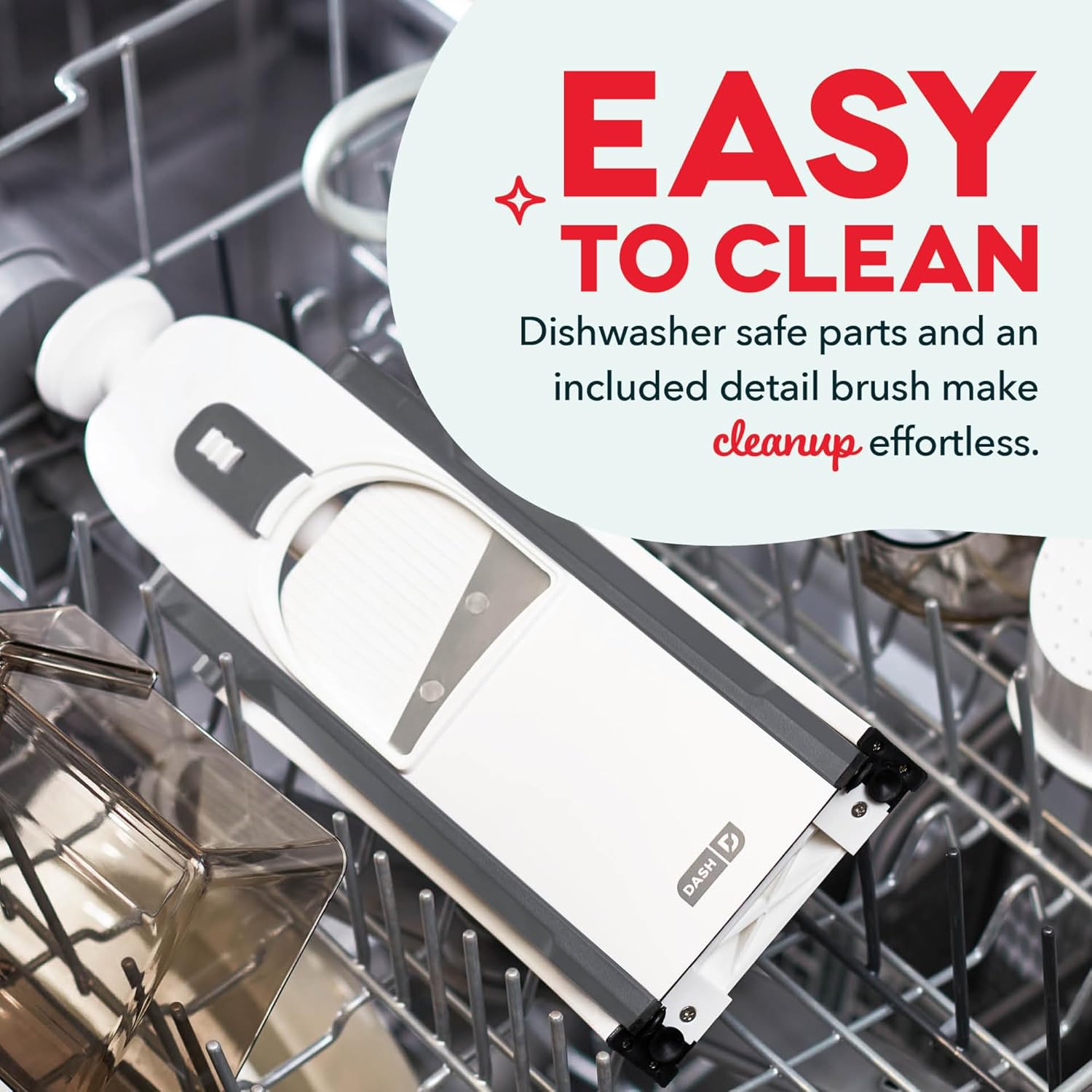
Julienne teeth trap pulp and fibers, so check how a tool comes apart before you buy it. Enclosed designs like the Dash Safe Slice and the ONCE FOR ALL break down into dishwasher-friendly parts, while most open mandolines reward a quick hand rinse under running water. Benriner asks for hand washing only, a small price for blades that sharp, and Fullstar recommends hand washing its blade inserts to protect the edges.
Think about where the tool will live, too. Flat boards slide into a drawer, chopper sets stack into their own containers, and the Dash folds flat to stand upright in a cabinet. A tool you can rinse and stow in thirty seconds is a tool you will actually reach for on a weeknight, the same logic that applies to a well-chosen cookware set.
Body material is the last durability checkpoint. BPA-free plastic housings keep tools light and affordable, but they scratch over time and can hold onto onion and garlic smells, while stainless decks like the Mueller shrug off stains and stay rigid under pressure. Whichever material you choose, look for solid rubber feet and a frame that does not flex when you lean into a dense vegetable like a sweet potato.
Why You Should Trust Us
We build every recommendation from evidence rather than sponsorship. For this guide, our team compared the specification sheets, blade materials, safety hardware, and included accessories of the leading julienne tools on the market, then weighed thousands of verified customer ratings to see how each one performs in real kitchens month after month.
We pay particular attention to recurring complaint patterns, because a flaw that shows up across hundreds of independent reviews is a flaw you will eventually meet in your own kitchen. Durability complaints, blades that dull early, and safety hardware that goes unused all count against a product no matter how strong its headline rating looks. No manufacturer paid for placement in this article, no ranking was traded for access, and our picks change whenever the feedback changes.
Final Thoughts
For most kitchens, the Fullstar 6-in-1 Mandoline Slicer is the best overall julienne slicer. One base station covers julienne strips, flat slices, grating, and spiral cuts, the built-in container keeps counters clean, and the bundled cut-resistant glove removes most of the risk that scares people away from mandolines in the first place. It is the pick we would hand to a friend who cooks a few nights a week and wants one tool that does it all.
Shopping on a tight budget, or short on drawer space? The OXO Good Grips Julienne Prep Peeler is the best value pick here: one stroke turns a carrot into fine, even strips, and it cleans up as fast as an ordinary peeler. Cooks chasing precision should go straight to the Benriner, the Japanese mandoline that restaurant kitchens have leaned on for decades, while anyone who wants maximum protection should pick the fully enclosed Dash Safe Slice.
Whichever pick fits your kitchen, uniform cuts are the quiet upgrade hiding inside every recipe you already make. Even matchsticks cook at the same rate, crisp at the same moment, and roast beautifully in one of the best air fryers, so the payoff shows up at the table every single night.
Frequently Asked Questions
What can I make with a julienne slicer?
More than most people expect. Matchstick carrots for stir fries and spring rolls, cucumber strips for salads and banh mi, zucchini noodles, apple slaw, potato strings for crispy garnishes, and fine vegetable threads for soups all come off the same blade. Uniform strips also pickle evenly and cook at a predictable rate. If you prep produce in bulk, the leftover trim goes straight into one of the best juicers so nothing hits the bin.
Is a julienne peeler or a mandoline better?
They solve different problems. A julienne peeler wins on price, cleanup, and storage, and it is the fastest route to a single serving of veggie noodles or a quick garnish. A mandoline wins on volume, consistency, and flexibility, since adjustable or swappable blades produce several strip sizes and perfectly even cuts. There is also a middle path: chopper-style sets like the Fullstar bundle julienne, slicing, and grating blades over one container, which suits cooks who want a single tool doing many jobs. Frequent cooks often end up owning a peeler and a mandoline anyway, reaching for whichever matches the size of the job.
How do I use a julienne slicer safely?
Respect the blade every single time. Use the food holder or cut-resistant glove that ships with your slicer, keep the tool anchored on a dry, stable surface, and never rush the last inch of a vegetable, that stub belongs in the stock bag rather than against the blade. Wash blades individually instead of dropping them into a sink of soapy water where a hand can find them blind, and store the tool with its guard in place. If open blades still make you uneasy, an enclosed model like the Dash Safe Slice or the ONCE FOR ALL removes the worry entirely.
What is the best julienne slicer in 2026?
The Fullstar 6-in-1 Mandoline Slicer is our best overall pick for 2026 because it covers julienne, slicing, grating, and spiral cuts in one tidy station with a safety glove included. The OXO Good Grips Julienne Prep Peeler is the best value for occasional use, and the Benriner is the choice for cooks who want professional-grade precision from a Japanese blade.
Can a julienne slicer make zucchini noodles?
Yes, and for many cooks that is the main event. A julienne peeler is the quickest route: long strokes down the length of a zucchini produce thin, spaghetti-like strands in under a minute. A mandoline fitted with a julienne blade delivers wider, more uniform noodles that stand up better to hot sauces. The same technique works on yellow squash, carrots, and even broccoli stems, so one tool covers the whole low-carb noodle repertoire. Salt the strands lightly and drain them for a few minutes before cooking so the finished dish stays springy instead of watery.





Write Your Review
No reviews yet. Be the first to share your experience!