

Nobody buys an energy star dehumidifier because they want another appliance. They buy it because the basement smells of damp cardboard, because the bathroom wall keeps growing a black rim, or because a musty closet has started ruining clothes. What makes this category different is duty cycle: a dehumidifier can run for six months of the year, several hours a day, which is why the efficiency label on the box turns into a real number on the electricity bill. We looked at 8 units from Midea, Waykar, AEOCKY and more, sorted by capacity class, drainage method and how they behave in a cold room, current for September 2026.
Our top pick is the Midea 22 Pint Dehumidifier for pairing a certified compressor with a washable filter and app control, which keeps both running cost and consumable cost low across a long season. Below we sort the field by the capacity classes the certification actually uses, so you can match a unit to the room instead of to the square footage number printed on the front of the box. For the rest of the house, our appliances section covers the adjacent gear.

Pros
- Carries the certification rather than only appearing in the search results for it
- Washable filter instead of a consumable cartridge
- App and voice control show humidity and tank state without a trip downstairs
- Continuous drainage port for unattended running
- Capacity class that suits most homes on the current rating scale
Cons
- Not enough machine for a genuinely wet basement or a crawl space
- Smart features depend on a stable Wi-Fi signal in a basement
The Midea 22 Pint sits in the capacity class that actually matches most homes. On the rating scale used since 2019, 22 pints covers a normal damp bedroom, a bathroom wall problem or a dry basement, and it is the size people should be buying when older advice pushes them toward a 50 pint machine.
The certification is the point of the product. It means the unit clears a minimum integrated energy factor, so it pulls more water per kilowatt hour than the legal floor, and on an appliance that may run daily through a humid season that difference shows up on the bill rather than on a spec sheet.
Two practical touches lift it above the generic listings. The filter is washable, so there is nothing to reorder, and the Wi-Fi is genuinely useful in a basement because it shows humidity and tank state without a trip down the stairs. Continuous drainage through the hose port removes the emptying chore entirely if you have somewhere lower to run it.
The limitation is honest and predictable: this is not a wet basement machine. If water comes through the walls after rain, or the space is a crawl space, the 50 pint class and above is the correct category and this unit will run continuously without ever reaching the setpoint.
Bottom line: the right size for the majority of homes, certified, and cheap to keep running, which is why it is the one to buy unless the room is genuinely wet.
- Capacity: 22 pints per day on the current federal scale
- Coverage: stated to roughly 1,500 square feet
- Certification: Energy Star
- Drainage: tank plus continuous gravity hose port
- Filter: reusable and washable
- Connectivity: Wi-Fi with app and voice assistant support
- Controls: humidistat, timer, auto shut off
Buy this for a bedroom, a living area or a basement that is damp rather than wet, and especially if the unit will live somewhere you do not walk past every day, because the app answers the question of whether the tank is full. Skip it if the walls are visibly wet after rain, if you are drying a space after a leak, or if the room is an unheated garage in winter.
Set the humidistat to around 45 to 50 percent rather than the lowest setting, so the compressor cycles instead of running flat out. Give the unit roughly a foot of clearance around the intake and exhaust, keep doors and windows closed while it runs, and attach the drain hose if there is a floor drain or sink lower than the port. Rinse the filter monthly during heavy use and let it dry fully before refitting.

Pros
- Large capacity class, which is what a genuinely wet basement needs
- Swinging louvre spreads dry air across an open floor instead of one direction
- Continuous drainage support for unattended running
- Auto defrost for cold basement operation
- Humidity target adjustable across a wide range
Cons
- Far more machine than a bedroom or a single damp room needs
- Large capacity units are the loudest class and belong in a utility space
This is the machine for the problem the 22 pint class cannot touch. A basement with efflorescence on the walls, standing damp after heavy rain or a musty smell that returns within days needs capacity, and the 80 pint class is where that starts.
The swinging louvre is more useful than it sounds in an open basement. A fixed outlet dries a cone in front of the unit and leaves the far corners alone, whereas a 90 degree sweep circulates dry air across the floor, which is the difference between one dry patch and a dry room.
Auto defrost matters here more than on any other unit in this list, because basements are cold. A refrigerant coil below freezing collects frost instead of water, and the defrost cycle pauses the compressor and lets the fan clear it. Without that, a large unit in a cold room runs all day and empties almost nothing into the tank.
Plan the drainage before you buy. A unit of this size fills a tank quickly in a wet space, and manual emptying defeats the purpose. If there is a floor drain or a sump lower than the port, a gravity hose turns it into a set and forget appliance.
Bottom line: the basement specialist here, and the right answer only if the space is genuinely wet rather than merely damp.
- Capacity: 80 pint class
- Coverage: stated to 5,000 square feet
- Certification: Energy Star
- Airflow: 90 degree auto swing louvre
- Drainage: tank plus continuous drainage support
- Defrost: automatic
- Humidity control: adjustable target across a wide range
This is for a wet basement, a whole floor that stays musty, or drying out a space after a leak. It is the wrong purchase for a bedroom, where the capacity is wasted and the noise class is intrusive, and it is also the wrong purchase for a small closet, where a compact tank unit does the job without the footprint.
Give it clearance on all sides, because a large unit pushed into a corner starves its own intake. Check the drain hose at the start of each season for algae and kinks, which is the usual cause of a slow backup into the tank, and make sure the run falls continuously to the drain. Clean the filter monthly in heavy use and let the unit stand upright for several hours before first use if it has been transported on its side.

Pros
- Widest stated coverage figure of the large units here
- Drain hose supplied rather than pictured and sold separately
- Intelligent humidistat cycles to a target instead of running flat out
- Certified in the capacity class that runs hardest, where efficiency matters most
Cons
- Coverage claims at this end of the scale assume a sealed space and standard ceilings
- Large capacity means a large footprint and utility space noise levels
The AEOCKY is the alternative in the large capacity class, and the specification it leads on is coverage. The stated 5,500 square feet is the widest figure here, which in practice means it is aimed at a whole basement floor or a crawl space rather than a single room.
Take the coverage number as a marketing figure and size from the pint class instead. Coverage claims assume a sealed space with a standard ceiling and a certain starting humidity, none of which describe a basement with an open stairwell. What the number does tell you honestly is which league the machine plays in.
The hose in the box is worth more than it appears. Plenty of listings in this class photograph a hose and then supply nothing, and continuous drainage is the feature that turns a large dehumidifier from a chore into an appliance you forget about.
The humidistat is the other part that earns its place. A unit that reaches 50 percent and cycles off uses far less power than one running continuously, and in the biggest capacity class that difference is where certification pays for itself.
Bottom line: the widest coverage in the large class, and a sensible pick for a crawl space or a whole basement floor where drainage is already sorted.
- Capacity: 80 pint class per day
- Coverage: stated to 5,500 square feet
- Certification: Energy Star
- Drainage: drain hose supplied for continuous operation
- Controls: intelligent humidistat with target setting
- Protection: auto shut off when the tank is full
- Intended spaces: basement, crawl space, whole floor
Choose this if the space is large and open, such as a full basement floor or a crawl space, and if you already have a floor drain or sump to run the hose into. It is not the right unit for a bedroom or a bathroom, where the capacity is wasted, and it is not the right unit for an unheated garage in a cold climate, where a desiccant machine is the correct category.
Compare this against the other large capacity units on drainage geometry rather than on the coverage figure. If your drain sits lower than the port, gravity drainage works and any of them will do the job. If the only outlet is higher, you need a condensate pump regardless of which unit you buy, and that cost belongs in the comparison from the start.

Pros
- Drain hose supplied for continuous unattended operation
- Large tank for the times when gravity drainage is not possible
- 24 hour timer lets you run it on off peak hours
- Auto shut off protects against overflow
Cons
- Sold without a clear brand identity, which makes parts and support harder to chase
- Large capacity class noise is not suited to a living space
This is the generic version of the large basement dehumidifier, and it covers the same ground as the branded units in this class: 80 pint capacity, coverage stated to 5,000 square feet, certification, and a hose in the box.
The tank deserves a mention because it is unusually large for the class. That matters in the situation where gravity drainage is impossible, such as a basement with no floor drain, because a bigger tank means fewer trips with a full bucket before you give up and buy a pump.
The 24 hour timer is the feature people underuse. Running a dehumidifier on a schedule that avoids peak electricity hours costs nothing to set up and makes a measurable difference across a season, and it pairs naturally with a certified unit that is already efficient per hour of running.
The honest caveat is support. A listing without a clear brand behind it is harder to chase for a replacement filter, a spare hose or a warranty claim, and that is a real trade against the branded machines in the same class.
Bottom line: the same capabilities as the branded large units at the same capacity, with support as the trade you are accepting.
- Capacity: 80 pint class per day
- Coverage: stated to 5,000 square feet
- Certification: Energy Star
- Tank: 1.06 gallons
- Drainage: continuous drain with hose supplied
- Controls: intelligent humidity control, 24 hour timer
- Protection: auto shut off
Run the hose downhill to a floor drain or sump with no rising sections, and check it for kinks before the season starts. Set the target to around 50 percent rather than the minimum, use the timer to keep the heaviest running outside peak hours, and give the unit clearance on all sides. If you are using the tank instead of the hose, empty it before it fills rather than relying on the shut off to catch it every time.
Judge this against the branded large units on two points only: whether you need the bigger tank, and how much you value having a name to contact for parts. The core specification is the same across the class, so if a floor drain is available and the hose is doing the work, the tank advantage disappears and support becomes the deciding factor.
Pros
- Temperature sensing auto mode adjusts the target as the room warms and cools
- Automatic defrost for cold basement running
- Continuous drainage support for unattended operation
- Wide manual humidity range when you want to override the auto setting
Cons
- Automatic targets are conservative and a manual setting is often more efficient
- Same large footprint and noise class as the rest of the 80 pint units
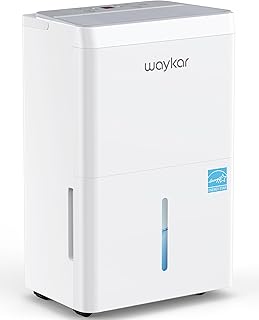
The second Waykar in this list is the same capacity class as the basement model but a different machine at the control panel. Instead of a swinging louvre, its headline feature is an auto mode that reads room temperature and picks a humidity target from it.
That is genuinely useful in a space whose temperature moves across the season. The relative humidity a room can hold changes with temperature, so a fixed 50 percent target that is comfortable in July can be needlessly hard work in October. An auto mode that tracks temperature keeps the compressor from chasing a number that no longer makes sense.
Auto defrost is present and it matters for the same reason it does on any basement unit: below the low 60s Fahrenheit the coil frosts, airflow blocks, and a machine that appears to be working collects nothing. Continuous drainage support means the same set and forget setup as the rest of the class once a hose is run.
The trade is that automatic modes are cautious by design. If you know your space, a manual target of around 50 percent often runs less than the auto setting picks, and the manual range here is wide enough to do exactly that.
Bottom line: the large unit to choose when the room temperature swings across the year, provided you are willing to override the auto mode once you know the space.
- Capacity: 80 pint class per day
- Coverage: stated to 5,000 square feet
- Certification: Energy Star
- Modes: temperature sensing auto plus manual humidity target
- Humidity control: wide adjustable range
- Drainage: continuous drainage support
- Defrost: automatic
This suits a basement or utility floor whose temperature moves a lot between seasons, and anyone who would rather set one mode than adjust a target twice a year. It is the wrong unit for a bedroom on capacity and noise grounds, and it offers nothing extra over the basement model if your space stays at a steady temperature.
Keep the intake clear and the filter clean, because a restricted airflow makes coil frosting more likely, not less. Run the drain hose with a continuous fall and inspect it each season. If the unit has been moved on its side, stand it upright for several hours before switching it on so the compressor oil settles, which is the single most common way these get damaged in transit.

Pros
- Quietest stated figure here at 36 decibels, which is genuinely bedroom territory
- Drain hose supplied for continuous running
- 30 pint class is the sweet spot for a normal basement or large room
- Four modes including a laundry drying setting
- Certified, so the running cost stays low across a season
Cons
- No clear brand behind the listing, which complicates parts and warranty
- Quoted decibel figures are usually measured on the lowest fan speed
The 30 pint class is where most people should be shopping and this is the cheapest certified way into it here. It covers a normal basement, a large open living area or a persistently damp room, without the footprint or the noise of the 80 pint machines.
The 36 decibel figure is the reason it earns the value label rather than merely the price. Read it with the usual caveat that quoted decibel numbers come from the lowest fan speed with the compressor off, but even allowing for that, this is at the quiet end of what a compressor unit can manage and it is the class of figure that makes a bedroom viable.
A hose in the box and a laundry drying mode are the two practical extras. Continuous drainage means it can run unattended in a basement, and the laundry mode simply runs the fan and compressor flat out without cycling to a target, which is what you want when the aim is drying clothes rather than holding a setpoint.
The compromise, as with the other unbranded listing here, is who you call when something fails. There is no brand behind the product to chase for a spare hose or a warranty claim, and that is the trade for the price.
Bottom line: the cheapest certified unit here in the size class most homes actually need, and quiet enough to live in a bedroom.
- Capacity: 30 pints per day
- Coverage: stated to 2,500 square feet
- Certification: Energy Star
- Noise: stated 36 decibels
- Tank: 0.39 gallons with auto shut off
- Drainage: drain hose supplied
- Modes: four, including dry clothes
- Timer: yes
This is the default recommendation for a normal damp basement, a large bedroom or a living area, and for anyone who wants a certified unit without paying for capacity they will never use. Look elsewhere if the basement is genuinely wet, where the 80 pint class is the right answer, or if you want a named brand behind the warranty.
Set the target to 45 to 50 percent for normal use and switch to the laundry mode only while clothes are drying, since that mode ignores the humidistat and runs continuously. Run the hose to a drain if the unit lives in a basement, keep a foot of clearance around it, and use the timer to shift the heaviest running away from peak hours. Rinse the filter monthly during a humid season.

Pros
- Small footprint that fits a closet, a bathroom or a bedside corner
- Quiet enough to leave running overnight
- Auto shut off stops it when the tank fills
- Ambient light can be dimmed or turned off for sleeping
Cons
- Not a substitute for a certified compressor unit in a real basement
- Manual emptying only, with no continuous drainage option
The BEDRED is a compact tank unit, which is a different category of machine from the certified compressors above it in this list. It is designed for a closet, a small bathroom, a caravan or a bedside corner, and its job is to keep a small enclosed space from going musty rather than to dry a floor.
Judge it on tank size and noise rather than on pint ratings, because the two scales are not comparable. A 95 ounce reservoir is generous for the class, and the auto shut off means it stops rather than overflowing when it fills, which is the failure mode that matters on a unit sitting on a shelf.
The ambient light is a genuine feature rather than decoration in a bedroom, because it can be dimmed or switched off. A unit that lights a dark room is the most common complaint on small dehumidifiers, and being able to kill the light is worth more than the seven colours.
The limitation is plain and worth stating: there is no continuous drainage and no certification, so this cannot be left running unattended for days and it will not dry a basement. Buy it for the space it is designed for and it is a sensible product.
Bottom line: a small space unit for closets and bathrooms, not a smaller version of a basement dehumidifier.
- Type: compact tank dehumidifier
- Tank: 95 ounces
- Coverage: stated to about 1,000 square feet in small enclosed rooms
- Drainage: manual tank emptying only
- Protection: auto shut off when full
- Lighting: seven colour ambient light, dimmable
- Noise: quiet running for bedroom use
Buy this for a wardrobe that smells musty, a windowless bathroom, a small bedroom corner or a caravan. Do not buy it for a basement, a garage or any space where water is visibly coming through the structure, because a compact tank unit will empty a room of very little moisture compared with what those spaces produce.
Empty the tank before it fills rather than relying on the shut off every time, and rinse it occasionally to stop a film forming in standing water. Keep the unit clear of curtains and bedding so the intake is not blocked, stand it on a level surface so the float switch reads correctly, and unplug it before emptying rather than carrying a full tank with the unit still running.
Pros
- Dedicated sleep mode drops fan speed and dims the display
- 95 ounce tank is generous for a compact unit
- Portable enough to move between rooms as needed
- Auto shutoff when the tank fills
Cons
- Compact tank design, so no continuous drainage for unattended running
- Coverage claim is optimistic for anything other than a small enclosed room
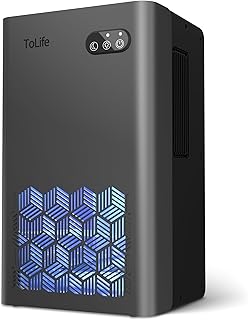
The ToLife is the other compact tank unit here and it is aimed squarely at bedrooms. The sleep mode is the differentiator: it drops the fan speed and dims the display, which addresses the two things that wake people up on a small dehumidifier.
Portability is the practical argument for this design. It is light enough to move from a bedroom to a bathroom to a hallway cupboard as the damp problem moves, which is not true of any of the large units in this list, and for a flat with one problem room at a time that flexibility is worth more than raw capacity.
The 95 ounce tank puts it level with the other compact unit here, and the auto shutoff does the same job of stopping the machine rather than letting it overflow. There is no hose port, so emptying by hand is part of the routine rather than an option you can design out.
Set expectations by the class, not by the coverage figure. In a small enclosed room it keeps humidity down and stops the musty smell returning. In an open basement it is the wrong tool, and a certified compressor unit is what that job needs.
Bottom line: the compact unit to choose if it is going in a bedroom, thanks to a sleep mode that actually addresses noise and light.
- Type: portable compact dehumidifier
- Tank: 95 ounces
- Coverage: stated to about 1,000 square feet in small rooms
- Drainage: manual tank emptying
- Modes: standard plus sleep mode
- Protection: auto shutoff when full
- Lighting: seven colour LED, switchable
This suits a bedroom, a small bathroom or a rented flat where the damp problem moves from room to room and a permanent basement install is not on the cards. It is the wrong purchase for a basement, a crawl space or a garage, and it is not the unit to leave running for a fortnight while you are away, because the tank has to be emptied by hand.
Use sleep mode overnight and the standard mode during the day, when the extra fan speed is worth the noise. Close the door of the room you are drying, because a compact unit fighting air from the rest of the house will never keep up. Empty and rinse the tank regularly rather than letting water stand in it, and keep the unit away from curtains and bedding so the intake stays clear.
How to Choose an Energy Star Dehumidifier
Six things decide whether a dehumidifier solves the problem or becomes an expensive fan. Read the first two even if you skip the rest, because sizing and certification are where most of the money is won or lost.
Pint Rating Changed, and Old Advice Did Not
Capacity is stated in pints of water removed per day, and the number changed meaning in 2019. The federal test condition dropped from 80 degrees Fahrenheit and 60 percent humidity to 65 degrees, which is a harder condition, so the same physical machine that used to be sold as a 50 pint unit is now labelled around 35 pints. Nothing about the hardware shrank. If you are comparing a listing against advice written before that change, or against an older unit in the garage, you are comparing two different scales.
In current terms, a 20 to 25 pint unit suits a single damp room, a bathroom or a bedroom closet wall. A 30 to 35 pint unit handles a normal basement or a large open living area. The 50 pint class and up, which is where the 80 pint marketing numbers on these listings sit, is for a wet basement, a crawl space with a moisture problem, or whole floor drying after a leak. Buying one size up is usually cheaper to run than buying one size down, because an oversized unit reaches the target and cycles off while an undersized one runs flat out and never gets there.
Treat the square footage claim on the front of the box as a marketing figure rather than a specification. It assumes a certain ceiling height, a certain starting humidity and a sealed space, and none of those match a basement with an open stairwell. The pint rating is the number tied to a defined test; the coverage number is not. When a listing states 5,000 square feet, read the pint figure next to it and size from that.
What the Energy Star Label Actually Covers
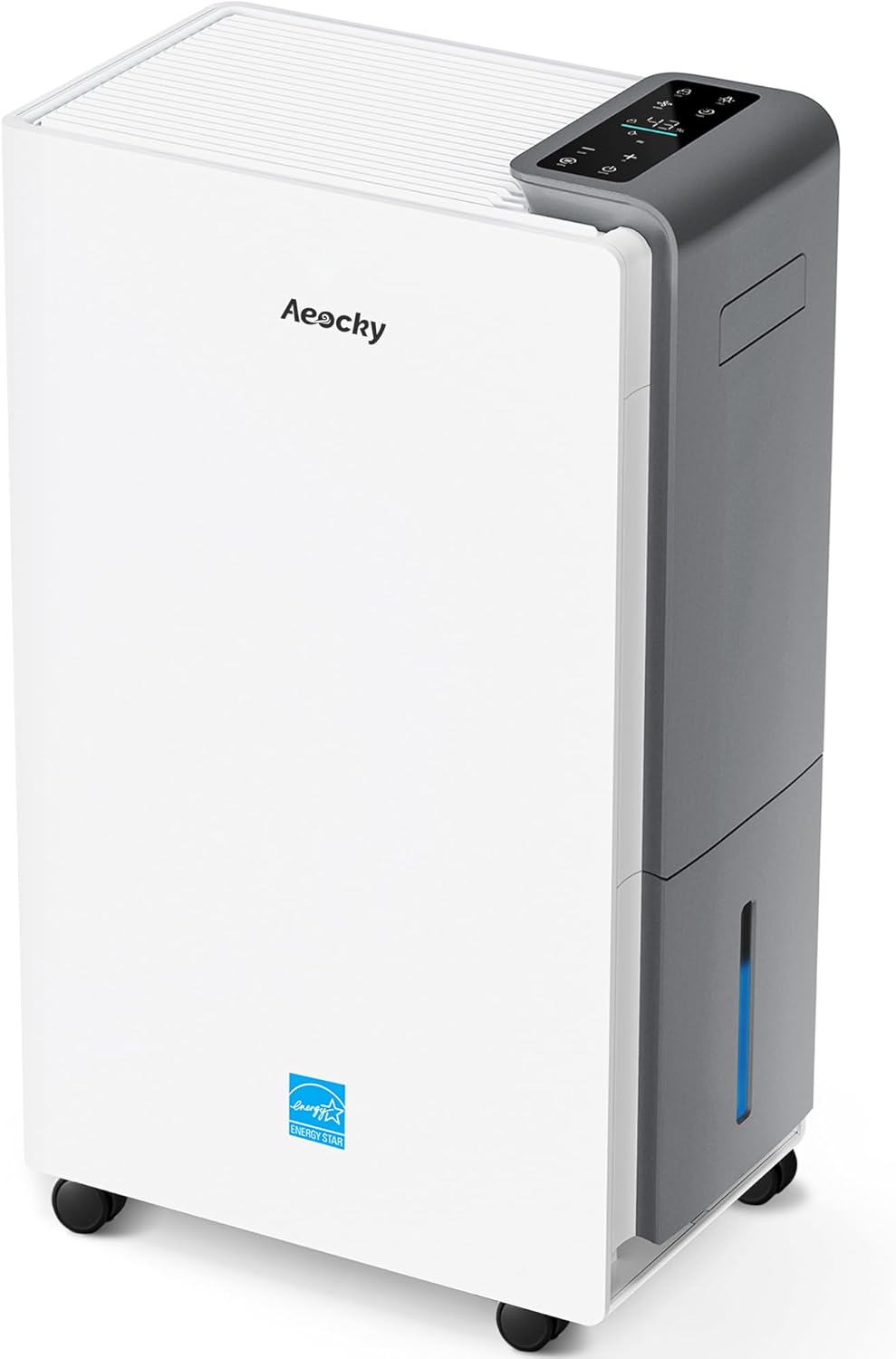
Energy Star certification for a dehumidifier is not a general quality badge. It means the unit meets a minimum integrated energy factor, which is litres of water removed per kilowatt hour of electricity consumed, measured under that same federal test. A certified unit removes meaningfully more water for the same power draw than the floor set by the minimum efficiency standard, and on an appliance that may run daily for a whole humid season, that gap compounds into a figure worth paying attention to.
The label also implies a compressor. Thermoelectric or Peltier units, the small quiet boxes sold for wardrobes and safes, are not eligible because they cannot approach the efficiency threshold. If a listing describes a very small tank, no compressor noise and a very low pint figure, you are looking at a different technology that works by chilling a small plate, not by refrigeration, and it will struggle in a real basement.
Certification is granted per model, so check the listing rather than trusting the brand. Makers commonly sell certified and uncertified capacity classes side by side under one name, and a compact bedroom unit from a brand whose larger models are certified may not carry the label itself.
Drainage Decides Whether You Keep Using It

Every dehumidifier fills a tank, and a 50 pint class unit in a genuinely damp basement can fill a bucket in well under a day. Manual emptying is fine for a bedroom running a few hours an evening and intolerable anywhere the machine is meant to run unattended. This single point is the most common reason a dehumidifier ends up unplugged in a corner.
Continuous gravity drainage solves it if the geometry allows. The unit has a threaded port near the base, you attach a garden hose and run it to a floor drain, a sump or a laundry sink. The catch is that gravity needs fall: the drain has to sit lower than the port, and a hose that kinks or rises even slightly will back up into the tank. Check whether the hose is included, because plenty of listings show one in the photograph and do not supply it.
Where the only drain sits higher than the unit, you need a built in or external condensate pump. Pumps add a second failure point and they are audible when they cycle, but they are the only option for a crawl space or a basement without a floor drain. Otherwise size the tank generously and look for an auto shut off that stops the compressor when it fills.
Noise, and Where the Machine Will Live

A compressor dehumidifier makes two noises: the fan, which is constant, and the compressor, which starts and stops. In a basement neither matters. In a bedroom the compressor cycling on at two in the morning is what people complain about, and it is not fixed by a low decibel figure on the box, because that figure is usually measured on the lowest fan speed with the compressor off.
Roughly 36 to 40 decibels is genuinely quiet enough for a bedroom, mid 40s is a background hum you notice at night, and above 50 belongs in a utility space. A sleep or night mode that drops fan speed and dims the display helps more than the raw number, and a unit without a display dimmer will light a dark room.
Placement changes noise as much as the specification does. Pushing a unit into a corner both starves the airflow and couples vibration into the wall, and on a suspended timber floor a strip of dense foam under the feet removes more perceived noise than any panel setting.
Cold Rooms, Icing, and Auto Defrost
Refrigerant dehumidifiers work by condensing moisture on a cold coil, and when the room drops toward the low 60s Fahrenheit that coil can fall below freezing. Condensate then turns to frost, frost blocks airflow, and the machine keeps running while collecting almost nothing. This is the single most common failure report on units bought for unheated basements and garages, and it is a physics limit rather than a defect.
Auto defrost is the answer and most current units have some version of it. The unit senses coil temperature or simply runs on a timer, pauses the compressor, and lets the fan melt the frost before resuming. A sensor based system is better than a timer because it only pauses when needed, and the specification usually says which one it is. Check the stated minimum operating temperature as well: many units are rated down to about 41 degrees, and a few honest ones say so plainly.
Below that range a desiccant dehumidifier is the correct tool, because it uses an absorbent wheel instead of a cold coil and does not ice at all. None of the units here are desiccant, so an unheated garage in a cold climate calls for that category instead.
Controls, Humidistat Accuracy, and Smart Features
A humidistat lets you set a target, commonly anywhere from 30 to 80 percent, and the unit cycles to hold it. That cycling is where the efficiency of a certified unit shows up, because a machine that hits the target and stops uses far less power than one running continuously. For most homes, 45 to 50 percent is the sensible target: low enough to stop mould and dust mites, high enough that the compressor is not fighting for the last few points.
Onboard humidistats are approximate. A reading a few points off the true value is normal, and it matters mainly because a unit reading low will run longer than it needs to. A separate hygrometer placed away from the machine is worth having, and it is the only way to know whether the room is actually reaching the setpoint or the unit is simply reading its own dry exhaust.
Wi-Fi and voice control earn their place on a basement unit for one reason: they show humidity and tank state without a trip down the stairs. Beyond that, the features worth having are a 24 hour timer, a restart after power loss, and a filter reminder.
| Capacity class (current scale) | Suited to | Drainage to plan for |
|---|---|---|
| 20 to 25 pints | Bedroom, bathroom, single damp room | Tank emptying is realistic |
| 30 to 35 pints | Normal basement, large open living area | Gravity hose recommended |
| 50 pints and above | Wet basement, crawl space, post leak drying | Continuous drain or pump |
| Compact tank units | Closet, wardrobe, small bathroom | Manual emptying only |
Sizing and drainage explain most of the difference between a unit people keep and one they return. The electronics section covers the sensors and smart plugs people pair with these.
Why You Should Trust Us
We build these lists from published specification and from the pattern of what long term owners report, not from marketing copy. For every unit here we read the stated pint rating against the current federal test scale, checked whether the listing carries the certification mark rather than assuming it from the brand, recorded the drainage options and whether a hose ships in the box, noted the stated minimum operating temperature and the defrost method, and looked at what owners say after a full humid season rather than in the first week.
We also set aside near identical listings that differ only in colour or bundle contents, so each entry is a genuinely different machine. Where a brand sells several capacity classes under one name, we treat the specific model as the product, because certification and cold room performance are properties of the model rather than of the badge on the front.
Final Thoughts
Best overall is the Midea 22 Pint Dehumidifier. It sits in the capacity class that suits the majority of homes, it carries the certification rather than merely appearing in the search results for it, the filter is washable rather than a consumable, and the app is the one smart feature that genuinely saves a trip down the basement stairs. For a normal damp room or a dry basement, it is the unit that stops the problem without oversizing.
Best value is the 30 Pints Energy Star Dehumidifier rated at 2,500 square feet. It is the cheapest certified unit here, it ships with a drain hose so continuous operation costs nothing extra, and its stated 36 decibel figure puts it at the quiet end of what a compressor unit can manage. If your room needs a real dehumidifier and you do not need a large tank or a pump, this is the sensible floor.
For specific needs, the Waykar 80 Pints Energy Star Dehumidifier for Basement is the pick for a genuinely wet basement, where its 90 degree auto swing louvre and continuous drainage suit whole floor coverage, and the AEOCKY 5,500 Square Foot Energy Star Dehumidifier is the alternative in that class for a crawl space run. The Waykar 5,000 Square Foot 80 Pint model with temperature sensing auto mode suits a space that swings between warm and cold across the season. For a closet or a small bathroom, the BEDRED 95 Ounce Dehumidifier and the ToLife 95 Ounce Dehumidifier are the compact tank units here, and neither replaces a certified compressor in a real basement. More home picks are indexed across our article archive and the category index.
Energy Star Dehumidifier FAQs
What size energy star dehumidifier do I need for a basement?
On the current rating scale, a normal basement that smells slightly damp is a 30 to 35 pint job, and a basement with visible moisture, efflorescence on the walls or standing damp after rain wants the 50 pint class or larger. Ignore the square footage claim and size from the pint figure, because coverage numbers assume a sealed space with a standard ceiling and a basement with an open stairwell is neither. If you are between two sizes, take the larger one: it reaches the target and cycles off, while an undersized unit runs continuously and costs more to achieve less.
Does a certified unit really cut the running cost?
Yes, and the reason is duty cycle rather than any single clever component. Certification means the unit clears a minimum integrated energy factor, so it removes more water per kilowatt hour than the legal minimum allows. On an appliance that runs for hours a day across a whole humid season, that gap accumulates in a way it never would on something used for ten minutes at a time. The saving is largest in the biggest capacity classes, which run hardest.
Can I leave a dehumidifier running with a drain hose all season?
That is what continuous drainage is designed for, and it is the normal way to run a basement unit. Attach the hose to the port, run it downhill to a floor drain or sump with no kinks and no rising sections, and check it at the start of the season for algae or debris, which is the usual cause of a slow backup into the tank. Set the humidistat to around 50 percent rather than the lowest setting so the compressor cycles instead of running flat out, and clean the filter monthly during heavy use.
Why does my dehumidifier ice up in a cold room?
Because a refrigerant unit condenses water on a cold coil, and once the room drops toward the low 60s Fahrenheit that coil can fall below freezing. The condensate then freezes, the frost blocks airflow, and the machine runs while collecting nothing. Auto defrost handles this by pausing the compressor and letting the fan clear the coil, and a sensor based defrost does it only when needed rather than on a fixed timer. If the space regularly sits below the stated minimum operating temperature, a desiccant unit is the right category instead, since it uses an absorbent wheel and does not ice at all.
Where should I place a dehumidifier?
Central to the space if you can, with roughly a foot of clearance around the intake and exhaust, and away from a corner that starves airflow and transmits vibration. Keep doors and windows closed while it runs, because a unit fighting outside air never reaches its setpoint. If you are drying a specific problem such as a damp wall, point the exhaust at it, and keep a separate hygrometer elsewhere in the room so you measure the space rather than the machine. Our appliances archive covers the rest of the home setup.
Write Your Review
No reviews yet. Be the first to share your experience!