

A crown stapler is the tool that turns cabinet backs, drawer bottoms, upholstery, lattice and subfloor sheathing from a tedious job into a fast one. It drives a two-legged staple that grips wood far better than a brad nail of the same size, and because the staple’s crown spreads the load, it holds thin material without tearing through. What complicates the category is that “crown stapler” covers three very different tools, and buying the wrong width or the wrong power source is the mistake people make most. We looked at 10 staplers from ROBERTS, BOSTITCH, Arrow and more, sorted by crown width, gauge, and whether the tool runs on air, a battery or a cord.
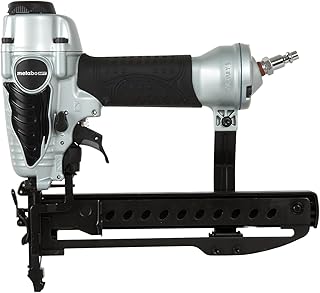
Our top pick is the Metabo HPT N3804AB3 18 Gauge Narrow Crown Stapler for pairing a light, well-balanced pneumatic body with a quarter-inch crown that suits cabinetry and trim, which is the job most people buying this tool actually have. Below we sort the field by crown width and power source so you can match a stapler to the work. For the compressors, nailers and saws that share the shop, our tools and home improvement section covers the rest of the bench.
Pros
- Very light and balanced for overhead and bench work
- Tool-free depth adjustment
- Quick jam clearing at the nose
- Wide staple length range for cabinet work
Cons
- Needs a compressor
- Quarter-inch crown is not ideal for rough outdoor work
The N3804AB3 is the narrow crown stapler that cabinet shops and trim carpenters have relied on for years under the Hitachi name, and it has not changed in the ways that matter. It is light, sits level in the hand, and drives 18 gauge staples cleanly into hardwood frames and plywood backs alike.
The depth dial lets you sink a crown flush in oak or leave it slightly proud in soft plywood without touching the compressor, and the nose opens by hand to clear the occasional jam. The staple range covers everything from thin backs to three-quarter-inch frames.
It is pneumatic, so you need a compressor, and the quarter-inch crown is a finish tool rather than a fencing tool.
Owners describe years of daily use with no drama, which is exactly what you want from a stapler.
Bottom line: the stapler to buy for cabinets, trim and boxes if you own a compressor.
- Crown: 1/4 inch narrow
- Gauge: 18
- Staple length: 1/2 to 1-1/2 inch
- Power: pneumatic
- Depth: tool-free adjustment
- Weight: lightweight aluminium body
Cabinetmakers, trim carpenters and serious DIYers building drawers, boxes and built-ins with a compressor in the shop.
Set the compressor around the middle of the tool's rated range and fine-tune with the depth dial. Use the staple series the manual specifies. Add a drop of oil to the inlet if the tool is not oil-free and keep the magazine clean.
Pros
- Depth adjustment and no-mar tip for finish work
- Kit includes case and accessories
- Durable BOSTITCH build with a long track record
Cons
- Pneumatic only
- Slightly heavier than the Metabo HPT
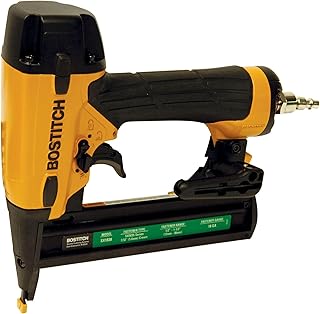
The SX1838K is BOSTITCH's answer to the Metabo HPT, and it competes on refinement: a no-mar tip that protects face frames, a depth dial, oil-free internals and a case to keep it all together.
It drives the same 18 gauge narrow crown staples and handles the same cabinet and trim jobs. It is a touch heavier, which some owners prefer for stability on the bench.
Reliability reports are strong, and the kit format makes it a good first stapler.
Bottom line: a premium pneumatic narrow crown stapler with the extras included.
- Crown: 1/4 inch narrow
- Gauge: 18
- Power: pneumatic, oil-free
- Depth: tool-free dial
- Nose: no-mar tip
- Includes: case and accessories
Woodworkers and finish carpenters who want a complete kit with a case and oil-free convenience.
Oil-free tools still need clean dry air; drain the compressor tank regularly. Clear jams through the nose latch. Store in the case.

Pros
- No hose, no compressor
- Compact M12 body keeps weight down among cordless staplers
- Consistent drive in wood and lattice
- Huge M12 ecosystem
Cons
- Bare tool, no battery or charger
- 3/8 crown is not the cabinet finish choice
- Heavier than a pneumatic stapler
The M12 crown stapler is the tool that freed lattice, fence and screen work from the hose. It shoots 3/8 inch crown staples with a consistent drive and weighs less than the 18 and 20 volt cordless alternatives because of the compact M12 pack.
Depth adjusts without tools, jams clear at the nose, and the tool starts instantly. It is a bare tool, so you need M12 batteries.
Owners use it for outdoor projects, house wrap and shop assembly and praise how much easier it is than dragging a hose up a ladder.
Bottom line: the cordless crown stapler to own if you are on M12.
- Crown: 3/8 inch
- Gauge: 18
- Power: Milwaukee M12 battery, not included
- Depth: tool-free adjustment
- Weight: compact cordless
- Includes: tool only
Contractors and homeowners on the M12 platform who staple lattice, fencing, screens and wrap where a hose is a nuisance.
Pair it with a 2Ah pack for balance or a 4Ah for long sessions. For cabinet finish work, choose a quarter-inch crown tool instead.

Pros
- Cordless convenience on the popular ONE+ platform
- Consistent drive with compression technology
- Good value for a cordless stapler
Cons
- Bare tool, no battery
- Heavier than pneumatic tools
- 3/8 crown not ideal for fine cabinet work
Ryobi's P317 brings cordless stapling to the ONE+ platform, which many homeowners already own. It drives 3/8 inch crown staples with a compression mechanism that sinks them consistently in lattice, fence boards and plywood.
It is heavier than a pneumatic stapler and not as compact as the Milwaukee M12, but for weekend projects that is a fair trade against the freedom of no hose.
Owners like the value and the convenience and note the weight on long overhead jobs.
Bottom line: the sensible cordless stapler for ONE+ owners.
- Crown: 3/8 inch
- Gauge: 18
- Power: Ryobi ONE+ 18V, not included
- Drive: compression
- Depth: adjustable
- Includes: tool only
Homeowners already on Ryobi ONE+ who want a stapler for fences, lattice and shop work without buying a compressor.
Use a compact battery for lighter overhead work. Keep the nose clean and use Ryobi-specified staples to avoid jams.
Pros
- Quarter-inch crown for cabinet and trim work without a hose
- Brushless motor and tool-free depth adjustment
- DEWALT 20V MAX platform
Cons
- Bare tool, no battery
- Heavier than a pneumatic narrow crown stapler
- Priced for professionals
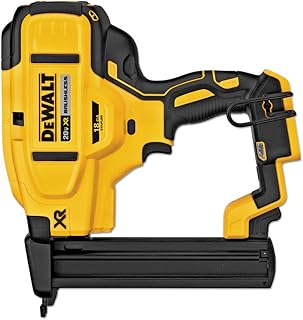
The DCN681B is the rare cordless stapler that shoots a quarter-inch narrow crown, which makes it the choice for installers who do cabinet backs and trim on site without a compressor. The brushless motor drives consistently, and depth and jam clearing are tool-free.
It carries the usual cordless weight penalty and it is a bare tool for the 20V MAX platform.
Owners who install cabinets on jobsites value the freedom from hoses and accept the heft.
Bottom line: the cordless narrow crown stapler for DEWALT users doing finish work in the field.
- Crown: 1/4 inch narrow
- Gauge: 18
- Power: DEWALT 20V MAX, not included
- Motor: brushless
- Depth: tool-free
- Includes: tool only
Cabinet installers and trim carpenters on the DEWALT platform who work where a compressor is impractical.
Keep the magazine free of debris, use DEWALT-specified staples and store the battery separately at partial charge.

Pros
- Uses widely available T50 staples
- Oil-free and simple
- Far faster than a hand staple gun for upholstery and insulation
Cons
- Not a narrow crown woodworking stapler
- Bulkier nose than finish tools
The Arrow PT50 is the pneumatic version of the hand staple gun everyone owns, and it shoots the same T50 staples. For upholstery, vapor barrier, screen frames and fencing wire, that wide flat crown grips material a narrow crown would tear through.
It is not a cabinet stapler and it will not shoot 18 gauge narrow crown staples. Think of it as the tool that makes reupholstering a chair or stapling insulation ten times faster.
Owners like the speed and the staple availability.
Bottom line: the pneumatic upgrade to a hand staple gun, for fabric and wrap rather than woodwork.
- Staples: T50 flat crown, 1/4 to 9/16 inch
- Power: pneumatic, oil-free
- Use: upholstery, insulation, screening, fencing
- Loading: rear load
- Weight: lightweight
- Body: metal
Upholsterers, DIYers stapling insulation or house wrap, and anyone tired of squeezing a hand staple gun.
Do not buy it for cabinet or trim work; choose a narrow crown stapler for that. Keep T50 staples in several lengths for fabric versus wrap.
Pros
- Brad nailer and stapler in one tool
- Fasteners included to start
- Low cost entry to pneumatic fastening
Cons
- Combo magazines jam more than dedicated tools
- Bulkier nose
- Depth set by air pressure rather than a dial
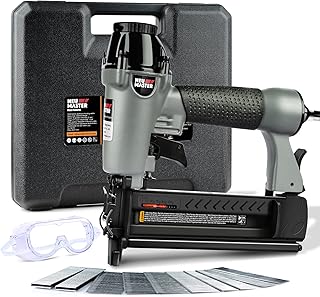
NEU Master's combo tool is the budget way to get both a brad nailer and a narrow crown stapler. It shoots 18 gauge brads for trim and quarter-inch staples for boxes and backs from the same magazine, and it ships with a starter supply of each.
The compromises are a bulkier nose and a magazine that is fussier about fastener quality than a dedicated stapler. Adjust drive depth with compressor pressure since there is no dial.
Owners doing occasional projects are pleased; heavy users move up to a dedicated tool.
Bottom line: a capable starter combo for the homeowner who does a little trim and a little box building.
- Fasteners: 18 gauge brads, 1/4 inch crown staples
- Power: pneumatic
- Included: starter brads and staples
- Depth: via air pressure
- Weight: lightweight
- Use: trim, boxes, upholstery
Homeowners who need both fastener types occasionally and do not want two tools.
Use the fasteners the tool ships with or the exact series specified. Start at low pressure and raise it until fasteners sit flush.

Pros
- Two tools in one with fasteners in the box
- Good reliability reports for a budget combo
- Light and easy to handle
Cons
- Combo nose is bulkier than a dedicated stapler
- Depth by air pressure only
WORKPRO's combo is the value pick because it delivers a working brad nailer and narrow crown stapler with a real supply of fasteners for less than most single tools. It handles trim, drawer boxes and upholstery jobs around the house without complaint.
Like every combo it has a bulkier nose and relies on air pressure for depth. Owners report fewer jam complaints than average for the category, which is why it edges out its rival.
Bottom line: the best value entry into pneumatic fastening for occasional users.
- Fasteners: 18 gauge brads, 1/4 inch crown staples
- Power: pneumatic
- Included: 400 brads, 300 staples
- Depth: via air pressure
- Weight: lightweight
- Use: trim, boxes, upholstery
First-time pneumatic tool buyers who want to cover trim and stapling jobs cheaply.
Add a drop of oil before each session unless marked oil-free. Clear jams with the nose latch. Match fastener series exactly.

Pros
- Fine 22 gauge wire leaves tiny holes in fabric
- Fast, light and easy to control
- Purpose-built for upholstery
Cons
- Not for structural wood joints
- 71 series staples are less common in hardware stores
The 3PLUS H7116SP is the specialist here: a fine-wire upholstery stapler that drives 22 gauge staples into frames through fabric and foam without tearing or leaving visible holes. It is light, fast and precise.
It is not a woodworking stapler; the fine wire has no structural strength in thick stock. Keep it for chairs, headboards and panels.
Owners doing furniture work rate it highly for the price.
Bottom line: the tool to buy for reupholstery, and only for that.
- Crown: 3/8 inch
- Gauge: 22
- Staples: 71 series, 1/4 to 5/8 inch
- Power: pneumatic
- Weight: lightweight
- Use: upholstery, fabric, foam
Upholsterers and hobbyists restoring furniture who want a proper fine-wire stapler.
Stock 71 series staples in a few lengths. Use lower pressure on soft frames to avoid overdriving through fabric.

Pros
- No compressor needed, plugs into the wall
- Strong drive for flooring underlayment
- Includes carry case
Cons
- Single-purpose flooring tool
- Heavy and corded
- Not a general woodworking stapler
The ROBERTS 10-600 exists for one job: stapling engineered wood and underlayment to subfloor without a compressor. It plugs into the wall and drives 20 gauge staples with enough force to seat them in plywood all day.
It is corded and heavy, and it shoots a fine 3/16 inch crown that is not suited to cabinet or trim work. Flooring installers know it well.
Owners installing floors themselves are glad to skip the compressor rental.
Bottom line: the right tool for flooring underlayment, and not the tool for anything else on this list.
- Crown: 3/16 inch
- Gauge: 20
- Power: corded 120V, 15 amp
- Use: flooring underlayment
- Includes: carrying case
- Weight: heavy-duty
DIYers installing engineered or laminate flooring who want to avoid renting a compressor and pneumatic stapler.
Buy it for a flooring project and expect it to sit afterward. For woodworking, choose a narrow crown pneumatic or cordless stapler instead.
How to Choose a Crown Stapler
Three of the tools here are two-in-one brad nailers, two are cordless, one is a corded flooring stapler, and the rest are pneumatic. They do not all shoot the same staple. Start with crown width, because that decides everything else.
Crown Width: Quarter Inch, 3/8 Inch, or Wide

The crown is the flat top of the staple, and its width defines the tool. A narrow crown of a quarter inch, as on the Metabo HPT, BOSTITCH and DEWALT staplers, is the cabinetmaker’s choice: it sinks nearly flush, is easy to fill, and holds drawer bottoms, cabinet backs, face frames and trim without splitting. This is what most people mean when they search for a crown stapler.
A 3/8 inch crown, as on the Milwaukee M12 and the Ryobi ONE+, spreads the load a little wider and suits lattice, screen frames, roofing felt, house wrap and general shop assembly. It is the general-purpose width for outdoor and rough work, and it is what the two cordless tools here shoot. The 3PLUS upholstery stapler also uses a 3/8 crown but in a fine 22 gauge wire made for fabric.
Wide crown staplers, half inch and up, are for sheathing, subfloor and pallets, and none of the tools here go that far. The Arrow PT50 is the outlier at the other end: it shoots the T50-style flat staple that hand staple guns use, which makes it an upholstery and insulation tool rather than a woodworking one.
Gauge and Leg Length: What the Staple Can Actually Hold
Gauge is wire thickness, and the numbers run backwards: 18 gauge is thicker and stronger than 22 gauge. The 18 gauge narrow crown staples shot by the Metabo HPT, BOSTITCH, DEWALT, NEU Master and WORKPRO are the structural choice for wood; they hold cabinet backs and drawer bottoms for decades. The 20 gauge ROBERTS and the 22 gauge 3PLUS shoot finer wire that leaves a smaller hole and suits flooring underlayment and fabric respectively.
Leg length is the other half. Most narrow crown tools accept staples from half an inch up to an inch and a half, which covers everything from a quarter-inch plywood back to a three-quarter-inch frame with penetration to spare. The rule of thumb is a leg about three times the thickness of the material being fastened, so a half-inch drawer bottom wants a leg near an inch and a half.
Buy the staples the tool is designed for. Narrow crown staples are not universal across brands, and a magazine that jams on the wrong staple wastes an afternoon. Each listing states its series; match it exactly.
Pneumatic, Cordless or Corded: The Power Source Decision
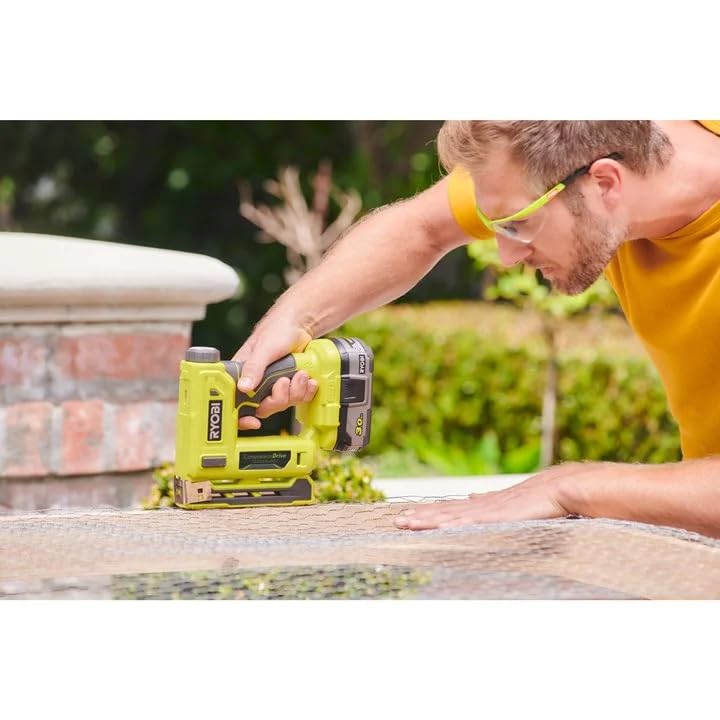
Pneumatic staplers are light, cheap and simple, and if you already own a compressor they are the obvious choice. The Metabo HPT, BOSTITCH, NEU Master, WORKPRO, 3PLUS and Arrow tools all run on air, and they weigh less than any cordless option because there is no battery or motor in the body. The cost is the hose, which is a nuisance on a ladder or a roof.
Cordless staplers trade weight for freedom. The Milwaukee M12 and the DEWALT 20V MAX narrow crown, along with the Ryobi ONE+, drive staples with an internal mechanism and no compressor at all. They shine on jobsites, fences, lattice and anywhere a hose would drag. They are heavier and cost more, and they are bare tools that assume you own the battery platform.
The ROBERTS 10-600 is the one corded electric tool here, built specifically for flooring underlayment. It plugs into the wall, drives a 20 gauge staple with real force, and is not a general-purpose stapler. It belongs on this list because people installing engineered flooring search for it, and it is the right tool for that job.
Two-in-One Brad Nailer and Stapler Combos
The NEU Master and WORKPRO tools are two-in-one designs that shoot both 18 gauge brad nails and narrow crown staples from the same magazine. For a homeowner who does trim one weekend and a drawer box the next, a single tool that does both is genuinely convenient, and the cost is low.
The compromise is that a magazine built for two fasteners is a little more prone to jams than one built for one, and the nose profile is a touch bulkier. Owners generally report both tools working well with the fasteners supplied and occasional jams with off-brand staples. For daily use, a dedicated stapler like the Metabo HPT is more reliable; for occasional projects, the combo is hard to argue with.
If you already own a brad nailer, skip the combo and buy a dedicated stapler. If you own neither, the combo is the sensible first purchase.
Depth Adjustment, Jam Clearing and the Nose

A tool-free depth adjustment lets you sink the crown flush in hardwood and leave it proud in soft plywood without changing compressor pressure, and it is the feature that separates a professional-grade stapler from a budget one. The Metabo HPT, BOSTITCH, DEWALT and Milwaukee all have it; the budget pneumatics rely on adjusting air pressure instead, which works but is slower.
Jams happen with every stapler, and how you clear them matters. A tool-free latch on the nose, which the better tools here provide, lets you open the drive channel and pull the bent staple in seconds. A nose that needs a hex key to open turns a jam into a ten-minute stop.
Sequential versus bump firing is worth a glance as well. Sequential mode fires one staple per trigger pull and is the safe default for cabinet work, where placement matters. Bump mode fires whenever the nose touches the work with the trigger held, which is how roofers and fence builders cover a sheet of house wrap in a minute. The professional tools here offer a selectable mode; the budget combos are sequential only, which is fine for the jobs they are bought for.
Look at the nose itself, too. A narrow, no-mar tip lets you place staples in a corner or against a face frame without denting the surrounding wood. The cabinet-oriented tools have slim noses; the two-in-one combos and the upholstery staplers are bulkier.
Weight, Balance and Working Overhead
Stapling a cabinet back is done on the bench; stapling lattice, soffit or roofing felt is done at arm’s length or overhead, and there the weight of the tool decides how long you can keep going. Pneumatic narrow crown staplers are the lightest tools in this group by a wide margin, and the Metabo HPT is among the lightest of those, which is much of why it sits at the top.
Cordless staplers carry a motor and a battery, and the Milwaukee M12’s compact 12 volt pack keeps it lighter than the 18 and 20 volt tools from Ryobi and DEWALT. If you will use a cordless stapler overhead for long stretches, the M12 is the one to hold first.
Balance matters as much as weight. A tool with the magazine loaded and a hose or battery attached should sit level in the hand; a nose-heavy stapler tires the wrist quickly. Owners rate the Metabo HPT and BOSTITCH highly on balance, and the two-in-one combos less so because of their larger magazines.
| Tool | Crown and gauge | Power | Best for |
|---|---|---|---|
| Metabo HPT N3804AB3 | 1/4 in, 18 ga | Pneumatic | Cabinets, trim, drawer boxes |
| BOSTITCH SX1838K | 1/4 in, 18 ga | Pneumatic kit | Cabinets and finish work |
| Milwaukee M12 2447-20 | 3/8 in, 18 ga | M12 cordless | Lattice, fences, jobsite |
| Ryobi ONE+ P317 | 3/8 in, 18 ga | 18V cordless | Homeowner outdoor work |
| DEWALT DCN681B | 1/4 in, 18 ga | 20V MAX cordless | Cabinets without a hose |
| Arrow PT50 | T50 flat, heavy | Pneumatic | Upholstery, insulation, fencing |
| NEU Master 2-in-1 | 1/4 in, 18 ga plus brads | Pneumatic | Occasional trim and boxes |
| WORKPRO 2-in-1 | 1/4 in, 18 ga plus brads | Pneumatic | Occasional trim and boxes |
| 3PLUS H7116SP | 3/8 in, 22 ga | Pneumatic | Upholstery fabric |
| ROBERTS 10-600 | 3/16 in, 20 ga | Corded electric | Flooring underlayment |
Our full article index lists every guide we publish, and the category directory covers the compressors and hoses that pneumatic tools need.
Why You Should Trust Us
We assembled this list by comparing the published specifications for each stapler, including crown width, gauge, staple length range, power source, weight, depth adjustment and jam clearing design, against the way owners describe using the tools over months of shop and jobsite work. We looked for the patterns that repeat across thousands of owner reports: which tools jam, which drive consistently in hardwood, and which ones people reach for first.
We ranked fit for the common cabinet and trim jobs, reliability and balance above raw driving force, and we were careful to note where a listing describes a different kind of tool than the name suggests, such as flooring and upholstery staplers. Where a maker’s claims and owner experience diverged, we said so in the individual reviews.
Final Thoughts
The Metabo HPT N3804AB3 is our best overall because it is the narrow crown stapler most cabinetmakers and trim carpenters actually use: light, balanced, reliable with a wide range of staple lengths, and fitted with the depth adjustment and jam clearing that make a stapler pleasant rather than frustrating. If you own a compressor, it is the tool to buy.
The WORKPRO 2-in-1 Brad Nailer and Staple Gun is the best value for a homeowner who needs a stapler and a brad nailer for occasional projects and wants both in one purchase with fasteners included. For work without a hose, the Milwaukee M12 3/8 inch Crown Stapler is the best cordless pick for lattice, fencing and jobsite use, and the DEWALT DCN681B is the cordless choice for cabinet work on the 20V MAX platform. For upholstery, the 3PLUS H7116SP is the specialist tool.
Match the crown to the job, buy the staples the tool specifies, and wear eye protection every time. The store list shows where each brand is currently discounted.
Crown Stapler FAQs
What is a crown stapler used for?
Fastening thin sheet material and light framing where a two-legged staple holds better than a nail: cabinet backs, drawer bottoms, lattice, screen frames, roofing felt, house wrap, upholstery and flooring underlayment. Narrow crown staplers are the cabinet and trim tool; 3/8 inch crowns suit outdoor and general work; fine-wire staplers handle fabric. The crown spreads the load so the fastener does not tear through thin plywood or fabric.
What is the difference between a narrow crown stapler and a brad nailer?
Both shoot 18 gauge fasteners, but a brad is a single pin that leaves a tiny hole and holds mainly by friction, while a narrow crown staple has two legs and a flat top that grip far better in sheet goods. Brads are for visible trim where the hole must disappear; staples are for hidden joints where holding power matters. The two-in-one tools here shoot both, which is why they suit homeowners who do a bit of each.
Do I need a compressor for a crown stapler?
Only for the pneumatic models, which are most of the tools here. A small pancake compressor runs any of them comfortably. If you do not own a compressor and do not want one, the Milwaukee M12, Ryobi ONE+ and DEWALT 20V MAX staplers are cordless and need only a battery, and the ROBERTS flooring stapler plugs into a wall outlet. The tools section covers compressors if you decide to go pneumatic.
What size staples should I use for cabinet backs and drawer bottoms?
Use 18 gauge narrow crown staples with a leg length about three times the thickness of the panel. A quarter-inch plywood back into a three-quarter-inch frame takes a leg around three quarters of an inch to an inch; a half-inch drawer bottom takes an inch and a quarter to an inch and a half. Set the depth so the crown sits just flush, and keep the staple at least half an inch from the edge to avoid blowing out the side of the frame.
Why does my stapler keep jamming?
Usually the staples. Off-brand or slightly wrong-series staples are the most common cause, followed by low air pressure that fails to drive the staple fully, dry internals on a pneumatic tool that needs a few drops of oil, and a magazine loaded with a bent strip. Clear the jam through the nose latch, check the staple series against the listing, add oil if the tool is not oil-free, and raise the pressure a few PSI. Persistent jams on correct staples point to a worn driver blade.
Write Your Review
No reviews yet. Be the first to share your experience!