

A vegetable bed lives or dies on the organic matter you put into it, and the fastest route to good soil is to buy that organic matter already finished, screened and ready to spread. Gardeners searching for compost for vegetable garden are usually after one of three things: a bagged compost that adds bulk and biology, a concentrated amendment such as worm castings that goes much further per pound, or a peat free bulking material that helps a new raised bed hold water. This shortlist of 9 products covers all three jobs, with material from Michigan Peat, Charlie’s Compost, Wiggle Worm and more. Our top pick is the Charlie’s Compost 10 lb bag, a certified organic poultry compost that arrives fully broken down, so it feeds young transplants instead of scorching them.
Everything on this list is a material you spread, dig in or dilute, not a container you fill. If you would rather make your own supply at home, that is a different shopping trip, and our guides to the best outdoor compost bins and the best indoor composters cover the hardware side. Ratings were pulled fresh for September 2026, and we gave weight to products with long sales histories and steady feedback from people growing food, not just houseplants.

Pros
- Certified organic in Kentucky and OMRI listed for food crops
- Fully composted before bagging, so it will not burn transplants the way raw manure does
- Biochar and organic grasses help the soil hold water and nutrients
- Concentrated, so a small bag treats more bed than its weight suggests
- Mild earthy smell instead of the ammonia hit of unfinished manure
Cons
- Concentrated formula means you have to respect the rate on the bag instead of piling it on
- Bag volume is small for filling a whole plot, so large gardens need several
- Rich enough that a heavy hand pushes leafy growth ahead of fruit set
Charlie's Compost is what people picture when they say compost: a dark, fully broken down material made from poultry manure, organic grasses and crop residue, composted on the same farm that produces the manure. That single source story matters, because it is the reason the ingredient list is short and readable rather than a vague reference to recycled organic matter.
What separates it from most of the aisle is that it behaves like soil food rather than a nutrient shot. It carries a broad, gentle nutrient load along with biochar and living biology, so treated beds hold moisture better and stay workable, and those effects carry into the following season instead of washing out with the first heavy rain.
The trade off is concentration. This is not a bulk product you spread by the wheelbarrow, and gardeners who treat it like cheap topsoil go through bags quickly. Used the way the label intends, a couple of handfuls per planting hole or a thin scatter raked into the bed surface, one bag covers a lot of ground.
Bottom line: if you grow food and you want one bag that is both genuinely composted and genuinely certified, this is the one to buy. It is the most trustworthy material here for beds growing crops you eat raw.
- Type: composted poultry manure with biochar and organic plant matter
- Bag size: 10 lb, also sold in larger bags
- Certification: certified organic in Kentucky, OMRI listed
- Source: single poultry farm in Calhoun, Kentucky
- Inputs: vegetarian fed and antibiotic free chicken manure, organic grasses, biochar, clay
- Best uses: planting holes, light topdressing, potting mix booster
- Odor: mild and earthy
Work two or three handfuls into each planting hole for tomatoes, peppers and squash before the transplant goes in, or scatter a thin layer across an established bed and rake it into the top inch of soil. For containers, blend roughly one part compost to four parts potting mix.
Water thoroughly after applying so the material makes contact with soil and the biology wakes up. Because it is concentrated, resist the urge to double the rate on the theory that more must be better.
Best suited to gardeners with raised beds or a modest plot who want certified material around food crops and do not need to fill cubic yards. It is also a strong pick for rebuilding tired container soil in a small kitchen garden where every handful counts.
If you are covering a large open plot, the smarter play is to use this in planting holes and buy a bulk compost and manure blend for the broad topdressing.

Pros
- Large bag weight makes it practical for covering entire beds
- Composted and blended, so it goes down without the ammonia problem of fresh manure
- Peat content lifts water holding capacity in sandy soil
- Sold as odor free, which matters in a suburban backyard
- Widely stocked and consistent from bag to bag
Cons
- Not OMRI listed and not certified organic
- Heavy to carry and awkward to store once the bag is open
- Contains peat, which some gardeners avoid on environmental grounds
Garden Magic is the workhorse option here. It is a blend rather than a pure compost, mixing composted manure with reed sedge peat, and that combination is aimed squarely at gardeners who need volume on the ground rather than a concentrate in a planting hole.
The value case is simple. Soil building is a numbers game, and a bed only improves when enough organic matter goes into it year after year. A 40 lb bag delivers that at a weight and format most people can actually afford to repeat, which is worth more to a garden than one premium bag used sparingly.
Where it gives ground to the certified options is provenance. There is no OMRI seal, and the manure source is not named the way a single farm product names it. For most vegetable beds that is a reasonable trade, though gardeners running a strictly certified program should stay with a listed product.
Bottom line: the best value pick for putting real organic matter across a whole plot, best used as the base layer with a concentrate reserved for planting holes.
- Type: composted manure and reed sedge peat blend
- Bag size: 40 lb
- Certification: none listed
- Texture: fine and dark, spreads with a rake
- Best uses: bed building, topdressing, soil conditioning
- Odor: marketed as odor free
As a rough guide, a one inch layer over a four foot by eight foot raised bed takes about 2.7 cubic feet of material, so plan on one bag per bed for a light season refresh and more if you are rebuilding depleted soil.
New beds are a different calculation. There you are filling a box rather than topping it up, so blend this with topsoil and a bulking material like coir instead of trying to fill the whole volume with bagged blends.
Spread it in early spring while the soil is workable, then fork or rake it into the top few inches rather than leaving it sitting on the surface where it dries out. Water it in and give the bed a week before planting if you can.
A fall application also works well in open ground. Spread it, leave it over winter, and let worms and weather pull it down so the bed is ready when the ground warms.
Pros
- OMRI listed and made from pure castings with no fillers
- Nutrients arrive in plant available form, so the response shows up quickly
- Clean and odor free enough to use on indoor seed starts
- Decades of production history behind consistent screening and texture
- Large bag gives a lot of planting holes per purchase
Cons
- Concentrated, so it is the wrong material for adding bulk to a bed
- Heavy bag that needs a dry storage spot to stay loose
- Nutrient levels are gentle, so heavy feeders still need a fertilizer program
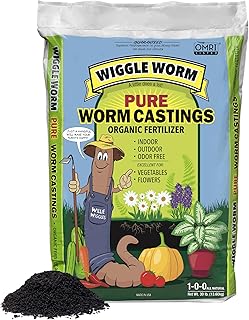
Worm castings are the concentrate of the soil world, and Wiggle Worm is the reference product in the category. The bag holds nothing but screened castings, which is unusual: plenty of competing bags cut castings with compost or peat and still call themselves castings.
In a vegetable bed the value shows at transplant time. A handful in the hole gives roots immediately available nutrition plus the microbial population that helps them find more, and because castings are mild there is no burn risk even against bare roots. Seed starting is the other place it earns its keep, since the fine texture blends into trays without clumping.
What it will not do is fill a bed. Castings add negligible volume for the weight, so anybody hoping to fix compacted clay with them is buying the wrong product. Pair them with a bulk compost or manure blend and the two do different jobs well.
Bottom line: the strongest concentrate on this list and the one worth paying up for, as long as you understand it supplements bagged compost rather than replacing it.
- Type: 100 percent pure earthworm castings
- Bag size: 30 lb
- Certification: OMRI listed
- Producer: UNCO Industries
- Best uses: planting holes, transplants, seed starting mixes, topdressing
- Odor: essentially none
The classic application is one generous handful in the planting hole for each tomato, pepper, cucumber or brassica transplant, mixed lightly with the surrounding soil so roots grow straight into it.
For seed starting, blend castings at roughly one part to four parts seed starting mix. That is enough to carry seedlings through their first weeks without any additional feeding.
Ideal for gardeners who already have decent soil and want a targeted upgrade at planting time, and for anybody raising seedlings indoors who wants a gentle, certified nutrient source.
If your beds are thin, compacted or newly built, buy bulk organic matter first and add castings once the structure is there.

Pros
- OMRI and CDFA listed for organic production
- Bag size makes castings affordable enough to spread across a bed, not just in holes
- Blends smoothly into potting and raised bed mixes
- Mild enough to use at transplant time with no burn risk
Cons
- Moisture content varies between bags and a damp bag clumps
- Still a concentrate, so it will not replace bulk compost
- Heavy sack that is awkward to move once it is open
Brut Worm Farms sells castings in bulk sizes, and that is the whole point of this bag. Once castings come in a 30 lb sack, they stop being a precious spoonful for houseplants and become something you can genuinely work into a vegetable bed.
The listing carries both OMRI and CDFA registration, which is a stronger paper trail than most castings on the shelf. In use the material is dark, fine and mild, and it mixes into a raised bed or a potting blend without any of the settling and crusting that heavier composts sometimes cause.
The one recurring gripe from gardeners is moisture. Castings ship with a natural moisture content, and a bag that has sat damp arrives clumpy and needs breaking up by hand before it spreads evenly. That is a nuisance rather than a defect, and drying the material slightly on a tarp solves it.
Bottom line: the value route into worm castings at garden scale, and a sensible pairing with a bulk compost blend for gardeners who want biology across a whole bed.
- Type: organic worm castings
- Bag size: 30 lb
- Certification: OMRI listed and CDFA listed
- Texture: fine, dark and crumbly when dry
- Best uses: bed amendment, potting mix additive, topdressing
- Odor: mild and earthy
For bed use, spread a thin layer over the surface and rake it into the top inch of soil, or mix castings at roughly one part to five parts soil when filling containers and grow bags.
At planting time, a handful in the hole is enough for most vegetable transplants. There is no waiting period and no burn risk, so you can plant immediately after applying.
Keep the bag closed and off a damp floor. Castings hold living biology, so heat and direct sun degrade them, and a cool shed or garage corner keeps a bag usable across a full season.
If the contents clump, spread them on a tarp for an hour to dry slightly and break the lumps by hand before spreading. Do not bake them dry, since that defeats the purpose of buying a biologically active material.

Pros
- Pelletized, so it spreads evenly and does not blow around
- Real nutrient strength for hungry crops such as corn, squash and brassicas
- Made without sludges or fillers
- Adds organic matter as well as nutrition
- Long established brand with a consistent organic gardening line
Cons
- Dehydrated rather than fully composted, so it belongs in the bed ahead of planting, not sprinkled around seedlings
- Manure smell is noticeable when the bag opens and again after watering
- Volume per bag is small relative to weight, so it is not a bulk soil builder
This is the product on the list that most needs its label read carefully. Espoma Organic Chicken Manure is dehydrated and pelletized poultry manure, not a finished compost, and that difference changes how you use it. It is closer to a slow organic fertilizer with a useful organic matter component than to a soil conditioner you spread by the inch.
Used correctly it is excellent. Nitrogen from poultry manure is one of the most effective natural feeds for heavy crops, and the pelletized form is far easier to apply evenly than a loose manure product. Espoma is also transparent about inputs, with no sewage sludge or filler in the bag.
Used incorrectly it causes problems. Sprinkling processed manure right against seedling stems or planting into it the same day risks burning tender roots, and the smell after watering surprises people who expected a compost experience. Work it into the bed two weeks before planting and both issues disappear.
Bottom line: the best pick when your beds need feeding rather than bulking, provided you treat it as a manure based fertilizer and give it time in the soil before crops go in.
- Type: dehydrated and pelletized poultry manure
- Bag size: 25 lb
- Certification: sold for organic gardening, no sludges or fillers
- Form: pellets that spread by hand or spreader
- Best uses: pre plant bed feeding, trees, shrubs, flower beds
- Odor: noticeable manure smell when opened and after watering
Wear gloves, keep the bag closed between uses and wash up after handling any manure product. Although this material is processed rather than raw, sensible hygiene around anything manure based is standard practice in a food garden.
Follow the usual organic growing waiting periods as a habit: allow 90 days before harvesting crops that grow above the soil and 120 days for root and leaf crops that sit in contact with it.
Broadcast the pellets over the bed at the rate on the bag, fork them into the top few inches of soil, water the bed and then wait about two weeks before planting. That window lets soil biology start breaking the pellets down and removes any burn risk.
For established plants, side dress along the row and keep the pellets a hand width away from stems, then water thoroughly.

Pros
- One block expands to a large volume, which makes filling new beds far cheaper
- Peat free and renewable, and light to carry before soaking
- Holds water well and opens up air space in heavy clay
- Stores compressed on a shelf until the day you need it
Cons
- Carries almost no nutrition, so it has to be paired with compost or fertilizer
- Needs a big tub and a lot of water to rehydrate properly
- Rinse quality varies across coir brands, and poorly rinsed coir can be salty
Coir is the quiet problem solver in raised bed gardening. Filling a new box with bagged compost alone is expensive and, more to the point, produces a bed that slumps and dries out. Coir supplies the sponge: it holds water, keeps the mix open and gives roots somewhere easy to travel.
The compressed block format is what makes it practical. Ten pounds on a shelf turns into roughly 72 quarts of material after soaking, so a single block can bulk out a whole raised bed. Nothing else on this list changes volume like that.
The honest limitation is nutrition, or rather the absence of it. Coir is a structural material, so a bed built mostly on coir with no compost or fertilizer will grow disappointing vegetables. Treat it as one third of a recipe alongside compost and soil and it performs.
Bottom line: the material to buy when the job is filling or loosening a bed rather than feeding it, and the cheapest way to add serious volume without a delivery truck.
- Type: compressed coconut coir block
- Block weight: 10 lb
- Expanded volume: roughly 72 quarts or 18 gallons
- Certification: none stated by the seller
- Best uses: filling raised beds, blending potting mixes, loosening clay
- Nutrition: negligible on its own
Put the block in a wheelbarrow, muck tub or contractor bag, add warm water a few gallons at a time and let it sit. Expansion takes 20 to 30 minutes, and breaking the softened edges apart with a fork speeds it along.
Coir absorbs a lot of water, so add gradually and stop when the material is damp and fluffy rather than soggy. If you are working with a large volume, soaking a half block at a time is easier to manage.
Made for gardeners filling new raised beds, rebuilding compacted clay or mixing their own potting soil, and for anybody who wants to stop buying peat.
It is not the right purchase if your beds already drain well and what they actually need is fertility. In that case put the money into compost or castings instead.

Pros
- OMRI listed and built on two well studied carbon inputs
- Granules break apart with water, so it works in without digging
- Biochar is a durable carbon addition rather than something that burns off in a season
- A small bag treats a large area, which suits bigger plots
Cons
- Adds no organic matter volume and no plant nutrition on its own
- Marketed mainly for lawns, so garden bed rates take a little arithmetic
- Benefits build over seasons rather than showing up within weeks
HumiChar is not compost and does not pretend to be. It is a carbon amendment: 30 percent humic acid and 43 percent biochar, pressed into granules that fall apart when watered so the fine material reaches the soil rather than sitting on top.
The reason it belongs in a compost roundup is what it does to the compost you already applied. Humic substances and biochar both increase the ability of soil to hold onto nutrients and moisture, which means less of what you add leaches away with irrigation and rain. In sandy beds that leak nutrients, it is a genuinely useful addition.
Expectations need managing. Nothing dramatic happens in the first month, there is no nutrient content to speak of, and the packaging is written for lawn care so bed rates require a moment with the label. This is a long game product for gardeners who intend to keep the same beds for years.
Bottom line: a smart complement to bagged compost for anyone playing a multi season soil building game, and a poor choice for anyone wanting visible results this month.
- Type: granular humic acid and biochar soil amendment
- Bag size: 12 lb
- Composition: about 30 percent humic acid and 43 percent biochar
- Certification: OMRI listed
- Coverage: up to roughly 12,000 square feet at lawn rates
- Application: broadcast spreader or by hand, then water in
Scatter the granules across the bed surface, then water so the dispersible granules break down and wash into the root zone. There is no need to dig it in, and it can be applied at any point in the season.
Bed rates are much smaller than lawn rates because the area is smaller, so measure your square footage and scale the label rate down rather than eyeballing a scoop.
Buy this after you have a compost habit, not instead of one. Carbon amendments improve how soil handles what you add, so they pay off in beds that already receive organic matter each season.
Gardeners with sandy soil, heavy irrigation or long growing seasons will see the most benefit, since those are the conditions where nutrients leach fastest.

Pros
- OMRI listed, so it fits a certified organic bed program
- Liquid form reaches the root zone quickly, including in containers
- One bottle makes many gallons of diluted solution
- Useful mid season when spreading bulk compost is not practical
Cons
- Not compost, despite the liquid compost wording on the label
- Adds no organic matter volume to the soil
- Needs repeat applications through the season to hold any effect
Farmer's Secret Soil Revitalizer sits in the booster category. It is a humic acid concentrate, OMRI listed, that you dilute and water into soil, and its job is to improve how existing soil functions rather than to add substance to it.
The practical appeal is timing. Compost goes down when a bed is empty or between crops, but a bed in full production in July cannot be topdressed properly without disturbing plants. A liquid amendment goes in with your normal watering, which makes it the realistic option once the season is running.
The label wording deserves a caveat. Calling a humic concentrate a liquid compost amendment is marketing shorthand, and gardeners who buy it expecting compost in a bottle will be disappointed. Read it as a soil conditioner that supports what your compost is already doing.
Bottom line: a sensible mid season supplement for beds that already get real organic matter, and the wrong purchase if it is the only soil product in your cart.
- Type: liquid activated humic acid concentrate
- Bottle size: 32 oz
- Certification: OMRI listed
- Application: dilute with water, apply to soil
- Best uses: mid season soil conditioning, containers, planted beds
- Organic matter added: none of any volume
Follow the dilution rate on the bottle, mix in a watering can and apply to the soil surface rather than the foliage, then water lightly so it moves into the root zone.
Applying in the evening or on an overcast day keeps the solution in the soil longer instead of evaporating off a hot bed surface.
Good for gardeners with containers, grow bags or fully planted beds where spreading solid material is impractical, and for anyone running a certified organic program who wants a listed liquid option.
Skip it if your beds have never had compost. Build the organic matter first, then use a product like this to keep that investment working.

Pros
- Delivers casting derived biology in a form you can simply water in
- Concentrate stretches a long way once diluted
- Doubles as an activator for a home compost pile
- Easy to use on containers and grow bags where digging is not an option
Cons
- A supplement rather than a soil builder, so it never replaces bagged compost
- Effects fade, which means regular reapplication through the season
- Needs storage out of heat and sunlight to protect the living component
Bloom City sells this as worm tea and compost booster, and both descriptions are accurate. It is a liquid concentrate carrying casting derived microbes plus bokashi fermentation inputs, and it works on two fronts: watered into soil it adds biology, poured onto a compost pile it speeds the pile along.
For a vegetable gardener the appeal is access. Beds packed with midsummer crops cannot be dug or topdressed heavily, and containers run out of biological life faster than ground soil does. A diluted liquid reaches both without disturbing a single root.
Where it falls short is permanence. Liquid biology is a pulse, not a foundation. Microbes need organic matter to live in, so the effect fades in beds that never receive solid compost, and repeat applications become a treadmill rather than an improvement.
Bottom line: a useful in season top up and compost pile helper, best bought alongside a solid material rather than instead of one.
- Type: liquid earthworm casting tea and compost activator concentrate
- Bottle size: 32 oz
- Certification: sold as organic, no OMRI listing stated
- Application: dilute with water for soil drench or pile treatment
- Best uses: containers, planted beds, compost pile activation
- Organic matter added: negligible
Mix at the rate printed on the bottle in a clean watering can, then drench the soil around the base of plants rather than spraying leaves. Repeat every few weeks through the growing season for a steady effect.
For a compost pile, dilute and pour across the layers as you build or turn the pile, then keep the pile moist so the added biology survives.
Store the bottle somewhere cool and dark. Heat and direct sunlight kill the living component, and a bottle left in a hot shed loses most of its value.
Mix only what you plan to use in one session, since diluted solution does not keep well, and rinse the watering can afterwards so residue does not build up.
Compost For Vegetable Garden Buying Guide: What Actually Matters
Bagged soil products are one of the most confusing aisles in the garden center because the labels borrow each other’s vocabulary. A bag marked organic may be a fertilizer, a growing medium, a manure product or a genuine finished compost, and those four things behave very differently once they hit your beds. The criteria below sort them out so you buy the material that matches the job in front of you.
Know What Is Actually In the Bag
Finished compost is plant and animal matter that has already gone through a hot decomposition cycle. It is dark, crumbly, smells like a forest floor and carries a broad but gentle nutrient load. Its main value is structure and biology rather than raw feeding power, which is why gardeners spread it by the inch instead of by the tablespoon.
Worm castings are a different animal. They are the digested output of earthworms fed on organic waste, and they arrive far more concentrated in plant available nutrients and beneficial microbes. You use them in handfuls in a planting hole or as a light top dressing, not as a bulk soil filler. Coir, peat and bark fines sit at the other end of the scale: they add water holding capacity and air space but almost no nutrition, so they are blending materials rather than food.
Finally there are the boosters, meaning humic acid concentrates, biochar blends and brewed teas. These do not build soil volume at all. They support the biology and chemistry that make the organic matter you already added work harder, so treat them as a supporting cast and never as the main event.
Look For OMRI Listing and Real Organic Certification

The word organic on a garden bag can mean carbon based chemistry rather than a certification. The label worth hunting for is the OMRI seal, which means the Organic Materials Review Institute reviewed the input against the USDA National Organic Program standard for certified organic production. On this list, Charlie’s Compost, the worm castings from Wiggle Worm and Brut Worm Farms, The Andersons HumiChar and the Farmer’s Secret concentrate are all listed with OMRI. Espoma states that its poultry product is made without sludges or fillers and is sold for organic gardening.
Certification matters more in a vegetable bed than in an ornamental border because you are eating the harvest. If a product carries no certification at all, that is not automatically a red flag, but you should be able to read a full ingredient list. Vague phrases such as organic matter or soil conditioner with no source named are the ones to walk away from, especially where municipal waste streams may be involved.
Composted Manure Versus Raw Manure
Manure is the cheapest source of bulk fertility in gardening, and it is also the one that causes the most trouble when it is used fresh. Raw manure carries high ammonia levels that burn roots and foliage, and it can carry pathogens including E. coli and Salmonella onto crops you plan to eat uncooked. Never spread fresh manure on a bed where salad greens, radishes or strawberries are going in.
Composted and heat processed products solve that problem. Charlie’s Compost is a poultry manure that has gone through a full composting cycle before bagging. The Michigan Peat Garden Magic blend is sold as an odor free compost and manure mixture. Espoma Organic Chicken Manure is dehydrated and pelletized rather than fully composted, so it behaves more like a slow organic fertilizer, which is why the sensible move is to work it into the bed a couple of weeks ahead of planting rather than sprinkling it around seedlings.
As a general safety habit, follow the same waiting period that organic growers use: leave at least 90 days between applying any manure based product and harvesting a crop that does not touch the soil, and 120 days for crops such as carrots and lettuce that do. With fully composted bagged material the risk is very low, but the habit costs you nothing.
Match the Bag Size to Your Bed Size
This is where most first time buyers get caught out. Spreading a one inch layer over a four foot by eight foot raised bed takes roughly 2.7 cubic feet of material, which is close to a standard large bag. Two inches on that same bed doubles it. A ten pound bag of concentrated compost or castings is not a topdressing for a whole plot, it is a planting hole amendment for a few dozen transplants.
Work out your square footage before you shop, then decide which strategy you are funding. Bulk builders such as the Michigan Peat blend and rehydrated coir bricks are the affordable way to add volume across a plot. Concentrates such as worm castings are how you give individual plants a strong start without buying pallets of material. Most gardeners end up running both, which is exactly how the list below is arranged.
| Material type | What it brings | Where it fits | Watch out for |
|---|---|---|---|
| Finished compost | Structure, slow nutrition, soil biology | Annual one to two inch topdressing on beds | Bag volume adds up fast on large plots |
| Composted manure blend | Bulk organic matter plus higher nitrogen | Bed building before the season starts | Needs to be fully composted, never fresh |
| Worm castings | Concentrated nutrients and microbes | Planting holes, transplant starts, topdressing | Too costly to use as bulk fill |
| Coir and peat alternatives | Water holding and air space | Filling new raised beds, blending mixes | Almost no nutrition on its own |
| Humic acid and biochar | Carbon and nutrient holding capacity | Long term soil improvement programs | Not a substitute for organic matter |
| Brewed teas and concentrates | Liquid biology between feedings | Mid season boosts and container crops | Effects fade quickly, needs repeating |
Texture, Moisture and Odor
Good bagged compost should be moist enough to clump lightly when squeezed and fall apart when you open your hand. Material that arrives soaking wet is heavy to carry and can go anaerobic in the bag, which is where the sour ammonia smell comes from. Material that is bone dry will sit on top of your soil and shed water until you irrigate it in.
Odor is a fair proxy for how finished a product is. A properly composted bag smells earthy and mild even when it is manure based, which is why odor free appears on so many labels in this category. If a bag smells sharply of ammonia when you open it, the composting cycle was not complete and the material needs to sit and air out before it goes anywhere near seedlings.
When to Apply and How Often

The default rhythm for a vegetable garden is a generous application at bed preparation in early spring, a lighter topdressing when summer crops go in, and an optional fall layer that overwinters and gets pulled down by worms before the next season. Beds under heavy production, particularly those growing corn, squash or brassicas, take more than beds growing beans and herbs.
Timing also depends on your growing structure. Open ground beds can take an fall layer that weathers over winter, while a covered structure such as one of the models in our guide to the best polycarbonate greenhouses keeps producing, so those beds do better with lighter, more frequent additions. If you are starting from bare soil this season, browse the wider patio, lawn and garden guides for the tools and structures that pair with the material choices here.
Why You Should Trust Us
We build these guides the same way every time. We pull live listing data for the products people actually buy in this category, filter out anything with a weak rating or a thin feedback history, then read what long term buyers report months after purchase, which is where soil products either hold up or fall apart. Claims about certification are checked against the manufacturer rather than repeated from a product page, and where a certification could not be confirmed we say so instead of implying one.
We also curate hard. Searches in this category return a flood of liquid plant foods and granular fertilizers that have nothing to do with building soil, and those were left out on purpose. What remains are materials you add to a bed for the organic matter, biology or water holding capacity they bring. Recommendations are made independently, and we earn a commission if you buy through the links on this page, which never changes the ranking.
Final Thoughts
Charlie’s Compost is our best overall choice because it does the hardest thing on this list well: it delivers genuine finished compost, certified for organic production, in a concentrated form that a home gardener can carry, store and spread without a truck. It is the safest way to add real fertility to a bed that will grow food you eat raw.
For best value, the Michigan Peat Garden Magic compost and manure blend is the one that fills beds without hurting. It is a bulk material at a bulk weight, and it is the sensible base layer for anybody rebuilding tired soil across a whole plot. Pair it with a bag of Wiggle Worm castings for planting holes and you have covered both ends of the range: volume underneath, concentrated biology exactly where the roots start. Gardeners filling brand new raised beds should add a Verdana coir block to the cart, since coir supplies the water holding structure that fresh compost alone does not.
If you are planning the season rather than just the soil, our roundup of the best heirloom seeds pairs naturally with a freshly amended bed, and once the season winds down a home unit from the outdoor compost bin guide turns this year’s plant waste into next year’s free supply.
Frequently Asked Questions
What is the best compost for vegetable garden in 2026?
For most home beds, a certified organic finished compost such as Charlie’s Compost is the strongest all round choice because it improves structure, feeds gently and is safe around food crops. If your priority is filling volume rather than concentrated fertility, a bagged compost and manure blend does the same job across more square footage, and worm castings are the upgrade you add where individual plants need a push.
How much compost does a raised bed need?
Plan on a one to two inch layer worked into the top few inches of soil each season. A four foot by eight foot bed needs roughly 2.7 cubic feet of material per inch of depth, so a single inch is about one large bag and two inches is about two. Brand new beds are different again, since you are filling the whole box rather than topping it up, and there a mix of compost, coir and topsoil costs far less than filling with compost alone.
Is bagged compost for vegetable garden safe for growing food?
Bagged material that is fully composted is safe for food crops, and OMRI listed products carry the clearest assurance because the inputs were reviewed against the organic production standard. The risk sits with raw or partially rotted manure, which can carry pathogens and should never go on a bed of salad greens. When in doubt, apply manure based products well ahead of planting and stick to the standard waiting period of 90 to 120 days before harvest.
Can I use worm castings instead of compost?
Not as a straight swap. Castings are a concentrate, so they deliver nutrients and microbes but almost no bulk, and bulk is what loosens heavy soil and holds moisture. The productive combination is a compost or manure blend for volume plus castings in the planting hole, which is how most of the gardeners who rate both products highly actually use them.
Should I buy bagged compost or make my own?
Do both if you have the space. Home composting is free and turns kitchen and garden waste into exactly the material described here, but a bin takes months to produce its first usable batch and rarely keeps up with a productive vegetable plot. Buying bagged material covers the gap in spring when you need soil ready now, and a home system built around one of the units in our indoor composter guide quietly builds your supply for the seasons that follow.




Write Your Review
No reviews yet. Be the first to share your experience!