

Android camera hardware has split into two clear tiers, and the gap shows up on the specification sheet long before it shows up in a photograph. On one side sit phones with a large main sensor, a genuine telephoto lens and optical stabilization on more than one camera. On the other sit phones that print a single large megapixel figure on the box and crop everything else out of the main sensor. This shortlist of 9 unlocked handsets from Samsung, Motorola, Google separates the two using numbers each manufacturer publishes itself, not marketing adjectives.
Our top pick is the Google Pixel 10 Pro for pairing a large 50MP main sensor with a 48MP 5x telephoto and stabilization on both, which is the rarest hardware combination on this page. Every phone below is a current model sold unlocked in a US configuration, so nothing here is refurbished stock and nothing is tied to a single carrier. If you want the wider picture before you commit, our phones and accessories section collects the rest of our mobile coverage for September 2026.

Pros
- Largest main sensor on this list at 1/1.31 inch
- 48MP 5x telephoto, the longest true optical reach here
- Ultrawide autofocuses, so it doubles as the macro camera
- Optical stabilization on both the wide and the telephoto
- Seven years of OS versions, security patches and feature drops
Cons
- The most expensive way to get a good phone camera
- 128GB fills quickly once you shoot at the highest video settings
- 6.3 inch body is smaller than some rivals in the same tier
The Pixel 10 Pro is the phone on this list that treats every rear camera as a real camera rather than a supporting act. The main unit is a 50MP sensor measuring 1/1.31 inch, which is at the large end of what fits in a phone body, and it is joined by a 48MP telephoto at 5x optical zoom and a 48MP ultrawide that can focus close enough for macro work. Anyone who shoots indoors, at night or at distance is buying hardware here rather than a processing trick.
The strongest part of the package is that the reach is genuine. Google quotes up to 100x Pro Res Zoom, but that figure combines the 5x lens with upscaling, and the honest number is the 5x. Optical stabilization on both the wide and the long lens means the zoom frames stay usable as the light drops, which is where phones with a single stabilized camera start to fall apart. The 42MP front camera is unusually high resolution for a selfie sensor and holds up when cropped.
The weaknesses are commercial rather than technical. This sits at the top of Google's pricing, and the 128GB configuration is tight once 8K clips are involved, with no expandable storage to fall back on. The 6.3 inch body will feel small to anyone moving from a large screen phone, and the customer rating here is a little below the newer Pixel models, which is worth weighing if you would be equally happy with less zoom.
Bottom line: if camera quality is the reason you are buying an Android phone rather than one factor among several, this is the specification sheet to beat, and the seven year support window means the processing keeps improving long after purchase.
- Main camera: 50MP, 1/1.31 inch sensor, optical stabilization
- Telephoto: 48MP, 5x optical zoom, optical stabilization
- Ultrawide: 48MP with Macro Focus autofocus
- Front camera: 42MP
- Zoom range: up to 100x Pro Res Zoom
- Video: up to 8K capture
- Display: 6.3 inch Super Actua
- Storage: 128GB, not expandable
- Software support: seven years of OS, security and Pixel Drops
- Condition: new, factory unlocked
This is the pick for someone who photographs events, performances or wildlife and is tired of digital zoom mush. It also suits anyone who shoots a lot in low light, since the large sensor and dual stabilization do most of the work automatically.
It is not the right buy if you shoot almost everything at 1x and mostly in daylight. The Pixel 9a further down this list captures those frames with the same processing at a fraction of the outlay.
Stay at 5x rather than an intermediate zoom level where possible, since 5x is the point at which the dedicated lens is doing the work. Beyond that the processing takes over and detail becomes an estimate.
Use the ultrawide for close focus work instead of hunting for a macro mode, because its autofocus is what makes those frames possible. If you plan to shoot 8K regularly, budget for cloud storage rather than assuming 128GB will cope.

Pros
- Stabilization on both the main camera and the 3x telephoto
- 120 degree ultrawide covers interiors without heavy distortion
- 8K video capture with a large 6.7 inch display to frame it
- 256GB as standard, so high resolution video has room
- Seven years of OS and security updates
Cons
- 3x reach is shorter than the 5x lenses on the Pixel 10 pair
- Large body is awkward for one handed shooting
- No expandable storage
The Galaxy S25+ is the most complete all rounder here. Samsung publishes a 50MP main camera at f/1.8 with optical stabilization, a 10MP telephoto at 3x that is also stabilized, and a 12MP ultrawide with a 120 degree field of view. Nothing in that set is a token inclusion, and the 8K video ceiling gives you room to reframe footage after the fact.
What it does better than the Pixel models is breadth. The 120 degree ultrawide is genuinely wide without bending faces at the edges, the large 6.7 inch panel makes framing and editing easier, and 256GB of storage means high resolution capture does not force an immediate cleanup. Samsung's colour processing is punchier than Google's, which some people prefer straight out of the camera.
The compromise is reach. A 3x telephoto covers portraits and everyday framing, but it cannot follow a subject across a field the way a 5x lens can, and there is no expandable storage to extend that 256GB. The size that helps with framing also makes one handed shooting awkward, which matters more than it sounds when you are photographing something that moves.
Bottom line: this is the phone to buy if you want one device that handles wide, standard and moderately long shots competently, with a video ceiling and an update window that both run to the top of the market.
- Main camera: 50MP, f/1.8, optical stabilization
- Telephoto: 10MP, 3x optical zoom, optical stabilization
- Ultrawide: 12MP, 120 degree field of view
- Front camera: 12MP
- Video: up to 8K capture
- Display: 6.7 inch AMOLED, 120Hz
- Processor: Snapdragon 8 Elite
- Battery: 4900mAh
- Storage: 256GB, not expandable
- Software support: seven years of OS and security updates
- Condition: new, factory unlocked, US warranty
The combination of a stabilized 3x lens and a very wide ultrawide covers the two situations most people meet daily: a portrait at conversational distance and a room or group that will not fit in the frame.
Because both of those are handled optically rather than by cropping, the frames survive being cropped again later, which is the difference that shows up when you look back at a year of photographs.
There is no memory card slot, so decide early whether 8K capture is something you will use regularly or only occasionally. Shooting at the highest setting by default will consume the 256GB faster than most people expect.
The 120Hz panel and 4900mAh battery are a demanding pair when recording, so long video sessions benefit from a case that does not trap heat against the back of the phone.

Pros
- Dedicated 5x telephoto, rare outside flagship pricing
- 48MP stabilized main camera handles low light well
- 4K60 video across the rear cameras
- Seven years of OS, security and feature updates
- Compact 6.3 inch body is easy to shoot one handed
Cons
- Telephoto resolution of 10.8MP is well below the Pro model
- Ultrawide has no autofocus, so close focus work is limited
- 128GB with no card slot
The standard Pixel 10 is the interesting one on this list because it brings a dedicated telephoto down out of Pro territory. Google publishes a 48MP main camera with optical stabilization, a 10.8MP telephoto at 5x optical zoom and a 13MP ultrawide, plus a 20x Super Res Zoom figure that combines the lens with processing.
That 5x lens is what makes this phone worth a second look. Most phones at this level either have no telephoto at all or a 2x crop from the main sensor, so a genuine long lens changes what you can photograph from where you are standing. The main camera keeps the stabilization and the computational pipeline that gives Pixels their reputation after dark, and 4K60 video is enough headroom for anything short of professional work.
The savings show up in two places. The telephoto sits at 10.8MP rather than the Pro model's 48MP, so zoomed frames do not take heavy cropping, and the ultrawide has no autofocus, which rules out close focus work. Storage is 128GB with no card slot, which is manageable at 4K but not generous.
Bottom line: this is the sweet spot on the list for anyone who wants real optical reach and a long support window without paying Pro prices, and its customer rating reflects that balance.
- Main camera: 48MP with optical stabilization
- Telephoto: 10.8MP, 5x optical zoom
- Ultrawide: 13MP, fixed focus
- Front camera: 10.5MP
- Zoom range: up to 20x Super Res Zoom
- Video: 4K at 60 frames per second
- Display: 6.3 inch Actua
- Storage: 128GB, not expandable
- Software support: seven years of OS, security and Pixel Drops
- Condition: new, factory unlocked
Choose this over the Pixel 9a if you regularly photograph anything more than a few paces away, because that is exactly what the 5x lens buys you and the 9a has no telephoto at all.
Choose the Pro instead if you crop zoomed shots heavily or need the ultrawide to focus close, since those are the two things the standard model gives up.
Frame at 5x rather than an intermediate step such as 3x, where the phone is cropping the main sensor rather than using the telephoto. The jump in detail at the native focal length is obvious once you compare the two.
Treat the 20x figure as a convenience for spotting rather than a capture setting. Detail beyond the optical range is reconstructed, not recorded.

Pros
- Stabilized 48MP main camera at a mid range outlay
- Ultrawide focuses close, so macro shots are possible
- 4K video at 60 frames per second
- Full seven years of OS and security updates
- Highest customer rating of any phone on this list
Cons
- No telephoto lens, so all zoom is a crop
- Front camera resolution is modest next to the flagships
- 128GB with no expandable storage
The Pixel 9a is the value argument on this page. Google publishes a 48MP main camera with optical stabilization and a 13MP ultrawide that focuses close enough for macro work, and it runs the same computational photography pipeline as the flagship Pixels. For a phone at this level, that pairing is unusual, because the budget tier normally cuts stabilization first.
What you get in practice is a camera that behaves like a flagship in the situations most people actually shoot: indoors, at dusk, and of people who will not hold still. 4K60 video is a genuine flagship figure rather than a mid range compromise, and Google backs it with the full seven year run of OS versions, security patches and feature drops, which no other phone in this price bracket matches except from Samsung's budget line.
The omission is the telephoto. Zoom on this phone is a crop from the main sensor dressed up as 8x Super Res Zoom, and the difference against the Pixel 10 is obvious the moment a subject is more than a few paces away. The front camera is also more modest than the flagship sensors, and there is no card slot to extend 128GB.
Bottom line: if you shoot mostly at 1x and mostly of people, this delivers most of the flagship result for a fraction of the outlay, which is why it carries the strongest customer rating on this list.
- Main camera: 48MP with optical stabilization
- Ultrawide: 13MP with close focus
- Telephoto: none, digital zoom only
- Front camera: 13MP
- Zoom range: up to 8x Super Res Zoom
- Video: 4K at 60 frames per second
- Display: 6.3 inch Actua
- Storage: 128GB, not expandable
- Software support: seven years of OS and security updates
- Condition: new, factory unlocked
This suits the photographer whose camera roll is family, food, pets and travel snapshots taken at normal distances. Every one of those frames is captured by the stabilized main camera, which is the part Google did not cut.
Skip it if your photographs are of a stage, a pitch or a distant landmark. Those are exactly the frames a crop cannot save.
Move closer instead of zooming wherever possible. With no telephoto, a few steps forward beats any setting in the camera app.
Use the ultrawide for close subjects rather than pushing the main camera to its minimum focus distance, since the ultrawide is the lens Google gave close focus to.

Pros
- Keeps a real 3x optical telephoto rather than a crop
- Stabilized 50MP main camera
- 8K video capture
- Seven years of OS and security updates
- Large 6.7 inch AMOLED display for framing
Cons
- 8MP telephoto is the lowest resolution long lens here
- 128GB base storage with no card slot
- Processing is less refined than the S25+ in dim light
The Galaxy S25 FE is Samsung's attempt to keep the shape of a flagship camera system while lowering the entry point. It publishes a stabilized 50MP main camera, a 12MP ultrawide and an 8MP telephoto at 3x optical zoom, with an 8K video ceiling and the same seven year update commitment as the S25+.
The important decision Samsung made here was to trim the telephoto rather than delete it. An 8MP 3x lens still captures real detail at portrait distances that a crop from the main sensor cannot invent, which puts this phone a clear step above the no telephoto entries further down. The 6.7 inch AMOLED panel and 4900mAh battery match the larger flagship, so framing and shooting stamina are not where the savings came from.
The compromise appears when you crop a zoomed frame. At 8MP there is little headroom, so the long lens is best treated as a fixed focal length rather than a starting point for reframing. Base storage is 128GB with no card slot, which is tight given the 8K capability, and low light processing is a shade behind the S25+.
Bottom line: this is the cheapest way onto this list to get a genuine optical telephoto plus a seven year support window, and its customer rating sits at the top of the group.
- Main camera: 50MP with optical stabilization
- Telephoto: 8MP, 3x optical zoom
- Ultrawide: 12MP
- Front camera: 12MP
- Video: up to 8K capture
- Display: 6.7 inch AMOLED, 120Hz
- Battery: 4900mAh
- Storage: 128GB, not expandable
- Software support: seven years of OS and security updates
- Condition: new, factory unlocked, US warranty
Pick this over the Pixel 9a if a telephoto matters to you, because that is the single largest difference between the two and they sit in similar territory otherwise.
Pick the S25+ instead if you crop zoomed shots or shoot in poor light often, since the higher resolution telephoto and stronger processing are what the extra outlay buys.
128GB and an 8K ceiling are an uncomfortable pairing without a card slot. Set 4K as the everyday default and reserve 8K for shots you intend to reframe later.
The large battery helps during long recording sessions, but sustained high resolution capture warms any phone, so avoid leaving it in direct sun while filming.

Pros
- Stabilization on both the main camera and the 3x telephoto
- 10MP telephoto resolution beats the S25 FE long lens
- 8K video capture
- Compact 6.1 inch body is genuinely one hand friendly
- Strong customer rating for a flagship of its generation
Cons
- Shipped under an older four upgrade software policy, so its window is shorter
- Smaller battery than the newer large screen models
- 128GB with no expandable storage
The Galaxy S23 is the compact flagship option here. Samsung published a stabilized 50MP main camera, a 12MP ultrawide and a 10MP telephoto at 3x optical zoom that is also stabilized, plus 8K video. That is the same camera architecture as the current large flagships, in a 6.1 inch body that most people can operate with one hand.
Its real strength is that dual stabilization. Two stabilized lenses is a specification the newer mid range phones on this list do not match, and it is what keeps zoomed frames usable indoors and after sunset. The 10MP telephoto also gives more cropping headroom than the 8MP lens on the S25 FE, so an older flagship is not automatically the weaker camera.
The catch is software rather than hardware. This generation shipped under Samsung's earlier commitment of four OS upgrades and five years of security patches, so its remaining support window is meaningfully shorter than the seven year phones above it. Battery capacity is smaller than the large screen models, which is the usual cost of a compact body, and storage is fixed at 128GB.
Bottom line: a strong choice if you want flagship camera hardware in a small phone and you are comfortable that the update runway is shorter than the current generation.
- Main camera: 50MP with optical stabilization
- Telephoto: 10MP, 3x optical zoom, optical stabilization
- Ultrawide: 12MP
- Front camera: 12MP
- Video: up to 8K capture
- Display: 6.1 inch, 120Hz
- Processor: Snapdragon 8 Gen 2 for Galaxy
- Storage: 128GB, not expandable
- Software support: four OS upgrades and five years of security patches from launch
- Condition: new, US version, factory unlocked
A 6.1 inch body changes how often the camera comes out. Reaching the shutter without shifting your grip is the difference between catching a moment and photographing the moment after it.
Because both the wide and the long lens are stabilized, one handed shots at 3x hold together in conditions where a larger phone with a single stabilized camera would not.
Check the remaining update runway before buying, since this generation runs on the older four upgrade policy and the clock started at its launch rather than at your purchase.
With no card slot and a smaller battery, this is a phone to keep tidy: clear the camera roll regularly and avoid leaving high resolution video as the default capture mode.

Pros
- High resolution ultrawide with autofocus doubles as a macro camera
- Stabilized 50MP main camera
- 3x optical telephoto rather than a digital crop
- 256GB storage as standard
- Made for the US market, so band support is not a gamble
Cons
- Published software support window is shorter than Google or Samsung
- Video ceiling sits below the 8K flagships
- Colour processing is more aggressive than some will want
The Motorola Edge 2025 is the non Samsung, non Google option worth taking seriously. Motorola publishes a stabilized 50MP main camera, a high resolution ultrawide with autofocus and a telephoto at 3x optical zoom, on a phone built specifically for the US market with 256GB of storage as standard.
Its distinguishing feature is the ultrawide. Where most phones in this bracket fit a low resolution fixed focus ultrawide, Motorola fits a high resolution unit that focuses close, which makes it a genuine second camera rather than a checkbox and removes the need for a throwaway macro sensor. Combine that with a real 3x telephoto and this covers wide, standard and short telephoto framing optically.
Where it falls behind is longevity and video. Motorola's published update window is shorter than the seven year commitments from Google and Samsung, which matters on a phone whose camera improves through software. The video ceiling also sits below the 8K flagships, and the colour processing leans warmer and more saturated than Google's, which is a matter of taste rather than a fault.
Bottom line: the best specification per outlay on this list if you want optical coverage at all three focal lengths and can live with a shorter support runway.
- Main camera: 50MP with optical stabilization
- Telephoto: 3x optical zoom
- Ultrawide: high resolution with autofocus and macro capability
- Storage: 256GB
- Memory: 8GB
- Display: 6.7 inch pOLED
- Software support: shorter published window than Google or Samsung
- Market: made for the US, factory unlocked
- Condition: new
This is the choice for someone who wants three usable focal lengths and plenty of storage without flagship pricing, and who replaces a phone every few years rather than keeping it for the full seven.
If you keep phones until they stop receiving updates, the support window here is the reason to look at the Pixel 9a or the Galaxy S25 FE instead.
The autofocusing ultrawide is the camera to reach for with close subjects such as flowers, food and small objects. Fixed focus ultrawides on rival phones cannot get near this.
Because the ultrawide resolution is high, close focus frames stand up to cropping afterwards, which is unusual at this level.

Pros
- Optical stabilization on the main camera despite the budget position
- 256GB of storage plus expandable memory
- Built in stylus stored in the body
- Made for the US market and factory unlocked
- Large 6.7 inch display for framing and editing
Cons
- No telephoto lens, so all zoom is a crop
- Shortest published update window on this list
- Low light results fall away quickly next to the flagships
The Moto G Stylus 5G is the budget entry that does not embarrass itself. Motorola publishes a 50MP main camera with optical stabilization, which is the specification most manufacturers cut first at this level, plus an ultrawide that can focus close and a high resolution front camera. It ships with 256GB of storage and supports a memory card, which is a genuinely rare combination now.
The stabilization is the reason it is on this page rather than in a general budget roundup. It is what keeps indoor frames from smearing and it is why the main camera holds up well beyond what the price suggests. The built in stylus is a separate argument entirely, but for note takers and anyone who edits photographs on the phone it is a real convenience.
The limits are clear. There is no telephoto lens, so every zoomed frame is a crop from the main sensor, and detail falls away quickly. Low light performance is a long way behind the flagship sensors, and Motorola's published update window for the Moto G line is the shortest here, which caps how long the camera processing keeps improving.
Bottom line: the best camera you can expect at the bottom of this list, chosen because the stabilization is real rather than because the megapixel figure is large.
- Main camera: 50MP with optical stabilization
- Ultrawide: with close focus capability
- Telephoto: none, digital zoom only
- Storage: 256GB with expandable memory support
- Memory: 8GB
- Display: 6.7 inch
- Stylus: built in, stored in the body
- Software support: shortest published window on this list
- Market: made for the US, factory unlocked
- Condition: new
This suits someone who wants a usable camera on a firm budget and values storage and the stylus as much as the photographs. It is also a sensible choice for anyone who fills a phone with video and wants a card slot.
It is not for anyone who photographs at distance or shoots frequently after dark, where the missing telephoto and smaller sensor both show.
Shoot at 1x and move closer rather than using the zoom slider, since there is no long lens behind it. Frames captured at the native focal length are noticeably cleaner.
Add a memory card early and set video to save to it, which keeps the internal storage free for photographs and app data.

Pros
- Six generations of OS upgrades and six years of security updates
- Large AMOLED display at a budget position
- Expandable storage
- US version, so band support matches US networks
- Highest review volume on this list, so the rating is well established
Cons
- 50MP figure sits on a much smaller sensor than the flagships
- 5MP fixed focus ultrawide is close to a token camera
- No telephoto and a video ceiling well below the flagships
The Galaxy A16 5G is the phone that illustrates why megapixel figures mislead. Samsung publishes a 50MP main camera, the same headline resolution as the Galaxy S25+, but on a far smaller sensor behind a simpler lens. The supporting cameras are a 5MP fixed focus ultrawide and a 13MP front camera, and the video ceiling sits well below the flagship models.
What makes it worth a place here is the support commitment. Samsung backs this budget model with six generations of OS upgrades and six years of security updates, which is longer than some flagships from other manufacturers and far longer than the budget tier normally receives. Add a large AMOLED display, expandable storage and a US configuration that matches US network bands, and the value case is clear even though the camera case is not.
The photographic limits are real. The small sensor struggles once the light drops, the fixed focus ultrawide cannot handle close subjects, and there is no telephoto, so every zoomed shot is a crop. This is a phone that takes acceptable daylight photographs and little more.
Bottom line: buy this for the longevity and the display, not for the camera, and treat the 50MP figure as a reminder that resolution and image quality are different things.
- Main camera: 50MP on a small sensor
- Ultrawide: 5MP, fixed focus
- Telephoto: none, digital zoom only
- Front camera: 13MP
- Video: well below the 8K flagship ceiling
- Display: large AMOLED
- Storage: expandable
- Connectivity: 5G
- Software support: six OS upgrades and six years of security updates
- Condition: new, US version, factory unlocked
Choose this if the phone is for someone who needs a long lived, inexpensive handset and photographs mostly outdoors in daylight. On those terms it does the job for years.
If photographs are the point of the purchase, the Pixel 9a or the Moto G Stylus 5G are the two entries on this list that keep a stabilized main camera at a lower outlay than the flagships.
Use the memory card slot from day one, since the internal storage on budget models fills quickly once photographs and apps accumulate.
Because the sensor is small, clean the lens more often than you would on a flagship. A smudge costs proportionally more light on a camera that has less to spare.
How to Choose an Android Phone for Camera Quality
Camera marketing on Android leans on one number, and it is usually the wrong one. The six criteria below are the ones that actually change what comes out of the phone, and each of them can be checked against the manufacturer’s own published figures before you buy. Work through them in order, because a phone that fails the first two rarely recovers on the rest.
Sensor Size and Pixel Pitch Beat Megapixel Counts

Megapixels describe how finely an image is divided, not how much light it collected. A 200MP sensor and a 50MP sensor of the same physical size gather roughly the same total light, and the higher count phone simply groups neighbouring pixels together to compensate. What changes the picture is the physical area of the sensor and the size of each pixel on it, quoted in fractions of an inch and in microns.
Google publishes a 1/1.31 inch main sensor for the Pixel 10 Pro, which is at the large end for a phone and explains why its low light frames hold colour instead of turning grey. Samsung’s 50MP main cameras on the Galaxy S25+ and Galaxy S25 FE sit in a similar bracket and pair a bright f/1.8 aperture with the same pixel binning approach. Budget models tell the opposite story: the Galaxy A16 5G also advertises 50MP, but on a much smaller sensor, so the number matches while the light gathering does not.
The practical rule is to compare sensor fractions rather than resolution. A larger fraction on the bottom of the ratio means a smaller sensor, so 1/1.31 inch is bigger than 1/2 inch even though the second number looks larger. Where a manufacturer declines to publish the sensor size at all, that silence is itself informative.
Optical Zoom Is the Only Zoom That Adds Detail

Digital zoom crops the main sensor and enlarges the result. Modern processing makes that crop look tidier than it used to, but no new detail is created, and the difference becomes obvious the moment you print or crop again. Optical zoom uses a separate lens with a longer focal length, so the detail is captured rather than reconstructed.
Three of the phones here carry a true 3x telephoto: the Galaxy S25+, the Galaxy S23 and the Motorola Edge 2025. Two carry a longer 5x telephoto, the Pixel 10 Pro at 48MP and the Pixel 10 at 10.8MP, which is the reach you want for anything shot from the back of a room or across a field. The Galaxy S25 FE keeps a 3x telephoto but at a lower 8MP resolution, a trade that shows up when you crop the zoom frame further.
Headline zoom figures such as 100x Pro Res Zoom on the Pixel 10 Pro or 20x Super Res Zoom on the Pixel 10 combine the telephoto lens with software upscaling. Treat the optical figure as the honest one and the composite figure as a bonus. Phones with no telephoto at all, including the Pixel 9a, the Moto G Stylus 5G and the Galaxy A16 5G, are cropping from the first frame onward.
Optical Stabilization on the Lenses You Use Most
Optical image stabilization physically counteracts hand shake, which lets the camera hold the shutter open longer without smearing the frame. That matters twice over: indoors and at night, where longer exposures are the only way to collect enough light, and at telephoto lengths, where every small tremor is magnified along with the subject.
Nearly every phone on this list stabilizes the main camera, including the budget entries, so the more useful question is whether the telephoto is stabilized too. The Pixel 10 Pro, the Galaxy S25+ and the Galaxy S23 all list stabilization on the long lens as well as the wide one. Where only the main camera is stabilized, zoomed shots in dim light fall back to shorter exposures and higher sensitivity, which is where noise creeps in.
Electronic stabilization, which crops and shifts the frame in software, is not a substitute for the optical kind in stills. It is genuinely useful in video, and most of these phones combine the two while recording.
Ultrawide and Macro Cameras That Earn Their Place

The ultrawide is the camera most often used to pad a specification sheet. A 48MP or 50MP ultrawide with autofocus, as published for the Pixel 10 Pro and the Motorola Edge 2025, is a genuine second camera that also handles close focus work. A 5MP fixed focus ultrawide, as listed for the Galaxy A16 5G, is closer to a checkbox and will not stand up to being cropped.
Autofocus is the detail that separates the two groups. Without it, an ultrawide cannot focus close enough for macro work, so manufacturers sometimes bolt on a separate low resolution macro camera instead. That third sensor rarely produces a frame worth keeping. The better designs, including the Pixel 9a and the Moto G Stylus 5G, simply let the ultrawide focus close and skip the extra module.
Check the field of view figure too. Samsung quotes 120 degrees on the Galaxy S25+ ultrawide, which is wide enough for interiors and group shots without bending faces at the edge of the frame.
Video Ceilings and Frame Rates
Video is where the tiers separate most sharply, because recording pushes the processor as hard as the sensor. Samsung publishes 8K capture on the Galaxy S25+, the Galaxy S25 FE and the Galaxy S23, and the Pixel 10 Pro also reaches 8K. Those are useful headroom figures if you plan to crop or reframe a shot afterwards.
For most people the more important line is 4K at 60 frames per second, which the Pixel 10 and Pixel 9a both support and which gives you smoother motion and room to slow footage down. Mid range and budget phones commonly cap at 4K30 or lower, and the Galaxy A16 5G sits well below the flagship ceiling entirely. If video matters more than stills, our roundup of electronics picks covers dedicated recording gear that goes further than any phone.
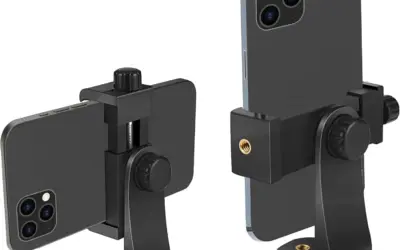
One practical caveat: the highest video mode usually disables some cameras, restricts stabilization or fills storage quickly. A 128GB phone shooting 8K will run out of room faster than the specification implies, which is one reason the expandable storage on the Galaxy A16 5G and the Moto G Stylus 5G still has a following. A stable mount also does more for handheld footage than any extra megapixel.
Software Support Windows Decide How Long a Camera Stays Current
Phone cameras improve after purchase, because most of the processing lives in software. That makes the manufacturer’s published update commitment part of the camera specification rather than a separate concern. When updates stop, the imaging pipeline stops improving and the security patches stop with it.
Google publishes seven years of OS versions, security updates and Pixel Drops for the Pixel 10 Pro, Pixel 10 and Pixel 9a, and Samsung publishes seven years of OS and security updates for the Galaxy S25+ and Galaxy S25 FE. The Galaxy S23 was launched under an earlier policy of four OS upgrades and five years of security patches, so its window is meaningfully shorter today. Motorola publishes a shorter commitment again on the Edge 2025 and shorter still on the Moto G Stylus 5G.
The surprise entry is the Galaxy A16 5G, which Samsung backs with six generations of OS upgrades and six years of security updates despite its budget position. That does not make its camera hardware competitive, but it does make the phone a longer term proposition than its price bracket usually allows.
| Phone | Main camera | Optical zoom | Ultrawide | Published update window |
|---|---|---|---|---|
| Google Pixel 10 Pro | 50MP, 1/1.31 in sensor, OIS | 5x telephoto, 48MP | 48MP with autofocus | 7 years |
| Samsung Galaxy S25+ | 50MP, f/1.8, OIS | 3x telephoto, 10MP | 12MP, 120 degrees | 7 years |
| Google Pixel 10 | 48MP, OIS | 5x telephoto, 10.8MP | 13MP | 7 years |
| Google Pixel 9a | 48MP, OIS | None, digital only | 13MP with close focus | 7 years |
| Samsung Galaxy S25 FE | 50MP, OIS | 3x telephoto, 8MP | 12MP | 7 years |
| Samsung Galaxy S23 | 50MP, OIS | 3x telephoto, 10MP, OIS | 12MP | 4 OS upgrades, 5 years security |
| Motorola Edge 2025 | 50MP, OIS | 3x telephoto, 10MP | 50MP with autofocus | Shorter than Google or Samsung |
| Moto G Stylus 5G | 50MP, OIS | None, digital only | 13MP with close focus | Shortest on this list |
| Samsung Galaxy A16 5G | 50MP, small sensor | None, digital only | 5MP fixed focus | 6 OS upgrades, 6 years security |
Why You Should Trust Us
Our approach for this category was deliberately narrow. We built the shortlist from manufacturer published specification sheets, which means every camera figure quoted above can be traced back to Google, Samsung or Motorola rather than to a reviewer’s impression. Where a manufacturer does not publish a number, we say so instead of filling the gap with an estimate.
We then filtered the field hard on the things that go wrong when you shop for phones on a marketplace. Refurbished and renewed listings were excluded, because their camera modules and warranty terms vary between units. Carrier locked stock was excluded for the same reason. Where a listing is an international model rather than a US configuration, band support can differ from the US version, so we kept to US configurations throughout. Storage and colour variants of the same phone were treated as one product, not several, which is why this list runs to 9 phones and not a padded round number. Customer ratings from real buyers were used to break ties between otherwise comparable models, never to justify a spec claim.
Final Thoughts
The best overall camera phone here is the Google Pixel 10 Pro. It is the only model that combines a large 1/1.31 inch main sensor, a 48MP 5x telephoto, a 48MP autofocusing ultrawide and 8K video, and it carries a seven year support window so that hardware keeps getting new processing. If you want that reach without the Pro price structure, the Google Pixel 10 keeps the 5x telephoto and the seven year window on a 48MP main sensor.
The best value pick is the Google Pixel 9a. It gives up the telephoto entirely, which is a real loss, but it keeps a stabilized 48MP main camera, a close focusing ultrawide, 4K60 video and the full seven years of updates. For anyone who shoots mostly at 1x and mostly of people, that is the shortest distance between a modest outlay and genuinely good photographs.
Two use cases deserve their own answer. If you want the widest capability in one device, the Samsung Galaxy S25+ pairs a stabilized 3x telephoto with a 120 degree ultrawide and 8K capture, and the Samsung Galaxy S25 FE covers most of the same ground with a lower resolution telephoto. If your budget is firm, the Motorola Moto G Stylus 5G gives you a stabilized 50MP main camera and a built in stylus, while the Samsung Galaxy A16 5G buys you an unusually long support window rather than camera hardware. Once you have chosen, a set of good headphones is the accessory most phone buyers reach for next.
Frequently Asked Questions
Is a Camera Quality Android Phone worth choosing over a dedicated camera in 2026
For everyday photography, yes. The computational processing on a phone like the Pixel 10 Pro or the Galaxy S25+ handles exposure, colour and noise automatically in situations where a beginner with a standalone camera would struggle. A dedicated camera still wins on sensor size, lens choice and long reach, so the honest split is that phones are better at the shots you take without planning and cameras are better at the shots you plan. Our full archive of buying guides covers standalone cameras separately.
Do more megapixels mean a better Android camera
No, and the phones on this list prove it. The Galaxy A16 5G advertises the same 50MP main camera resolution as the Galaxy S25+, but on a much smaller sensor with a weaker lens and no telephoto beside it. Sensor size, aperture, stabilization and the quality of the processing pipeline all matter more than the resolution figure printed on the box.
How much optical zoom do I actually need
A 3x telephoto, as fitted to the Galaxy S25+, the Galaxy S23 and the Motorola Edge 2025, covers portraits and everyday framing comfortably. A 5x telephoto, as fitted to the Pixel 10 Pro and the Pixel 10, is the one to look for if you photograph stage performances, sport or wildlife. Anything beyond that is usually the software composing a longer reach from the 5x lens.
Should I buy a renewed or carrier locked Android phone to save money
We deliberately left both off this list. Renewed listings can arrive with a replaced camera module or a shortened warranty, and the listing wording rarely makes clear which. Carrier locked stock ties you to one network until it is unlocked. International models are a third trap: they can lack the bands a US network relies on, and where a listing states that limitation it belongs in the negatives column rather than in the fine print.
How long will an Android phone camera stay current
That depends entirely on the published update commitment. Google backs the Pixel 10 Pro, Pixel 10 and Pixel 9a for seven years of OS versions, security patches and feature drops, and Samsung matches that on the Galaxy S25+ and Galaxy S25 FE. The Galaxy S23 shipped under an earlier four upgrade policy and the Motorola models publish shorter windows, so a cheaper phone bought today can stop improving several years before a more expensive one does.

Write Your Review
No reviews yet. Be the first to share your experience!