

Cold nights outdoors are lost from underneath, not from above. A sleeping bag traps the air around you, but the half of it you are lying on is crushed flat and does almost nothing, so the ground pulls heat out of you all night through whatever is left between your back and the frozen dirt. That is why the number that matters here is not thickness or comfort or price, it is R-value, and it is the one figure many listings bury. We looked at 7 pads from Gear Doctors, Klymit, INVOKER and more, sorted by insulation first, then by how they inflate, what they weigh and how loud they are when you roll over. More cold weather gear sits in our sports and outdoors section.
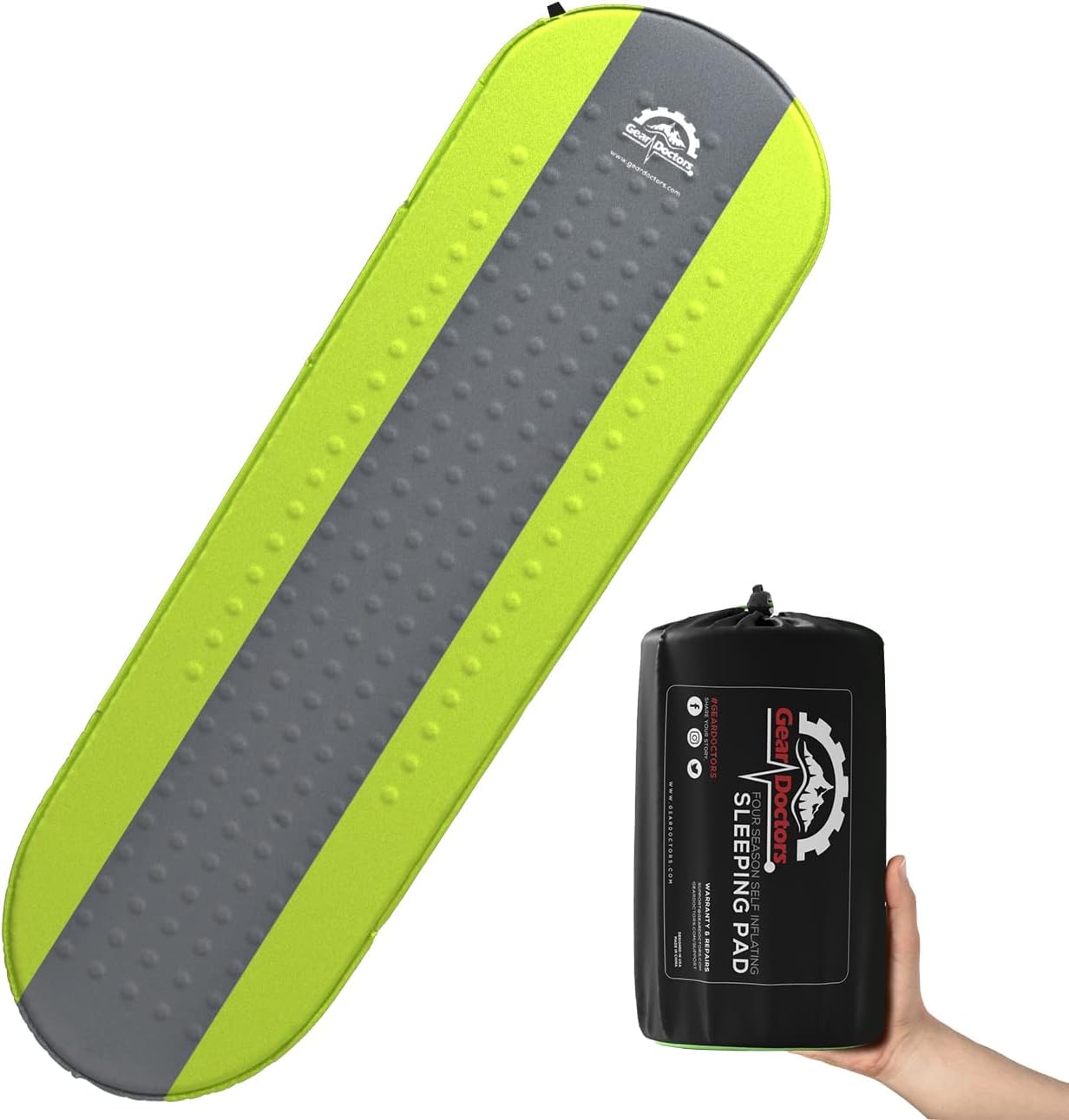
Our top pick is the Gear Doctors ApolloAir Insulated Sleeping Pad for delivering a stated R-value of 5.2 at a weight most three season pads cannot match, which is the combination that actually defines a four season pad. Below we work through the criteria in the order that decides whether you sleep or shiver.

Pros
- Stated R-value of 5.2 puts it in genuine cold weather territory
- Around seventeen ounces, light enough to carry all day
- Packs down to roughly the size of a large water bottle
- Insulated air construction rather than bare air
Cons
- Air construction means a puncture ends the night without a patch kit
- Insulated air pads are noisier than foam when you roll over
- Standard width leaves side sleepers close to the edges
The ApolloAir is the clearest example in this list of what a four season pad is supposed to be. The stated R-value of 5.2 sits in the band where snow and frozen ground stop being a problem, and it gets there at a weight that a three season pad would be pleased with.
That combination is the entire point of an insulated air pad. Rather than adding foam thickness, the warmth comes from insulation layered inside a sealed shell, which is why it can roll down to something close to a large water bottle in the pack.
The trade you accept is fragility. There is no foam to keep working if the shell is punctured, so the patch kit is not optional equipment on a winter trip, and a groundsheet or a closed cell mat underneath is cheap insurance.
The other characteristic worth knowing is sound. Insulated air pads use internal layers that move against each other, and they are audibly busier than a foam pad when you turn over. In a shared tent that is a real consideration.
Bottom line: the best warmth to weight balance here, and the pad to buy if you carry it on your back.
- Construction: insulated inflatable air pad
- Stated R-value: 5.2
- Weight: around seventeen ounces
- Packed size: compact roll, water bottle scale
- Inflation: pump sack or valve, mouth inflation not advised in cold
- Best use: cold weather backpacking
Buy this if you carry your pad rather than drive it to camp, and you want a number that holds up on frozen ground without a heavy penalty. Skip it if you camp out of a vehicle, where a thicker self-inflating or foam mattress is more comfortable for the same money, and skip it if a quiet tent matters more to you than pack weight.
Carry the patch kit and know how to use it before you need it in the dark. Inflate with a pump sack rather than by mouth, since damp breath can freeze inside the baffles in winter and encourages mildew the rest of the year. Store it loosely inflated with the valve open at home rather than tightly rolled, and always put something between the shell and rough ground.

Pros
- Memory foam core is quiet and comfortable to turn on
- Self-inflating, so only a breath or two is needed to finish
- Integrated pillow saves carrying a separate one
- Foam keeps insulating even if the shell is damaged
Cons
- Stated R-value is a maker figure with no standard test cited
- Heavy and bulky compared with an insulated air pad
- Three inch thickness is more than a small tent floor wants
This is the comfort end of the self-inflating category. A memory foam core gives it a softer, quieter feel than a standard open cell pad, and the integrated pillow removes one more item from the pile in the tent.
Self-inflating construction has a specific advantage in the cold that people underrate. The foam continues to insulate whether or not the shell holds air, so a puncture at midnight is uncomfortable rather than serious, which is not true of a pure air pad.
The stated R-value of 9.5 is a maker figure. It is quoted without reference to the standardized industry test, so treat it as a claim to be ranked against other untested claims rather than as a number you can place directly alongside a tested pad. What is not in doubt is that a thick foam core is a genuinely warm base.
Weight and bulk are the cost. This is a pad for the trunk of a car or a short carry from a parking area, not for a long day under a pack, and three inches of loft takes up real space in a small tent.
Bottom line: the pick when cold ground comfort matters and you are not carrying it far.
- Construction: self-inflating memory foam core
- Stated R-value: 9.5, maker figure without a cited standard
- Thickness: around three inches
- Pillow: integrated
- Inflation: self-inflating valve, finish by breath or pump
- Best use: car camping and short carries in cold weather
Open the valve and leave the pad flat for several minutes before touching it, since the foam does most of the work on its own. Add only a breath or two at the end to set the firmness you like, and close the valve while the pad is still slightly under firm so it settles right. Top it up before you sleep, because the air inside contracts as the night cools.
Store it unrolled with the valve open, flat under a bed or standing in a closet, because months of compression takes the spring out of the foam and it stops self-inflating. Make sure it is completely dry before it goes into storage. Keep it off sharp ground even though the foam would keep working, since a torn shell lets the foam take on water.

Pros
- Self-inflating foam core keeps working after a puncture
- Integrated pillow included rather than sold separately
- Twenty four inch width is wider than a standard pad
- Straightforward valve and quick setup
Cons
- Stated R-value is a maker figure with no standard test cited
- Bulky rolled up compared with an insulated air pad
- Foam core adds real weight for a backpacking trip
The INVOKER covers the ground most people actually camp on. It is a self-inflating foam pad with a built in pillow, a little wider than the standard twenty inch pad, and thick enough that a hip does not find the floor.
Width is worth calling out because it is the specification buyers regret ignoring. At twenty four inches a side sleeper keeps their knees and elbows on the pad rather than on cold ground, which protects the insulation value you paid for.
The stated R-value of 8 is a maker number quoted without reference to the standardized test, so read it as a claim rather than a measured figure. What can be said with confidence is that a thick foam core plus a sealed air layer is a warm arrangement, and that the foam continues to insulate if the shell is damaged.
The compromise is bulk. Rolled up it is closer to a sleeping bag than a water bottle, and the weight belongs in a vehicle rather than on a long carry. For the money that is the trade most campers should take.
Bottom line: the most pad for the least outlay here, provided you are not carrying it far.
- Construction: self-inflating elastic foam core
- Stated R-value: 8, maker figure without a cited standard
- Dimensions: about seventy five by twenty four by three inches
- Pillow: integrated
- Inflation: self-inflating valve, top up by breath or pump
- Best use: car camping and cold weather basecamp
Buy this if you camp from a vehicle in cold conditions and want width, thickness and a pillow without assembling three separate purchases. Skip it if pack weight is the constraint, since an insulated air pad is a fraction of the bulk, and skip it if you need a figure you can compare directly against tested pads rather than a maker claim.
Compare this against the other self-inflating pads on width and thickness rather than on the quoted R-value, since none of the budget brands here cite the standard test. If you sleep on your side, the extra four inches of width matters more than another point of claimed insulation. If you already own a closed cell foam mat, stacking it underneath adds real warmth for almost no cost.

Pros
- Stated R-value of 4.3 covers cold ground and shoulder season snow
- Foam core is quiet and keeps insulating after a puncture
- Self-inflating valve does most of the work
- Moderate bulk for a foam pad
Cons
- Heavier and bulkier than the insulated air pad from the same brand
- Below the numbers you want for deep winter on snow
- Foam needs unrolled storage to stay healthy
The Oxylus is the sensible middle of this list. A stated R-value of 4.3 sits at the point where cold ground stops being a problem, without pushing into the very high numbers that budget brands quote without a test behind them.
Being self-inflating, it asks almost nothing of you at the end of a long day. Open the valve, let the foam pull air in, add a breath to set the firmness, and it is done, with no pump sack to fumble in the dark.
The foam core also makes it quiet. Insulated air pads crackle as their internal layers shift, and in a shared tent that difference is noticeable enough to decide a purchase on its own.
What you give up is packed size. This will not roll to water bottle dimensions, and on a long carry the difference against an ultralight air pad is real. For shoulder season trips with a moderate walk in, it is a fair trade.
Bottom line: the balanced choice when you want a believable number and a quiet night.
- Construction: insulated foam self-inflating pad
- Stated R-value: 4.3
- Inflation: self-inflating valve, finished by breath or pump
- Noise: quiet foam core rather than reflective film
- Packed size: larger than an insulated air pad
- Best use: cold ground and shoulder season camping
Unroll it and open the valve as soon as you pitch the tent, so the foam has time to expand while you do everything else. Set the firmness softer than feels right at first, because the air will pack down under your weight. Close the valve before you lie on it and add a top up before sleeping, since cooling air lowers the pressure through the night.
Store it flat and unrolled with the valve open, as compressed foam left in a stuff sack for months loses its ability to self-inflate. Dry it fully before storage. On rocky or frozen ground put a groundsheet underneath, which protects the shell and adds a little insulation at no real cost in weight.

Pros
- Four and a half inches of foam is close to a bed
- Full width sleeping surface rather than a narrow pad
- Adjustable firmness through the valve
- Foam construction is quiet and forgiving
Cons
- R13 is a maker figure with no standard test cited
- Far too heavy and bulky to carry any distance
- Full size takes most of a small tent floor
This is a camp mattress rather than a sleeping pad, and the distinction is the whole review. Four and a half inches of self-inflating foam across a full width surface is much closer to a bed than to anything you would carry.
For basecamp and vehicle camping that is exactly right. Ground texture disappears entirely, side sleeping is comfortable, and firmness can be tuned through the valve rather than accepted as it comes.
The maker quotes R13, which is a very high figure and is stated without reference to the standardized test. Read it as a claim rather than a measurement. That said, four and a half inches of foam is genuinely warm ground insulation by any reckoning, so the direction of the claim is not in question even if the precision is.
The limits are obvious and worth stating plainly. It does not pack small, it is heavy, and in a compact backpacking tent a full width mattress will not leave room for anything else, including a second person.
Bottom line: the most comfortable night here, on the condition that a vehicle carries it.
- Construction: self-inflating foam mattress
- Thickness: four and a half inches
- Size: full width sleeping surface
- Stated insulation: R13, maker figure without a cited standard
- Firmness: adjustable through the valve
- Best use: basecamp, vehicle camping, tent floors with room
Buy this if your camping happens within reach of a vehicle and comfort is the priority, or if a bad back means a thin pad is not an option. Skip it if you backpack at all, since neither the weight nor the packed size is defensible on a trail, and skip it if your tent is a compact two person model where a full width mattress leaves nowhere for gear.
Give it plenty of time with the valve open, since a mattress this thick takes far longer to self-inflate than a thin pad. Set the firmness with the valve while lying on it, which is the only way to judge it honestly. Close the valve fully before the night and expect to add a little air as the temperature drops.

Pros
- Noticeably wider than a standard twenty inch pad
- V chamber layout limits rolling and air movement
- Synthetic fill rather than bare air construction
- Established brand with widely available spares
Cons
- R-value is not stated in the listing, so check the maker figure
- Air construction depends on a patch kit in the cold
- Wide pads take up more tent floor than they look like they will
Width is what this pad is for. A standard sleeping pad is around twenty inches across, which is fine on your back and awkward on your side, and the Luxe version exists to fix exactly that.
The V chamber layout is Klymit's signature. Instead of straight baffles, the chambers form a pattern intended to limit how much air moves when you shift position, which makes the pad feel more settled than a simple tube design at the same pressure.
The insulated model adds synthetic fill inside the shell, which is what separates it from the uninsulated pads that share the Static V name and appear in the same searches. That distinction matters more than anything else here, so check that the listing you buy says insulated rather than assuming.
The listing does not state an R-value, which is the one thing we would want for a four season comparison. Check the current maker figure before committing if you are heading onto snow, and pair it with a closed cell mat underneath if the number falls short.
Bottom line: the width fix for side sleepers, with the insulation figure worth confirming before a winter trip.
- Construction: insulated inflatable air pad with synthetic fill
- Layout: V chamber design
- Width: wide version, above the standard twenty inches
- R-value: not stated in this listing, check the maker figure
- Inflation: valve, pump sack recommended over mouth inflation
- Best use: side sleepers and cold ground three season camping
Choose this if a narrow pad is what has been ruining your nights and you sleep on your side. Confirm the insulated model rather than the plain Static V, since the uninsulated version looks nearly identical in a listing and is not a cold weather pad. If you are camping on snow, plan on stacking a closed cell mat underneath rather than relying on this pad alone.
Keep the patch kit with the pad rather than in a drawer at home, because an air pad without foam offers nothing once it deflates. Inflate with a pump sack instead of lung power, since damp breath sealed inside can freeze in winter and encourages mildew the rest of the year. Store it loosely inflated with the valve open, and keep sharp gear out of the same stuff sack.

Pros
- Three inches of dual layer memory foam for real comfort
- No valve, no inflation and nothing to puncture
- Rolls up for transport in a vehicle
- Works on a tent floor, a cot or indoors for guests
Cons
- No R-value published, so it cannot be compared on the insulation scale
- Solid foam is heavy and does not pack small
- Foam absorbs moisture if it is left on wet ground
This is the simplest product in the list and the only one with no air in it at all. A dual layer memory foam mattress three inches thick rolls up for the car and unrolls into something that behaves like a mattress rather than a pad.
The appeal is reliability. There is no valve to leak, no shell to puncture and no pressure to lose overnight, so what you set up is what you sleep on until morning. For people who have been let down by an air pad in the cold, that alone is the argument.
The honest caveat for a four season comparison is that no R-value is published for it. Three inches of foam is a substantial barrier between you and the ground by any physical reasoning, but without a stated number it cannot be placed on the same scale as the pads above, and we are not going to invent one.
Weight and bulk put it firmly in the vehicle camping category. It also doubles as a guest bed at home, which is a genuine second use that none of the technical pads here can offer.
Bottom line: the comfort and reliability choice for car camping, without a number to compare it on.
- Construction: dual layer memory foam, no air chambers
- Thickness: three inches
- R-value: not published for this product
- Transport: rolls up for a vehicle
- Uses: tent floor, camping cot, indoor guest bed
- Best use: car camping and basecamp
Buy this if you camp out of a vehicle, value a night that cannot deflate, and would use the mattress at home for guests between trips. Skip it if you need a published insulation figure for snow camping, since none is given, and skip it entirely if you carry your kit any distance, because solid foam is the heaviest way to sleep off the ground.
Keep it off wet ground and out of standing water, since open foam takes on moisture readily and is slow to dry. Air it out fully before rolling it away, and store it loosely rather than tightly compressed so the foam keeps its loft. A groundsheet underneath protects the cover and makes packing up in the morning much cleaner.
How to Choose a 4 Season Sleeping Pad
Six criteria, and the first one outranks the other five combined. If you read nothing else, read the section on R-value, because a comfortable pad with the wrong number is a cold night no amount of padding will fix.
R-Value Is the Whole Point
R-value measures resistance to heat flowing through the pad. Higher means more of your body heat stays with you instead of draining into the ground, and the scale is roughly linear, so a pad at four is about twice the barrier of a pad at two. It says nothing about comfort, thickness or how well you will sleep, only about heat.
As a working guide, anything below two is a summer pad, two to four covers ordinary three season use, and four and above is where genuine cold weather starts. Snow camping and cold sleepers are usually happier from five upward. The term four season on a listing has no defined meaning at all, so treat it as marketing and go straight to the number.
One thing changed for the better in recent years. There is now a standardized industry test, ASTM F3340, which lets you compare figures between brands that use it rather than trusting each maker’s own method. Brands that cite the standard are telling you their number is comparable. Very high numbers quoted with no reference to any standard, particularly the ones above about seven, are best read as maker claims and ranked against each other rather than against tested pads.
Air, Self-Inflating, or Foam Core
Three constructions dominate, and they trade the same three things against each other: warmth, weight and reliability. A pure air pad is a sealed shell that gets its insulation from synthetic fill or reflective film layered inside. It packs down smallest and weighs least for the warmth, and it is the only one that a thorn ends outright.
A self-inflating pad is open cell foam bonded inside an airtight shell. Open the valve and the foam expands, drawing air in on its own, and you top it off with a few breaths. It is heavier and bulkier than a pure air pad, but the foam keeps insulating even if the shell is punctured, which is the reason many people carry one into deep cold rather than the lighter option.
Thick foam mattresses sit at the far end of the scale. They are heavy and they do not pack small, so they belong in a vehicle rather than a pack, but they are the most comfortable and the least likely to fail in any way at all. If your camping starts and ends within sight of the car, that trade is often the right one.
How It Inflates, and Why That Matters in Winter
Inflation looks like a convenience feature and turns into a real one below freezing. Blowing a pad up by mouth puts warm, damp breath inside the shell. In summer that dampness sits there and slowly encourages mildew. In winter it can freeze inside the baffles, and a pad with ice in it insulates worse and can be noisy for the rest of the trip.
The alternatives all avoid that. A pump sack scoops cold outside air and squeezes it in, a built in foot pump does the same with a bellows you stand on, and a self-inflating pad draws most of its air in on its own so only a breath or two is needed to firm it up. Any of these is preferable to lung power on a cold trip.
Valve design matters more than the marketing suggests. A wide two way valve lets you dump air quickly at pack up time and lets you add a little without losing everything, which is exactly what you want at two in the morning. Narrow single direction valves make both jobs slower and colder. More gear guides are collected in our article archive.
Weight and Packed Size Against Warmth
Warmth to weight is the axis that separates a backpacking pad from a camping pad, and it is where the money in this category actually goes. A pad that delivers a genuinely cold weather number at roughly a pound is doing something clever with reflective film or synthetic fill. A pad that reaches the same number with three inches of foam is doing it the easy way, and it will weigh several times as much.
Packed size follows the same rule and matters more than weight to some people. An ultralight insulated pad rolls to about the size of a large water bottle. A self-inflating foam pad rolls to something closer to a rolled sleeping bag, and a thick foam mattress does not roll small at all.
Be honest about the trip you actually take. Most people who buy for an imagined winter traverse spend their nights within a short walk of a vehicle, and for that use a heavier pad with a higher number and a thicker cushion is simply the better night’s sleep. Weight only becomes the deciding factor when you carry it all day.
Noise, Width, and How You Sleep

The reflective film that makes a light pad warm is also what makes it crackle. Every time you shift, the layers move against each other, and in a quiet tent that sound carries to whoever is next to you. Foam based pads are almost silent by comparison, which is a genuine reason to choose one if you share a tent or you wake easily.
Width is the specification people regret ignoring. A standard pad is around twenty inches wide, which is narrow enough that a side sleeper’s elbow or knee ends up on the ground, and a limb on frozen ground undoes the R-value you paid for. Wide versions in the twenty five to thirty inch range solve it at a cost in weight and in tent floor space.
Internal structure decides stability. Vertical baffles guide you into a channel and feel secure, horizontal baffles let you move more freely, and pads built from individual cells tend to feel bouncier. None is better in the abstract, but a side sleeper on a thick pad with soft edges will roll off it, so thickness alone is not comfort.
Durability, Repair, and Cold Weather Failure
Fabric weight is quoted in denier, and it is the honest trade against packed size. A twenty denier shell packs tiny and punctures easily. A seventy five denier shell shrugs off a pine needle and weighs noticeably more. Many pads use a heavier fabric on the underside than on top, which is the sensible compromise.
Check what comes in the bag. A patch kit included from the start is worth more than an extra tenth of R-value, because a pad that fails at midnight in the cold is not a minor inconvenience. Repair patches, valve spares and seam adhesive are the kind of small supplies also indexed under tools and home improvement, and carrying them costs almost nothing.
The failure that surprises people is not a puncture. Air contracts as it cools, so a pad inflated at dusk is measurably softer by the small hours, and on a cold night that is the difference between floating and touching the ground. The fix is free: top it up with a couple of breaths just before you sleep, and again if you wake. Store a self-inflating pad unrolled with the valve open at home, because leaving the foam compressed for months is what kills its ability to expand.
| R-value | Suited to | Trade-off |
|---|---|---|
| Below 2 | Summer nights and warm ground | No real barrier once the ground is cold |
| 2 to 3.9 | Ordinary three season camping | Marginal on snow or frozen ground |
| 4 to 5.9 | Genuine cold weather and shoulder season snow | Usually the warmth to weight sweet spot |
| 6 and above | Deep winter, snow camping, cold sleepers | Heavier or bulkier, and often an untested maker figure |
Why You Should Trust Us
We build these lists from published specification and from the pattern of what long term owners report, rather than from marketing copy. For every pad here we recorded the stated R-value and whether the maker references a standardized test, the construction type, the inflation method supplied in the box, packed weight and dimensions, shell denier where it is published, and whether a patch kit is included.
We set aside uninsulated pads that appear in the same searches, because a pad without insulation is not a four season pad regardless of how comfortable it is, and we set aside near identical listings that differ only in color or size. Where an R-value is quoted without reference to a standard we say so on the card and treat it as a maker figure rather than a tested result.
Final Thoughts
Best overall is the Gear Doctors ApolloAir Insulated Sleeping Pad. A stated R-value of 5.2 puts it firmly in cold weather territory, and it reaches that at a weight that still makes sense on your back, which is the balance that a four season pad is actually judged on. It is an air construction, so a patch kit belongs in the pack with it.
Best value is the INVOKER Self-Inflating Sleeping Pad. It is a self-inflating foam core design with an integrated pillow and a stated R-value well into winter territory, and the foam keeps insulating even if the shell takes damage, which is a reassuring property in cold weather for anyone not counting every ounce.
For specific needs, the Elegear Self-Inflating Sleeping Pad is the pick if you want memory foam comfort with a high stated number, the Gear Doctors Oxylus is the choice when you want a self-inflating pad with a figure you can actually place on the standard scale, and the Lost Horizon Option3 is the basecamp option when a full width mattress matters more than pack size. Side sleepers should look at the Klymit Insulated Static V Luxe for its extra width, and anyone camping out of a vehicle will sleep best on the GAIALOOP memory foam mattress. Brand pages and current offers are gathered in our store directory, and the wider gear index sits under sports and outdoors.
4 Season Sleeping Pad FAQs
What R-value do I need for winter camping?
For camping on snow or frozen ground, most people land somewhere from five upward, and cold sleepers are happier higher still. Four to five covers shoulder season nights where the ground is cold but not frozen solid. Below four you are relying on the sleeping bag to do a job it cannot do, since the insulation under your body is crushed flat by your own weight. Remember that the term four season on a listing means nothing on its own, so ignore it and read the number, ideally from a brand that cites the standardized test.
Can I stack two pads instead of buying a warmer one?
Yes, and it is the most reliable trick in cold weather camping. R-values add up when pads are stacked, so a closed cell foam mat under an inflatable gets you close to the sum of the two. The foam mat also protects the inflatable from sharp ground and gives you something to sleep on if the air pad fails overnight, which is why many winter campers carry both by choice rather than as a compromise. Browse the wider outdoor category through our category index.
Why does my pad feel softer in the middle of the night?
Because the air inside it cooled down. Air contracts as its temperature drops, so a pad inflated at dusk when the tent was warm holds measurably less pressure by the early hours, and on a cold night that shows up as your hip finding the ground. It is physics rather than a leak, and the fix costs nothing: add a couple of breaths just before you settle down, and top it up again if you wake. If the pad is genuinely flat by morning rather than soft, then look for a puncture.
Should I inflate a 4 season sleeping pad with my mouth?
Avoid it if you have any alternative, and especially in winter. Breath is warm and damp, and that moisture ends up sealed inside the pad where it encourages mildew over time and can freeze into the baffles in cold conditions, which makes the pad both colder and noisier. A pump sack or a built in foot pump moves dry outside air instead and does the job faster. If a pad is self-inflating, let the foam do most of the work and add only a breath or two at the end to set the firmness.
How should I store a self-inflating pad in 2026?
Unrolled and with the valve open, flat under a bed or standing in a closet. The open cell foam inside is what pulls air in, and leaving it compressed in a stuff sack for months takes the spring out of it until the pad no longer self-inflates properly. Make sure it is fully dry before it goes away, since any moisture sealed inside will not improve with time. Air pads without foam are less fussy, but storing them loosely inflated with the valve open still helps the shell keep its shape.




Write Your Review
No reviews yet. Be the first to share your experience!