

A scratch on a car panel is rarely one thing. It is a fingernail catching on a key mark, a spiderweb of swirls that only shows up under a petrol station canopy, or a grey smear of someone else’s bumper paint that looks far worse than the damage underneath it. The reason people buy the wrong product here is that all three get called a scratch, and only some of them can be fixed with abrasive. We compared 9 options from Meguiar’s, Turtle Wax, Chemical Guys and more, sorted by how much they cut, whether they finish or need a follow up polish, and whether they can be worked by hand, current for September 2026.
Our top pick is the Meguiar’s Ultimate Compound for cutting hard enough to clear real defects while still finishing down to a gloss without a second product, which is the balance most people actually need. Below we rank the field from professional heavy cut through to gentle hand applied blemish removers, so you can match the aggression to the damage. For the rest of the garage, our automotive section covers adjacent gear.

Pros
- Cuts hard enough for real defects yet finishes to a gloss without a second polish
- Label sanctions both hand and dual action machine use
- Safe on clear coat and on single stage paint
- Generous bottle size for the amount of work it does
- Widely stocked, so a refill is never a problem
Cons
- Not aggressive enough for sanding marks or badly oxidised paint
- Contains some filling oils, so a panel wipe is needed to judge the real correction
The Ultimate Compound is the default answer in this category for a reason. It sits at the point on the cut and finish scale where most home correction jobs actually live: enough abrasive to clear swirls, water spot etching and light scratching, and a finish clean enough that you do not have to follow it with a polish.
The abrasives are the diminishing type, which is why the instructions ask you to keep working the residue rather than wiping it off after a couple of passes. Early in the pass it behaves like a compound and cuts, and as the particles break down it behaves like a polish and refines, which is what lets one bottle do a two stage job.
It is also one of the few products here explicitly sanctioned for both hand and machine work. On a single door scratch a foam applicator and some patience is enough, and on a whole bonnet a dual action polisher with a cutting pad turns the same product into a fast panel correction.
The limits are honest. Sanding marks, deep random scratching and neglected oxidised paint want a genuine cutting compound and a follow up polish, and this will improve those without fully correcting them. It also carries some filling oils, so wipe the panel down with a panel wipe before deciding how much correction you achieved.
Bottom line: the one bottle to own if you only own one, and the right starting point before reaching for anything more aggressive.
- Type: one step correction compound
- Abrasive: diminishing
- Application: hand or dual action machine
- Paint compatibility: clear coat and single stage
- Finish: gloss without a mandatory follow up polish
- Size: 15.2 ounces
- Body shop safe
This is the pick for an owner correcting their own car a couple of times a year, whether by hand on a single mark or with a polisher across whole panels. Look at the professional cutting compounds instead if you are removing sanding marks or reviving badly oxidised paint, and at a fine blemish remover if all you ever do is spot work on isolated scratches.
Wash and clay the panel first, then work in the shade on cool paint. Apply a few pea sized drops to a foam pad, spread at low speed, then work the section with moderate pressure for several passes until the residue turns clear. Buff off with a clean microfibre towel and rotate towels as they load. Wipe the panel with a panel wipe to see the true result, then protect with a wax or sealant.

Pros
- Genuine heavy cut for sanding marks and refinish work
- Quart bottle suits sustained or professional use
- Consistent, predictable cutting behaviour under a machine
- Designed as the first stage of a proper multi step correction
Cons
- Machine application only, it dries out too fast under a hand pad
- Leaves haze that requires a follow up polish to finish
This is a body shop product rather than a consumer one, and understanding that is the whole review. Perfect-It EX AC is the cutting stage of a professional refinish system, designed to remove sanding marks left after a panel has been flatted, and it does that faster than anything else in this list.
Its cut is genuine and its finish is not the point. You should expect haze after the cutting pass, because the system assumes a polish and often a finishing glaze afterwards. Buying this as a single bottle solution to a scratch on a door misunderstands what it is for.
The quart size tells the same story. This is the volume you buy when you are correcting cars regularly or working through a full respray, and it is far more product than a home user needs for a handful of jobs a year.
Application is machine only in practice. Under a hand pad it dries out before the abrasives have done their work, and the pressure and speed it is formulated around simply are not available by hand. Pair it with a cutting pad, keep the surface cool, and follow with a polish.
Bottom line: the professional cutting stage, excellent at its job, and the wrong purchase unless a follow up polish is already part of your plan.
- Type: professional rubbing compound, fast cutting
- Application: machine with a cutting pad
- Stage: first step of a multi step correction
- Follow up: polish required to remove haze
- Size: 1 quart, 32 fluid ounces
- Intended use: refinish and sanding mark removal
- Part number: 36060
Buy this if you are flatting and refinishing panels, reviving heavily oxidised paint, or correcting cars often enough to justify a quart. It is the wrong product for a single scratch, for hand application, and for anyone who does not already own a polisher and a finishing polish to follow it with.
Keep the panel cool and work in the shade, because a fast cutting compound plus a hot panel is how clear coat gets burned. Stay off sharp body lines and panel edges where the clear is thinnest, use masking tape on trim, and check your progress often rather than making long uninterrupted passes. Shake the bottle well, since a heavy cut compound settles between uses.

Pros
- Very high cut for its class, clears heavy swirls quickly
- Micro abrasive technology leaves a finer finish than older heavy compounds
- Small bottle makes professional cut affordable for occasional jobs
- Works on hard clear coats that milder products barely touch
Cons
- Flashes off quickly, so working time is short and technique matters
- Still needs a follow up polish for a fully finished gloss
M105 is the compound detailers reach for when the paint is genuinely bad. It is an ultra cut product built on a micro abrasive formula, which means it removes serious defects at a rate the consumer one step products cannot approach, while leaving a finer finish than heavy compounds of the previous generation.
The behaviour that catches people out is working time. M105 flashes off quickly, so long slow passes leave you working a dry pad across the paint, which is neither effective nor safe. Small sections, a few drops at a time, and a willingness to reapply are the technique it wants.
The 8 ounce bottle is the practical argument for it over a professional quart. This gives a home user access to a true cutting compound for the one panel that actually needs it, without buying volume for a workshop.
As with any product at this cut level, it is stage one. Expect to follow with a finishing polish to bring the gloss back, and expect it to be overkill on light swirls, where you would be removing far more clear coat than the defect justifies.
Bottom line: the ultra cut option for genuinely damaged paint, in a bottle size a home user can justify, provided a polish follows it.
- Type: professional ultra cut compound
- Abrasive: micro abrasive formula
- Application: machine, small sections
- Follow up: finishing polish recommended
- Size: 8 ounces
- Suited to: heavy swirls, deep defects, hard clear coats
- Glossy paint and clear coat safe
This suits someone tackling one badly swirled or neglected car with a machine and the patience to work in small sections. It is not the product for light defects, not the product for hand application, and not the product to use without a finishing polish waiting on the bench.
Work sections of roughly two feet square at a time. Put three or four drops on the pad, spread at low speed, then work at moderate speed with light to medium pressure and stop before the residue dries. Reapply rather than pushing a dry pad, keep the pad clean by brushing it out between sections, then follow with a finishing polish and protect the panel afterwards.

Pros
- Cut level can be dialled up or down by changing the pad
- Corrects and finishes in one pass on light to moderate defects
- Long working time compared with professional cutting compounds
- Water based formula wipes off cleanly with little dusting
Cons
- A single pass will not fully correct badly neglected paint
- Needs a machine to get the most from the formula
3D One built its reputation on a single idea: one bottle whose aggression you change with the pad rather than by buying a second product. Put it on a microfibre or firm cutting pad and it behaves like a compound; move to a soft finishing pad and the same liquid refines to a gloss.
That flexibility is genuinely useful for someone who corrects a car once or twice a year. Instead of a shelf of graded compounds, you keep one bottle and a set of pads, and the pads cost less and last longer than the liquids they replace.
The formula is water based with long working time, which forgives slower technique and produces very little dust to wipe out of panel gaps. That is a real quality of life difference against products that flash off fast and leave residue in every shut line.
Where it stops is the same place every one step stops. On paint that has been washed badly for a decade, one pass improves things without fully correcting them, and a proper two stage job with a dedicated cutting compound is still the honest answer.
Bottom line: the most flexible single bottle here, and the best choice for someone who owns a polisher and a couple of pad grades.
- Type: hybrid compound and polish, one step
- Cut adjustment: by pad selection
- Formula: water based, low dust
- Application: dual action or rotary machine
- Correction: abrasive rather than filling
- Size: 8 ounces
- Clear coat safe
This is for the enthusiast with a dual action polisher and more than one grade of pad, correcting light to moderate defects and wanting one liquid to cover the range. If you have no machine, a hand sanctioned product is the better buy, and if the paint is genuinely wrecked, start with a dedicated cutting compound instead.
Compare this with the other one step products on whether you already own pads. The pad led approach only pays off if you have at least a cutting pad and a finishing pad, because that is what turns one bottle into two grades. If you own a single all purpose pad, a product formulated to a fixed cut level gives a more predictable result.
Pros
- Cuts and finishes in a single stage, no polish required
- Stated safe on clear coat and ceramic paint finishes
- 16 ounce bottle covers a full car with room to spare
- Forgiving under both hand and machine application
Cons
- Less cutting power than a dedicated compound on deep defects
- Gloss owes something to the finishing oils, so a panel wipe tells the real story
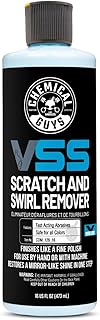
VSS is Chemical Guys taking the one step idea and aiming it at gloss. It cuts moderately, refines as you work it, and finishes with the kind of wet look that photographs well, which is exactly what most owners want from an afternoon in the driveway.
The formula is stated as safe on clear coat and on ceramic paint finishes, which matters more than it used to now that so many cars leave the factory or the detailer with a coating on them. It is still abrasive, so it will thin a coating with repeated use, but it is not the aggressive cut that strips one in a single pass.
The 16 ounce bottle is the practical size in this list. It is enough for several full car corrections rather than a panel or two, and that changes the economics against the small professional bottles.
Its ceiling is the honest limit of every one step: on deep scratching or heavy oxidation it improves rather than corrects, and part of the shine comes from finishing oils. Wipe a panel down afterwards if you want to see how much defect removal actually happened.
Bottom line: the gloss focused one step, well sized for a full car, and a sensible maintenance correction for paint that is not badly damaged.
- Type: one step cut and polish
- Finish: high gloss in a single stage
- Paint compatibility: clear coat and ceramic finishes
- Application: hand or machine
- Size: 16 ounces
- Removes: swirls, light scratches, oxidation
- No follow up polish required
Buy this for a full car maintenance correction where the paint is tired rather than damaged, and especially if you want gloss with the least fuss. Look elsewhere if you are chasing deep scratches, and remember that repeated correction on a coated car eventually means recoating the panel.
Wash and decontaminate first, then work one panel at a time out of direct sun. With a machine, spread at low speed and correct at medium speed with light pressure until the residue clears; by hand, use a foam applicator in overlapping circles and keep the pressure steady. Buff with a clean microfibre towel, then protect the paint with a sealant or wax once you are happy with the finish.

Pros
- Correction and protection in one pass, which halves the work
- Leaves a sealant layer, so no separate wax step is needed
- Clear coat safe and easy to apply for a beginner
- High gloss finish straight off the pad
Cons
- Correction is light, so it is not a fix for deeper defects
- The sealant fills fine marks, which flatters the result until it wears
3D Speed is built around the reality that most people have one afternoon, not a weekend. It corrects lightly, then leaves a paint sealant behind, so the panel is both improved and protected when you finish the pass.
As a time saver on a daily driver this is hard to argue with. A car that would take a correction session plus a protection session gets done in one, and the gloss it leaves is genuinely good, particularly on darker colours where swirls show most.
The trade is transparency about what happened. The sealant and the finishing oils fill fine marks as well as covering them, so the finish immediately after the pass looks better than the correction alone would justify. Several washes later some of that flattery washes away.
Set expectations accordingly. This is the product for tidy paint that wants refreshing and protecting, not for a car with real defects. On those, correct first with a proper compound and use an all in one afterwards only if you want the convenience.
Bottom line: the fastest route to a glossy, protected panel, provided you accept that the correction half of the job is light.
- Type: all in one polish, wax and sealant
- Correction: light abrasive for swirls and fine scratches
- Protection: paint sealant included
- Application: machine or hand
- Finish: high gloss
- Size: 8 ounces
- Clear coat safe
This suits a daily driver in reasonable condition, a car being prepared for sale, or anyone who wants one afternoon rather than two. It is the wrong product for genuine paint correction, and it is the wrong product if you want to judge exactly how much defect removal you achieved, because the sealant hides part of the answer.
Apply to a clean, decontaminated and cool panel, because sealing dirt onto the paint locks it in place. Use thin applications rather than heavy ones, since excess product is harder to buff off and can streak in the sun. Let the sealant cure before washing the car, keep it off unpainted plastic trim where it can leave white residue, and store the bottle out of frost.

Pros
- Mild enough for confident hand use on a single mark
- Excellent on paint transfer and light blemishes
- Small bottle suits occasional spot work
- Very low risk of over correcting the surrounding clear coat
Cons
- Too mild for whole panel correction or heavy swirling
- Spot work can leave a shinier patch that needs blending outward
Scratch-X is the product to keep in the boot rather than the one to plan a correction around. It is a fine blemish remover aimed at the single scratch on a door, the trolley scuff, or the smear of paint transfer that turns out to be sitting on top of the clear coat.
The mildness is the feature. Working a small area by hand with an aggressive compound is how people end up with a dull patch surrounded by good paint, and a fine product removes so little clear that this is very hard to do.
It is genuinely good at what it targets. Paint transfer and light blemishes come away with patience and a foam applicator, and the clarity it restores on a small area is the kind of result that stops a mark bothering you every time you walk past the car.
What it will not do is correct a panel. Whole bonnet swirling needs a real compound and preferably a machine, and expecting a fine blemish remover to handle that leads to a lot of effort for very little change.
Bottom line: the hand tool for isolated marks, and a sensible thing to own alongside a proper compound rather than instead of one.
- Type: fine scratch and blemish remover
- Application: hand, foam applicator
- Cut level: mild
- Paint compatibility: clear coat and glossy paints
- Size: 7 ounces
- Best at: isolated scratches, paint transfer, small blemishes
- No machine required
This is for the owner who wants a single mark gone rather than a corrected car, and for anyone nervous about abrasives who wants the lowest risk option. Look at a one step compound if you plan to work whole panels, and at a professional cutting compound if the paint is heavily swirled or oxidised.
Wash the area first so you are not dragging grit. Put a small amount on a foam applicator and work the mark with firm, overlapping passes for thirty seconds or so, then wipe with a clean microfibre towel and inspect. Repeat rather than pressing harder, and blend the work outward past the scratch so the corrected area does not sit as an obvious bright patch. Protect the spot afterwards with wax or sealant.

Pros
- The simplest and most widely stocked option here
- Works by hand with nothing but an applicator and a towel
- Handles light scratches, scuffs and dull older paint
- Small enough to keep in the garage for occasional jobs
Cons
- Cut and finish are basic next to modern one step formulas
- Can leave a slight haze on dark paint that wants a follow up polish
The T-241A is the compound most people picture when they think of the category, and it has stayed on shelves for decades because it does a simple job adequately. Light scratches, scuffs and dull oxidised paint on an older car are exactly its territory.
Hand use is the intended method and it works. An applicator, some pressure and a clean towel is the entire kit, which makes it the sensible purchase for someone who owns no polisher and does not intend to buy one.
Judged against modern one step formulas, the cut and the finish are both basic. It does not carry the diminishing abrasives that let newer products cut and then refine, so on dark paint it can leave a slight haze that a follow up polish removes.
Availability is a genuine part of the value. This is stocked in supermarkets and petrol stations as well as parts shops, which matters when the scuff appears the day before you need the car to look presentable.
Bottom line: the low cost, widely available option for occasional hand work on an older car, and the sensible floor of this category.
- Type: polishing compound and scratch remover
- Application: hand
- Cut level: moderate for hand use
- Best at: light scratches, scuffs, dull oxidised paint
- Size: 10.5 ounces
- Colour: white compound
- Widely stocked
Buy this for an older car, an occasional scuff, or a garage that needs a bottle of something on the shelf rather than a detailing system. Choose a modern one step formula instead if the car is dark coloured and you care about the last few percent of finish, or if you own a polisher and want to correct whole panels properly.
The comparison that matters is against the modern one step products. Those cost more per bottle and finish better because their abrasives break down as you work them. If the car is light coloured, older, and you are fixing a scuff rather than chasing perfection, that difference is not worth paying for. On dark paint, it usually is.
Pros
- Tackles paint transfer and headlight oxidation as well as paint swirls
- Hand applied with no machine or pads required
- Small bottle suited to occasional touch up work
- Straightforward to use with very little technique
Cons
- Relies partly on fillers, so fine marks return after several washes
- Light cut, so it will not clear anything you can feel with a fingernail
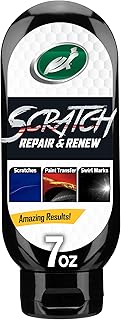
Scratch Repair and Renew sits at the mild, convenience oriented end of this list. It targets the marks people notice rather than the ones detailers measure: swirls, paint transfer from a garage wall, water spotting and hazy headlights.
The headlight claim is worth taking seriously, because oxidised polycarbonate responds well to mild abrasive and this saves buying a separate restoration kit for a job that takes ten minutes a side.
Part of the visual result comes from filling rather than correction. That gives an immediate improvement that looks better than the abrasion alone would justify, and it also means the fine marks reappear once a few washes have stripped the filling components away.
Deeper damage is out of scope. If a fingernail catches in the scratch, no amount of this will level it, and the honest options at that point are touch up paint or a body shop.
Bottom line: a convenient hand product for tidying up a car quickly, best understood as cosmetic improvement rather than permanent correction.
- Type: hand applied scratch remover
- Targets: swirl marks, scratches, paint transfer, water spots
- Also suited to: headlight oxidation
- Correction: light abrasive plus filling components
- Paint compatibility: safe for all paint colours
- Size: 7 ounces
- Pack: single bottle
This suits a quick tidy up before a sale or an inspection, an owner who wants swirls hidden rather than removed, and anyone with hazy headlights to sort out at the same time. Choose an abrasive one step compound instead if you want the correction to survive the next few washes.
Wash the panel first, work out of direct sun, and use a clean applicator for each area so you are not moving contamination around. Keep it off unpainted matte plastic trim, where mild abrasives leave shiny patches, and rinse headlights thoroughly afterwards. Because part of the effect is filling, apply a wax or sealant over the top to slow how quickly it washes away.
How to Choose a Scratch Removal Compound
Six things decide whether the mark disappears or you make it worse. Read the first one even if you skip the rest, because it determines whether any compound can help at all.
The Fingernail Test Comes First

Modern car paint is layered: primer, colour coat, then clear coat on top, and the clear is where almost all the gloss and almost all the visible damage lives. A compound works by abrading a tiny amount of that clear coat until the surface is level with the bottom of the scratch. If the scratch is deeper than the clear, there is nothing to level down to and no compound in this list will remove it.
The test takes two seconds. Run a fingernail lightly across the mark. If your nail glides over it, the damage is in the clear coat and a compound is the right tool. If the nail catches, the scratch has gone through the clear and probably into colour, and the honest answer is touch up paint or a body shop. Compounding a through scratch just thins the surrounding clear and leaves the scratch exactly as visible.
Paint transfer is the happy exception. A grey or white smear left by another bumper, a trolley or a garage wall often sits on top of the clear rather than in it, and a mild compound or even a clay bar lifts it entirely. Look closely before assuming the worst: what looks like a long gouge on a dark car is very often another car’s paint sitting proud of yours.
Cut Level, and Why One Number Is Not Enough
Compounds are graded by how aggressively they abrade, and the useful way to think about it is a pair of numbers rather than one: how much they cut, and how well they finish. A heavy cutting compound clears deep defects fast and leaves its own haze behind, which then needs a finer polish. A finishing product leaves a clean gloss but will not touch anything serious.
The abrasive technology is what closes that gap. Traditional compounds use fixed abrasives that stay the same size throughout the work, so they cut consistently and leave marks matching the grit. Diminishing abrasives break down as you work them, starting coarse and ending fine, which means a single product can cut and then finish as the pass continues. Most of the consumer products here rely on that behaviour, and it is why they say to keep working the residue rather than wiping it off early.
Match the cut to the damage rather than buying the most aggressive thing available. Light swirls and water spot etching need a mild product. Sanding marks, heavy oxidation on a neglected roof or deep random scratching need a genuine cutting compound followed by a polish. Reaching for a professional heavy cut on light swirls means you remove far more clear coat than the job required, and clear coat does not grow back.
One Step or Two Stage Correction
A traditional correction is two stages: compound to remove the defect, then polish to remove the haze the compound leaves. It gives the best finish and it is what a detailer does on a full paint correction, but it is two products, two pads and roughly twice the time.
A one step product tries to do both in a single pass, usually with diminishing abrasives that break down toward a fine finish. On a car with light to moderate defects this is genuinely the sensible choice, and it is where most of the products here sit. On badly neglected paint a one step will improve things without fully correcting them, and pretending otherwise is the main way people end up disappointed.
All in one products go a step further and add a wax or sealant to the mix, so you compound and protect in the same pass. That is a real time saver on a daily driver. The catch is that the protection layer also fills fine marks, which flatters the result and makes it hard to judge how much correction actually happened until a few washes later.
By Hand or With a Machine

Hand application works, and for a single scratch on a door it is often the right approach. What it cannot do is generate the sustained pressure and speed a machine does, so hand work suits mild products and small areas. Trying to correct a whole neglected bonnet by hand takes hours and usually ends in an uneven finish.
A dual action polisher is the tool most people should own. The head oscillates as well as rotates, which spreads the heat and makes it very difficult to burn through an edge, and it turns a two hour panel into a twenty minute one. A rotary polisher cuts faster still and is what body shops use, but it generates real heat and will strike through clear coat on an edge in seconds if you are not practised.
Check the label before assuming a product suits your method. Professional heavy cutting compounds are formulated for machine use and dry out quickly under a hand pad, while products sold for hand use are usually mild enough that a machine makes them faster rather than dangerous. If you only own a microfibre cloth, buy accordingly.
Pads, Towels, and Surface Prep

The pad changes the result as much as the compound does. A foam cutting pad, usually the firmest and often colour coded, is the pairing for a compound. A softer polishing pad reduces cut and improves finish with the same product. Microfibre pads cut harder than foam and are the choice for heavy correction on hard clear coats.
Wash and decontaminate before you start, without exception. Compounding over grit drags that grit across the panel and installs new scratches faster than you remove old ones. A proper wash, then a clay bar or clay mitt to lift bonded contamination, is the step people skip and then blame the compound for.
Keep several clean microfibre towels for buffing off residue and rotate them as they load up. A towel carrying dried compound is effectively an abrasive of unknown grade, and it will put fine marks back into the panel you just corrected. Work in the shade on cool paint too, because hot panels flash the product off before the abrasives have finished breaking down.
Fillers, Coatings, and Corrections That Wash Away
Some products in this category contain fillers: oils and polymers that sit in fine scratches and hide them optically without removing anything. There is nothing dishonest about that on a daily driver, and a filled finish looks excellent, but it is temporary. Two or three washes later the fillers are gone and the swirls are back, which is why a result that looked perfect on Sunday can look ordinary by the end of the month.
If you want to know how much real correction happened, wipe the panel down with a dedicated panel wipe or a diluted isopropyl alcohol solution after compounding. That strips oils and fillers and shows the paint as it actually is. Detailers do this between stages precisely because it is the only way to judge the work honestly.
Ceramic coatings change the rules. A compound will abrade a coating just as readily as it abrades clear coat, so correcting a coated car means removing the coating from that panel and reapplying it afterwards. On a single stage paint, older or repainted vehicles included, expect colour to transfer onto the pad, because there is no clear layer between the abrasive and the pigment.
| Product type | Best at | Watch out for |
|---|---|---|
| Professional cutting compound | Sanding marks, heavy oxidation, deep swirls | Leaves haze, needs a follow up polish, machine only |
| One step compound | Light to moderate swirls, isolated scratches | Will not fully correct neglected paint |
| All in one with wax or sealant | Quick correction plus protection in a single pass | Fillers flatter the result until a few washes later |
| Fine blemish remover | Single scratches and spot work by hand | Too mild for whole panel correction |
Matching cut level to damage is most of the skill here, and the rest is preparation. The article archive covers the polishers, pads and washing gear these products rely on.
Why You Should Trust Us
We build these lists from published specification and from the pattern of what long term owners report rather than from marketing copy. For every product here we read the manufacturer stated cut and finish levels, whether the abrasive is diminishing or fixed, whether the label sanctions hand use or restricts the product to machine application, container size against the coverage people report, and whether a follow up polish is required to reach a finished gloss.
We also set aside near identical listings that differ only in bundle contents, along with kits that supply applicators rather than a compound, so each entry here is a genuinely different formula. Where a product line contains several grades under one family name, we treat the specific grade as the product, because cut level is a property of the formula rather than of the badge on the bottle.
Final Thoughts
Best overall is the Meguiar’s Ultimate Compound. It cuts hard enough to clear the defects most owners are actually looking at, it finishes down to a gloss without demanding a second polishing stage, it is sanctioned for hand or machine use, and it is safe on both clear coated and single stage paint. For one bottle in the garage that handles the majority of jobs, this is the one.
Best value is the Turtle Wax T-241A Polishing Compound and Scratch Remover. It is the simplest execution of the idea here, it is stocked almost everywhere, and for someone dealing with an occasional scuff on an older car it does that job without asking for a polisher or a second product afterwards.
For specific needs, the 3M Perfect-It EX AC Rubbing Compound and the Meguiar’s Professional M105 Ultra Cut Compound are the picks for genuine heavy correction with a machine, where sanding marks or badly oxidised paint need real cutting power and a follow up polish is part of the plan. The 3D One and the Chemical Guys VSS One-Step are the choices for a single pass correction on light to moderate defects, the 3D Speed All-In-One is the one to reach for when you want correction and protection in the same afternoon, and the Meguiar’s Scratch-X is the fine blemish remover to keep for hand work on isolated marks. The Turtle Wax Scratch Repair and Renew rounds out the hand applied end for paint transfer and headlight haze. More picks are indexed across the automotive archive and the category index.
Scratch Removal Compound FAQs
Will a scratch removal compound remove a deep scratch?
Only if the scratch sits within the clear coat. Run a fingernail across it: if the nail glides over, a compound can level the surrounding clear until the mark disappears. If the nail catches, the damage has gone through the clear into colour or primer, and abrading further just thins the paint around a scratch that stays exactly as visible. That case needs touch up paint or a body shop. Paint transfer from another vehicle is the exception, because it usually sits on top of the clear and lifts off easily.
Can I use a compound by hand instead of a polisher?
Yes for mild products and small areas, which covers most single scratch repairs. What hand work cannot deliver is the sustained pressure and speed that a machine provides, so a whole neglected bonnet by hand is hours of effort for an uneven result. Check the label as well, because professional cutting compounds are formulated for machine pads and dry out too quickly under a hand applicator. If you plan to correct whole panels regularly, a dual action polisher is the tool to buy, and it is far more forgiving than a rotary.
What is the difference between a compound and a polish?
Cut level, and nothing else conceptually. A compound carries coarser or more aggressive abrasives and is designed to remove defects, which leaves its own fine haze behind. A polish uses finer abrasives to remove that haze and bring up gloss. The traditional order is compound then polish, then a wax or sealant for protection. Modern one step products blur the line by using abrasives that break down as you work them, starting like a compound and finishing like a polish, which is why the instructions tell you to keep working the residue.
How often can I compound the same panel?
Rarely, and that is the honest answer. Factory clear coat is thin, and every correction removes a slice of it that never comes back. A car can usually take a handful of full corrections across its life before the clear becomes too thin to protect the colour underneath. Use the mildest product that will do the job, spot correct single scratches rather than compounding whole panels, and protect the paint with a wax, sealant or coating afterwards so you are not back correcting it every season. Our automotive archive covers the protection side.
Do I need to wax after using a compound?
Yes, unless the product is an all in one that already contains a sealant. Compounding strips whatever protection was on the panel and leaves bare clear coat exposed, so a wax, sealant or ceramic coating afterwards is not optional if you want the finish to last. It is also worth wiping the panel with a panel wipe or diluted isopropyl alcohol before protecting it, which removes any filling oils and shows you what the paint actually looks like rather than what the compound residue is hiding.

Write Your Review
No reviews yet. Be the first to share your experience!