

Edging is the difference between a garden bed and a vague area where the mulch happens to stop. It is also one of the few landscaping jobs where the cheap answer and the right answer are frequently the same thing, provided you pick the material that suits your soil and your mower. Our shortlist covers 8 landscape edging picks from EasyFlex, Amazon Basics, MASTER MARK and more, grouped by what they are made of rather than by how they photograph.
Our top pick is the EasyFlex No-Dig kit for combining a flexible profile that follows curves with anchoring spikes that hold it there, which is the combination that separates edging that stays put from edging you re-seat every spring. If your borders need feeding as well as defining, our patio, lawn and garden section covers the rest. This list is current for October 2026.
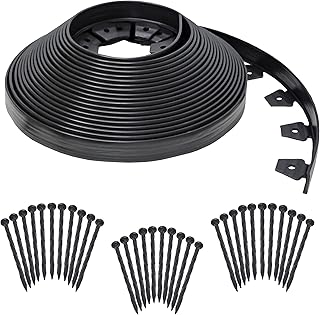
Pros
- 100 feet covers most gardens in one purchase
- Follows curves without cutting
- Anchoring spikes supplied in the kit
- Largest rating history in this category
Cons
- Spikes still need hammering into the soil
- Coil memory makes it awkward until warmed
This is the edging most gardens should start with. A hundred feet covers the beds of a typical suburban plot in one order, the profile bends around curves without any cutting, and the spikes come in the box rather than as a separate purchase you discover you need halfway through.
What makes it work over years is the anchoring. Edging that relies on being wedged into a trench drifts; edging pinned every foot with spikes stays put. It also survives contact with a mower deck by flexing rather than denting, which is the difference between plastic and thin steel in a garden that gets mown weekly.
Two honest caveats. No-dig means no trench, not no effort: driving spikes into dry clay is real work, and watering the line the day before makes an enormous difference. And the coil has memory, so lay it in the sun for an hour before installing.
Bottom line: the default choice, and the one that stays where you put it.
- Length: 100 feet
- Material: flexible plastic coil
- Colour: black
- Installation: no-dig with anchoring spikes
- Spikes: included
Water the line thoroughly the day before installing and use a rubber mallet rather than a steel hammer, which mushrooms spike heads.
Unroll the coil and leave it flat in the sun for an hour first; cold coiled plastic fights back.
Walk the line each spring with a mallet and re-seat anything the frost has lifted. Ten minutes a year keeps a run looking installed rather than abandoned.
Keep spike heads flush; a proud spike is a hazard to bare feet and mower tyres alike.

Pros
- Lowest cost per foot here
- Flexible enough for tight curves
- Simple product with nothing to go wrong
- Widely available for top-ups
Cons
- Spikes are not included
- Shallow profile is not a serious grass barrier
Sometimes the job is simply separating mulch from lawn, and for that this coil is all that is required. It bends around whatever shape you have, cuts with secateurs, and costs less per foot than anything else here.
Buy spikes separately and budget for them, because unpinned edging drifts within a season. On clay soils buy longer spikes than the standard, since the extra depth is what resists frost heave.
Do not expect it to stop aggressive spreading grass. The profile is shallow, and couch grass travels through the top few inches of soil rather than over the surface, so a deeper barrier is needed where grass pressure is real.
Bottom line: the value pick for defining beds, provided you buy spikes and keep your expectations proportionate.
- Material: flexible plastic coil
- Use: garden borders, flower beds
- Spikes: not included
- Installation: surface laid and pinned
Choose this when the job is definition rather than grass exclusion, and buy spikes at the same time.
Step up to a deeper profile if couch grass or similar spreaders border the bed.
Re-seat lifted sections each spring with a mallet.
Cut with secateurs rather than a knife; a slipped blade in coiled plastic under tension is a real risk.

Pros
- 6 inch height gives a genuine soil barrier
- Hemmed top edge removes the sharp cut edge
- Corrugation stiffens the 1 mm steel
- Reads as a deliberate design feature
Cons
- Bends permanently if struck by a mower or strimmer
- Gets hot in direct sun
Corrugated steel edging is bought to be seen. Where plastic coil disappears under mulch, this defines the bed as a visible line, and in a contemporary garden that is the entire point.
The 6 inch height also does something plastic coil rarely does: it puts real material below ground. Spreading grasses travel through the top few inches of soil, so depth is what actually excludes them, and this profile provides it even though only part of it shows.
Two practical warnings. Corrugation adds stiffness but the steel is still thin, and a mower wheel or a strimmer head that catches the top edge will bend it permanently where plastic would spring back. And it absorbs heat, which matters if it borders a path used barefoot.
Bottom line: the design-led choice, and a genuine grass barrier, provided the mower keeps its distance.
- Height: 6 inches, range includes 4, 8, 10 and 12 inch
- Length: 40 feet
- Material: corrugated steel, 1 mm thick
- Edges: hemmed
- Profile: corrugated for stiffness
Contemporary gardens where the edge is meant to be visible, and beds under real pressure from spreading grass.
Not for tightly curved beds or gardens where a mower runs right up to the border.
The top edge is hemmed, which makes it far safer to handle than unhemmed steel edging, but wear gloves when cutting to length since a cut end is not hemmed.
Keep a mowing strip of a few inches between lawn and metal so the deck never touches it.

Pros
- Purpose-built paver restraint, not decorative edging
- Snip-to-flex webs allow tight curves
- Highest rating of any product on this list
- Invisible once installed
Cons
- Wrong product for flower bed borders
- Needs long spikes into a compacted base
This is the entry on the list that is not garden edging at all, and saying so plainly saves people a wasted purchase. Paver restraint sits along the outside of a patio or path, buried at the level of the base course, and its job is to stop laid pavers from creeping outward under years of foot and vehicle load.
Without it, the outer course of a paved area migrates and the joints open. With it, the whole field stays locked. It is anchored with long spikes driven into compacted base material rather than into soft soil, and once backfilled it disappears completely.
The snip-to-flex design is what makes it work around circular patios and curved paths: cutting the connecting webs lets the strip close into a tighter radius than it would otherwise take. Its rating average is the highest here, which for a product that nobody ever sees is telling.
Bottom line: essential if you are laying pavers, and pointless around a flower bed.
- Length: 60 feet
- Type: paver restraint edging
- Feature: snip-to-flex webs for curves
- Colour: black
- Installation: buried at base course, spiked
Snip the connecting webs on the outside of a curve to tighten the radius, and leave them intact on straight runs.
Drive spikes into the compacted base, not into surrounding soft soil, or the restraint moves with the pavers it is meant to hold.
Buy this only for hard surfaces. For flower beds, choose the coil or corrugated products on this list.
Measure the perimeter of the paved area and add ten percent for curves and overlaps.

Pros
- 120 spikes supplied, enough for close spacing
- 6 inch spikes reach below the frost-active layer
- 1.5 inch low profile is mower-friendly
- Cuts to length with pruning shears
Cons
- 1.5 inch profile is shallow for grass exclusion
- Thin section flexes in hot weather
The spike count is what recommends this kit. A hundred feet with 120 spikes allows spacing of roughly one every ten inches, which is closer than most kits permit and directly determines whether a run stays put through a winter.
The profile is low at 1.5 inches, which suits its purpose: a clean line between mulch and lawn that disappears once the bed is topped up. It is not a barrier against aggressive spreading grass, and nothing at that height is.
Thin sections soften in summer heat and will follow whatever shape you leave them in, so install with the line where you want it rather than expecting to correct it later. On the other hand that same softness makes tight curves easy.
Bottom line: the pick for long runs where you want plenty of spikes in the box.
- Length: 100 feet
- Height: 1.5 inches, low profile
- Spikes: 120 included, 6 inches long
- Spike spacing: one per two to three tabs
- Cutting: pruning shears
- Installation: no-dig, hammer only
Choose this when the run is long and you want spike spacing tighter than most kits allow.
Choose a deeper profile if the bed borders vigorous lawn grass.
Install on a warm day when the coil is soft, and set the final line before the plastic cools and sets.
Re-seat spring lift with a mallet each year.

Pros
- 50 feet covers longer runs in one purchase
- 6 inch height gives real soil depth
- Corrugated profile resists flexing
- Crisp modern appearance
Cons
- Permanently deforms if struck
- Sharp edges during installation
This is the same proposition as the LAVEVE corrugated steel with a longer run in the box, which matters because joins are the weak point of metal edging and fewer of them is better.
At 6 inches tall it puts genuine material below ground, and that depth is what actually stops spreading grass entering a bed. Above ground it gives the crisp line that plastic coil deliberately avoids.
The same cautions apply as for any thin steel edging. It bends permanently rather than springing back, so keep mower decks and strimmer heads away from the top edge, and wear gloves during installation because cut steel is unforgiving.
Bottom line: the metal option for longer runs, chosen to minimise joins.
- Height: 6 inches
- Length: 50 feet
- Material: corrugated steel
- Use: landscape and paver edging
Wear gloves and eye protection when cutting steel edging to length.
Leave a mowing strip between lawn and metal so the mower never contacts the edge.
Compare against the LAVEVE on price per foot and on how many joins each option leaves in your run.
Both are the same category; buy whichever gives fewer joins for your length.

Pros
- Traditional brick look without masonry work
- Interlocking sections install without mortar
- Suits period and cottage gardens
- Good rating average
Cons
- Modular sections follow curves less smoothly than coil
- Visual honesty depends on viewing distance
Not every garden suits a black plastic line or a sheet of corrugated steel. In a cottage or period garden a brick edge is the traditional answer, and laying real brick on a mortar bed is a weekend of proper work.
This is the shortcut: interlocking sections moulded to read as brick, pushed into the soil without mortar. From a few paces it does the job, and it installs in an afternoon rather than a weekend.
The trade-offs are honest ones. Modular sections negotiate curves in facets rather than smoothly, so a tightly curved bed will show the segments. And how convincing it looks depends on how close people get; at arm's length it is clearly not fired clay.
Bottom line: the traditional-look option for gardens where plastic coil and steel would both look wrong.
- Type: interlocking brick style edging
- Installation: pushed into soil, no mortar
- Use: lawn edging, flower beds
- Style: traditional brick appearance
Cottage gardens, period properties, and anywhere a modern line would look out of place.
Not for tight curves, where modular sections show their facets.
Set a string line and level the soil before installing; brick style edging shows every deviation that coil would hide.
Firm the soil on both sides after installing so sections cannot rock.

Pros
- Deeper profile than typical coil edging
- Works as a grass barrier as well as a border
- Can be used for terracing low level changes
- Established landscape supply brand
Cons
- Stiffer than thin coil, so tight curves take effort
- Needs stakes for a stable line
Bender board occupies the middle ground in this category. It is deeper and stiffer than the thin coils that dominate the budget end, which makes it a genuine grass barrier rather than a visual line, and it is still flexible enough to bend around a bed.
MASTER MARK sells this as a terrace board, and that second use is worth knowing: set on edge and staked, it holds a small change in level, which is how you build a shallow raised bed or terrace a gentle slope without buying timber.
The stiffness is the trade. Tight curves take more force to form and more stakes to hold, so it rewards planning the line before you start rather than adjusting as you go.
Bottom line: the pick when you need edging that also holds soil back, not just edging that draws a line.
- Type: coiled bender board
- Uses: landscape edging, grass barrier, terracing
- Installation: staked
- Profile: deeper than standard coil
Terracing a gentle slope or building a shallow raised bed, where the edging has to hold soil rather than mark a line.
Also the better choice where grass pressure has defeated shallower edging.
Stake at closer intervals on curves than on straight runs; the material wants to return to straight.
Warm the coil in the sun before forming tight radii.
How to Choose Landscape Edging
Four materials dominate this category and they behave completely differently once installed. Coiled plastic follows curves and is nearly invisible. Corrugated metal reads as a deliberate design feature. Paver edging holds hard surfaces rather than beds. Bender board sits between the two. Choose by the job first, then by price.
What No-Dig Actually Means

Nearly everything in this category is now labelled no-dig, and the phrase is doing some heavy lifting. It means you do not have to excavate a trench and bury the edging, which is genuinely the hard part of the traditional method. It does not mean nothing gets driven into the ground: these systems anchor with spikes hammered through the edging every foot or so, and in dry clay or stony soil that is real work.
Two things make it far easier. Water the line thoroughly the day before, which softens the top six inches enough for spikes to go in cleanly. And use a rubber mallet rather than a claw hammer, since a steel face mushrooms the spike heads and makes the last inch a struggle. The EasyFlex and Gardzen kits both supply the spikes; count them against the length you are edging before ordering, as spacing wider than the manufacturer suggests is the usual reason a run lifts later.
Height, Depth, and What Actually Stops Grass

Buyers focus on the height above ground because that is what shows. What stops grass invading a bed is the depth below ground, because couch grass and similar spreaders travel through the top few inches of soil rather than over the surface. A decorative strip standing 2 inches proud with almost nothing buried will look tidy and stop nothing.
For a real barrier against spreading grass you want several inches in the soil, which is why the taller corrugated metal profiles, such as the 6 inch LAVEVE and Land Guard products, are the more serious answer even though only a fraction shows. For separating mulch from lawn where grass pressure is low, a shallow coil is fine.
Plastic Coil Versus Corrugated Metal

Coiled plastic edging, which covers the EasyFlex, Amazon Basics, Gardzen and MASTER MARK products here, is bought for two reasons: it follows curves without cutting, and it disappears. Once mulch is banked against it you see a dark line and nothing else. It also tolerates being hit by a mower deck, flexing rather than denting.
Corrugated metal is the opposite proposition. It is a visible design element, gives a crisp modern line, and holds a shape rather than following one. The corrugation exists to add stiffness to thin steel, and it works, but a strimmer line or a mower wheel that catches the top edge will bend it, and unlike plastic it stays bent. It also gets hot in direct sun, which is worth knowing if it borders a path children walk barefoot on. One detail worth checking on any steel edging is whether the top edge is hemmed, meaning folded back on itself. The LAVEVE product specifies hemmed edges, which removes the sharp cut edge that makes unhemmed steel edging genuinely hazardous to handle and to garden beside.
Paver Edging Is a Different Product
The EasyFlex Snip-to-Flex paver edging on this list is not garden border edging and should not be bought as such. Paver restraint sits at the outside of a patio or path, buried at the level of the base course, and its job is to stop laid pavers from creeping outward under load over years. It is anchored with long spikes into the compacted base and then hidden completely.
If you are laying pavers, this is essential and a decorative edging will not do the job. If you are edging a flower bed, it is the wrong product and will look like nothing at all, since it is designed to be invisible. The snip-to-flex design lets you cut the connecting webs to tighten a curve, which is what makes it work around circular patios.
Frost Heave and the Spring Re-Seating Problem
In any climate with a freeze and thaw cycle, edging rises. Water in the soil expands as it freezes and lifts everything in it, spikes included, and by spring a run installed flush in autumn stands proud in places. This is not a product failure, it is soil physics, and no edging on this list is immune.
Two things reduce it. Longer spikes reach below the most active layer and hold better than short ones, which is a reason to prefer kits that supply generous spikes or to buy longer ones separately. The Gardzen kit is a useful benchmark, supplying 6 inch spikes at roughly one per two or three tabs; anything much shorter is working entirely within the layer where frost is most active. And installing in autumn rather than spring means the first freeze happens while the soil around the spikes is still loose, which lets them settle rather than lift. Either way, plan on walking the line each spring with a mallet; it takes ten minutes.
Measuring, Curves, and Ordering Enough
Measure with a garden hose rather than a tape. Lay the hose along the line you want, adjust the curves until they look right from the house window, and then measure the hose. This takes five minutes and prevents the most common ordering error, which is measuring a curved bed as though it were straight and coming up ten feet short.
Add ten percent for overlap at joins and for the tighter radius you will inevitably decide you want at the corners. Coiled products are supplied in 50, 60 and 100 foot lengths here, so ordering slightly long usually costs nothing extra; the offcut is useful for a small bed elsewhere.
One more detail worth knowing: coiled edging arrives coiled and has a memory. Lay it out flat in the sun for an hour before installing and it becomes dramatically easier to work with. In cold weather, warm water over the coil does the same job.
Mowing Strips, Strimmers, and Designing Out the Damage
Most edging that looks terrible after two years was damaged by the machine used to cut the grass beside it, not by weather. A mower deck that rides up onto a metal edge bends it, a strimmer line whipping against plastic scores and eventually cuts through it, and both happen every week during the growing season.
The professional answer is a mowing strip: a few inches of gravel, brick or mulch between the lawn and the edging itself, so the mower wheel runs on that rather than against the border. It also means the strimmer never has to get close, because there is no grass growing hard against the edge. This costs almost nothing and roughly doubles how long any edging looks new.
Where a mowing strip is not practical, set plastic edging so the top sits flush with or slightly below the grass height. A mower can then pass straight over it without contact, which is precisely why so many professionally installed borders sit lower than homeowners expect. Height above ground looks like the point, and in a working garden it is often the thing to give up first.
| Pick | Material | Length | Best for |
|---|---|---|---|
| EasyFlex No-Dig Kit | Coiled plastic with spikes | 100 ft | Curved beds, general use |
| Amazon Basics Coil | Coiled plastic | Coil | Lowest cost per foot |
| LAVEVE Corrugated Metal | Corrugated steel, 6 in | 40 ft | Modern crisp lines |
| EasyFlex Snip-to-Flex | Paver restraint | 60 ft | Holding laid pavers |
| Gardzen Kit | Coiled plastic, 1.5 in | 100 ft, 120 spikes | Long runs with spikes supplied |
| Land Guard Corrugated | Corrugated steel, 6 in | 50 ft | Metal edging over longer runs |
| Polyrock Bricks | Interlocking brick style | Modular | Traditional brick look |
| MASTER MARK Terrace Board | Bender board | Coiled | Grass barrier and terracing |
Before planting inside your new borders, it is worth knowing what you are planting into; see our guide to home soil pH test kits.
Why You Should Trust Us
Every product here was checked against its live listing for material, supplied length, stated height, and whether anchoring spikes are included and how many. That last figure matters more than it appears: several kits in this category supply spikes at wider spacing than the same manufacturer recommends elsewhere, and running out halfway along a bed is a common complaint.
We have not installed these products across a season, and we do not claim otherwise. What we can do is separate four materials that share one search term, explain why a paver restraint is not a garden border, and set out the frost heave behaviour that no manufacturer mentions and every buyer in a cold climate encounters. More outdoor projects are covered in our buying guide library.
Final Thoughts
The EasyFlex No-Dig kit is our best overall pick. A hundred feet of flexible plastic with the spikes in the box covers most gardens in one purchase, it follows curves without cutting, and the anchoring system is the part that determines whether edging is still where you put it in three years.
For best value, the Amazon Basics flexible coil does the same fundamental job at the lowest cost per foot. Budget separately for spikes and expect to buy longer ones if you garden on clay.
Beyond those, buy for the look and the job. The LAVEVE or Land Guard corrugated steel if you want the metal line to be a visible design feature, the EasyFlex Snip-to-Flex if you are restraining pavers rather than edging a bed, the Gardzen kit for long runs with plenty of spikes supplied, the Polyrock bricks for a traditional look without laying real brick, and the MASTER MARK terrace board where you need a deeper grass barrier. Whichever you choose, lay it in the sun for an hour before you fight it into shape.
Frequently Asked Questions
Does no-dig landscape edging really require no digging?
It removes the trench, not the work. You still hammer anchoring spikes through the edging every foot or so, which in dry clay or stony ground is genuinely hard going. Water the line the day before to soften the soil and use a rubber mallet rather than a steel hammer, which stops the spike heads mushrooming.
What height do I need to stop grass spreading into a bed?
Depth below ground matters far more than height above it, because spreading grasses travel through the top few inches of soil. A shallow decorative strip will look tidy and stop very little. For real grass pressure, choose a taller profile such as the 6 inch corrugated steel products and accept that most of it will be buried.
Why does my edging lift out of the ground every spring?
Frost heave. Water in the soil expands as it freezes and lifts everything embedded in it, spikes included. No edging is immune. Longer spikes that reach below the most active layer help, autumn installation helps, and a ten minute walk along the line with a mallet each spring fixes the rest.
Can I use paver edging around a flower bed?
You can, but it is the wrong product. Paver restraint is designed to be buried completely at base course level so laid pavers cannot creep outward, so around a bed it will be invisible and will not define anything. Buy decorative or barrier edging for beds and keep paver restraint for hard surfaces.
How much edging should I order in 2026?
Lay a garden hose along the line you want, adjust the curves until they look right from the house, then measure the hose and add ten percent. Measuring a curved bed as though it were straight is the most common ordering mistake in this category. Coils here come in 40, 50, 60 and 100 foot lengths, so rounding up rarely costs much. More garden guides are in our category index.


Write Your Review
No reviews yet. Be the first to share your experience!