

Mirrorless bodies made cameras smaller, and tripod makers spent the following decade catching up. The result is a market where a support rated to carry 33 pounds can cost less than one rated to carry 11, and where the specification that decides whether you actually take the thing with you, folded length, is often missing from the listing entirely. Our shortlist covers 7 travel tripod for mirrorless cameras from Manfrotto, Peak Design, K&F Concept and more, chosen for the way they balance carrying weight against the load they will genuinely hold steady.
Our top pick is the Peak Design Travel Tripod for packing down to a diameter closer to a water bottle than a tent pole, which is the difference between a tripod that lives on your bag and one that lives in a cupboard. If you are still choosing the camera that goes on top, our guide to mirrorless cameras is the place to start. This list is current for October 2026.

Pros
- Nesting leg design packs far smaller in diameter
- Quick setup and takedown
- Low profile ball head adds almost no height
- Straps to the outside of a pack without snagging
Cons
- Costs well above the aluminum norm
- Listing does not publish payload or height figures
Every travel tripod claims to be compact and most of them mean short. Peak Design went after the other dimension. The legs and centre column are shaped so they nest into one another when folded, which removes the triangular void that sits in the middle of a conventional round-legged tripod. The result packs closer to the diameter of a water bottle than a bundle of poles.
That sounds like a detail and behaves like the whole product. A tripod of this profile straps to the outside of a daypack without catching on doorways or bus seats, which is the difference between a support you carry on day four of a trip and one you leave at the hotel.
The head follows the same thinking, sitting low enough that it barely adds to the folded length, and setup is genuinely fast. What Peak Design does not do is publish the numbers enthusiasts like to compare, so payload and maximum height are absent from the listing text.
Bottom line: the pick for people who have owned a tripod and stopped carrying it, chosen on packed size rather than on specification sheet bragging rights.
- Material: aluminum
- Head: ergonomic low profile ball head
- Design: nesting legs around the centre column
- Payload: not stated in listing
- Maximum height: not stated in listing
- Intended use: travel photography, camera and phone
Travellers and hikers who carry their kit all day and have historically left the tripod behind because of its bulk.
Less compelling for studio or static work, where packed size is irrelevant and the money is better spent on load capacity.
Rinse grit out of the leg joints after beach or desert use; nesting designs have tighter tolerances than round tubes and sand shows up sooner.
Hang your bag from the centre hook in wind rather than extending the column for extra height.

Pros
- 17.6 lb payload is generous for the price
- Folds to 15.4 inches at 2.73 pounds
- 360 degree BH-36 ball head included
- Longest rating history among these tripods
Cons
- Aluminum damps vibration less well than carbon
- Maximum height assumes the centre column is raised
The K&F Concept is the tripod to buy when the budget is the constraint and the requirements are ordinary. A 17.6 pound payload gives a mirrorless kit roughly three times the headroom it needs, the ball head moves in every axis and locks with one knob, and 64 inches is enough height for a standing eye-level shot for most people.
Aluminum rather than carbon means slightly more weight in the bag and slightly slower vibration damping, neither of which will be visible at normal shutter speeds. At 2.73 pounds folded down to 15.4 inches it is also genuinely portable, which is the specification most rivals leave out. It is the correct compromise at this price, because the money saved on material has clearly gone into a head that works properly rather than one that creeps under load.
Read the height figure with the usual caution: 64 inches assumes the centre column is fully extended, which is the least stable way to use any tripod. Judge it by its height with the column down and treat the rest as reserve.
Bottom line: the value pick, and the sensible default for a first proper travel tripod.
- Maximum height: 64.2 inches, 163 cm
- Folded length: 15.4 inches, 39 cm
- Net weight: 2.73 lb, 1.24 kg
- Load capacity: 17.6 lb, 8 kg
- Leg sections: 4
- Head: BH-36 360 degree ball head
- Material: aluminum
Choose this if you want maximum capability per dollar and can accept a slightly bulkier folded package than the premium options.
Step up only if packed size or carbon damping genuinely matters to how you shoot.
Retighten the ball head knob periodically; the most common complaint with budget heads is creep under load, and a partially tightened knob accelerates wear.
Keep the centre column down whenever the height allows.

Pros
- Folds small enough for a pocket or a jacket
- Two-section legs deploy almost instantly
- Aluminum build rather than plastic
- Purpose-designed for mirrorless and compact system cameras
Cons
- No meaningful standing height
- Needs a table, wall or rock to be useful
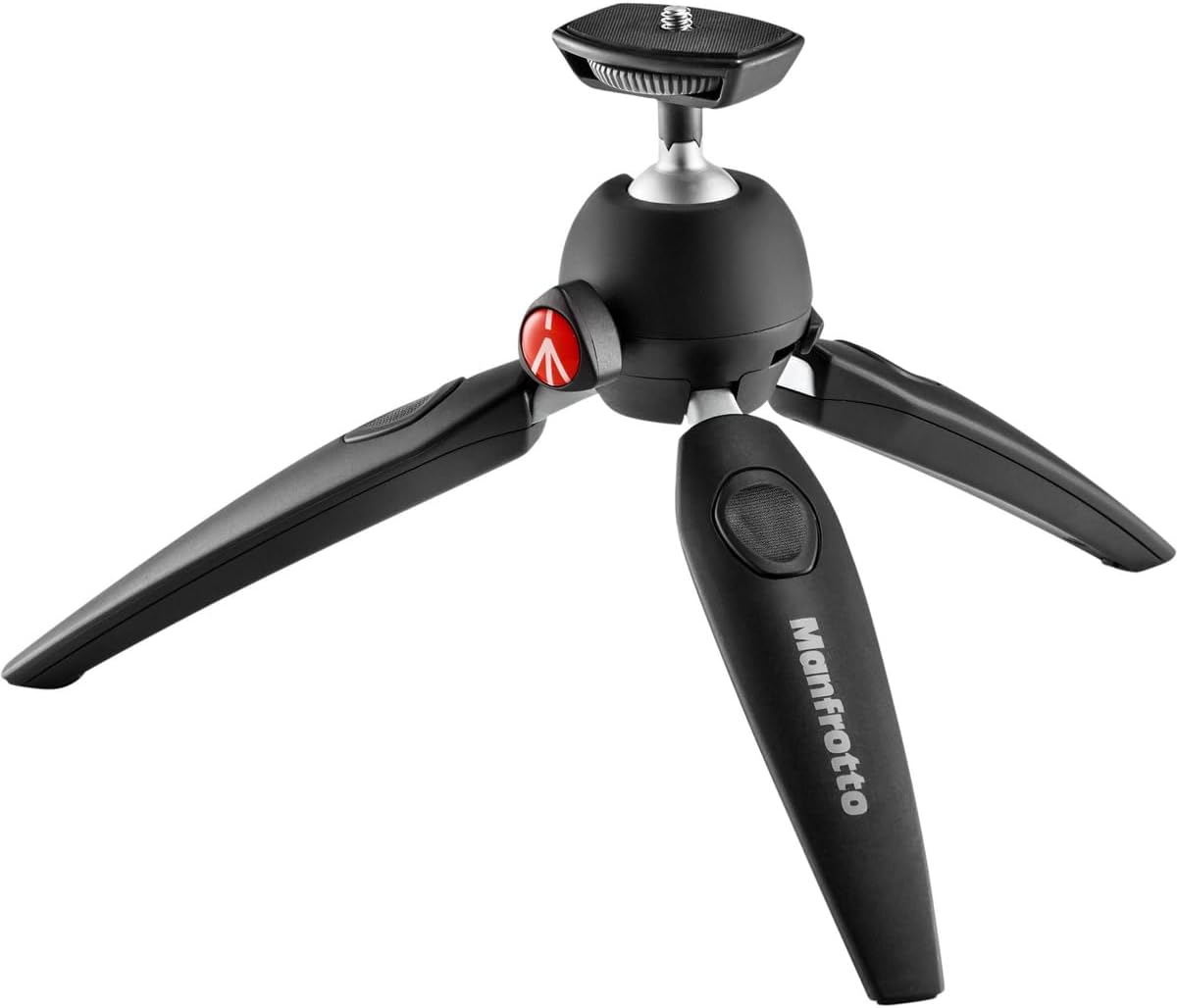
The PIXI EVO answers a different question from everything else here. It is not trying to hold a camera at eye level; it is trying to be small enough that you have a tripod at all when the shot appears unexpectedly.
Two-section legs mean it opens and locks in a couple of seconds, and the aluminum construction puts it above the plastic mini tripods that flex under anything heavier than a phone. Manfrotto designed it around compact system and mirrorless bodies specifically, which is why the head holds a real camera without sagging.
The limitation is obvious and worth stating plainly: you need a surface. On a table, a wall, a rock, or a car roof it turns a handheld situation into a stable one. On open ground it puts your camera a few inches above the dirt, which is occasionally exactly what you want and usually not.
Bottom line: the tripod you actually have with you, best owned alongside a full-height one rather than instead of it.
- Model: MTPIXIEVO-BK
- Type: 2-section mini tripod
- Material: aluminum
- Colour: black
- Intended use: mirrorless, compact system cameras, DSLR, video
Travellers who want a tripod in the bag at all times, vloggers shooting at desk or table height, and anyone whose main tripod is too bulky for a city day.
Not a substitute for a full-height tripod on landscape work.
Look for waist-height and above surfaces rather than putting it on the ground: walls, railings, planters and car roofs all give a far more useful perspective.
Use the self-timer or a remote, since pressing the shutter on a small tripod is enough to shift the frame.

Pros
- Carbon fiber damps vibration faster than aluminum
- Dual 360 degree pan head suits video movement
- 73.6 inch maximum height
- Quick release plate system
Cons
- Lowest stated payload here at 11 lb
- Carbon cracks rather than dents under sharp impact
This is the video specialist of the group, and the head is the reason. A dual 360 degree pan arrangement is built for controlled horizontal movement, which a ball head simply cannot do: unlock a ball and it moves in every axis at once, so a pan turns into a wobble.
Carbon fiber is the other half of the argument. It damps vibration faster than aluminum, so the frame settles sooner after you touch the rig, which matters more in video than in stills because there is no shutter speed to hide behind.
Two things to weigh. Its stated 11 pound load is the lowest on this list, still ample for a mirrorless body with a zoom but less generous if you add a cage, a monitor and a microphone. And carbon fiber responds to a hard knock by cracking where aluminum would dent and carry on, so it rewards careful handling.
Bottom line: the pick for travel video work, chosen for the head and the damping rather than for raw capacity.
- Model: JJ06 GlideGo
- Material: carbon fiber
- Maximum height: 73.6 inches
- Load capacity: 11 lb
- Head: dual 360 degree pan head
- Quick release: UKA plate system
Built for run-and-gun travel video: interviews, establishing shots and slow pans where a ball head would fight you.
Stills photographers gain less from the head, though they still benefit from the carbon damping.
Do not overtighten carbon leg locks. The material tolerates clamping force poorly compared with aluminum and the tubes are the expensive part.
Inspect the legs after any hard knock, since carbon damage can be internal and invisible.
Pros
- 33 lb payload, by far the highest here
- Adjusts down to 16 inches for low angle work
- Converts to a monopod
- Ball head detaches for use elsewhere
Cons
- Heavier to carry than the carbon option
- Highest payload is more than a mirrorless kit needs
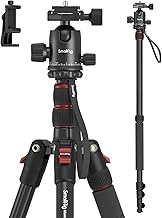
The SmallRig is the most flexible support here and the numbers explain why. A 33 pound payload is roughly six times what a mirrorless kit weighs, and that headroom is what makes a setup settle quickly instead of oscillating after you let go.
More useful still is the bottom of its range. It adjusts down to 16 inches, which opens up close-up and ground-level work that most travel tripods cannot reach without you lying in the dirt. Anyone photographing flowers, food, or products should treat minimum height as seriously as maximum, and few listings even mention it.
It also converts to a monopod, which is worth more on the road than it sounds. Plenty of museums, galleries and events ban tripods outright while permitting monopods, and here you carry the parts anyway.
Bottom line: the versatility pick, and the one to choose if your subjects are as often at your feet as at eye level.
- Height range: 16 to 71 inches
- Payload: 33 lb
- Material: aluminum
- Head: detachable 360 degree ball head
- Conversion: tripod to monopod
- Intended use: camera and phone
For low angle work, splay the legs fully and drop the column rather than shortening individual sections; you keep more of the bracing that way.
Detach the ball head onto the monopod leg for events where tripods are not allowed.
Check the monopod conversion threads for grit before screwing them together; cross-threading an alloy fitting is difficult to undo.
Keep the payload well under the rating for the steadiest results, regardless of what the label allows.

Pros
- 74 inch maximum height, the tallest here
- Pan head suits horizontal movement
- Handles DSLR, mirrorless, phones and action cameras
- Strong rating history for the price
Cons
- Tall aluminum legs flex more at full extension
- Folded length is longer than compact rivals
Height is the selling point here, and 74 inches is the tallest figure on this list. That matters more than it sounds for anyone above average height, since shooting through a viewfinder while stooping gets old within an afternoon, and it also lets you shoot over crowds and railings.
The 360 degree pan head is a better match for casual video than a ball head, and the mount accepts everything from a mirrorless body to a phone or an action camera, which suits a household where the tripod is shared.
The trade-offs come with the height. Aluminum legs extended to their full length flex more than shorter ones, so the top of the range is best treated as occasional rather than default, and the folded length is longer than the compact designs above. Neither matters if the tripod travels in a car boot rather than on your back.
Bottom line: the height-per-dollar pick, best for road trips rather than long hikes.
- Maximum height: 74 inches
- Material: aluminum
- Head: 360 degree pan head
- Compatible with: DSLR, mirrorless, smartphone, action camera
- Design: foldable travel stand
Buy for height and price. If your tripod travels by car and stands on flat ground, the compromises barely register.
Choose a compact design instead if you carry it on your back all day.
Extend the thickest leg sections first and leave the thinnest for last; you keep far more rigidity that way at any given height.
Hang weight from the centre for stability outdoors rather than trusting the legs alone.

Pros
- Lever locks open in one pass with one hand
- Compact travel kit format with ball head included
- Manfrotto build quality and parts availability
- Works well in gloves or cold weather
Cons
- Levers eventually need retensioning
- Lever mechanism adds a little folded bulk
The Befree Advanced is the tripod for people who set up and tear down constantly. Its lever locks flip open in a single pass with one hand, where twist locks need a two-handed rolling motion, and in cold weather or gloves that difference is not small.
It is a kit rather than a bare set of legs, so the ball head is matched to the tripod rather than bought separately, and Manfrotto's parts availability means a worn lock or a lost plate is a purchase rather than a write-off. That matters on gear you expect to keep for a decade.
Two honest caveats. Lever mechanisms need occasional retensioning with a small screwdriver as they bed in, which is a two minute job people forget to do until a leg slips. And the levers add a little width to the folded profile compared with twist locks.
Bottom line: the pick for fast, repeated setups, and for anyone who values being able to buy a replacement part in five years.
- Series: Befree Advanced
- Material: aluminum
- Leg locks: lever closure
- Head: ball head, supplied as a kit
- Intended use: DSLR and mirrorless cameras
Open all lever locks on a leg in one downward sweep rather than one at a time; that is the speed advantage you paid for.
Retension the levers with the supplied tool when a leg starts to creep under load.
Keep grit out of the lever pivots, since they are harder to flush than twist collars.
Store with the locks closed but not clamped tight, which preserves the tension springs.
How to Choose a Travel Tripod for a Mirrorless Camera
Three numbers decide whether a travel tripod works: what it weighs, what it holds, and how long it is when folded. Manufacturers publish the first two and are strangely quiet about the third, which is unfortunate, because folded length is the number that determines whether the tripod goes in a carry-on or gets left at home.
Payload Ratings and What They Do Not Tell You

The spread across this list is striking. The SmallRig is rated to a 33 pound payload, the K&F Concept to 17.6 pounds, and the carbon fiber ULANZI to 11 pounds, and those figures run in almost the opposite order to what people assume about price and materials. A mirrorless body with a fast zoom rarely exceeds 5 pounds, so every tripod here clears the requirement on paper.
What a payload rating does not describe is behaviour at the limit. It states the mass the legs will support without collapsing, not the mass at which the setup stops vibrating after you let go. In practice a tripod loaded to half its rating settles quickly, while one loaded near the maximum keeps oscillating long enough to blur a two second exposure. Treat the published figure as a ceiling to stay well under rather than a target to hit.
Folded Length Is the Specification That Decides Everything
A tripod you do not carry is worth nothing, and carrying is decided by packed size rather than by weight. Most travel tripods in this class fold to somewhere between 15 and 20 inches, which fits diagonally in a carry-on but sticks out of a daypack. Mini tripods like the Manfrotto PIXI EVO fold to a fraction of that and slip into a jacket pocket, at the cost of any real height.
The K&F Concept is a useful reference point because it actually publishes the figure, if only on its product images: 15.4 inches folded, 2.73 pounds, over four leg sections. Anything much longer than that stops being a travel tripod regardless of what the name says.
Packed diameter matters just as much and is discussed even less. The Peak Design Travel Tripod is built around this idea: the legs and centre column are shaped to nest into each other so the folded bundle has almost no dead space inside it. Conventional round-legged tripods leave a triangular void in the middle, which is why two tripods of identical folded length can occupy very different amounts of bag.
Carbon Fiber Versus Aluminum
Carbon fiber buys you two things: roughly 20 to 30 percent less weight for the same stiffness, and better damping, meaning vibration dies away faster. It costs considerably more, and it is more vulnerable to a sharp impact, since carbon tends to crack where aluminum dents and carries on working.
The ULANZI JJ06 is the carbon option here, and it pairs the material with a video-oriented head. Everything else on this list is aluminum, which for most photographers is the right call: at travel tripod sizes the absolute weight saving is measured in a few hundred grams, and that money often buys a better head instead.
Heads: Ball, Pan, and Video
A ball head, used on the Peak Design, the K&F Concept, the SmallRig, and the Manfrotto Befree, moves in every axis at once and locks with a single knob. It is the fastest way to frame a still image and the most frustrating way to pan smoothly, because there is nothing to control the rate of movement.
Video work wants the opposite. The ULANZI uses a dual 360 degree pan head designed for controlled horizontal movement, and the CAMBOFOTO ships a pan head rather than a ball. If your mirrorless camera spends most of its time recording rather than shooting stills, that difference will matter more than any leg specification. Our vlogging camera guide covers the bodies most often paired with this kind of head.
Leg Locks, Sections, and Setup Speed
Twist locks are compact and seal well against grit, but they require a two-handed rolling motion to release several sections at once. Lever locks, used on the Manfrotto Befree Advanced, can be flipped open in one pass with one hand, which is quicker and easier in gloves, at the cost of a slightly wider folded profile and levers that eventually need retensioning.
More leg sections mean a shorter folded length and a taller maximum height, but every additional joint adds flex and another thing to clean. Four sections is the usual travel compromise. Two-section designs like the PIXI EVO trade height for near-instant deployment.
Working Height, Centre Columns, and Low Angles
Advertised maximum height almost always assumes the centre column is fully extended, and a raised centre column is the least stable configuration a tripod has. Treat the height with the column down as the real working height and add the column only when you have no alternative.
Minimum height is the neglected end of the range. The SmallRig adjusts from 16 inches up to 71 inches, and that low figure is what makes close-up and ground-level work possible without lying in the dirt. If you shoot flowers, food, or product stills, minimum height deserves as much attention as maximum.
Monopod Conversion and Other Genuinely Useful Extras
Several tripods here, including the SmallRig and the CAMBOFOTO, convert to a monopod by detaching a leg or the centre column. This is more useful than it sounds for travel, since a monopod is accepted in many museums, galleries, and events where tripods are banned outright, and it weighs nothing extra because you were carrying the parts anyway.
Quick release plates are the other detail worth checking. Arca-Swiss style plates are close to a universal standard and interchange between brands; proprietary plates lock you in and are expensive to replace when lost. A hook under the centre column for hanging your bag is the cheapest stability upgrade any tripod offers, and plenty of models still omit it.
Free Stability, and the Setting Most People Forget

The cheapest upgrade to any tripod is not a part. Hang your camera bag from the hook under the centre column and the whole setup gains mass exactly where it helps, lowering the centre of gravity and damping the sway that wind induces in extended legs. If there is no hook, a strap looped around the column junction does the same job.
The setting people forget is stabilisation. In-body and in-lens stabilisation systems are designed to counteract movement, and on a locked-off tripod there is no movement to counteract. Some systems then hunt for motion that is not there and introduce a slow drift of their own, which shows up as softness in long exposures. Modern bodies increasingly detect tripod use automatically, but if you are shooting multi-second frames and the results are inexplicably soft, switching stabilisation off is the first thing to try.
Two more habits cost nothing. Use the self-timer or a remote release rather than pressing the shutter by hand, since the press itself is enough to move the frame at slow speeds. And extend the thickest leg sections before the thinnest, because rigidity falls away sharply as the narrow lower tubes come out. Together these three habits do more for sharpness than upgrading from aluminum to carbon.
| Pick | Material | Stated max height | Stated payload | Head type |
|---|---|---|---|---|
| Peak Design Travel Tripod | Aluminum | Not stated in listing | Not stated in listing | Ergonomic ball head |
| K&F Concept 64 inch | Aluminum | 64 inches | 17.6 lb | 360 degree ball head |
| Manfrotto PIXI EVO | Aluminum | Mini, 2 sections | Not stated in listing | Ball head |
| ULANZI JJ06 GlideGo | Carbon fiber | 73.6 inches | 11 lb | Dual 360 degree pan head |
| SmallRig 71 inch | Aluminum | 71 inches, from 16 inches | 33 lb | Detachable ball head |
| CAMBOFOTO 74 inch | Aluminum | 74 inches | Not stated in listing | 360 degree pan head |
| Manfrotto Befree Advanced | Aluminum | Not stated in listing | Not stated in listing | Ball head, lever leg locks |
Why You Should Trust Us
Every tripod here was checked against its live listing for the figures that decide real-world use: material, stated maximum and minimum height, published payload, head type, and leg lock mechanism. Where a manufacturer does not publish a number, our table says so rather than estimating, because an invented payload figure is worse than an honest gap.
We have not loaded these legs on a vibration rig, and we do not claim to have. What we can do is read the specifications critically, point out where a headline figure such as maximum height depends on a configuration nobody should shoot in, and flag the specification that listings routinely omit. Our wider camera coverage lives in the electronics section.
Final Thoughts
The Peak Design Travel Tripod is our best overall pick because it solves the problem that actually stops people using a tripod. Its legs nest around the centre column so the folded bundle has almost no wasted space, and a tripod that straps to the outside of a daypack without catching on doorways is a tripod you will still be carrying on day four of a trip.
For best value, the K&F Concept 64 inch aluminum model is the clear choice: a 17.6 pound payload and a 360 degree ball head at a price that makes the decision easy, backed by the largest body of customer feedback on this list.
After that, match the tripod to the work. The SmallRig for anyone who shoots low or wants a monopod without carrying one, the ULANZI JJ06 for video shooters who need a proper pan head and carbon damping, the CAMBOFOTO for maximum height on a budget, the Manfrotto Befree Advanced for one-handed lever setup, and the PIXI EVO as the mini tripod that lives in a jacket pocket for the shots you did not plan. For wider framing on those landscape stops, see our guide to wide angle cameras.
Frequently Asked Questions
What payload rating do I need for a mirrorless camera?
Far less than most people buy. A mirrorless body with a fast zoom rarely passes 5 pounds, so even the lowest rated tripod here at 11 pounds has ample margin. The reason to want extra headroom is stability rather than safety: a support loaded to half its rating stops vibrating much faster than one near its limit.
Is carbon fiber worth the extra cost on a travel tripod for mirrorless cameras?
It buys roughly 20 to 30 percent less weight at equal stiffness plus faster vibration damping. At travel tripod sizes that saving is a few hundred grams, so for most photographers the money is better spent on a better head. Carbon earns its price if you hike long distances or shoot long exposures in wind.
Will a travel tripod fit in carry-on luggage?
Most fold to between 15 and 20 inches and fit diagonally in a standard carry-on, though airline rules on tripods vary and some treat them as a potential blunt object. Packed diameter decides how much room is left for everything else, which is where nesting designs such as the Peak Design have a real advantage. A mini tripod avoids the question entirely.
Should I extend the centre column?
Only as a last resort. A raised centre column is the least stable configuration a tripod offers, since the load sits on a single tube instead of three braced legs. Advertised maximum heights almost always assume it is fully up, so judge a tripod by its height with the column down and treat the rest as an emergency reserve.
Do I need a ball head or a pan head in 2026?
Ball heads are faster for stills and awkward for smooth movement; pan and video heads are the reverse. If your camera mostly shoots stills, take the ball head. If it mostly records, a dual pan head like the one on the ULANZI will matter more than any leg specification. More gear guides are collected in our articles section.


Write Your Review
No reviews yet. Be the first to share your experience!