

Search “leather balm” on Amazon and you get three different products mixed into one shelf: true conditioning balms that feed and protect leather with oils and waxes, recoloring balms that patch scratches and faded color with pigmented dye, and general-purpose salves marketed for wood and leather furniture together. They are not interchangeable, and grabbing the wrong one is how people end up with a boot that still cracks or a couch cushion with a smear of the wrong shade of brown. This guide sorts the leather balm category into those groups so you can match the formula to the job, whether that is softening a pair of hiking boots or refreshing a leather sofa. We also point out where a listing’s marketing language overstates what the formula can actually do, since “restores like new” claims are common even on products that only condition and never touch color.
Our top pick is the Leather Honey Leather Conditioner for its non-toxic, deep-penetrating formula that softens and waterproofs boots, bags, jackets, and furniture without leaving a heavy shine or a strong chemical smell. Below you will find 8 picks from Obenauf’s, Bickmore, Leather Honey and more, split clearly between conditioning balms built to nourish leather and recoloring balms built to fix how it looks, so you can shop with the right goal in mind.

Pros
- Non-toxic, food-grade-safe formula made in the USA since 1968
- Deeply conditions and adds water resistance to boots, bags, jackets, and furniture
- One of the most-reviewed leather conditioners on Amazon, so real feedback is easy to find
- A little goes a long way; thin layers absorb fully without a greasy feel
Cons
- Can slightly darken very light or unfinished leather if applied too heavily
- Thick, honey-like texture takes some effort to work in
Leather Honey is one of the longest-running names in leather conditioning, and its Amazon listing carries far more customer ratings than any other product in this roundup. The formula is built to replace oils that leather loses over time, softening stiff hides and adding a layer of water resistance without an artificial sheen.
It works across a wide range of leather goods, from work boots and belts to handbags, jackets, and upholstered furniture. Buyers consistently point to how little product is needed per application, since the balm spreads thin and absorbs fully into the grain rather than sitting on top.
The main caution is on very light or unfinished leather, where oil-based balms can cause a visible, if temporary, darkening. A trial patch in a hidden spot is the safest way to check how a specific piece will react before treating the whole item.
Bottom line: for anyone who wants one reliable conditioning balm that covers boots, bags, jackets, and furniture without guesswork, this is the safest default pick in the category.
- Type: True conditioning balm (oil-based)
- Common sizes: 4 oz to 1 gallon
- Leather types: Full-grain, top-grain, finished leather
- Not recommended for: Suede, nubuck
- Origin: Made in the USA
Apply a thin, even coat with a soft cloth, let it absorb for a few minutes, then buff off any excess. Two to three thin coats work better than one heavy application, especially on very dry leather.
Keep away from suede and nubuck surfaces. Ventilate the room while applying and allow the item to air out for a few hours before storing it in an enclosed space like a closet or garment bag.

Pros
- Restores faded or scratched color on furniture, car seats, and bags
- Blends into surrounding leather rather than sitting on top like paint
- Medium brown shade matches a common range of furniture leather tones
Cons
- Color-only formula; it does not add long-term conditioning oils
- Best results need a trial patch and careful blending, not a quick wipe-on fix
Furniture Clinic's recoloring balm is built for a different job than a conditioning balm: it carries pigment meant to rebuild color on leather that has faded, scratched, or worn thin at the edges. The medium brown shade sits in the middle of the brand's range, making it one of the easier colors to blend into common furniture and car seat tones.
Reviewers most often use it on couches, recliners, and vehicle interiors where a lighter, thin application blends better than one heavy coat. The balm is designed to bond to the surface rather than penetrate deeply, which is why it excels at hiding damage but should not be relied on as a conditioner.
Getting an even result takes patience: applying in thin layers, letting each one dry, and checking the match in daylight before committing to a larger area all make a visible difference in the outcome.
Bottom line: a solid entry point for anyone dealing with scratched or faded furniture leather who needs color repair rather than conditioning.
- Type: Recoloring balm (pigmented)
- Shade: Medium brown
- Best for: Furniture, couches, car seats
- Application: Sponge or cloth, thin layers
- Brand: Furniture Clinic
Best suited to homeowners dealing with a faded or scratched leather couch, recliner, or car seat rather than someone simply looking to condition healthy leather.
Always apply a trial patch in an inconspicuous spot first, and compare the dried color in natural light before treating a visible area of furniture.

Pros
- Cleans and conditions leather in one step
- Formulated not to darken finished leather
- Trusted by boot and saddle owners for decades, made in the USA
Cons
- Not intended for suede or nubuck
- Some buyers want a glossier finish on smooth dress leather
Bick 4 is made by Bickmore, a leather care company that has been producing boot, saddle, and equestrian gear conditioners since 1882. The Bick 4 formula is a cleaner and conditioner combined, aimed at cutting the number of products someone needs to keep leather looking presentable.
Its main selling point relative to oil-heavy conditioners is that it is formulated not to darken finished leather, which makes it a safer choice for dress shoes, lighter-colored bags, and furniture where a color shift would be noticeable. Reviewers across boots, saddles, and furniture consistently mention how far a single bottle stretches.
It is not marketed for suede, nubuck, or unfinished leather, and buyers looking for a very glossy show finish sometimes reach for a separate leather polish afterward.
Bottom line: an efficient, budget-friendly two-in-one pick for anyone who wants to clean and condition without darkening the leather.
- Type: True conditioner and cleaner combo
- Common sizes: 8 oz, 16 oz
- Darkening: Formulated not to darken finished leather
- Leather types: Boots, furniture, jackets, auto interiors, apparel
- Origin: Made in the USA
Avoid using on suede or nubuck. Wipe on with a clean cloth and buff after a few minutes; no water rinse is needed since the formula cleans and conditions together.
Apply a small amount with a soft cloth in circular motions, then buff with a dry cloth. Repeat on very dry leather rather than saturating it in one pass.
Pros
- Natural balsam formula with no silicone or petroleum solvents
- Softens and water-resists leather without a greasy residue
- Works on saddlery and tack as well as bags, boots, and furniture
Cons
- Small tin empties faster on large surfaces like sofas
- Mild natural scent some buyers notice at first use
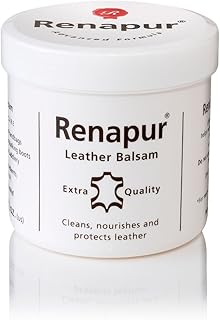
Renapur Leather Balsam was originally developed in Germany as a natural alternative to solvent-heavy leather cleaners, and the current formula still leans on that approach: no silicone, no petroleum solvents, just a balsam base meant to soften and protect leather. It has built a following among owners of saddlery and tack, where harsh chemicals are a real concern around animals.
Everyday users apply it to boots, bags, jackets, and furniture with similar results: leather that feels supple rather than coated, with a light water-resistant layer that does not leave a heavy shine. The included applicator sponge makes it easy to control how much product goes on.
Because the tin is relatively small, larger items like a full sofa or a saddle set will use it up faster than a single pair of boots or a handbag would.
Bottom line: a strong pick for buyers who specifically want a natural, low-chemical balm and do not mind restocking a bit more often on bigger jobs.
- Type: True conditioning balsam (natural)
- Formula: Free of silicone and petroleum solvents
- Includes: Applicator sponge
- Best for: Boots, bags, furniture, saddlery and tack
- Origin: Formulated in Germany
A good fit for buyers who prioritize natural ingredients, including saddlery and tack owners who need a balm that is gentle around animals.
Budget for a second tin if you are treating a large surface like a full sofa, since the balsam is sold in relatively small containers compared to some competitors.

Pros
- Includes an applicator sponge for a complete recoloring kit
- Dark brown shade covers common furniture and car seat scuffs
- Budget-friendly for spot repairs
Cons
- Coverage is thinner than professional dye kits and may need multiple coats
- Not a substitute for conditioning oils on dry leather
FORTIVO sells its recoloring balm in a wide range of shades, and the dark brown version is one of the most requested for furniture and car interiors. Like other recoloring balms, it is a pigmented formula meant to rebuild color on scratched or faded leather rather than condition it.
The kit includes an applicator sponge, which keeps the total cost down compared to buying a bare tin and sourcing your own tools. Reviewers use it most often on couches and car seats, applying thin coats and letting each one dry before adding another.
As with any recoloring balm, results depend heavily on technique: rushing a single thick coat tends to look uneven, while several thin layers blend much better into the surrounding leather.
Bottom line: a practical, wallet-friendly recoloring kit for anyone tackling a scratched or faded dark brown leather surface.
- Type: Recoloring balm (pigmented)
- Shade: Dark brown
- Includes: Applicator sponge
- Best for: Couches, car seats, bags
- Brand: FORTIVO
Apply thin coats with the included sponge, letting each layer dry before adding the next. Two to three light coats generally blend better than one heavy application.
Work in a ventilated space and check the color match on a hidden section before treating a visible area, since shade can look slightly different once fully dry.

Pros
- Beeswax and natural oil blend built for heavy outdoor use
- Highest average customer rating among the true conditioners in this roundup
- Popular with hikers and hunters for waterproofing work boots
Cons
- Heavier formula darkens lighter leather more than lighter conditioners
- Thicker texture takes longer to fully absorb
Obenauf's Heavy Duty LP leans further into heavy-duty territory than most conditioning balms on this list. The formula is built around natural oils and beeswax, aimed squarely at boots and gear that spend real time outdoors in mud, snow, or wet trails rather than dress shoes or handbags.
Hikers, hunters, and outdoor workers make up much of its customer base, and the balm's water resistance holds up well after repeated exposure to moisture. It carries the highest average rating among the true conditioning balms in this roundup, which lines up with its focused use case.
The tradeoff for that heavy-duty performance is a thicker texture that takes longer to work in and absorb, and it will darken lighter leather more noticeably than a lighter conditioner would.
Bottom line: the strongest pick here for work boots and outdoor gear that need serious waterproofing, not for lighter dress or fashion leather.
- Type: True conditioning balm (heavy-duty, natural oil and beeswax)
- Size: 8 oz
- Best for: Work boots, hiking boots, outdoor gear
- Water resistance: Strong after application
- Note: Darkens leather more than lighter formulas
Best suited to hikers, hunters, and outdoor workers who need serious water resistance on boots rather than someone conditioning dress shoes or light bags.
Warm the tin slightly if the balm feels stiff, apply with a cloth in thin layers, and allow extra time for full absorption compared to lighter conditioners.
Pros
- Two-in-one cleaner and conditioner cuts down on prep steps
- Formulated for a wide range of surfaces from purses to car seats
- Water-based formula wipes on and off cleanly
Cons
- Lighter conditioning power than oil-based balms on very dry leather
- Multiple applications may be needed on heavily cracked leather
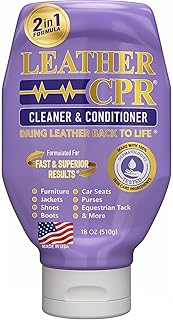
Leather CPR takes a different approach than the oil-based balms in this roundup: it is a water-based cleaner and conditioner meant to be applied and wiped off in a single, low-mess step. That makes it a convenient option for routine maintenance on furniture, car seats, handbags, and boots without committing to a longer conditioning process.
Buyers generally reach for it as an easy, frequent-use product rather than a deep restoration treatment, since the water-based formula does not penetrate as deeply as an oil or beeswax balm. It is a reasonable middle ground for people who want leather to look and feel maintained without a heavier routine.
On leather that is already dry or cracked, it typically takes more than one application to see a meaningful improvement, and an oil-based conditioner may still be needed alongside it for deeper conditioning.
Bottom line: a convenient, lower-mess option for routine leather upkeep rather than a replacement for a deep-conditioning balm.
- Type: True conditioner and cleaner combo (water-based)
- Size: 18 oz
- Best for: Furniture, car seats, handbags, boots
- Residue: Low, wipes clean
- Use case: Routine maintenance
Best used as a regular upkeep step. For leather that is already dry or cracked, pair it with a deeper oil-based conditioning balm rather than relying on it alone.
Spray or apply with a cloth, work into the leather, then wipe off excess with a clean, dry cloth. Check colorfastness on a hidden area first for dyed or painted leather.
Pros
- Repair kit format bundles balm with basic application tools
- Black shade suits jackets, bags, and dark furniture
- Affordable option for small scuffs and scratches
Cons
- Newer brand with a smaller review history than the other recoloring balms here
- Not designed to condition or waterproof leather
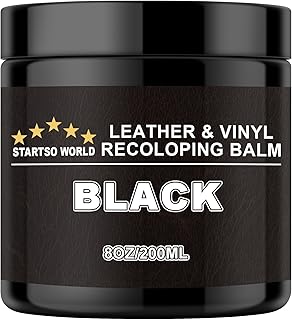
STARTSO WORLD's black recoloring balm is aimed at small, targeted repairs rather than a full furniture recoloring project. Like the other pigmented balms in this list, it is meant to rebuild color on scuffed or scratched black leather, not to condition or waterproof it.
It comes packaged as a repair kit with basic application tools included, which keeps the total cost low for someone dealing with a single scratch on a couch, bag, or jacket rather than an entire piece of furniture. Black is one of the more forgiving shades to color-match, since minor variations are less noticeable than with lighter browns.
The brand has a shorter track record on Amazon than names like Furniture Clinic or FORTIVO, so buyers doing a larger project may want to start with a small area before committing to full coverage.
Bottom line: a low-cost option for small black leather touch-ups rather than a full-scale recoloring project.
- Type: Recoloring balm (pigmented)
- Shade: Black
- Includes: Basic application tools
- Best for: Small scuffs on furniture, bags, jackets
- Brand: STARTSO WORLD
Best for small, targeted touch-ups on black leather rather than large furniture recoloring projects.
Clean the area first, then apply thin coats with the included applicator, letting each layer dry before adding more for full coverage.
How to Choose the Best Leather Balm
Leather balm is a broad label, and the products sold under it are built for different outcomes. Before comparing brands, it helps to know what each type of balm is actually formulated to do and where it falls short.
Conditioning Balm vs. Recoloring Balm: Know the Difference

A true conditioning balm, like the oil-and-wax formulas from Leather Honey, Bickmore, or Obenauf’s, is meant to replace natural oils that leather loses over time. It softens stiff hides, helps prevent cracking, and adds a degree of water resistance. It does not change the color of the leather in any meaningful way, aside from a slight, temporary darkening as the oils absorb.
A recoloring balm is a different product entirely. It carries pigment, similar to a thin dye, and is meant to cover scratches, sun fading, or worn edges by rebuilding color on the surface. Recoloring balms from brands like Furniture Clinic, FORTIVO, and STARTSO WORLD are popular for couches and car seats precisely because they fix how damage looks, not because they feed the leather underneath. Using a recoloring balm expecting it to condition, or using a conditioning balm expecting it to hide a scratch, is the most common mismatch in this category.
There is a third group worth flagging even though it is not part of this roundup: general “leather and wood” salves marketed for furniture care. Those products are formulated to be safe on finished wood as well as leather, which usually means a lighter, more universal formula that is not as concentrated as a dedicated leather conditioner. If your project is a wood-and-leather piece, such as a leather-inlaid desk, that separate category is worth researching on its own rather than assuming a leather-only balm is interchangeable.
Ingredients: Natural Oils and Waxes vs. Synthetic Fillers

Most of the respected conditioning balms lean on mink oil, beeswax, lanolin, or neatsfoot oil as the base. These are the same ingredients leather has always been treated with, and they tend to soak in rather than sit on top. Obenauf’s Heavy Duty LP is a good example of a formula built around natural oils and beeswax specifically for leather that takes a beating outdoors.
Recoloring balms are formulated differently on purpose. They rely on pigment carried in a wax or acrylic base so it can bond to the surface and hide damage, rather than penetrate deep into the hide. That is not a flaw, it is simply a different engineering goal, so do not judge a recoloring balm by how “nourishing” it feels going on.
A third group sits between the two: water-based cleaner-and-conditioner combos, like Leather CPR, which trade some of the deep conditioning power of an oil-based balm for a lighter formula that wipes on and off in one step. These are worth considering if you want fewer steps in your leather care routine and do not need heavy-duty waterproofing.
Leather Type and Finish Compatibility
Full-grain and top-grain leather generally handle conditioning balms well. Suede, nubuck, and patent leather are different stories: oil-based balms can stain suede permanently, and patent leather’s coated surface does not need conditioning at all. Always check the label for suede or nubuck warnings before applying any balm from this list.
Recoloring balms need an even closer color match. Manufacturers usually offer a shade range such as black, dark brown, medium brown, and camel, and picking the wrong one can leave an obvious patch. A small trial patch in a hidden spot, like the underside of a cushion or the inside of a boot cuff, is worth the extra five minutes before treating a visible area.
Application and Drying Time

Conditioning balms are typically wiped on with a cloth, left to absorb for a few minutes to a few hours depending on how thick the layer is, then buffed. Most brands recommend two to three thin coats rather than one thick one, since a heavy single application can leave a greasy surface that takes days to fully absorb.
Recoloring balms usually need more patience. Because they are rebuilding color, brands typically recommend applying in thin layers with a sponge or cloth, letting each layer dry before adding the next, and sometimes sealing the result with a separate protective finish. Rushing this step is the most common reason recoloring projects look patchy.
Coverage Area and How Long a Tin Lasts
A little conditioning balm goes a long way. An 8-ounce tin of a concentrated formula can condition several pairs of boots, a couple of bags, and a jacket over the course of a year with normal use, since only a thin layer is needed each time. Furniture is the exception: a full sofa or a set of car seats will use up a tin much faster than a single pair of boots.
Recoloring balms also depend heavily on the size of the damaged area. Spot-repairing a scuffed handbag corner uses very little product, while recoloring an entire couch or a full set of car seats can require multiple applications across the whole surface, so buying an extra tin for a large furniture job is common.
Smell, Residue, and Finish
Natural oil and beeswax balms carry a mild, earthy scent that fades within a day or two. A handful of buyers describe the scent as noticeable at first use, which is worth knowing if you are treating something like a suitcase or a piece of carry-on luggage that will sit closed for a while afterward. Water-based cleaner-and-conditioner combos tend to have less scent but also lighter conditioning power on very dry leather.
Finish preference is personal: some conditioning balms leave a subtle sheen, while others dry to a matte, factory-original look. Recoloring balms almost always leave a slightly satin finish since the pigment sits closer to the surface, and several brands sell a separate matte or gloss topcoat if you want to adjust that after the color repair is done.
| Balm Type | What It Does | Best For | Not Suited For |
|---|---|---|---|
| True Conditioning Balm | Feeds leather with oils and waxes, softens and water-resists it | Boots, bags, jackets, saddlery, furniture upkeep | Hiding scratches or faded color |
| Recoloring Balm | Rebuilds pigment on the surface to cover damage | Scuffed or faded couches, car seats, worn bag corners | Long-term conditioning or waterproofing |
| Wood-and-Leather Furniture Salve | Light, general formula safe on wood trim and leather together | Mixed wood-and-leather furniture pieces | Concentrated conditioning of pure leather goods |
Why You Should Trust Us
We built this list by pulling real Amazon customer ratings and review volume for each product rather than relying on marketing copy, since a formula with tens of thousands of verified reviews has been checked by far more households than any single write-up could cover. Every product here met a minimum ratings bar before it was even considered.
We also grouped every pick by its actual intended use, conditioning versus recoloring, instead of treating “leather balm” as one interchangeable category. Brand names were cross-checked against manufacturer listings rather than pulled blindly from product titles, since Amazon titles often bury or drop the brand entirely. Where a listing did not clearly state an ingredient or a compatibility warning, we left that detail out rather than guessing.
Final Thoughts
For most leather goods, the Leather Honey Leather Conditioner is our best overall pick. It is a true conditioning balm with an enormous base of customer ratings, a non-toxic formula, and enough versatility to move between boots, bags, jackets, and furniture without needing a separate product for each.
If budget matters more than having the single most-reviewed option, the Bickmore Bick 4 Leather Conditioner & Cleaner is our best value pick. It cleans and conditions in one pass, is formulated not to darken finished leather, and has been a trusted name in boot and shoe care for decades.
If your leather is not dry so much as scratched, faded, or the wrong shade after a repair, skip the conditioning balms entirely and reach for a recoloring balm instead. The Furniture Clinic Medium Brown Leather Recoloring Balm is a solid starting point for couches and car seats, and FORTIVO’s Dark Brown balm is a comparable, budget-friendly alternative if you need a wider shade range to try first. STARTSO WORLD’s Black recoloring balm is worth a look if your damaged item is dark to begin with and you want a repair kit format bundled with basic tools rather than buying applicators separately.
A few picks fill smaller, specific gaps. If you want a fully natural, plant-oil-and-beeswax formula and do not mind a heavier texture, Obenauf’s Heavy Duty LP is built for boots and gear that see real outdoor abuse, while Renapur Leather Balsam suits lighter goods like handbags and saddlery where a milder natural balm is enough. If you would rather clean and condition in a single pass instead of doing both separately, the Leather CPR Cleaner and Conditioner trades some deep conditioning power for convenience. Whichever direction you go, matching the balm type to the actual problem will save you from redoing the job with the other kind of product a week later.
FAQs
What is leather balm used for in 2026?
Leather balm is used to either condition leather, replacing lost oils to keep it soft and crack-resistant, or to recolor leather, covering scratches and faded spots with pigment. The two jobs use different formulas, so check which type a product is before buying.
Does leather balm darken leather?
Most oil-based conditioning balms cause a slight, temporary darkening as they absorb, which usually fades within a day or two. Brands formulated specifically not to darken finished leather, such as Bickmore Bick 4, are a safer choice if you want to keep the exact original shade.
Can I use the same leather balm on shoes, bags, and furniture?
Many conditioning balms are labeled for multiple uses, including boots, bags, jackets, and furniture, so one tin can often cover all of them. Suede, nubuck, and patent leather are the exceptions and generally need their own dedicated care products rather than a general leather balm.
How often should I apply leather balm?
For everyday items like boots or bags, conditioning every one to three months, or whenever the leather starts to feel dry or stiff, is a reasonable baseline. Items that see heavy outdoor use or frequent water exposure may need conditioning more often. You can browse more leather and accessory guides for care schedules on specific items.
Is leather balm the same as leather recoloring balm?
No. A standard leather balm conditions and softens leather without changing its color, while a recoloring balm is a pigmented product meant to cover scratches, fading, or worn spots. Picking the wrong one for leather balm needs is the most common mistake buyers make in this category.

Write Your Review
No reviews yet. Be the first to share your experience!