

A good mini voice recorder disappears into a shirt pocket, runs for hours on a single charge, and turns a noisy lecture hall or a fast moving meeting into a clean, searchable audio file. The category now spans two very different worlds: classic button driven recorders that just save WAV or MP3 files, and a new wave of AI notetakers that transcribe and summarize what they hear. To sort the genuinely useful models from the throwaway gadgets, we weighed real customer ratings, storage and battery claims, microphone quality, and how easy each device is to actually operate with one hand. Our top pick is the PLAUD Note Pro for its ultra slim body and built in AI transcription that turns recordings into readable notes without a laptop.
Below you will find the 8 best mini voice recorder options for October 2026, drawn from established names like Sony and OM System alongside high capacity value recorders from Sony, EVIDA, OM System and more. Whether you are a student capturing back to back classes, a journalist running interviews, or a professional who wants meeting notes written for you, there is a device here that fits. If you want to browse more gear like this, our full electronics deals page is a good place to start.

Pros
- Ultra slim body slips into any pocket or bag
- AI transcription turns recordings into readable notes
- Automatic summaries save hours of typing
- Supports well over 100 languages
- InstantView display shows status at a glance
Cons
- Smartest features rely on the companion app
- Advanced transcription may involve a subscription
The PLAUD Note Pro reimagines what a mini voice recorder can be. Instead of just saving audio, it pairs an ultra slim recorder with an AI powered app that transcribes speech and writes concise summaries, so you walk out of a meeting with notes already drafted. It is aimed at professionals, students, and teams who spend more time typing up conversations than having them.
In everyday use, the appeal is the workflow. You record a call or an interview, and the app returns a searchable transcript plus a summary you can paste into your own documents. Support for over 100 languages makes it genuinely useful for multilingual work, and the slim InstantView display keeps you informed without a fuss.
The tradeoff is dependence on software. The transcription and summary features live in the app, and the most advanced options can involve a subscription, so this is a device you buy into as a system rather than a standalone gadget. If that fits how you work, little else in this class competes.
Bottom line: for anyone who values automation over raw simplicity, the Note Pro is the most capable mini recorder here and our best overall pick.
- Type: AI voice recorder and notetaker
- Storage: 64GB onboard
- Languages supported: 112
- Display: InstantView
- Design: Ultra slim, wearable
- Extras: Carrying case included
Ideal for professionals, consultants, and students who run frequent meetings, calls, or interviews and want written notes without the manual work. If you record in multiple languages or need summaries you can act on immediately, this is the recorder to beat.
Keep the device within a few feet of the main speaker for the cleanest transcripts, and confirm the app supports the languages you use most. Review each summary before you rely on it, since automated notes are a strong starting point rather than a flawless record.

Pros
- Built in USB plugs straight into a laptop
- MicroSD slot expands the 4GB memory
- Simple, tactile controls
- Records directly to MP3
- Includes AAA batteries to start
Cons
- Mono capture, not stereo
- Plastic build feels basic
The Sony ICD-PX370 is the recorder most people picture when they think of a reliable pocket device. It focuses on the fundamentals: clear mono recording, straightforward buttons, and a fold out USB connector that plugs directly into a computer so you can transfer files without hunting for a cable.
For students capturing lectures or professionals logging notes, the 4GB of internal memory holds plenty of audio, and the microSD slot lets you expand it further. Recording straight to MP3 keeps files small and universally playable. It runs on AAA batteries, which some buyers prefer because a spare set means you are never stuck without power.
The limitations are honest ones. It records in mono, so it is not the choice for music or wide room ambience, and the build is functional rather than premium. But for capturing the spoken word cleanly and getting it onto your computer fast, it is hard to fault.
Bottom line: a proven, no nonsense workhorse that suits the widest range of everyday users.
- Type: Mono digital voice recorder
- Internal memory: 4GB
- Expansion: microSD supported
- Recording format: MP3
- Connectivity: Built in USB
- Power: 2x AAA batteries included
A strong match for students, note takers, and office professionals who want dependable spoken word capture and effortless file transfer. If you value simple controls and replaceable batteries over stereo fidelity, this is your recorder.
Slide the record switch to begin capturing without navigating menus, and place the device close to the speaker for the clearest voice. When you are done, flip out the USB arm and plug straight into your laptop to drag the MP3 files across.

Pros
- Three microphone TRESMIC system for rich stereo
- High resolution PCM recording
- Bluetooth remote control
- Low cut filter tames rumble
- 16GB built in memory
Cons
- Higher price than basic recorders
- More features mean a steeper learning curve
The OM System Olympus LS-P5 is the audiophile pick of this group. Where most mini recorders aim for adequate voice capture, the LS-P5 targets genuine sound quality with its TRESMIC three microphone array, which records a wide, natural stereo image well suited to music, podcasts, and detailed field recording.
High resolution PCM recording preserves nuance that compressed formats lose, and thoughtful extras raise its ceiling further: a low cut filter reduces low frequency rumble, Bluetooth allows remote control, and a composite USB microphone mode lets it double as a desktop mic. The 16GB of built in memory is ample for high quality sessions.
All of this capability comes at a higher price and with more settings to learn than a point and shoot recorder. For someone who only needs to log a meeting, it is more than necessary. For someone who cares how the recording actually sounds, it is worth every bit of the extra effort.
Bottom line: the best choice when audio fidelity, not just intelligibility, is the priority.
- Type: High resolution PCM recorder
- Microphones: TRESMIC three mic system
- Memory: 16GB built in
- Connectivity: Bluetooth and USB
- Filter: Low cut filter
- Extra: Composite USB microphone mode
Choose the LS-P5 when the recording itself is the product: interviews you will publish, music practice, podcasts, or nature and field audio. The three microphone system captures depth and space that single mic recorders simply cannot reproduce.
Engage the low cut filter to reduce handling noise and wind rumble, and take a moment to set the recording level before an important session. Store the recorder in a soft case to protect the microphone housing, which is central to its sound.

Pros
- Massive 128GB storage capacity
- Voice activated recording saves space
- Password protection for privacy
- On device playback
- Strong value for the price
Cons
- Interface is basic compared to premium models
- No stereo microphone array
The EVIDA 128GB recorder is built around one big idea: capacity. With enough storage for thousands of hours of audio, it is designed for people who record constantly and offload rarely, such as students working through a full semester of lectures or professionals logging back to back meetings.
Voice activated recording is the key feature that makes that capacity practical. The device only writes to storage when it detects sound, which conserves space and stretches battery life across long sessions. Password protection adds a layer of privacy for sensitive recordings, and on device playback lets you check a file without a computer nearby.
It will not match the microphone sophistication of a premium recorder, and the interface is functional rather than polished. But for the price, the combination of huge storage and voice activation is remarkable, which is exactly why it earns our best value nod.
Bottom line: the smart pick for high volume recording on a budget.
- Type: Voice activated digital recorder
- Storage: 128GB
- Security: Password protection
- Playback: On device
- Use case: Lectures and meetings
- Recording: Long duration capacity
Perfect for students and professionals who record heavily and value storage over frills. If you want to press record and forget about running out of space, this recorder is built for you.
Enable voice activation to skip silent gaps and save both space and battery, and set a password if your recordings are sensitive. Place the recorder near the speaker, since voice activation works best with a clear, close audio source.
Pros
- Trusted Sony reliability
- Clear voice recording
- Easy menu navigation
- Compact and lightweight
- Familiar button layout
Cons
- Older model with modest storage
- Mono recording only
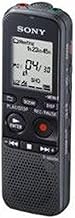
The Sony ICD-PX312 is a classic flash based voice recorder that has earned its reputation through sheer reliability. It does not chase AI features or huge storage numbers; instead it captures clear spoken audio and keeps the process simple, which is exactly what many buyers want.
The menu driven controls are easy to learn, and the compact body fits comfortably in a hand or pocket. For recording lectures, meetings, and personal notes, its voice capture is clean and consistent, and Sony's long history with recorders shows in the dependable build.
As an older model, it offers modest storage and records in mono, so it is not the choice for high fidelity or stereo needs. But if you want a proven, uncomplicated recorder from a name you trust, it remains a sensible option.
Bottom line: a reliable, no drama recorder for straightforward voice capture.
- Type: Digital flash voice recorder
- Recording: Mono voice capture
- Controls: Menu driven
- Form factor: Compact and lightweight
- Brand: Sony
- Use case: Lectures and notes
Suited to buyers who want a simple, trustworthy recorder for voice notes, classes, and meetings, without apps or subscriptions. If reliability and ease of use matter more than cutting edge features, this Sony delivers.
Use the on screen menu to pick your recording quality before you start, and keep the microphone pointed toward the speaker. Transfer files to your computer regularly so the modest storage never becomes a limitation.

Pros
- Very easy to operate
- Clear voice recording
- Lightweight and pocketable
- 4GB internal memory
- Affordable Sony option
Cons
- Basic feature set
- Mono audio only
The Sony ICD-BX140 is the most pared down recorder in this guide, and that is its charm. It strips the category back to essentials: press record, capture clear voice, and play it back. For anyone intimidated by menus and apps, this simplicity is a genuine feature.
With 4GB of internal memory it holds a healthy amount of voice audio, and the light, compact body makes it easy to keep on hand for quick thoughts, class notes, or short interviews. Sony's reliability means it just works, session after session.
It records in mono and keeps extras to a minimum, so power users will outgrow it. But as an affordable, grab and go recorder for the spoken word, it does its one job well.
Bottom line: the easiest, most approachable pick for basic voice capture on a budget.
- Type: Digital voice recorder
- Internal memory: 4GB
- Recording: Mono
- Color: Black
- Design: Compact and light
- Brand: Sony
Best for first time buyers and anyone who wants a simple recorder for voice memos, lectures, and short interviews. If you value ease of use above all, the BX140 is the friendliest option here.
Press record and speak, keeping the device close to the sound source for clarity. Because storage is modest, move your files to a computer periodically so you always have room for the next recording.

Pros
- AI noise reduction cleans up audio
- Voice activated to save space
- 64GB of onboard storage
- Compact, portable design
- Suited to meetings and interviews
Cons
- Noise reduction cannot fix poor placement
- No expandable storage
The ZIPCIDE 64GB recorder leans into modern processing, pairing generous storage with AI driven noise reduction that aims to suppress background hum and chatter. In the kind of imperfect rooms where most recordings actually happen, that extra cleanup can make the difference between a usable file and a frustrating one.
Voice activated recording keeps files tidy by capturing only when there is sound, which also conserves battery for long sessions. With 64GB of space, it comfortably handles a heavy schedule of lectures, meetings, and interviews before you need to offload anything.
It is worth being realistic about noise reduction: it helps, but it is not a substitute for good placement. Put the recorder close to your subject and the AI has far less to fight against. Storage is fixed rather than expandable, so plan around the 64GB you have.
Bottom line: a smart mid capacity recorder for anyone battling noisy environments.
- Type: Voice activated digital recorder
- Storage: 64GB
- Processing: AI noise reduction
- Recording mode: Voice activated
- Design: Compact and portable
- Use case: Lectures and meetings
Reach for the ZIPCIDE when your recordings happen amid fans, traffic, or crowd noise. The AI noise reduction gives you a cleaner starting point, especially when paired with careful microphone placement.
Enable voice activation to skip silence and stretch battery life, and position the recorder as close to the speaker as possible so the noise reduction has the easiest job. Offload files before you approach the 64GB limit.

Pros
- Magnetic body mounts hands free
- Long battery for extended sessions
- Huge 128GB storage
- Voice activated recording
- Convenient USB-C charging
Cons
- Basic playback controls
- Mono capture only
The Nanezan 128GB recorder is designed for long, unattended capture. Its magnetic body can attach to a metal surface so it records hands free, and a large battery keeps it running through extended sessions without a recharge, which suits people who set it down and let it work.
Storage is the other headline. With 128GB and voice activated recording, it can log an enormous amount of audio before you ever need to clear it, capturing only when there is sound to conserve both space and power. USB-C charging is a welcome modern touch, letting you top up from the same cable as your phone or laptop.
The controls and playback are basic, and it records in mono, so it is a practical tool rather than a fidelity champion. But for long duration, set and forget recording with plenty of headroom, it is a capable and convenient choice.
Bottom line: an ideal recorder for long, hands free sessions where capacity and battery matter most.
- Type: Magnetic voice activated recorder
- Storage: 128GB
- Mounting: Magnetic body
- Charging: USB-C
- Battery: Long life for extended use
- Recording mode: Voice activated
Great for anyone who needs long, unattended recording, from all day meetings to extended lectures. The magnetic mount and long battery make it easy to place the recorder and leave it running.
Charge fully over USB-C before a long session, and secure the magnetic body to a clean metal surface so it stays put. Always follow local recording laws and inform people when consent is expected before leaving a device running.
How to Choose the Best Mini Voice Recorder
Mini voice recorders look similar from the outside, but the details decide whether a device saves your day or leaves you with a garbled file. Use the criteria below to match a recorder to the way you actually work, then confirm the specifics on the product page before you buy.
Recording Quality and Microphones

The microphone array is the single most important part of any recorder. Basic mono recorders like the Sony ICD-BX140 are fine for a quiet office or a one on one conversation, where the speaker sits close to the device. Once you move into a large room, an echoey lecture hall, or an outdoor interview, stereo and multi microphone systems pull ahead. The OM System Olympus LS-P5 uses a three microphone TRESMIC arrangement that captures a wider, more natural sound stage, which matters if you plan to record music, podcasts, or anything where tone and clarity are non negotiable.
Also look for noise handling. Several newer recorders, including the ZIPCIDE 64GB model, advertise AI driven noise reduction that suppresses fan hum and background chatter. These features help in imperfect rooms, but they are not magic. Positioning the recorder close to your subject still does more for clarity than any processing chip.
Storage and Battery Life

Storage is measured in both gigabytes and recording hours, and the two do not always line up because file quality changes the math. A 128GB recorder such as the EVIDA or the Nanezan magnetic model can hold thousands of hours of compressed audio, which is overkill for a single class but genuinely useful if you record all day and offload files rarely. Smaller 4GB and 16GB recorders from Sony and OM System are aimed at people who transfer recordings regularly.
Battery life follows the same logic. Voice activated recording, which only writes to storage when it detects sound, can stretch a charge across days of standby. If you need continuous capture, look at the rated hours per charge rather than the standby figure, and favor recorders with USB-C charging so you can top up from any modern cable.
Transcription and AI Features
This is the newest and most divisive category. Devices like the PLAUD Note Pro pair the recorder with an app that transcribes speech and generates summaries, and they support dozens of languages. For students and professionals who dread typing up notes, that workflow is transformative. The tradeoff is that the smartest features usually live in an app or cloud service, sometimes behind a subscription, so read the fine print before you count on unlimited transcription.
If you simply want reliable audio files you can play back or feed into your own software later, a traditional recorder keeps things simple and keeps your data on the device. Both approaches are valid; the right one depends on whether you value automation or control.
Size, Controls, and Ease of Use
A mini recorder only helps if you can start it quickly. Physical slide switches and dedicated record buttons, common on Sony models, let you begin capturing without looking. Wearable and clip style recorders trade tactile buttons for discretion and hands free use. Consider where the device will live day to day: a clip on notetaker suits someone moving between meetings, while a pocket recorder with a display suits a student who reviews files on the spot.
Connectivity and File Transfer
Getting audio off the device should be effortless, and this is where design choices really show. Recorders with a built in USB connector, like the Sony ICD-PX370, plug straight into a laptop with no extra cable, so you can drag files onto your computer in seconds. Others rely on a supplied USB cable or a microSD card you pop out and read through an adapter. If you frequently move files into editing software or a transcription service, prioritize a recorder that mounts as a simple USB drive rather than one that forces you through proprietary software.
Expandable storage is another quiet advantage. A recorder with a microSD slot lets you swap in a larger card or keep separate cards for different projects, which is handy for journalists and researchers who need to keep recordings organized and backed up. For AI notetakers, connectivity often means a wireless link to a phone app, so check that the companion app supports your device and the languages you work in before committing.
Discretion and Wearability
Size is not only about pocketability; it also shapes how and where you can record. A slim, clip on recorder can ride on a lapel or sit unobtrusively on a table, which keeps conversations natural and stops people from freezing up in front of an obvious microphone. The PLAUD Note Pro leans into this with an ultra slim profile, while magnetic models such as the Nanezan can attach to a metal surface and record hands free for long stretches. Always follow local laws on recording conversations, and let people know when you are capturing audio in settings where consent is expected.
| Recorder | Best For | Standout Feature |
|---|---|---|
| PLAUD Note Pro | Meeting and interview notes | AI transcription and summaries |
| Sony ICD-PX370 | Everyday students and pros | Built in USB, microSD expandable |
| OM System Olympus LS-P5 | Audio quality and music | Three microphone hi-res capture |
| EVIDA 128GB | All day, high capacity use | Thousands of recording hours |
| Nanezan 128GB | Long unattended sessions | Magnetic body, USB-C, long battery |
Still weighing your options? Comparing a few models side by side, as in the table above, is the fastest way to see which tradeoffs you can live with. You can also browse related gadgets on our cell phones and accessories page for chargers and cables to pair with your new recorder.
Why You Should Trust Us
We build every shortlist around evidence rather than hype. For this guide we gathered current listings for mini voice recorders, then filtered them by verified customer rating and review volume so that only models with a real track record made the cut. We read through product specifications, owner feedback, and manufacturer documentation to understand how each recorder performs in the situations buyers actually describe, from crowded lecture halls to quiet one on one interviews.
Our editors focus on the tradeoffs that matter: microphone quality, battery and storage claims measured against real use, and how approachable the controls are for someone picking up the device for the first time. We do not accept payment to rank a product higher, and we flag the limitations of each pick as plainly as the strengths. When a feature depends on an app or subscription, we say so, because a recorder should serve your workflow rather than lock you into one. You can find more of our buying guides on the articles hub.
Final Thoughts
The best mini voice recorder for you comes down to how much you want the device to do on its own. For most people who want more than raw audio, the PLAUD Note Pro is our best overall choice, because its slim body slips anywhere and its AI transcription turns recordings into notes you can actually read and search. It is the closest thing to having an assistant take minutes for you.
If you want dependable capture without the extras, the Sony ICD-PX370 is the safe, familiar workhorse, with tactile controls and a built in USB connector that make transfers painless. For the best value, the EVIDA 128GB recorder delivers enormous storage and voice activated recording at a fraction of the cost of a premium notetaker, which makes it ideal for students recording class after class. And if pure audio fidelity is your priority, the OM System Olympus LS-P5 and its three microphone system stand alone in this group. Whichever you choose, keep exploring current deals on our electronics page and our broader category directory to pair your recorder with the right accessories.
Frequently Asked Questions
What is the best mini voice recorder in 2026?
For most users, the PLAUD Note Pro is the best mini voice recorder in 2026 because it combines a genuinely pocketable design with AI transcription and summaries. If you prefer a traditional recorder, the Sony ICD-PX370 is a proven alternative, and the EVIDA 128GB model is the standout value pick.
Do mini voice recorders work well for lectures and meetings?
Yes. Most of the recorders in this guide are designed specifically for lectures, meetings, and interviews. For large rooms, place the recorder as close to the speaker as you can, and choose a model with strong microphones or voice activated recording to keep your files clean and easy to review later.
How much storage do I need in a mini voice recorder?
It depends on how often you offload files. A 4GB or 16GB recorder holds many hours of audio and suits people who transfer recordings regularly. If you record all day and rarely clear the device, a 64GB or 128GB model such as the EVIDA or Nanezan gives you thousands of hours of headroom.
What is the difference between a voice recorder and an AI notetaker?
A traditional voice recorder simply saves audio files that you play back or process yourself, keeping your data on the device. An AI notetaker like the PLAUD Note Pro also transcribes and summarizes recordings through an app, which saves time but may rely on a cloud service or subscription for its smartest features. You can compare more gadgets in our articles section.
Can mini voice recorders record automatically when they detect sound?
Many can. Voice activated recording pauses capture during silence and resumes when the device hears speech, which saves storage and dramatically extends battery life. The EVIDA, ZIPCIDE, and Nanezan recorders all offer this mode, making them a smart choice for long or unattended sessions.

Write Your Review
No reviews yet. Be the first to share your experience!