

A great gaming headset does two jobs at once: it drops you inside the game world and keeps you talking clearly with your squad. The right pair sharpens quiet footsteps into directional cues, tames the roar of an explosion so voices still cut through, and stays comfortable long after a casual match turns into an all-night session. Our shortlist of 7 gaming headsets for September 2026 spans wired and wireless designs from BENGOO, Logitech, EKSA and more, chosen so there is a strong option whether you play on PC, PlayStation, Xbox, or Switch.
Our top pick is the HyperX Cloud III for its crisp detachable microphone, plush memory-foam earpads, and durable frame that shrugs off daily abuse. If you would rather see how these picks compare to the machines you plug them into, our guide to the best gaming PCs pairs neatly with any headset here. Below you will find the full ranked lineup, then a buying guide that explains exactly what separates a forgettable pair from one you never want to take off.

Pros
- Plush memory-foam earpads stay comfortable for hours
- Clear, natural detachable microphone with a pop filter
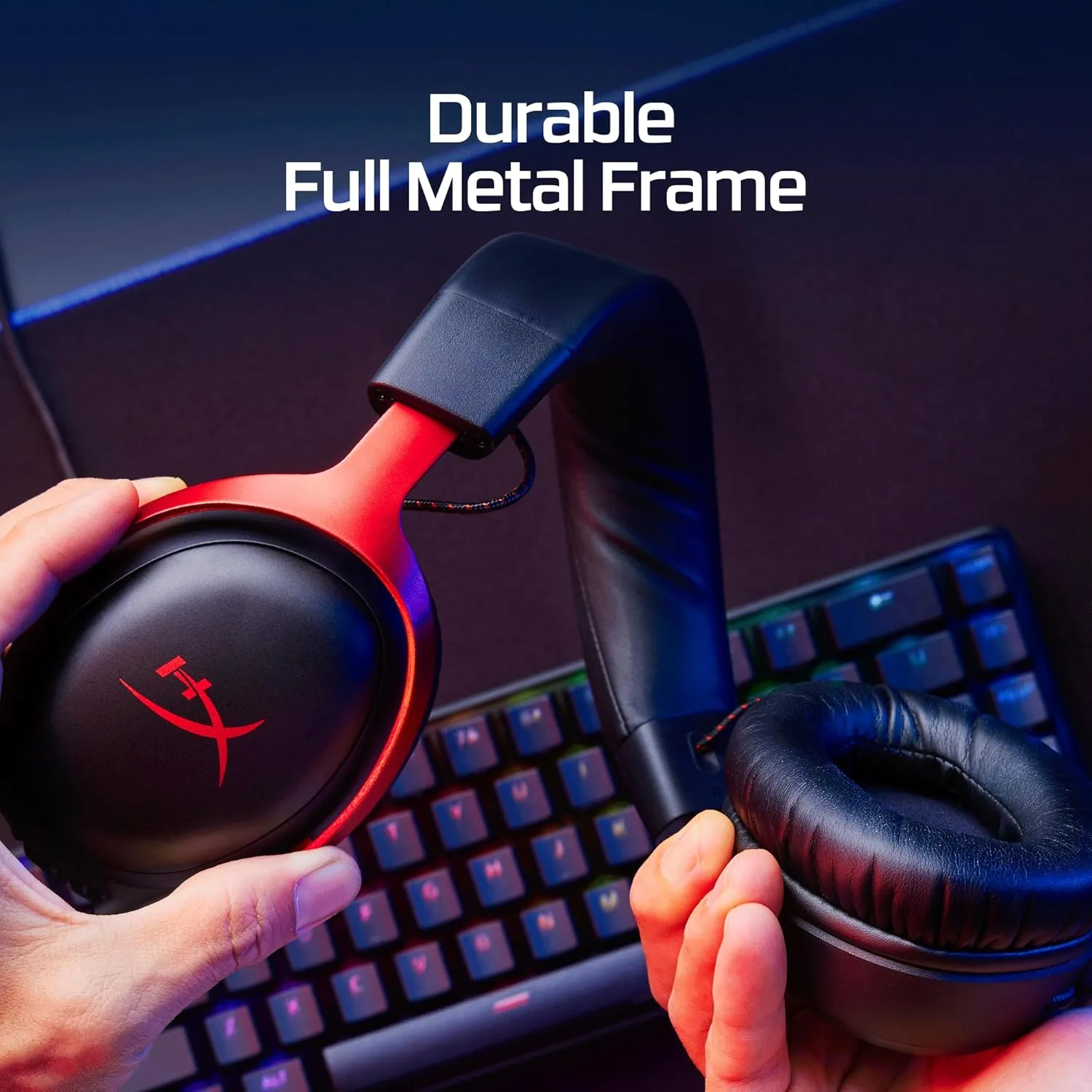
- Durable aluminum-reinforced frame
- Spatial audio helps you place in-game sounds
- Broad compatibility over USB-C, USB-A, and 3.5mm
Cons
- Wired only, with no wireless version in this model
- No active noise cancellation for outside sound
- Spatial audio features work best on PC
The HyperX Cloud III is a wired gaming headset built to be the dependable pair you reach for every day. It targets players who want strong all-around performance without juggling batteries, and it fits neatly into a PC or console setup thanks to USB-C, USB-A, and 3.5mm connections.
Its strengths are comfort and clarity. The memory-foam earpads and padded headband spread pressure evenly, so long sessions rarely leave your ears aching, and the angled 53mm drivers deliver a wide, immersive soundstage that makes directional cues easy to follow. The detachable microphone captures your voice cleanly and naturally, which keeps callouts intelligible for your team.
The main limitation is that it is wired only, so players set on going cordless will need to look elsewhere, and its spatial audio shines brightest on PC. There is also no active noise cancellation, so a very loud room can still bleed in around the seal.
Bottom line: for the majority of players who want comfort, a great microphone, and rugged build quality in one wired package, the Cloud III is the easiest recommendation on this list.
- Connection: Wired USB-C, USB-A, and 3.5mm
- Drivers: 53mm angled dynamic
- Microphone: Detachable 10mm with pop filter
- Audio: Spatial audio support
- Frame: Aluminum-reinforced with memory foam
- Compatibility: PC, PS5, Xbox Series X|S, Switch, mobile
The Cloud III suits players who want one headset that does everything well: comfortable marathons, clear voice chat, and reliable audio across platforms. It is a natural fit for multiplayer regulars who value a great microphone and for anyone who prefers the simplicity of a wired connection with no charging to remember.
To get the most from the Cloud III, enable its spatial audio option on PC through the companion app, which widens the soundstage for directional cues. On consoles it runs as a high-quality stereo headset, so you keep clear, detailed audio even where the extra processing is not available. Position the microphone about two finger-widths from the corner of your mouth for the cleanest voice pickup.

Pros
- Very lightweight for low fatigue
- Focused cardioid mic rejects background noise
- Noise-isolating memory-foam earcups
- Clean, detailed sound for locating enemies
- Simple 3.5mm plug-and-play across platforms
Cons
- Wired only over 3.5mm
- Microphone is not detachable
- Bass is restrained versus bass-heavy rivals
The Razer BlackShark V2 X is a wired headset aimed squarely at competitive players who care about hearing every cue and staying comfortable through long ranked sessions. Its low weight is the headline feature, keeping pressure off your head so you can focus on the match rather than the hardware.
Audio tuning favors clarity over booming bass, which helps you pick out footsteps and reloads with precision, and the plush earcups isolate outside noise passively so the game stays front and center. The cardioid microphone zeroes in on your voice and shrugs off keyboard clatter, making your callouts easy for teammates to parse.
The trade-offs are straightforward: the connection is wired 3.5mm only, the microphone does not detach, and bass fans may find the low end a touch lean compared with more cinematic headsets.
Bottom line: if competitive shooters are your main game and you want a light, clear, no-nonsense headset, the BlackShark V2 X is an outstanding pick.
- Connection: Wired 3.5mm
- Drivers: 50mm dynamic
- Microphone: Cardioid, noise-focused
- Isolation: Passive, memory-foam earcups
- Weight: Lightweight frame
- Compatibility: PC, Xbox, PS5, Switch, mobile
In fast shooters, the BlackShark V2 X earns its keep by keeping audio clean and neutral so you can trust what you hear. The cardioid microphone keeps your comms crisp under pressure, and the light frame means you stop noticing the headset entirely once a match heats up. For ranked grinds where every footstep counts, that combination is hard to beat.
This headset is built for competitive and multiplayer gamers who prize accuracy, low weight, and a dependable microphone over flashy extras. It is also a smart pick for players on a budget who want an esports-minded design that plugs into almost anything with a 3.5mm jack.

Pros
- DTS Headphone:X 2.0 virtual 7.1 surround
- Large 50mm drivers with punchy sound
- Flip-to-mute microphone is fast and intuitive
- USB and 3.5mm connections
- Adjustable software equalizer on PC
Cons
- Leatherette earpads can warm up over long sessions
- Surround features rely on PC software
- Build is largely plastic
The Logitech G432 is a wired headset that leans on virtual surround to punch above its price. It is aimed at PC players who want an immersive, wide soundstage and a simple way to mute themselves, without stepping up to premium money.
Its 50mm drivers push energetic, full-bodied sound, and the DTS Headphone:X 2.0 processing widens the field so you can sense where action is happening around you. The flip-to-mute boom is the standout convenience: rotate it up and you are muted instantly, no button hunting required. On PC, the companion software adds equalizer presets to tailor the tuning.
The compromises are typical for the class. The leatherette earpads trap a little heat during long marathons, the surround magic depends on PC software so consoles get standard stereo, and the frame is mostly plastic.
Bottom line: for PC players who want convincing virtual surround and a fuss-free mute at a friendly price, the G432 is a well-rounded, sensible choice.
- Connection: Wired USB and 3.5mm
- Drivers: 50mm dynamic
- Surround: DTS Headphone:X 2.0 virtual 7.1 on PC
- Microphone: Flip-to-mute boom
- Earpads: Leatherette
- Compatibility: PC, PS5, Xbox, Switch, mobile via 3.5mm
Choose the G432 if you play mostly on PC and want the widest possible soundstage for the money. Use the USB connection and the companion app to switch on 7.1 surround and dial in an equalizer preset that suits your games. If you also play on a console, keep the 3.5mm cable handy for reliable stereo audio on the couch.
The G432 keeps weight modest and the headband adjustable, so it settles comfortably for most head shapes. During very long marathons the leatherette earpads can warm up, so taking a short break between sessions helps. If you tend to run hot, this is worth weighing against the more breathable picks on this list.

Pros
- Long battery life for marathon play
- Low-latency 2.4GHz wireless connection
- Bluetooth for simultaneous phone audio
- Flip-to-mute microphone
- 50mm drivers with strong bass
Cons
- Wireless models are often platform-specific
- Microphone is not detachable
- Charging required before long sessions
The Turtle Beach Stealth 600 is a wireless headset made for players who want to cut the cord without babysitting the battery. It is a natural fit for console gamers, connecting over a low-latency 2.4GHz link that keeps audio in step with the action.
Battery life is the marquee feature, stretching across many sessions before a recharge, so you rarely get caught mid-match on empty. The 50mm drivers deliver punchy, immersive sound with satisfying bass, and Bluetooth lets you pipe in a phone call or music alongside the game. The flip-to-mute boom makes silencing yourself effortless.
The caveats are common to wireless gear: models tend to be tuned for a specific platform, so match the version to your console, the microphone does not detach, and you will need to charge it before long stretches.
Bottom line: for console and PC players who want dependable, long-lasting wireless freedom without a premium price, the Stealth 600 is the standout cordless pick here.
- Connection: Wireless 2.4GHz and Bluetooth
- Drivers: 50mm dynamic
- Battery: Long-life, up to 80 hours
- Microphone: Flip-to-mute boom
- Latency: Low-latency 2.4GHz for gaming
- Compatibility: Xbox, PS5, PC, or Switch depending on model
To keep the Stealth 600 ready, top it up during breaks rather than waiting for a full drain, and use the 2.4GHz dongle for gaming since it holds the lowest latency. Save Bluetooth for phone calls or music so your game audio stays crisp. Confirm you have the version that matches your main console before buying, since wireless standards differ between platforms.
This headset is ideal for console and PC players who want long wireless battery life and a clean, low-latency connection without paying flagship prices. It is especially handy for gamers who like to keep a phone connected over Bluetooth while they play.

Pros
- Low-latency 2.4GHz wireless connection
- Long battery life for extended play
- USB and Type-C dongle options
- Flip-up microphone mutes on the lift
- Affordable entry to wireless gaming
Cons
- Not designed for Xbox wireless
- Build uses mostly plastic
- Sound tuning is less refined than premium pairs
The Ozeino wireless headset brings cord-free gaming to a budget-friendly price. It targets PC and PlayStation players who want the freedom of wireless without stepping up to flagship money, and it connects through a low-latency 2.4GHz dongle in either USB or USB-C form.
Its best traits are practical: a stable wireless link that stays in sync for fast games, generous battery life that clears long evenings, and a flip-up microphone that mutes the moment you raise it. The over-ear cups seal out a fair amount of room noise so you can stay immersed.
Expectations should be set for the price. The sound tuning is enjoyable but less refined than premium pairs, the build is largely plastic, and it is not made for the Xbox wireless standard.
Bottom line: for players who want affordable, dependable wireless on PC or PlayStation, the Ozeino is a smart way to cut the cord without overspending.
- Connection: Wireless 2.4GHz via USB and USB-C
- Battery: Up to 40 hours
- Microphone: Flip-up mute
- Design: Over-ear with passive isolation
- Latency: Low-latency 2.4GHz link
- Compatibility: PC, PS5, PS4, Switch, mobile
The Ozeino wireless headset suits budget-minded PC and PlayStation players who want to ditch the cable without a big outlay. It is a practical choice for anyone trying wireless gaming for the first time, or for a spare headset that still delivers a stable connection and long battery life.
Plug the 2.4GHz dongle into a free USB or USB-C port and the headset pairs automatically, with no software required. Keep the dongle within line of sight of your seat for the most stable link. Note that this model is built for PC and PlayStation rather than the Xbox wireless standard, so confirm your platform before buying.
Pros
- Very affordable entry price
- Soft memory-foam earcups for comfort
- Immersive virtual surround sound
- Adjustable noise-cancelling microphone
- Works across PC and major consoles via 3.5mm
Cons
- Wired only with a Y-splitter for older PCs
- LED light needs a USB port for power
- Plastic build feels its price
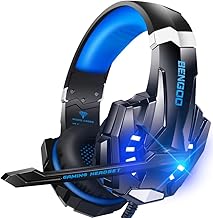
The BENGOO G9000 is a wired budget headset that has become a go-to first purchase for new gamers, and for good reason. It aims to deliver an immersive, comfortable experience at a price that is easy to say yes to, and it plugs into PC and the major consoles through a standard 3.5mm connection.
Comfort is its calling card at this price: the memory-foam earcups and padded headband cushion long sessions better than you would expect. The virtual surround gives games a pleasingly wide sound, the adjustable microphone rotates to your mouth and rejects a fair amount of background noise, and the LED accents add a fun gamer look when powered over USB.
You do need to keep the price in mind. The frame is plastic, the LED requires a spare USB port, and PC users may need the included Y-splitter for separate audio and mic jacks.
Bottom line: as an affordable, comfortable, all-purpose starter, the G9000 is the best value on this list and an easy recommendation for newcomers.
- Connection: Wired 3.5mm with PC Y-splitter
- Design: Over-ear with memory foam
- Surround: Virtual surround sound
- Microphone: Adjustable noise-cancelling boom
- Lighting: LED accents via USB
- Compatibility: PC, PS5, PS4, Xbox, Switch handheld, mobile
The G9000 is made for newcomers, younger gamers, and anyone who wants a comfortable, capable headset without spending much. It is also a sensible spare to keep around for guests or a second setup, since it plugs into nearly anything with a 3.5mm jack.
Buy the G9000 if you want maximum comfort and features per dollar and do not need wireless or a premium microphone. On a modern console, plug the single 3.5mm jack into the controller; on a PC without a combined port, use the included Y-splitter for the separate headphone and microphone connectors. The LED accent draws its power from any spare USB port.

Pros
- Virtual 7.1 surround over USB
- Detachable noise-cancelling microphone
- Large 50mm drivers
- Comfortable over-ear cushions
- Affordable for a surround USB headset
Cons
- USB 7.1 mode is PC-focused
- Build is mostly plastic
- Sound is less refined than premium pairs
The EKSA E900 Pro is a budget USB headset built for PC gamers who want virtual surround without spending much. It connects over USB to unlock its 7.1 processing, aiming to give newer players a wider, more directional soundstage on a tight budget.
The 50mm drivers produce full, room-filling audio, and the virtual 7.1 mode helps you sense where sounds are coming from during a match. The detachable noise-cancelling microphone is a genuine plus at this price, since it keeps your voice clear and lets the headset double as plain headphones when you pull the boom off. The over-ear cushions keep things comfortable through a session.
As with most budget gear, temper expectations. The surround experience is centered on PC over USB, the frame is largely plastic, and the tuning is enjoyable rather than audiophile grade.
Bottom line: for PC players who want detachable-mic convenience and virtual surround at an entry price, the E900 Pro is a strong budget option.
- Connection: Wired USB
- Drivers: 50mm dynamic
- Surround: Virtual 7.1 on PC over USB
- Microphone: Detachable noise-cancelling boom
- Design: Over-ear cushioned cups
- Compatibility: PC and laptop over USB
On PC, the E900 Pro leans on its USB connection to deliver virtual 7.1 surround, which widens the soundstage and sharpens directional cues in shooters and open-world games. Pair it with a tidy desk setup and the detachable microphone keeps your comms clear, making it a capable budget companion for long PC sessions.
The E900 Pro is aimed at budget-conscious PC gamers who want surround sound and a detachable microphone without a big spend. It is a fitting choice for students, newcomers, and anyone building a first PC gaming setup who values clear comms and immersive audio for the money.
How to Choose the Best Gaming Headsets
Every headset on this list handles the basics, but the differences show up during long, competitive play. Use the criteria below to match a pair to how and where you actually game. If you are building out a full battlestation, it is worth reading alongside our roundup of the best gaming chairs so your audio and your posture both hold up through marathon sessions.
Sound Quality and Surround Immersion
Driver size and tuning shape how a headset renders a game. Larger drivers, typically in the 50mm range, move more air and give explosions and bass-heavy scenes real weight, while carefully tuned mid and high frequencies keep dialogue and treble cues from getting buried. For competitive shooters, a neutral, slightly bright signature often beats a bass-heavy one because it lets you hear the exact direction of a reload or a distant footstep.
Surround sound is the other half of the picture. Many of these headsets advertise 7.1 virtual surround or spatial audio, which uses processing to place sounds around a virtual circle rather than relying on true multi-speaker hardware. Virtual surround is genuinely useful for locating enemies in open maps, though the quality of the processing varies. The HyperX Cloud III and Logitech G432 lean on well-regarded spatial systems, while budget picks deliver a wider soundstage that still helps you pinpoint threats.
Microphone Clarity and Noise Rejection
Your teammates hear you through the boom mic, so its quality matters as much as what you hear. Look for a microphone that captures your voice clearly without sounding thin or muffled, and one that rejects background noise like a mechanical keyboard, a nearby fan, or a busy room. Noise-canceling and cardioid microphones focus on the sound coming straight at them and ignore the rest, which keeps your callouts crisp during heated moments.
Convenience features round out a good mic. A detachable boom lets you pull the headset double duty as everyday headphones, while a flip-to-mute arm or an inline mute button lets you silence yourself instantly without fumbling through software. The Razer BlackShark V2 X and HyperX Cloud III are standouts for clean, natural voice pickup, and the Logitech G432 offers a handy flip-to-mute design that competitive players appreciate.
Comfort for Long Sessions

Comfort is not a luxury when a raid or a ranked climb runs for hours. Weight, clamping force, and earpad material decide whether a headset disappears on your head or leaves you rubbing your ears after two matches. Memory-foam earpads distribute pressure evenly and mold to your head, while breathable fabric or leatherette covers change how warm your ears get over time. A lighter frame reduces neck fatigue, which is why many players prefer sub-350-gram designs for daily use.
Fit adjustability seals the deal. Generous headband padding, a wide size range, and swiveling earcups help the headset conform to different head shapes, including over glasses. Plush picks like the HyperX Cloud III and the memory-foam BENGOO G9000 earn steady praise for staying comfortable well into an evening, while the lightweight Razer BlackShark V2 X keeps pressure low for players who hate anything heavy on their head.
Wired vs Wireless Connection

Wired headsets connect over USB or a 3.5mm jack and deliver rock-steady, lag-free audio with no batteries to manage, which is why they remain popular for competitive play and tight budgets. A 3.5mm connection also makes them easy to move between a PC, a console controller, a phone, and a Switch in handheld mode. The trade-off is the cable, which can tug or tangle if your setup is not tidy.
Wireless headsets cut the cord using a low-latency 2.4GHz dongle, Bluetooth, or both. A dedicated 2.4GHz connection keeps latency low enough for fast games, while Bluetooth adds handy phone pairing on the side. Battery life is the number to watch: the Turtle Beach Stealth 600 pushes marathon runtime, and the Ozeino wireless model delivers a solid multi-day charge, so you spend more time playing and less time tethered to a wall outlet.
Extras and Software Features
Beyond the core audio, the extras can meaningfully change how a headset fits your routine. Companion software often unlocks a graphic equalizer, surround toggles, and microphone sidetone, which lets you hear your own voice so you stop shouting during intense rounds. Onboard controls matter too: a volume wheel or mic-mute button on the earcup is faster than reaching for the keyboard, and a well-placed dial becomes second nature within a day. RGB lighting is purely cosmetic, but it is a fun touch for streamers and anyone matching a themed setup.
These features cluster around price and platform. PC-focused models like the Logitech G432 and EKSA E900 Pro lean on desktop software for surround and equalizer tuning, while console-first wireless picks such as the Turtle Beach Stealth 600 keep quick presets on the headset itself so you can adjust on the fly. Budget wired options like the BENGOO G9000 skip the software entirely and rely on onboard inline controls, which keeps them dead simple to set up for a first-time buyer.
Platform Compatibility and Build
Not every headset works everywhere. A 3.5mm analog connection is the most universal, plugging into nearly any controller or PC, while USB and wireless models sometimes favor one ecosystem, especially on Xbox, which uses its own wireless protocol. Before you buy, confirm the pair supports your main platform, whether that is PC, PlayStation, Xbox, or Nintendo Switch, and check whether extra features like surround processing are enabled on that system.
Build quality decides how long a headset lasts. Metal-reinforced headbands, thick cables, and replaceable earpads survive years of daily wear, while all-plastic frames can creak or crack at the hinges. The table below sums up how our picks compare on connection, drivers, and platform support so you can narrow the field at a glance.
| Headset | Connection | Drivers | Best For |
|---|---|---|---|
| HyperX Cloud III | Wired USB-C, USB-A, 3.5mm | 53mm angled | All-around comfort and mic |
| Razer BlackShark V2 X | Wired 3.5mm | 50mm | Competitive esports |
| Logitech G432 | Wired USB, 3.5mm | 50mm | Virtual surround value |
| Turtle Beach Stealth 600 | Wireless 2.4GHz, Bluetooth | 50mm | Console wireless |
| Ozeino Wireless | Wireless 2.4GHz, USB-C | Over-ear | Budget wireless PC |
| BENGOO G9000 | Wired 3.5mm | Over-ear | Best value starter |
| EKSA E900 Pro | Wired USB | 50mm | Budget PC surround |
Why You Should Trust Us
We build our rankings around what actually matters to players: audio accuracy, microphone clarity, long-session comfort, connection reliability, and platform support. Rather than chase marketing claims, we weigh verified customer ratings and the volume of feedback each headset has earned, then read closely for the patterns that repeat across owners, both the praise and the recurring complaints.
Our score blends those real ratings with the specifications that separate a competitive headset from a casual one, so a pair only rises to the top when broad owner satisfaction and strong fundamentals line up. We update this guide as new models arrive and as feedback shifts, and we call out where a budget pick punches above its class so you can spend confidently no matter your budget.
We also try to represent the full range of players rather than a single ideal buyer. That means keeping wired and wireless options on the list, holding a spot for genuinely affordable picks alongside premium ones, and noting which platforms each headset serves best. A headset that is perfect for a competitive PC shooter is not always the right call for a couch console session, so our goal is to help you find the pair that matches your setup and your budget, not to crown one universal winner.
Final Thoughts
For most players, the HyperX Cloud III is the best overall gaming headset here. It nails the fundamentals with a durable frame, plush memory-foam comfort, spatial audio that helps you place threats, and a clear detachable microphone, all while staying compatible across PC and the major consoles. If competitive shooters are your focus, the lightweight Razer BlackShark V2 X trims weight and delivers a clean cardioid mic built for fast callouts.
On a tighter budget, the BENGOO G9000 is the best value pick, a hugely popular wired starter with 7.1 virtual surround and soft earcups that make it an easy first headset. Prefer to cut the cord? The Turtle Beach Stealth 600 is the standout for console players who want long wireless battery life, while the Ozeino wireless model brings low-latency freedom to budget PC setups. Whichever you choose, pair it with the right rig from our gaming PC guide, and browse more roundups over on our articles hub.
Frequently Asked Questions
Are wired or wireless gaming headsets better in 2026?
It depends on your priorities. Wired headsets give you lag-free audio, no charging, and a lower price, which suits competitive players and anyone on a budget. Wireless models built on a 2.4GHz connection are now fast enough for serious play and free you from cable clutter, so they shine for console gamers and tidy desks. If low latency and value matter most, go wired; if freedom of movement wins, go wireless.
Does virtual 7.1 surround sound really help in gaming headsets?
Yes, within reason. Virtual 7.1 surround uses processing to widen the soundstage and place audio cues around you, which genuinely helps you judge the direction of footsteps and gunfire in open maps. It is not the same as true multi-speaker surround, and the benefit depends on the quality of the processing, but on a good headset it gives competitive players a real situational edge.
Do these gaming headsets work with PS5, Xbox, and Nintendo Switch?
Most of our wired picks with a 3.5mm jack plug straight into a PS5, Xbox, or Switch controller and just work. USB and wireless models can be more platform-specific, since Xbox in particular uses its own wireless standard, so always confirm the listing supports your console before buying. You can find more platform-matched gear across our category pages.
How important is the microphone on gaming headsets?
For team-based games it is critical. A clear, noise-rejecting boom mic keeps your callouts intelligible so your squad reacts to what you say, not what they can barely make out. Look for a cardioid or noise-canceling microphone, and a detachable or flip-to-mute design if you also want to use the headset as everyday headphones away from the game.
How much should I spend on a good gaming headset?
You can get a genuinely good experience across a wide range of budgets. Entry-level wired picks deliver surprisingly capable surround and comfort for casual play and newcomers, while mid-range and premium models add better microphones, sturdier builds, wireless freedom, and refined audio tuning. Decide which of those upgrades you will actually notice, then buy the pair that nails your top two priorities rather than paying for features you will never use.
Do I need a headset with a detachable microphone?
Only if you want the flexibility. A detachable boom mic lets a gaming headset moonlight as a clean pair of everyday headphones for music or a commute, with no arm sticking out near your face. If the headset lives on your desk and rarely leaves the room, a fixed or flip-up microphone works just as well and is one less part to misplace. Prioritize how the microphone sounds first, then treat detachability as a convenience bonus rather than a dealbreaker.
Write Your Review
No reviews yet. Be the first to share your experience!