

When winter arrives, picturesque mountain trails transform into challenging ribbons of hard-packed snow, hidden black ice, and frozen mud. Every step on an exposed ridge or slick descent becomes a calculated risk without reliable underfoot traction. Standard hiking boot lugs, no matter how aggressive, quickly lose their purchase once freezing temperatures glaze over the tread. Slipping can lead to sprained ankles, painful falls, or premature ends to backcountry excursions. Choosing the right traction footwear restores your trail confidence, turning treacherous seasonal paths into predictable, enjoyable winter adventures. You can explore more outdoor advice in our Sports & Outdoors deals and reviews hub.
Navigating the outdoor marketplace requires understanding the subtle mechanical differences between various snow and ice devices. We compared 5 microspikes for winter hiking options from EnergeticSky, Cimkiz, Morefuneasier and more for September 2026 to determine which setups offer the best balance of tooth bite, elastomer resilience, and long-range comfort.
Our top pick is the Kahtoola MICROspikes Footwear Traction for Winter for its unmatched trail authority and legendary build standard.

Pros
- 19 stainless steel spikes deliver solid traction on ice
- Cold-resistant TPE frame stays pliable down to -45°C
- Top security strap prevents slipping off footwear
- Includes a protective storage and carry bag
Cons
- Not intended for technical mountaineering or vertical ice climbing
- L marking indicates size Large rather than Left foot, causing confusion
- Metal spikes can wear down when walking across bare pavement or rock
The Cimkiz Ice Cleats are slip-on traction devices designed to keep outdoor enthusiasts steady across slick terrain. Built with 19 stainless steel teeth distributed beneath the heel and forefoot, they provide balanced grip for winter hikers, dog walkers, and ice anglers facing hard-packed snow and frozen trails.
What sets these cleats apart is the durable 5 mm thick thermoplastic elastomer band, engineered to resist tearing and retain its elasticity down to -45 degrees Celsius. Linked to a robust stainless steel chain harness, the spikes bite securely into slick surfaces while an over-foot tension strap keeps the cleat firmly centered over your footwear.
While these traction cleats handle icy walking paths and moderate winter inclines effectively, they are not designed for steep technical mountaineering or vertical ice climbing. Hikers should also avoid walking on dry pavement or exposed bedrock to prevent premature dulling of the teeth and strain on the chains.
Bottom line: The Cimkiz 19-Spike Ice Cleats offer a dependable, easy-to-pack traction upgrade that delivers confident footing on frozen hiking trails, icy roads, and slick neighborhood sidewalks.
- Spike Count: 19 spikes per foot
- Spike Material: Stainless steel
- Chain System: Stainless steel links
- Harness Material: 5 mm Thermoplastic Elastomer (TPE)
- Temperature Rating: Flexible down to -45°C
- Attachment Type: Slip-on band with adjustable hook-and-loop strap
- Included Accessories: Storage carry bag
- Footwear Compatibility: Trail runners, hiking shoes, insulated boots, mountaineering boots
Each pair features a symmetrical build without dedicated left and right orientations, allowing you to slip either cleat onto either foot. An embossed letter L on the band indicates a size Large rather than the left foot.
The flexible elastomer harness is designed to stretch over athletic shoes, low-cut trail runners, and insulated winter boots. When selecting your size, account for the added bulk of thick winter boot outsoles relative to standard street footwear.
To secure the best fit, hook the front cap over the toe of your shoe, stretch the band back over the heel, and fasten the included top strap across the instep to eliminate slippage.
Rinse the cleats with clean water after use to remove road salt, dirt, and mud that could degrade the metal links over time. Allow the chains and rubber to air dry completely before placing them into the carry bag.
Limit walking on bare asphalt, gravel, or concrete. Hard surfaces dull the points quickly and place excess tension on the elastomer connection points.
Always check that the rubber frame sits evenly around the welt of your boots and verify that the security strap is tightly fastened before venturing onto steep or uneven terrain.

Pros
- Aggressive traction on packed snow and glare ice
- Durable stainless steel construction resists corrosion
- Easy to slip over hiking boots or trail runners
- Reliable elastomer harness remains stretchy in extreme cold
Cons
- Not designed for technical ice climbing or steep glacial slopes
- Spikes wear down faster when walking over bare rock or pavement
The Kahtoola MICROspikes traction system is an industry benchmark designed for hikers, trail runners, and outdoor enthusiasts who encounter packed snow and slick ice. Built with a durable elastomer band and stainless steel underfoot hardware, these traction devices stretch securely over standard trail runners, winter boots, and hiking footwear.
Underfoot, twelve heat-treated stainless steel spikes bite aggressively into slick surfaces, providing reliable stability on icy inclines and descent paths. The welded chain links flex naturally with each stride, helping to shed packed snow while ensuring long-term resilience against jagged rocks and frozen soil.
While excellent for trail hiking and moderate winter conditions, these microspikes are not an alternative to rigid mountaineering crampons for vertical ice climbing or extremely steep technical terrain. They can also feel uncomfortable on bare pavement or exposed granite, which quickly dulls the spike tips.
Bottom line: For dependable, slip-free confidence on frozen trails and snowy hills, Kahtoola MICROspikes deliver unmatched ease of use and durable trail-proven grip.
- Brand: Kahtoola
- Spike Material: Heat-treated stainless steel
- Spike Count: 12 spikes per foot
- Spike Length: Approximately 3/8 inch
- Harness Material: Thermoplastic elastomer (TPE)
- Chain Construction: Welded stainless steel
- Intended Use: Winter hiking, trail running, walking on ice and packed snow
- Footwear Compatibility: Trail running shoes, hiking shoes, and insulated winter boots
Getting the proper fit ensures that the traction spikes remain centered underfoot and do not shift during steep descents. The flexible elastomer harness stretches across the toe box and secures around the heel, creating a tensioned fit over most outdoor footwear.
When choosing your size, consider the bulk of your footwear. Standard trail runners and low-profile hiking shoes typically align with standard street shoe sizing, while insulated winter boots or heavy mountaineering boots often require stepping up one size to accommodate the wider sole profile.
To maintain peak performance, rinse off mud, road salt, and debris after every winter outing. Allow the stainless steel chains and spikes to dry completely before storing them in an enclosed pouch to avoid lingering moisture and keep the metal in pristine condition.
Always inspect the elastomer harness for micro-tears before heading into remote backcountry areas. Avoid prolonged walking across dry asphalt or concrete, as abrasive surfaces can wear down the spike points and place unnecessary strain on the chain links.

Pros
- Tough steel studs for slick ice and packed snow
- High-stretch silicone rated down to minus 45 degrees
- Pocket-sized and easy to pack
- Fast, tool-free slip-on installation
Cons
- Stud design is less aggressive than full mountaineering spikes
- Steel studs can wear down prematurely on bare pavement and rocks
The Aliglow Ice Cleats are slip-on traction aids designed for everyday winter safety, casual trail hiking, and slippery commutes. Sized to fit both men and women, they stretch over running shoes, winter boots, and casual footwear to deliver immediate stability across frozen ground and packed snow.
Their primary strength is the combination of ground-gripping steel studs and a durable silicone elastomer harness. While standard rubber can stiffen and snap in extreme winter temperatures, this flexible silicone blend maintains its elasticity down to minus 45 degrees Celsius. The lightweight construction folds down effortlessly, letting you stash them in a pocket or daypack when not in use.
Because these use low-profile studs rather than long steel spikes, they are best suited for flat or gently rolling winter paths, shoveled sidewalks, and packed trails. Hikers taking on steep alpine terrain, deep backcountry drifts, or rocky ridge lines should bypass these in favor of full-coverage mountaineering crampons.
Bottom line: The Aliglow Ice Cleats offer an accessible, compact, and reliable traction upgrade for everyday winter walkers and hikers who need secure footing on ice without the bulk of heavy trail spikes.
- Brand: Morefuneasier
- Model: Aliglow Ice Cleats
- Band Material: Silicone rubber thermoplastic elastomer
- Traction Hardware: Ground-gripping steel studs
- Cold Resistance: Flexible down to minus 45 degrees Celsius
- Dimensions: 5.8 by 9 inches
- Sizing Compatibility: US Men 8 to 11, US Women 10 to 13
- Footwear Compatibility: Boots, sneakers, casual shoes, and dress shoes
This size model measures approximately 5.8 by 9 inches and accommodates US Men shoe sizes 8 through 11 and US Women shoe sizes 10 through 13. The flexible silicone frame stretches over the toe cap and loops around the heel to hold the studs flat against your outsole.
For low-profile running shoes and standard walking sneakers, the fit is straightforward and snug. If you plan to mount these cleats over thick winter snow boots or heavy insulated work boots with prominent outsoles, stretching the band into position requires extra pull to ensure the studs align properly underfoot.
To protect the steel studs and prolong the life of the silicone frame, avoid walking on dry pavement, concrete, or indoor flooring. Hard, abrasive surfaces can dull the studs quickly and place unnecessary strain on the elastomer harness.
Rinse the cleats with fresh water after contact with road salt and slush, and allow them to air dry fully before packing them away. Storing the cleats in a dry area away from direct radiators or intense heat sources keeps the silicone pliable for future winter seasons.

Pros
- Aggressive 19-spike layout for high-traction grip
- Welded stainless steel chains for reliable durability
- Silicone elastomer band remains flexible in freezing cold
- Compact shape folds easily for pack storage
Cons
- Not intended for vertical ice climbing or technical mountaineering
- Spikes will wear down quickly if used on bare pavement or dry rock
- May require sizing up when paired with thick insulated snow boots
EnergeticSky 19-spike traction cleats are designed for hikers, runners, and outdoor commuters who need confident footing on frozen terrain. Built with a resilient silicone harness and rugged steel hardware, they slip directly over everyday footwear to help prevent slips on slick ground.
The key strength of these cleats is the underfoot hardware. Nineteen aggressive stainless steel spikes are positioned under both the heel and forefoot, joined by welded chains that resist stretching. The silicone frame retains elasticity in sub-zero temperatures, preventing the brittleness and snapping common with basic rubber bands.
While these cleats handle angled trails, icy driveways, and packed snow effectively, they are not designed for vertical glacier ascents. Anyone tackling extreme alpine terrain or technical climbing should opt for rigid mountaineering crampons with front points instead.
Bottom line: EnergeticSky delivers dependable grip and heavy-duty steel hardware for hikers who need reliable slip prevention across icy winter trails without excessive bulk.
- Spike Count: 19 multidirectional spikes
- Spike Material: Stainless steel
- Chain Construction: Welded stainless steel links
- Harness Material: High-elasticity silicone
- Cold Resistance: Flexible to -60 degrees Fahrenheit
- Traction Zones: Forefoot and heel
- Recommended Footwear: Hiking boots, trail running shoes, snow boots
- Intended Use: Winter hiking, trail running, walking, ice fishing
Getting a secure fit is essential for keeping the silicone harness centered on your shoes while moving across uneven ground. Review the manufacturer size chart carefully to match your standard boot or shoe size before heading out.
If you plan to wear these traction cleats over heavy insulated winter boots or oversized pac boots, consider stepping up one size. The silicone band stretches easily over slim trail runners and mid-cut hikers, but bulkier outsoles require extra clearance for a comfortable fit.
After trekking through wet slush, mud, or snow, wipe the stainless steel spikes and chains dry with a towel before packing them away. Storing them dry ensures that the metal hardware remains in peak condition season after season.
Avoid walking on bare concrete, asphalt, or dry rocks whenever possible, as hard surfaces can rapidly dull the spike points. Keep the harness away from direct sunlight and radiator heat during off-season storage to protect the silicone material from premature aging.
Pros
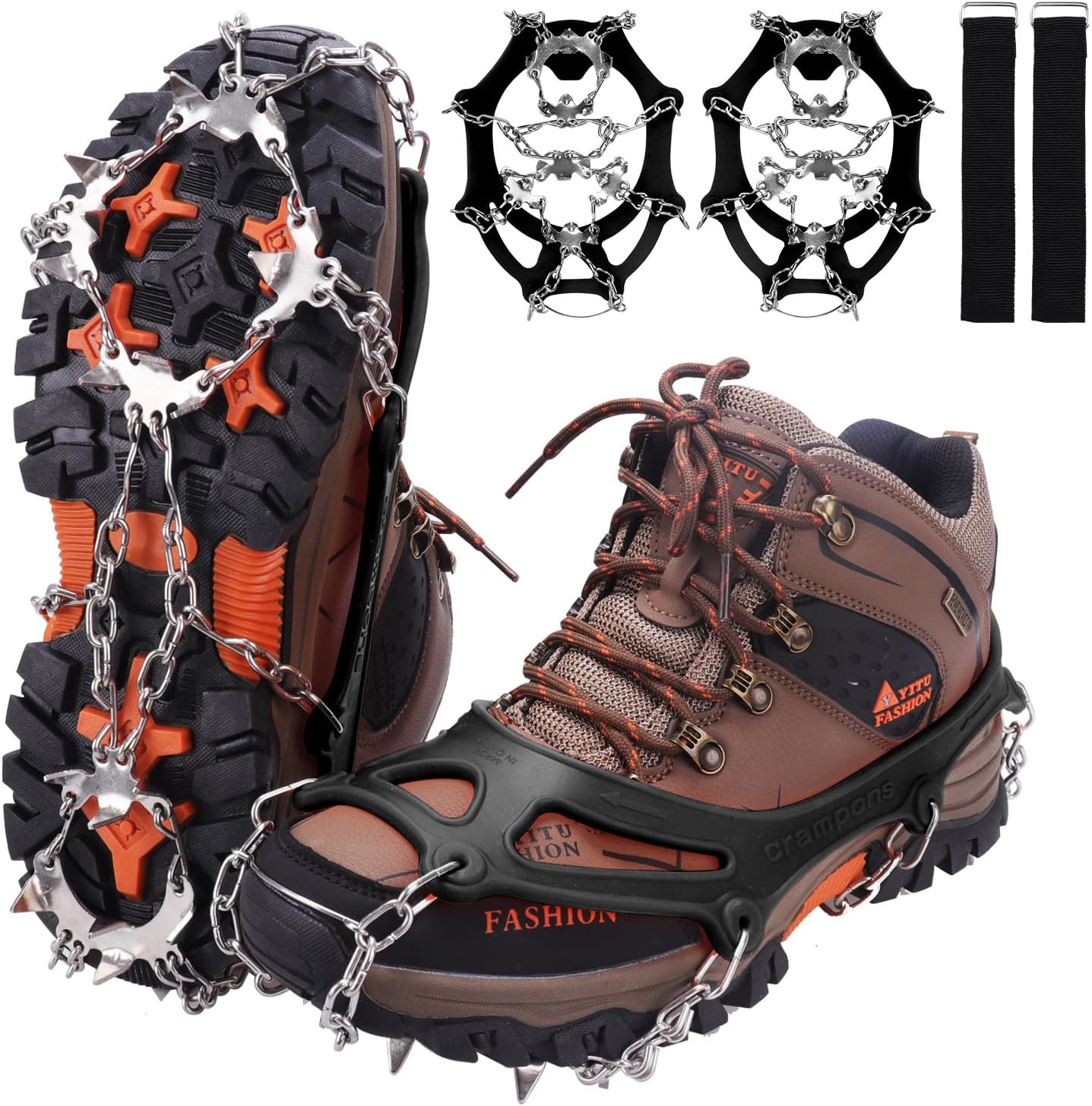
- Durable 19-point stainless steel spike array
- Thick cold-resistant TPE harness
- Secure over-foot fastening strap
- Includes convenient compact carry bag
Cons
- Not suitable for technical ice climbing or vertical terrain
- Extra bulk compared to minimalist urban slip-on coils
- Stainless steel spikes can wear down if walked on bare asphalt
The WIN.MAX 19-Spike Traction Cleats are designed for winter adventurers, outdoor workers, and daily commuters who need reliable footing over packed snow and treacherous ice. Engineered to slip over standard footwear, they give hikers and trail runners the confidence to navigate steep, slippery inclines without losing traction.
The standout feature is the combination of 19 heat-treated stainless steel teeth and double-link chains, which bite cleanly into hard-packed ice without rusting. Holding everything together is a thick 5.49mm thermoplastic elastomer frame that retains flexibility down to negative 90 degrees Fahrenheit, while the included over-foot strap prevents the rubber from shifting or rolling off your boots.
While these cleats excel on slick mountain paths and icy neighborhood streets, they are not a replacement for rigid mountaineering crampons required for vertical ice climbing. Anyone seeking a featherlight option strictly for quick walks across bare pavement or thin frost might also find the steel spike array overly aggressive.
Bottom line: WIN.MAX delivers a rugged, cold-weather traction device that strikes an excellent balance of durability, stability, and secure fit for dedicated winter hikers and outdoor enthusiasts.
- Spike Count: 19 teeth per foot
- Spike Material: Stainless steel
- Chain Design: Double-link stainless steel chains
- Harness Material: Thermoplastic Elastomer (TPE)
- Elastomer Thickness: 5.49 mm
- Temperature Rating: Flexible down to -90°F
- Included Accessories: Fastening strap, storage carry bag
- Footwear Compatibility: Hiking boots, trail running shoes, casual shoes
These cleats slip over a wide variety of footwear, including bulky winter hiking boots, low-profile trail runners, and standard insulated casual boots. The stretchy elastomer band expands smoothly around the perimeter of the sole to maintain uniform tension.
To install, position the front toe cap over the front of your shoe, stretch the band backward over the heel, and secure the included hook-and-loop strap across the bridge of your foot. This strap keeps the harness firmly anchored and prevents shifting on angled or uneven terrain.
Rinse the cleats with clean tap water after every trip to clear away road salt, dirt, and mud, then allow them to air dry completely before placing them into the storage bag to prevent rust.
Avoid prolonged walking over bare pavement, exposed rocks, or indoor flooring, as hard surfaces will rapidly dull the spike tips and reduce traction. These cleats are designed strictly for non-technical winter hiking and walking, and they should never replace technical crampons for steep alpine climbs.
How to Choose the Best Microspikes for Winter Hiking: Buying Guide
Spike Configuration, Tooth Count, and Trail Penetration

When evaluating traction devices, tooth geometry and spike count dictate how effectively you penetrate varying densities of snowpack and frozen water. Aggressive spikes engineered from heat-treated metal bite deep into crusty snow and steep glare ice, preventing both forward slipping and dangerous lateral slides. Devices featuring nineteen spikes, such as the Crampons Ice Cleats Traction Snow Grips for Boots, distribute downward pressure across multiple contact points beneath both the forefoot and the heel. This multi-spike layout prevents localized pressure spots from pushing uncomfortably through flexible boot soles during all-day trekking.
Not every winter trail demands heavy, deep-penetrating spikes. Compact stud systems, like the steel studs featured on the Aliglow Ice Cleats Crampons for Shoes and Boots, take a minimalist approach. These low-profile steel studs are ideal for flat, packed trails, gravel pathways, or neighborhood sidewalks where full steel claws would feel awkward and clunky. Stud systems allow you to walk with a more natural gait on level ground, whereas deep spikes require a conscious upward stepping motion to avoid snagging frozen trail debris.
When navigating undulating ascents and off-camber slopes, multidirectional tooth orientation becomes essential. The Upgraded Version of Walk Traction Ice Cleat Spikes utilizes nineteen multi-directional enhanced stainless steel spikes that grip securely regardless of your foot angle. Similarly, the Kahtoola MICROspikes Footwear Traction for Winter delivers an industry benchmark tooth design that bites predictably during ascents, level traverses, and steep descents. Choosing the correct tooth structure depends entirely on whether your winter adventures focus on rugged alpine trails or gentler rolling terrain.
Elastomer Band Durability and Sub-Zero Flexibility

The rubberized band that wraps around your footwear is the structural foundation of any slip-on traction device. This upper band must maintain its stretch and memory across intense temperature swings without hardening, sagging, or tearing. Thermoplastic elastomer, commonly known as TPE, is widely utilized because it combines synthetic rubber flexibility with plastic durability. The Crampons Ice Cleats Traction Snow Grips for Boots features a specialized TPE band that is five millimeters thicker than ordinary rubber compounds, retaining flexible strength down to -45°C.
Silicone offers an alternative band material that excels in sub-zero flexibility. In extreme cold, standard rubber can become brittle and fracture when stretched over rigid winter boots. The Upgraded Version of Walk Traction Ice Cleat Spikes utilizes proprietary silicone rather than standard TPR rubber, staying remarkably pliable down to -60 degrees Fahrenheit. Likewise, the Aliglow Ice Cleats Crampons for Shoes and Boots uses a silicone rubber thermoplastic elastomer blend that preserves elasticity down to -45 degrees Celsius, ensuring you can pull the harness over cold boots without tearing the eyelets.
Thickness plays a decisive role in long-term survivability against sharp rocks and frozen branches. The WIN.MAX Crampons for Shoes elevates durability with a heavy-duty TPE frame measuring 5.49 millimeters in thickness, maintaining pliability down to -90 degrees Fahrenheit. A thicker band creates tighter tension against footwear uppers, preventing the harness from shifting sideways when side-hilling steep slopes. Choosing premium elastomer ensures your traction system will endure repetitive stretching across multiple winter hiking seasons without snapping when you need it most.
| Product | Band Material | Traction Hardware | Cold Flexibility |
|---|---|---|---|
| Crampons Ice Cleats Traction Snow Grips for Boots | Thermoplastic elastomer (TPE) | 19 high quality stainless steel spikes | Under -45°C |
| Aliglow Ice Cleats Crampons for Shoes and Boots | Silicone rubber thermoplastic elastomer | Special non-slip steel studs | Under -45 degree C |
| Upgraded Version of Walk Traction Ice Cleat Spikes | Silicone | 19 multi-directional enhanced stainless steel spikes | Flexible to -60degrees F |
| WIN.MAX Crampons for Shoes | Thermoplastic elastomer (TPE) | 19 high-strength stainless steel teeth | Maintain flexibility to -90°F |
Underfoot Chain Construction and Link Strength

While spikes provide direct contact with icy trail surfaces, the chain network distributes your weight and keeps the metal cleat plates securely aligned underfoot. Substandard chains can bend, twist, or snap when subjected to torsional stress on rocky ridges. Welded steel chains represent the premier standard for serious winter trails. The Upgraded Version of Walk Traction Ice Cleat Spikes highlights welded chain construction with robust stainless steel links, ensuring the harness resists deformation even when you twist your foot across hidden root beds.
Double-chain architecture increases tensile strength and safeguards against unexpected trail failures. The WIN.MAX Crampons for Shoes pairs nineteen stainless steel teeth with an integrated double chain design to withstand heavy mechanical loads. This reinforced architecture resists rust and prevents metal fatigue caused by slush, melting snow, and trail salts. Similarly, the Crampons Ice Cleats Traction Snow Grips for Boots utilizes a firm chain system that holds the underfoot steel plates flat against your boot tread, minimizing lateral play.
A well-designed chain grid must flex naturally with every stride you take. As your boot flexes, the loose movement of the chain links prevents damp snow from balling up between the spikes. Traditional fixed plates often accumulate frozen slush, which forms dangerous snowballs that elevate your spikes off the ice. The chain assemblies found on the Kahtoola MICROspikes Footwear Traction for Winter and other premium chains allow self-clearing action, keeping every steel tooth exposed and ready to grip throughout extended wilderness treks.
Sizing Accuracy, Heel-to-Toe Security, and Retaining Straps
Selecting the correct size for winter traction devices is more nuanced than picking ordinary shoes because boot bulk varies wildly. A trail runner, an insulated hiking boot, and a rigid mountaineering boot of the same shoe size have completely different outer circumferences. For instance, the Aliglow Ice Cleats Crampons for Shoes and Boots specifies a size profile fitting US Women sizes 10 to 13 and US Men sizes 8 to 11, measuring approximately 5.8 by 9 inches. Always size up if you plan to stretch your traction device over heavily insulated winter pac boots.
Manufacturers often place molded markings on elastomer bands to help hikers align the footwear properly in cold conditions. With models like the Crampons Ice Cleats Traction Snow Grips for Boots, the molded letter marking can occasionally confuse hikers: the L mark designates a size Large rather than indicating the left foot. Traction devices are universally symmetrical and unisex, meaning either cleat can be worn on either boot without distinction. Carefully consulting sizing diagrams before heading into the mountains ensures your traction gear fits snugly without slipping off your heel.
While tension from the elastomer band holds the device in place, secondary straps offer invaluable security on steep climbs. The WIN.MAX Crampons for Shoes and the Crampons Ice Cleats Traction Snow Grips for Boots include adjustable safety straps that run over the top of the foot. These straps lock the rubber frame tightly against your instep, preventing the harness from being pulled off backward when your spikes sink into deep, dense snowdrifts. If your winter adventures include overnight expeditions, packing reliable lighting like The 8 Best Battery Camping Lanterns ensures you can adjust harness straps easily in camp after sunset.
Weight, Packability, and Storage Protection
Winter hiking already demands substantial pack weight due to extra clothing layers, emergency gear, and insulated thermoses. Traction devices must deliver uncompromising grip without feeling like lead weights strapped to your boots or resting in your backpack. Minimalist traction options like the Aliglow Ice Cleats Crampons for Shoes and Boots feature lightweight constructions that fold small enough to slip directly into a jacket pocket. This makes them exceptionally convenient for everyday walking, light jogging, or sudden icy stretches on groomed paths.
Aggressive stainless steel spikes can easily puncture waterproof jacket fabrics, tear through sleeping bags, or scratch expensive accessories if tossed loosely into a backpack. Products like the Crampons Ice Cleats Traction Snow Grips for Boots and the WIN.MAX Crampons for Shoes include dedicated carry bags. These storage pouches protect the rest of your backcountry equipment from sharp teeth and trap residual trail slush as the spikes thaw out inside your pack during breaks.
Having your traction gear readily accessible encourages you to put them on before encountering trouble rather than after slipping. Models like the Upgraded Version of Walk Traction Ice Cleat Spikes fold compactly into a pack or car glove box, ensuring you always have traction at hand when arriving at an icy trailhead. When commuting in snowy weather, pairing your traction gear with durable The 9 Best Bicycle Panniers for Commuting helps keep all your seasonal transit essentials organized and protected against winter slush.
Terrain Matching: From Urban Walkways to Alpine Ridges
Different winter environments place distinct mechanical demands on traction footwear. Walking across flat frozen ponds, icy driveways, or clearing snow from walkways requires moderate slip resistance without excessive claw length. The Aliglow Ice Cleats Crampons for Shoes and Boots provides dependable stability for light climbing, snow shoveling, and walking on slick neighborhood pavements without making your stride feel awkward or jarring your joints on intermittent asphalt.
When winter trails climb through steep forested canyons, angled terrain, and boulder fields, you need deep-penetrating traction that holds from every angle. The Upgraded Version of Walk Traction Ice Cleat Spikes and the Crampons Ice Cleats Traction Snow Grips for Boots are specifically engineered for angled mountain trails, icy mud, and slippery wet grass. Their nineteen-spike layouts dig into crusty snowbanks, allowing you to ascend steep inclines without losing forward momentum or sliding backward.
For the most demanding winter routes where hard-packed snowpack transitions into glacier-like trail ice, the Kahtoola MICROspikes Footwear Traction for Winter sets the benchmark for trail hiking reliability. While these devices provide exceptional traction on hiking trails, remember that microspikes are not full technical climbing crampons. They are not intended for vertical ice climbing or steep technical couloirs requiring front-pointing. Matching your traction device to your specific route profile ensures maximum safety and trail efficiency across all winter landscapes.
Why You Should Trust Us
At Daily Deal Here, our editorial team approaches outdoor gear evaluation with rigorous analytical standards. I am Jake Morrison, a senior editor specializing in sports, automotive, and outdoor gear. We understand that winter hiking footwear is a critical safety investment where dependability directly impacts your well-being on remote trails. Rather than relying on marketing slogans, our process centers on exhaustive research of verified retail specifications, metallurgical details, and elastomer engineering data.
We scrutinize thousands of authentic consumer feedback reports across varying geographical climates to identify real-world durability trends. By cross-referencing customer experiences in sub-zero environments, we observe how hardware holds up against metal fatigue, chain link stress, and elastomer degradation. We track failure rates, sizing quirks, and hardware longevity across diverse conditions to provide objective, trustworthy recommendations. Our editorial independence ensures that our guides remain focused solely on helping you select the safest, most reliable gear for your outdoor pursuits.
Final Thoughts
Winter hiking reveals some of the most serene and rewarding backcountry landscapes imaginable, but frozen trails demand the right equipment to ensure your safety. Stepping onto an icy ridgeline without dependable traction can turn an exhilarating trek into a hazardous ordeal. Selecting the right microspikes for winter hiking transforms slick trails into manageable pathways, giving you the grip and balance needed to hike confidently through snow, slush, and glare ice. You can explore more equipment recommendations in our All buying guides and reviews directory.
For hikers seeking an industry gold standard with proven pedigree on demanding trails, our top pick remains the Kahtoola MICROspikes Footwear Traction for Winter. If you are looking for outstanding value and robust nineteen-point traction without stretching your gear budget, the Crampons Ice Cleats Traction Snow Grips for Boots delivers exceptional security with its reinforced TPE frame and included storage sack.
For hikers venturing into severe sub-zero climates where rubber brittleness is a primary concern, the WIN.MAX Crampons for Shoes stands out with its 5.49-millimeter elastomer band rated to maintain flexibility down to -90 degrees Fahrenheit. Meanwhile, those who need compact, pocketable traction for light urban walking and packed neighborhood pathways will appreciate the Aliglow Ice Cleats Crampons for Shoes and Boots. No matter which option you slip over your boots, carrying proper traction ensures you stay upright, injury-free, and ready to enjoy every mile of winter beauty.
Frequently Asked Questions About Microspikes for Winter Hiking
How do microspikes for winter hiking differ from traditional mountaineering crampons?
Microspikes feature flexible elastomer bands and moderate steel spikes designed primarily for walking on packed snow, icy trails, and frozen dirt. In contrast, mountaineering crampons use rigid or semi-rigid steel frames with longer spikes, including forward-pointing horizontal front teeth built specifically for technical vertical ice climbing and steep glacier travel. Crampons require specialized, rigid-soled mountaineering boots and careful footwork techniques to prevent snagging clothing. For standard winter hiking trails and rolling mountain terrain, microspikes are significantly lighter, much easier to put on, and far more comfortable for natural walking strides.
What boot size should I order when buying microspikes for winter hiking in 2026?
When ordering microspikes, always account for the total exterior volume of your footwear rather than your everyday shoe size alone. Standard running shoes and lightweight trail hikers have relatively slim profiles, while insulated winter boots and pac boots have thick soles and heavy insulation that expand outer dimensions considerably. If your boot size sits near the upper boundary of a sizing bracket, sizing up ensures the rubber harness will stretch easily over your boot without overstressing the elastomer eyelets. Checking detailed size charts provided by manufacturers helps you secure a snug, slip-free fit.
Can I wear microspikes for winter hiking on bare rock, dirt, or paved surfaces?
While high-strength stainless steel spikes can withstand brief contact with rocks and frozen dirt, walking on extensive bare rock or dry pavement is not recommended. Repeated impacts against unyielding stone or asphalt rapidly dulls the sharp points of the spikes, reducing their ability to bite into hard ice later. Furthermore, metal spikes feel awkward, noisy, and slippery on hard pavement, creating an unstable walking platform that strains foot muscles. To protect your investment and preserve spike sharpness, slip your traction devices off whenever trails transition into dry dirt or clear asphalt.
How do I clean and maintain my microspikes for winter hiking after a muddy winter trek?
Proper post-hike maintenance prevents corrosion and extends the lifespan of your traction gear. After trekking through snow and muddy trails, rinse the spikes and chain assembly under cool tap water to remove dirt, mud, and corrosive road salts. Use a soft towel to dry the stainless steel hardware thoroughly before storing them in their carry bag, as trapped moisture can promote minor surface discoloration. Store the elastomer bands in a cool, dry place away from direct sunlight and excessive heat, which can degrade rubber compounds over time. Explore our Browse all categories index for more maintenance tips.
Will silicone or TPE elastomer bands snap when hiking in severe sub-zero cold?
High-grade thermoplastic elastomer and specialized silicone bands are formulated specifically to retain elasticity in extreme sub-zero weather. Quality traction devices often feature materials engineered to remain pliable in temperatures ranging from -45 degrees Celsius down to -90 degrees Fahrenheit. Standard cheap rubber bands can become stiff and brittle in freezing temperatures, but hiking-grade TPE and silicone compounds stretch reliably without snapping or tearing. Always inspect the eyelets and attachment points before leaving home to ensure no micro-tears have formed, and pull the bands smoothly over your footwear without excessive jerking.



Write Your Review
No reviews yet. Be the first to share your experience!