

Most guides to keto sweeteners rank them as though one is simply better than the next. They are not competing products, they are different chemistry, and the differences show up in the pan rather than on the nutrition panel. An erythritol blend that makes a perfect shortbread will turn your ice cream into a block you cannot get a spoon into. Allulose caramelises like real sugar and will not hold a crisp edge. Choosing well means matching the sweetener to what you are actually cooking.
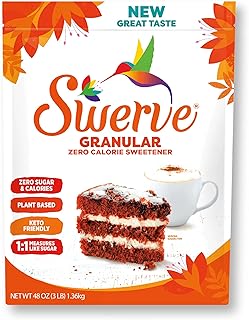
Our top pick is the Swerve Ultimate Granular Sugar Replacement for measuring cup for cup like sugar across the widest range of uses. Below are 9 options from Truvia, Swerve, Sukrin and more, grouped by how they behave rather than by marketing claims. Our grocery guides cover the rest of the low carb aisle, and this list is current for October 2026.
Pros
- Measures cup for cup so recipes need no conversion
- Replaces the bulk of sugar, not only the sweetness
- Zero calorie and non glycemic
- Works across most standard baking
Cons
- Erythritol recrystallises as it cools, so not ideal for ice cream
- Cooling sensation is noticeable to some people in uncooked uses
The practical advantage here is that you can use a normal recipe without changing it. Pure erythritol is only around seventy percent as sweet as sugar, so straight substitution produces a flat result. This blend is formulated to land at the same sweetness per cup, which removes the arithmetic and the guesswork.
The second thing it gets right is bulk. Sugar is not only sweetness in baking, it is volume and structure, and swapping a cup of sugar for a teaspoon of concentrated sweetener leaves the recipe short of material. A granular cup for cup product keeps that structure intact.
Its limit is the same as any erythritol product: it recrystallises as it cools. That is fine in biscuits and cakes and unhelpful in frostings and frozen desserts, where a grainy or rock hard result is the usual complaint. Keep allulose for those jobs.
Bottom line: the single most useful bag to keep in a keto kitchen.
- Base: erythritol blend
- Measurement: cup for cup with sugar
- Calories: zero calorie
- Glycemic: non glycemic
- Format: granular
Best for anyone who bakes from standard recipes and wants a direct swap, and for a first keto sweetener before you know which specialised products you need.
Less suited to ice cream and caramel work, where allulose behaves far better.
Swap one for one by volume in most recipes. If a result tastes slightly cool on the tongue, reduce the amount a little and add a few drops of liquid stevia to make up the sweetness.
For frostings, dissolve it fully in a warm liquid before combining, since undissolved crystals are what create a gritty texture as the mixture cools.

Pros
- Single ingredient with nothing else added
- Economical way to buy the base of most keto blends
- Lets you build your own sweetener combinations
- Generally the best tolerated sugar alcohol
Cons
- Around seventy percent as sweet as sugar, so recipes need adjusting
- Cooling effect is most noticeable in a pure product
This is the raw material rather than a finished product, and for people who bake regularly that is the point. Most cup for cup keto sweeteners are erythritol with something intense added to bring the sweetness up, so buying the base on its own is the economical route.
It also gives you control. Adding your own monk fruit or stevia lets you tune sweetness to a recipe rather than accepting a fixed ratio, and it lets you combine erythritol with allulose to solve the crystallisation problem in desserts.
The two things to plan around are sweetness and cooling. At roughly seventy percent the sweetness of sugar, straight substitution will taste flat, and the cooling sensation erythritol produces is at its strongest when nothing else is masking it.
Bottom line: the cheapest way to keep keto baking supplied, if you are willing to do the blending.
- Ingredient: 100% erythritol
- Sweetness: approximately 70% of sugar
- Calories: zero calorie
- Format: granulated
- Use: baking and blending base
Best for frequent bakers, for anyone already comfortable adjusting recipes, and for people who want to control exactly what is in their sweetener.
Not the easiest starting point for someone who wants to open a bag and follow a normal recipe.
Use roughly a third more by volume than the sugar a recipe calls for, or top up sweetness with a few drops of liquid stevia rather than adding more bulk.
Grind it finer in a clean spice grinder for frostings and anything uncooked. Fine crystals dissolve more completely and reduce the gritty texture as a mixture cools.

Pros
- Carries a third party keto certification
- No cooling sensation associated with pure sugar alcohols
- Convenient for tabletop and drinks
- Familiar brand with wide availability
Cons
- Concentrated, so it does not replace sugar bulk in baking
- Some people detect an aftertaste from monk fruit blends
Monk fruit extract is hundreds of times sweeter than sugar, which is why it is never sold neat. What you buy is the extract on a carrier, and the carrier is the part worth reading before anything else on the label.
The keto certification here is a genuine plus in a category full of unverifiable claims. It is a third party program rather than a regulated standard, but it does provide a consistency check on ingredients and carbohydrate content, which is more than most competing products offer.
Where it works well is tabletop use: coffee, tea, cereal, yoghurt. Where it needs care is baking, because a concentrated sweetener contributes sweetness without contributing the volume that sugar provides to a batter.
Bottom line: a good everyday tabletop sweetener with a label claim somebody has checked.
- Base: monk fruit extract with carrier
- Certification: keto certified
- Format: bag
- Use: drinks, tabletop, light baking
- Calories: low to zero per serving
Best for daily tabletop use and for anyone who dislikes the cooling sensation of sugar alcohols.
Less suited to baking projects that rely on sugar for structure, where a cup for cup blend is the better tool.
Read the carrier ingredient before buying any intense sweetener. Erythritol carriers suit keto, while dextrose and maltodextrin are carbohydrates that raise blood glucose.
Start with less than you think you need. Concentrated sweeteners taste bitter rather than sweeter when overdosed, and that is usually what people mistake for a bad aftertaste.

Pros
- Clear conversion printed on the pack
- Spoonable jar is convenient for daily use
- Stevia and erythritol blend rather than a bare extract
- Non GMO and calorie free
Cons
- Concentrated, so not a bulk replacement in baking
- Stevia aftertaste is noticeable to some people
The useful thing about this product is that the conversion is printed where you can see it. Three quarters of a teaspoon in place of two teaspoons of sugar removes the most common source of error with concentrated sweeteners, which is guessing and then overdoing it.
The blend pairs stevia leaf extract with erythritol, which is the standard arrangement: the erythritol provides some bulk and softens the intensity, and the stevia does the sweetening. The result is a tabletop sweetener that measures by the spoon rather than the cup.
Stevia carries a distinctive taste that a proportion of people notice as a lingering aftertaste. It is not a fault so much as a preference, and it is the single reason people switch between stevia and monk fruit products.
Bottom line: a convenient everyday jar for coffee and cereal, with the conversion done for you.
- Base: stevia leaf extract with erythritol
- Conversion: about 3/4 tsp equals 2 tsp of sugar
- Calories: calorie free
- Format: spoonable jar
- Non GMO
Best for coffee, tea and cereal, and for households that want one jar on the table rather than a baking supply.
Not the right product for cakes and biscuits that need sugar volume as well as sweetness.
Follow the printed conversion rather than spooning by eye. Concentrated blends turn bitter when overdosed and the tipping point is small.
Stir into hot drinks rather than cold where possible. Erythritol dissolves more readily warm, and undissolved crystals in a cold drink are what people describe as grittiness.

Pros
- Replaces brown sugar cup for cup
- Adds the caramel note that plain sweeteners lack
- Keeps baked goods softer than white sugar replacements
- Zero calorie and non glycemic
Cons
- Flavouring means it is not identical to the plain granular version
- Allulose content makes it behave differently from a pure erythritol blend
Brown sugar does two things in a recipe that white sugar does not: it adds a molasses flavour and it holds moisture, which is why brown sugar cookies stay chewy. A keto bake that swaps brown sugar for a plain white sweetener loses both.
This product exists to close that gap, and it does it while measuring cup for cup, so a standard recipe converts without arithmetic. For cookies, barbecue style sauces, crumbles and anything with a caramel note, it is the correct tool rather than a nicety.
Two things to keep in mind. The flavouring means the nutrition panel is not necessarily identical to the plain granular version, so read it rather than assuming. And the ingredient list is erythritol with allulose, so it does not behave exactly like the plain granular version: the allulose softens the way it sets as it cools.
Bottom line: the right buy for any recipe that calls for brown sugar.
- Type: brown sugar replacement
- Base: erythritol and allulose, coloured with fruit juice concentrate
- Measurement: cup for cup
- Calories: zero calorie
- Glycemic: non glycemic
Best for bakers who make cookies, crumbles and sauces where brown sugar is part of the flavour rather than only the sweetness.
Unnecessary if you only sweeten drinks, where a tabletop product is simpler and cheaper.
Pack it into the measuring cup the way you would pack brown sugar, since recipes assume a packed measure.
Pair it with a spoonful of allulose in chewy cookie recipes. The allulose stops the mixture setting hard as it cools, which is what turns a chewy cookie into a crisp one.

Pros
- Single ingredient with no additives
- Non GMO and zero net carb
- Good base for custom sweetener blends
- Consistent granular texture for baking
Cons
- Less sweet than sugar so recipes need adjusting
- Pure erythritol has the strongest cooling effect
This is a straightforward erythritol in a convenient bag size, and it competes on being exactly what it says rather than on formulation. For anyone who has settled on their own blend ratio, single ingredient products like this are the sensible way to buy.
The granular texture is the practical detail. It behaves like caster sugar in a mixing bowl, which is what you want in most baking, and it dissolves reasonably in warm liquids.
Everything that applies to pure erythritol applies here. It is around seventy percent as sweet as sugar, it recrystallises when it cools, and the cooling sensation on the tongue is most pronounced when there is no other sweetener to mask it. Those are properties of the ingredient rather than shortcomings of this product.
Bottom line: a clean single ingredient option in a manageable bag size.
- Ingredient: granular erythritol
- Carbohydrate: zero net carb
- Calories: zero calorie
- Size: one pound bag
- Non GMO
Best for people who blend their own sweeteners and want a smaller bag than bulk baking sizes.
Not the choice for someone wanting to follow a recipe unchanged, where a cup for cup blend saves the adjustment.
Combine roughly three parts erythritol with a small measured amount of monk fruit or stevia to reach the sweetness of sugar without adding more bulk.
Store it sealed and dry. Erythritol takes up moisture from humid air and clumps, and a clumped bag measures inaccurately by volume.

Pros
- Does not recrystallise, so ice cream stays scoopable
- Browns and caramelises the way sugar does
- No cooling sensation
- Non GMO and keto friendly
Cons
- Less sweet than sugar so quantities need adjusting
- Browns faster than sugar, so baked goods can darken early
Allulose is the answer to the problem every erythritol product has, which is what happens when the dish cools. It does not recrystallise, so ice cream stays scoopable, caramel sauce stays pourable and chewy cookies stay chewy.
It also browns. Sugar alcohols do not caramelise, which is why keto versions of anything that relies on browning tend to disappoint. Allulose behaves much more like real sugar in the pan, and that alone justifies keeping a bag alongside your main sweetener.
Two adjustments are needed. It is less sweet than sugar, so quantities go up or you top up with a concentrated sweetener. And because it browns faster than sugar, baked goods can colour before the centre is cooked, which usually means dropping the oven temperature slightly or covering the top.
Bottom line: the specialist that solves the jobs erythritol cannot do.
- Ingredient: allulose
- Size: 12 ounce
- Calories: zero calorie
- Contains: no erythritol
- Non GMO
Best for ice cream, caramel, sauces and chewy baked goods, and for anyone who dislikes the cooling sensation of sugar alcohols.
Less suited to recipes that need a crisp snap, where erythritol gives a better result.
Lower the oven temperature slightly or tent with foil when baking, because allulose browns faster than sugar and the surface can colour before the middle sets.
Introduce it gradually. Allulose is usually well tolerated in normal amounts but can cause digestive discomfort at higher doses, and individual thresholds vary a lot.

Pros
- Dissolves instantly in hot and cold liquids
- No bulk, no grittiness, no cooling effect
- Organic and zero calorie
- Small bottle travels easily
Cons
- Cannot replace sugar in baking
- Easy to over sweeten with a heavy hand
Granular sweeteners are the wrong tool for drinks. Erythritol based products dissolve slowly in cold liquid and leave grit at the bottom of an iced coffee, and their cooling effect is at its most obvious when there is nothing to hide it.
A liquid extract avoids all of that. It disperses immediately in hot or cold, it adds no bulk and no texture, and the bottle is small enough to carry.
The limit is obvious once you understand what sugar does in baking. Drops cannot replace the volume and structure that a cup of sugar contributes, so this is a drinks and finishing product rather than a baking one. The other thing to watch is dosing, since stevia turns bitter rather than sweeter when you use too much.
Bottom line: the right product for coffee and cold drinks, and only for those.
- Type: liquid stevia extract
- Size: 1.8 ounce bottle
- Calories: zero calorie
- Organic
- Use: coffee, tea, cold drinks
Best for daily coffee and tea drinkers, for iced drinks where granular sweeteners fail to dissolve, and for carrying to work.
Not a baking product, since it provides no bulk.
Start with fewer drops than you expect to need and add more. Stevia becomes bitter when overdosed, and there is no way back once a cup is over sweetened.
Add it to the liquid before ice in cold drinks so it disperses evenly rather than sinking through a full glass.

Pros
- Brown sugar character with a caramel note
- Erythritol and stevia blend for sweetness without bulk loss
- Zero calorie sugar free formulation
- Works in baking that needs depth of flavour
Cons
- Distinct flavour will not suit every recipe
- Sugar alcohol base still recrystallises on cooling
This is the second brown sugar option in the list and it approaches the job slightly differently, leaning on a caramel character rather than aiming for a strict brown sugar imitation. In practice that makes it a good fit for bakes where you want depth rather than an exact match.
The erythritol and stevia combination is the conventional keto pairing, with the sugar alcohol carrying the bulk and the stevia lifting the sweetness. That keeps recipes structurally sound in a way concentrated sweeteners alone cannot.
The flavour is pronounced enough that it will not disappear into every recipe. In a spiced cake or a sauce that is an advantage. In a delicate vanilla bake it can dominate, which is when the plain granular blend is the better call.
Bottom line: a flavour led brown sugar alternative for bakes that want a caramel note.
- Type: brown sugar substitute
- Base: erythritol with stevia
- Calories: zero calorie
- Sugar: sugar free
- Use: baking and sauces
Best for spiced bakes, crumbles and sauces where a caramel note adds something, and for bakers who want an alternative to the mainstream brown sugar replacements.
Less suited to delicate recipes where the flavour would take over.
Taste the batter before baking if you are using it in a new recipe. The caramel character is stronger than plain sweeteners and it is easier to adjust before the oven than after.
Store it sealed. Like all erythritol based products it draws moisture from humid air and clumps, which throws out volume measurements.
How to Choose a Sugar Substitute For Keto
Work through these six points in order. The first three decide which sweetener suits your cooking, and the last three cover the things labels obscure.
The Four Families and How They Behave

Erythritol is a sugar alcohol, sold pure by Whole Earth and So Nourished here and used as the bulk in many blends. It looks like sugar, measures roughly like sugar and carries a distinct cooling sensation on the tongue that some people never notice and others find unmistakable. It is the workhorse of keto baking.
Allulose is a rare sugar that the body largely does not metabolise, represented here by the Wholesome Sweeteners product. It behaves far more like real sugar in the pan than erythritol does, and it does not produce the cooling effect. Monk fruit and stevia are the third family: intense sweeteners hundreds of times sweeter than sugar, which is why Monk Fruit In The Raw, Truvia and the Pyure liquid all pair them with a carrier or sell them in drops.
The fourth family is the brown sugar replacements, including Swerve Brown and Sukrin Gold. These build a brown sugar character on top of a sweetener base, and the method varies: Swerve Brown lists erythritol and allulose with fruit juice concentrate for colour, while others use molasses or a molasses style flavouring. That difference matters, because a blend containing allulose behaves differently in the pan from a pure erythritol product. Read the ingredient list rather than assuming the brown version is the plain version with colour added.
Sweetness Ratio and Why Cup for Cup Matters

Pure erythritol is roughly seventy percent as sweet as sugar, so a recipe converted straight across comes out noticeably flat. Allulose sits in a similar range. Monk fruit and stevia are the opposite problem, being so concentrated that a spoonful where a recipe asks for a cup would be inedible.
This is the reason blends exist. Products described as measuring cup for cup, such as the Swerve granular and brown versions and the Truvia spoonable jar, are formulated so that one cup replaces one cup of sugar. That saves you doing conversion arithmetic on every recipe and, more importantly, it keeps the bulk right. In baking, sugar is not only sweetness, it is also volume and structure, so replacing a cup of sugar with a teaspoon of concentrate leaves a hole in the recipe.
Where intense sweeteners shine is in liquids, where bulk does not matter. The Pyure liquid stevia is designed for coffee, tea and drinks, and in that role the concentration is the feature rather than the obstacle.
What Happens When It Cools: Crystallisation and Browning

This is the criterion that separates a good result from a disappointing one, and it is almost never on the packaging. Erythritol recrystallises as it cools. In a biscuit that is harmless and can even help with snap. In a frosting it can turn gritty, and in ice cream it produces a texture closer to a solid block than a scoopable dessert.
Allulose does the opposite. It resists crystallising, stays soft, and browns and caramelises in a way sugar alcohols do not. If you are making ice cream, caramel sauce, chewy cookies or anything that needs to stay pliable, allulose is the one that works. The trade is that it will not give you a crisp, snappy result, and it browns faster than sugar so baked goods can darken before they are cooked through.
A practical middle route many bakers use is combining them, with an erythritol blend for bulk and a smaller amount of allulose to keep the texture soft. It is more work than reaching for one bag, and it explains why experienced low carb bakers keep two sweeteners in the cupboard rather than one.
Digestive Tolerance and Serving Size
Sugar alcohols are not fully absorbed, which is what makes them low in usable carbohydrate and also what can cause bloating, gas or looser stools when consumed in quantity. Erythritol is generally the best tolerated of the group because most of it is absorbed in the small intestine and excreted rather than fermenting further down, which is why it dominates the category.
Allulose is usually well tolerated in normal amounts but can cause discomfort at higher doses, and the threshold varies widely between people. The sensible approach with any new sweetener is a small serving first rather than a full batch of brownies, particularly if you are switching families rather than brands.
Individual tolerance is genuinely individual here. Some people eat erythritol daily with no effect at all, others notice it immediately. If one family does not agree with you, switching to another often solves the problem entirely.
Reading Zero Net Carb and Keto Certified Claims
Net carbohydrate is a calculation rather than a measured value. In the United States, labelling conventions allow sugar alcohols and fibre to be subtracted from total carbohydrate to arrive at a net figure, which is how a product listing carbohydrate on the panel can also claim zero net carbs. Other regions do not use the concept at all, so the same product can be described differently depending on where it is sold.
Keto certification, which Monk Fruit In The Raw carries, is a third party program rather than a government standard. It provides a consistency check on ingredients and carbohydrate content, which is useful, but it is not equivalent to a regulated definition. Treat both claims as shorthand and read the ingredient list, which is the part that cannot be spun.
What to look for in that list is the carrier. Intense sweeteners are always blended with something, and the something matters. Erythritol or a similar sugar alcohol is the common choice for keto products. Dextrose and maltodextrin are also used as carriers in some tabletop sweeteners, and both are carbohydrates that raise blood glucose.
The Trap: Natural Sugars Sold as Substitutes
Search for a sugar substitute and the results will include coconut sugar, date sugar, honey powder and maple sugar, usually described as natural alternatives to refined sugar with a lower glycemic index. Every one of those is sugar. They contain broadly the same carbohydrate load as the sugar they replace, and a lower glycemic index does not make a carbohydrate disappear.
This matters because the phrase sugar substitute is doing two jobs at once. For someone reducing refined sugar for general health reasons, coconut sugar is a reasonable swap. For someone eating to stay in ketosis, it is not a substitute at all, it is the thing they are avoiding wearing a different label. We excluded those products from this list for exactly that reason.
The check takes five seconds: look at total carbohydrate per serving on the nutrition panel. Keto appropriate sweeteners show carbohydrate that is almost entirely sugar alcohol or fibre. Natural sugars show carbohydrate that is simply sugar.
| Sweetener | Family | Measures like sugar | Best for |
|---|---|---|---|
| Swerve Ultimate Granular | Erythritol blend | Cup for cup | General baking and everyday use |
| Whole Earth Erythritol | Pure erythritol | Less sweet than sugar | Bulk baking, blending your own |
| Monk Fruit In The Raw | Monk fruit blend | Packet and bag format | Drinks and tabletop use |
| Truvia Spoonable | Stevia and erythritol | Concentrated, spoon measure | Coffee, cereal, tabletop |
| Swerve Brown | Brown sugar replacement | Cup for cup | Cookies, sauces, anything brown sugar |
| So Nourished Erythritol | Pure erythritol | Less sweet than sugar | Baking where you control the blend |
| Wholesome Allulose | Allulose | Less sweet than sugar | Ice cream, caramel, chewy textures |
| Pyure Liquid Stevia | Liquid stevia | Drops, not measured | Coffee, tea and cold drinks |
| Sukrin Gold | Brown sugar replacement | Cup for cup | Baking that needs a caramel note |
If you only buy one, take a cup for cup blend. If you buy two, add allulose for anything that must stay soft. More food guides are in our article archive.
Why You Should Trust Us
We build these lists from ingredient panels and verified buyer feedback, and in this category we applied one filter that other lists often skip: everything here has to actually suit a ketogenic diet. Searches for sugar substitutes return coconut sugar, date sugar and honey products near the top, all of which are sugars. Including them would have made the list longer and the advice wrong.
We also describe mechanisms rather than repeating claims. Whether a sweetener recrystallises, whether it browns, how sweet it is relative to sugar and what carrier is blended with it are all things you can read off a label and a recipe result. Whether it is the healthiest or the best tasting is not, so we tell you what each one does in the pan and let you match it to what you cook.
Final Thoughts
The Swerve Ultimate Granular Sugar Replacement is our best overall because it removes the arithmetic. It measures cup for cup, it works across most baking, and it keeps the bulk that sugar contributes to a recipe rather than only the sweetness. For a single bag in the cupboard, this is the one.
The Whole Earth Sweetener Co. 100% Erythritol is the best value pick. Buying the base ingredient on its own is the economical route if you bake often, and it lets you blend your own combinations rather than paying for someone else’s ratio.
After that, buy for the job. Ice cream, caramel and chewy cookies need the Wholesome Sweeteners allulose, which is the only product here that will not set hard as it cools. Brown sugar recipes need Swerve Brown or Sukrin Gold. Coffee and tea are better served by the Pyure liquid stevia or the Truvia jar than by a baking blend. Monk Fruit In The Raw is the tabletop option with a keto certification on the pack, and So Nourished is a straightforward erythritol for anyone building their own mixes. Our grocery section has more on low carb shopping.
Frequently Asked Questions
Which sugar substitute for keto works best for baking in 2026?
A cup for cup erythritol blend for most baking, because it replaces both the sweetness and the bulk that sugar provides. Switch to allulose for anything that needs to stay soft or caramelise, such as ice cream, sauces and chewy cookies, since erythritol recrystallises as it cools.
Is coconut sugar suitable for keto?
No. Coconut sugar is sugar, and it carries broadly the same carbohydrate load as the cane sugar it replaces. It is often sold alongside keto sweeteners because it is marketed as a natural alternative, but a lower glycemic index does not remove the carbohydrate. Check total carbohydrate on the panel before buying anything described as a natural sugar substitute.
Why does my keto dessert taste cold or minty?
That is the cooling effect of erythritol, which draws heat as it dissolves. It is more noticeable in uncooked applications like frostings and drinks than in baked goods. Blending erythritol with allulose or monk fruit reduces it, and switching to allulose entirely removes it.
What does zero net carbs actually mean?
It is a calculation that subtracts sugar alcohols and fibre from total carbohydrate, permitted under United States labelling conventions rather than defined by a single global standard. The number is useful shorthand for keto shoppers, but read the ingredient list too, since some tabletop sweeteners use carbohydrate carriers such as dextrose or maltodextrin.
Can these sweeteners upset your stomach?
They can, because sugar alcohols are not fully absorbed. Erythritol is usually the best tolerated, and allulose is generally fine in normal amounts but can cause discomfort at higher doses. Tolerance varies a lot between individuals, so try a small serving before committing to a large batch. More food and drink guides are in our article archive.





Write Your Review
No reviews yet. Be the first to share your experience!