

Twelve inches is the number most parents arrive with, usually because a coach mentioned it or because it sits in the middle of the size chart. It is a reasonable place to start and a poor place to stop. Glove size is not a measure of quality, it is a measure of fit and position, and a glove that is too big is the single most common reason a young player drops balls they should have caught.
Our top pick is the Rawlings Player Preferred Baseball Glove for its combination of a ready to use feel and a size range that covers the years when a player is still growing into the position. Below are 6 gloves from Franklin Sports, Rawlings, Rawlings Remix, sorted by who they fit rather than by how impressive the leather sounds. For related gear, our sports and outdoors guides cover the rest of the bag, and this list reflects what is available in October 2026.
Pros
- Soft enough to use from the first practice
- Size range spans the years a player is still growing
- Versatile pattern works in the infield or outfield
- Available for both baseball and slowpitch softball
Cons
- Not built for a player who has committed to one position
- Recreational construction will not last as long as stiff leather
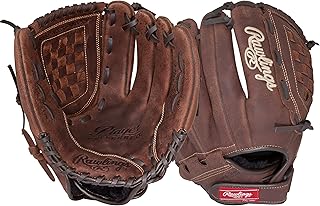
This is the glove to buy when you do not yet know where a player will end up on the field, which describes most youth players. The pattern is a middle of the road design, neither the shallow quick transfer pocket of a dedicated infield glove nor the deep basket of an outfielder, and that compromise is the point.
It arrives soft. For a young player that matters more than leather grade, because the limiting factor at this age is hand strength rather than glove quality. A glove that closes easily gets used at the edges of a player's range, and a stiff one quietly shrinks that range.
The size spread is the other reason it leads this list. The same model exists across youth and adult recreational sizes, so a family can stay with a familiar fit as a child grows instead of relearning a new glove shape every two seasons.
Bottom line: the safest single choice for a youth player who still plays everywhere.
- Type: recreational baseball and slowpitch softball glove
- Sizes: youth through adult recreational range
- Break-in: soft from new
- Pattern: versatile, not position specific
- Hand options: right hand throw and left hand throw
Best for players roughly nine to twelve who rotate through positions, and for families who want one glove that works for practice, games and the back garden.
Less suited to a player who has settled at a specific position and wants the pocket depth that goes with it.
Break it in by playing catch. Ovens, microwaves and heavy oil all soften the material faster and shorten the life of the glove.
Store it with a ball in the pocket and the glove closed, so the shape sets around the ball rather than flattening. Keep it out of a hot car boot, where heat cycles dry the material and stiffen the lacing.
Pros
- Usable straight out of the box with no break-in
- Light enough for a young player to hold up all game
- Padded palm takes the sting out of harder throws
- Straightforward pattern that is easy to learn on
Cons
- Softer materials wear faster than full leather
- Not intended for competitive play at older ages
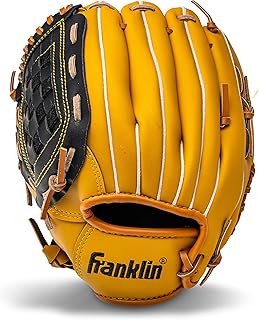
The Field Master is the standard answer for a first proper glove after tee ball, and it earns that position by removing the two things that frustrate beginners: stiffness and weight.
Because it is soft from new, a player can close it on the first day. That sounds minor and is not. Catching is a confidence skill, and a child who cannot shut the glove around a ball learns to trap it against their body instead, which is a habit coaches spend seasons undoing.
Padding in the palm is the second thing done right. A hard throw into an underpadded glove stings, and a child who has been stung once flinches on the next one. The trade off across the whole design is longevity, since the lighter materials will not hold their shape for as many seasons as stiff leather.
Bottom line: the sensible buy for a player who will outgrow the glove before they wear it out.
- Type: youth baseball glove
- Break-in: ready to play from new
- Palm: padded for comfort
- Weight: light youth construction
- Hand options: right hand throw and left hand throw
Best for first and second season players, for recreational leagues, and for a spare glove to keep in the car for casual games.
Not the choice for an older player in competitive play, who will want firmer leather and a position specific pattern.
Check the throwing hand before the size. A right hand throw glove goes on the left hand, and left hand throw versions sell out of popular sizes first.
If the glove feels slightly loose, look for a model with an adjustable wrist strap rather than sizing down, since a strap keeps a growing hand secure for another season.

Pros
- Built specifically to be easy to close for small hands
- Sizes run from tee ball up to adult recreational
- Baseball and softball versions available
- Soft from new with no break-in needed
Cons
- Designed for learning rather than competitive play
- Soft construction limits how long it holds its shape
The Sure Catch line is built around one problem: a beginner cannot squeeze a glove shut. Everything about it, the softness, the lighter materials, the pattern, is aimed at reducing the force needed to close around a ball.
That makes it a genuinely different product from a cheap adult glove in a small size, which is what many first gloves actually are. A young player using this one will close the glove and hold the catch, which is the skill everything else is built on.
It also spans an unusually wide size range for a beginner glove, from tee ball up through adult recreational, and exists in both baseball and softball cuts. For a household with more than one child playing, that means one familiar design across several sizes.
Bottom line: the best pick for a player who is still learning to catch rather than refining how they field.
- Type: baseball and softball glove
- Sizes: tee ball, youth and adult recreational
- Break-in: soft from new
- Design focus: easy closing for developing hands
- Hand options: right hand throw and left hand throw
Best for beginners of any age, for tee ball players moving up, and for parents who want the glove to be the least difficult part of learning the game.
Skip it for competitive youth play where a firmer glove and a position pattern start to matter.
Have the player close the glove on a ball a few dozen times before the first practice. Even a soft glove benefits from the pocket learning its shape.
Check the fit at the wrist rather than the fingertips. A glove that slides on the wrist will twist on contact, which is what usually causes a dropped ball on an otherwise good catch.

Pros
- Pro style patterns scaled to youth hands
- Size range covers the upper youth band
- Lighter than a full size adult glove
- Position specific options available
Cons
- Firmer than beginner gloves, so it needs some break-in
- Overkill for a first season player
This is the step up glove in the list, and it is aimed at a specific moment: a player has settled into a position, has the hand strength to close a firmer glove, and has outgrown gloves designed purely for learning.
The patterns are scaled from professional models rather than being generic youth shapes, so pocket depth and finger stalls behave more like an adult fielding glove. That is what makes it worth choosing at the right age and what makes it the wrong choice too early.
The size range, running roughly from ten and a half to a little over twelve inches, is the practical band for older youth players. Within it, the shorter sizes suit the infield and the longer sizes the outfield, which is the choice the buying guide above is really about.
Bottom line: the right glove once a player knows where they play, not before.
- Type: youth baseball glove
- Sizes: approximately 10.5 to 12.25 inches
- Patterns: multiple pro player derived styles
- Break-in: some required
- Hand options: right hand throw and left hand throw
Best for older youth players with a settled position and enough hand strength to work a firmer glove, and for players moving into more competitive leagues.
Not the pick for a first glove or for a player who still struggles to close the pocket.
Choose the size by position rather than by age. Toward ten and a half to eleven and a half for infield work where a fast transfer matters, toward twelve and up for the outfield where reach and pocket depth matter.
Allow a couple of weeks of catch before a season starts. This is not a glove that arrives fully game ready.

Pros
- Pocket cut for a softball rather than a baseball
- Youth sizing across a useful range
- Soft construction that closes easily
- Same easy closing design as the baseball version
Cons
- Deeper pocket makes it less suited to baseball
- Recreational build rather than competitive
Softball is where a lot of glove purchases go wrong, because a softball is noticeably larger than a baseball and a glove cut for one does not sit right with the other. This model is built for the bigger ball, with more pocket depth at a given nominal length.
Everything else follows the Sure Catch approach: soft from new, easy to close, and sized for players who are still developing hand strength. For a child joining a recreational softball team, that combination removes the two most common early frustrations.
The size range is wide enough to cover several years of play. As with baseball, the shorter end suits infield positions and the longer end suits the outfield, and the same warning applies about buying too large to grow into.
Bottom line: buy this rather than a baseball glove if the team plays softball.
- Type: youth softball glove
- Sizes: approximately 10 to 12.5 inches
- Pocket: deeper cut for a softball
- Break-in: soft from new
- Hand options: right hand throw and left hand throw
Best for young softball players in recreational leagues, and for households where one child plays softball and another plays baseball and the gloves keep getting mixed up.
Not the pick for baseball, where the deeper pocket makes the ball sit high and slows the transfer.
Break it in with a softball, not a baseball. The pocket forms around whatever you shape it with, and a baseball will set it too shallow.
Label the glove if there are two players in the house. Softball and baseball gloves of the same nominal size look nearly identical in a bag and play very differently.
Pros
- Sized for the youngest hands rather than scaled down from adult
- Extremely soft so a small child can close it
- Light enough to hold up through a whole session
- Works for both tee ball and early softball
Cons
- Outgrown quickly as a player develops
- Too small for the twelve inch range most youth leagues move to
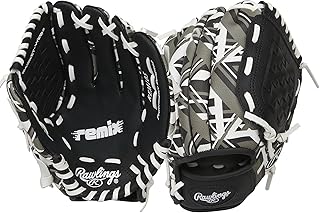
This glove is in the list for the players the rest of it does not fit. A nine or ten inch pattern is not a small twelve inch glove, it is a different object built for hands that cannot yet span an adult sized pocket.
Softness is taken further here than anywhere else in this list. A tee ball player has very little grip strength, so the glove has to do most of the closing work itself. That is exactly what parents are looking for when a first glove turns out to be unusable.
The obvious limitation is lifespan. A player in this size range is likely to move up within a season or two, and the glove is not designed to be handed down through years of hard use. That is a reasonable trade for a glove that lets a five year old actually catch a ball.
Bottom line: the right starting point before a player is ready for a twelve inch glove.
- Type: tee ball and early youth glove
- Sizes: approximately 9 to 10.5 inches
- Break-in: none needed, very soft from new
- Use: baseball and softball
- Hand options: right hand throw and left hand throw
Best for tee ball players and children starting out, roughly ages four to eight depending on hand size.
Not appropriate for players in leagues using a full sized ball at speed, where a larger pattern and more padding are needed.
Check the fit at the wrist every few months. Small children grow through this size range quickly, and a glove that has become tight at the wrist will twist on impact.
Keep it out of hot cars and away from radiators. Soft youth materials stiffen when they dry out, and once that happens the one advantage this glove has is gone.
How to Choose a Youth Baseball Glove
The gloves on this page are not interchangeable, and the differences between them are mostly about the player rather than the product. Work through the criteria below in order, because the first one changes the answer to all the others.
What the Inch Measurement Actually Measures
The size printed on a glove is measured from the top of the index finger, down along the inside of the pocket, to the heel. It is not the width of the hand opening and it is not a measure of how much of the glove a player can control. Two gloves listed at the same size can feel different depending on how deep the pocket is and how the fingers are stitched.
This is why the twelve inch figure needs context. For most youth players, roughly ages nine to twelve, the useful range runs from about eleven inches for infield work up to twelve and a half for the outfield. The Rawlings Select PRO LITE covers the upper part of that band in sizes from about ten and a half to a little over twelve inches, while the Remix line starts well below it for the youngest players. Buying at the top of the range because a child will grow into it usually backfires.
The reason it backfires is mechanical. A glove is caught with, and then closed. If a player cannot squeeze the glove shut around the ball, the ball bounces out of a pocket that was technically big enough to hold it. Fit beats reach every time at this age.
Position Decides the Pattern, Not Just the Size
Infield gloves are shorter with a shallower pocket, because an infielder needs to get the ball out of the glove quickly and cleanly for the throw. Outfield gloves are longer with a deeper pocket, because an outfielder needs reach and needs the ball to stay put on a running catch. A twelve inch glove sits close to the boundary between the two.
At youth level most players move around the field, which is why versatile patterns like the Player Preferred and the Sure Catch series make sense for a first or second glove. They are built to work reasonably well anywhere rather than perfectly in one spot. Once a player settles into a position, usually around the time they outgrow the twelve inch range, a pattern specific glove starts to matter.
Softball is a separate question that often gets folded into the same purchase. Softball gloves are cut for a larger ball, so the pocket is deeper at a given length. The Sure Catch softball model in this list is built for that, and a baseball specific glove of the same nominal size will feel tighter with a softball in it.
Break-In: Ready to Play or Real Leather

This is where youth gloves differ most sharply from adult ones, and where a lot of money gets wasted. A stiff full leather glove is the better long term product for an adult, because it moulds to the hand over a season and lasts for years. For an eight year old it is close to unusable, because breaking in leather takes hand strength and repetition that a young player does not have yet.
Gloves aimed at younger players are therefore built soft from the start, using lighter synthetic or treated leather that closes with much less force. The Remix and Sure Catch lines are explicit about this, and the Franklin Field Master follows the same principle. The trade off is durability: a soft glove will not hold its shape for as many seasons as stiff leather. For a player who will outgrow it in two years, that is the correct trade.
If you do buy something firmer, plan for the break-in rather than hoping it happens. Playing catch is the method that works. Ovens, microwaves and heavy oiling all soften leather faster and all shorten the life of the glove, sometimes drastically.
Web Style and Closing Strength

The web is the laced section between thumb and fingers, and it comes in two broad families. Closed webs, where the leather is woven solid, hide the ball and add support, which suits pitchers and some outfielders. Open webs, with visible gaps, are lighter and let an infielder see the ball through the glove as they transfer it. For a young player who is still learning to look the ball into the glove, an open pattern is generally easier.
More important at this age is how much force the glove needs to close. Some youth models add an adjustable wrist strap so the glove can be tightened as a hand grows, which keeps a slightly large glove usable for another season. Others use a lighter web and thinner padding specifically to reduce the effort. When a player has to fight the glove, they stop reaching for balls at the edge of their range.
Padding is the counterweight. Too little and a hard throw stings enough to make a child flinch on the next one, which is a habit that takes a long time to unlearn. Youth gloves that get this right, including the Sure Catch and Field Master models, put extra material in the palm without making the glove heavy.
Throwing Hand and Which Glove to Order
This is the most common ordering mistake in the category and it is worth stating plainly. A glove described as right hand throw is worn on the left hand. The description refers to the hand the player throws with, not the hand the glove goes on. A right handed thrower needs a right hand throw glove, which will arrive fitting their left hand.
Check this before anything else if you are buying for a left handed child, because left hand throw models are made in far smaller quantities and often exist in fewer sizes and colours. Ordering the wrong one and discovering it at the first practice is a common story, and by then the preferred size may be gone.
Ambidextrous children complicate this. If a player has not settled on a throwing hand, let them throw a few balls before you buy rather than guessing from which hand they write with. The two do not always match.
Lacing, Repairs, and What Fails First

Gloves in this category almost never fail at the leather. They fail at the laces, usually at the web or along the fingertips, and they usually fail in the middle of a season. This is worth knowing before you buy because it changes what counts as a durable glove: the useful question is not how tough the palm feels but whether the lacing is thick enough and whether it can be replaced.
A conventionally laced glove, which covers every model here, can be relaced with a lace kit and an hour of patience. That turns a broken glove back into a working one for a fraction of the cost of replacing it, and it is a genuinely realistic repair for a parent rather than a specialist job. Gloves that use bonded or moulded construction in place of real lacing cannot be repaired this way, and when they go, they are done.
The second common failure is the palm padding compressing until hard throws start to sting again. There is no repair for that, and it is the point at which a glove that still looks fine should be replaced. Check it by pressing the centre of the palm with a thumb: if it feels thin compared with the heel, the glove has done its time even if the leather looks new.
| Glove | Typical size range | Break-in | Best suited to |
|---|---|---|---|
| Rawlings Player Preferred | Youth through adult rec sizes | Soft from the start | Players moving between positions |
| Franklin Field Master | Youth sizes | Ready to play | First real glove after tee ball |
| Rawlings Sure Catch | Tee ball, youth and adult rec | Soft, youth focused | Beginners learning to close the glove |
| Rawlings Select PRO LITE | About 10.5 to 12.25 inches | Lighter leather feel | Older youth players with a position |
| Rawlings Sure Catch Softball | About 10 to 12.5 inches | Soft, youth focused | Softball players needing a deeper pocket |
| Rawlings Remix | About 9 to 10.5 inches | Very soft | Tee ball and the youngest players |
Note that two gloves in this table sit outside the twelve inch band on purpose. The Remix is there for players who are not ready for a twelve inch glove yet, and the softball model is there because the same household often needs both. More gear comparisons are in our article archive.
Why You Should Trust Us
We build this list from what manufacturers publish about size, pattern and construction, combined with what verified buyers report about fit and durability. We pay particular attention to whether the stated size range actually matches the age group a glove is marketed to, because that is where listings in this category most often mislead.
We also say plainly when a glove is not a twelve inch baseball glove. Two models here are included for the neighbouring cases, a smaller pattern for the youngest players and a softball cut for a larger ball, and we flag both rather than letting the size chart imply they are the same thing. A list that quietly mixes categories is how a parent ends up with a glove their child cannot close.
Final Thoughts
The Rawlings Player Preferred Baseball Glove is our best overall for youth players in this range. It is soft enough to use immediately, it is made in sizes that span the years when a player is still moving around the field, and it does not ask a young hand for strength it does not have yet.
The Franklin Sports Field Master Baseball Glove is the best value pick, and the sensible choice for a first proper glove after tee ball. It arrives ready to play, which for a player in their first or second season matters more than the leather grade.
For the specific cases: a player just starting out should look at the Rawlings Sure Catch, built around helping a beginner actually close the glove. A player who has settled into a position and wants something closer to a real fielding glove should look at the Select PRO LITE. Softball players need the Sure Catch softball cut rather than a baseball glove of the same size. And for tee ball, the Remix is sized for hands the other gloves here do not fit. Our sports section has more on outfitting a young player.
Frequently Asked Questions
Is a 12 inch glove right for a youth baseball glove in 2026?
It suits many players roughly between nine and twelve years old, particularly those spending time in the outfield. Infielders of the same age are often better served by something closer to eleven or eleven and a half inches, which lets them get the ball out of the pocket faster.
Should I buy a bigger glove so it lasts longer?
No. A glove a child cannot squeeze shut will drop balls that a correctly sized glove would hold, and the habit of missing catches is harder to fix than the cost of a second glove. If you want a little room to grow, look for a model with an adjustable wrist strap rather than jumping a full size.
What does right hand throw mean when ordering?
It refers to the hand your player throws with, so a right hand throw glove is worn on the left hand. Check this carefully for left handed players, since left hand throw versions are produced in smaller numbers and sell out of popular sizes first.
How should we break in a new glove?
Play catch with it. Most youth gloves are built soft on purpose and need very little work. Avoid ovens, microwaves and heavy oiling: they soften leather quickly and shorten the useful life of the glove, and on a synthetic youth glove they can do permanent damage.
Can a baseball glove be used for softball?
It can in casual play, but the pocket is cut for a smaller ball so it will feel tight and the ball will sit higher. If a player is on a softball team, buy a softball pattern such as the Sure Catch softball model. More equipment guides are collected in our article archive.



Write Your Review
No reviews yet. Be the first to share your experience!