

Silicone took over the utensil crock for one reason: it will not scratch a non-stick pan the way steel does. But the label “silicone” covers tools that behave nothing alike. Some are solid rubber that flex around the curve of a bowl. Some are a silicone head clamped onto a wooden or steel handle. Some are rated to 446°F, some to 600°F, and that gap decides whether a spatula survives a screaming-hot skillet or slowly deforms into a spoon-shaped memory.
For October 2026 we compared 7 silicone cooking utensils from OXO, Unicook, oannao and more, sorted by the three things that actually separate them: heat rating, whether the tool is one piece or two, and how stiff the core is. Our top pick is the HOTEC Heat Resistant 600°F Silicone Spatula Set for its one-piece seamless build and the highest heat rating in the group, which is the combination that keeps a spatula out of the bin. If you are still deciding how to fill the rest of the crock, our guide to the best wooden utensil sets covers the other half of the drawer.

Pros
- Highest published heat rating in this group at 600F
- One-piece moulding, no seam between head and handle
- Dishwasher safe end to end
- Stiff enough to lift, flexible enough to scrape
- Largest body of positive owner feedback in the category
Cons
- All-rubber handle is less comfortable than wood on long sessions
- Light colours in the set will stain with tomato and turmeric
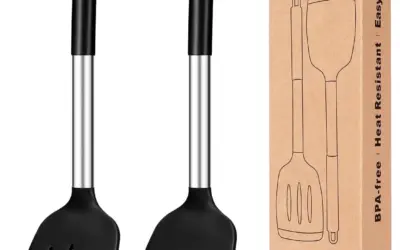
This is the set to buy if you want one answer for the whole crock. HOTEC builds these as a single moulded body, so the head and handle are one piece of silicone rather than a head clamped onto a stick. That removes the joint where oil, sauce and dishwater collect on two-piece tools, and it is the single most useful thing about the set.
The published rating is 600F, the highest in this comparison. In practice that is margin rather than a new capability: nothing in home cooking asks a spatula to hold 600F for long. What it buys you is that the brief contact with a very hot cast iron or carbon steel pan, which happens every time you cook, does not slowly soften the edge into uselessness.
The flex is judged well. There is enough rigidity along the handle to lift a fried egg without the tool folding, and enough give at the edge to clear the wall of a mixing bowl in one pass. Cooks coming from stiff nylon will find it softer; cooks coming from a floppy all-rubber scraper will find it firmer.
The drawbacks are the ones every all-silicone tool shares. The handle does not feel like a wooden one over a long session, and lighter pieces in the set will pick up colour from tomato and turmeric and keep it. Neither affects how the tool works.
Bottom line: the combination of a 600F rating and one-piece construction is what keeps a spatula out of the bin, and this set is the cleanest expression of it here.
- Material: food grade silicone, one-piece moulding
- Published heat resistance: 600F
- Construction: seamless head and handle
- Dishwasher: safe, whole utensil
- Pan compatibility: non-stick, stainless, cast iron, enamel
- Set contents: mixed turner, scraper and spoon shapes
Cooks who own cast iron or carbon steel, preheat pans empty, or have a habit of leaving a spatula resting in the pan while they do something else. Those three habits are what destroy 446F tools, and this is the set that tolerates them.
It also suits anyone who wants everything to go in the dishwasher without thinking about which part is safe to submerge. If you cook mostly at moderate heat and value a wooden handle in the hand, a head-on-handle set will feel nicer and cost you nothing in practice.
Wash in the dishwasher or in hot soapy water. There is no joint to dry out and no wood to protect, so neither method risks the tool.
Staining is cosmetic and permanent on light colours. If it bothers you, use the darker pieces for anything with tomato, turmeric or curry. Odour transfer after a strong spice session usually clears with hot soapy water and a few hours in daylight.
Silicone will not scratch a coated pan, but pressure still can. If the tool is not scraping cleanly, check the edge for damage rather than pressing harder.

Pros
- Covers an entire utensil drawer in one purchase
- Wooden handles are comfortable over long cooking sessions
- Includes a holder so the counter stays tidy
- Silicone heads are safe on coated pans
- Very large base of owner feedback
Cons
- Rated to 446F, below the solid rubber spatulas here
- Wooden handles need hand washing and drying
- Piece count includes tools many kitchens never use
This kit answers a different question from the spatula sets in this guide. It is not trying to be the best single turner, it is trying to furnish a kitchen in one delivery, and at 33 pieces plus a holder it does that.
The construction is a silicone head fitted to a wooden handle. That is the comfortable way to hold a tool through a long session, and it looks like a real kitchen tool rather than a baking accessory. It also introduces a seam. The joint between head and handle is where oil and dishwater collect, which is why the handles want hand washing and drying rather than a dishwasher rack.
The published rating is 446F. That is above the smoke point of butter and comfortably above a simmer, so it handles sauces, eggs, batters and moderate stir frying without complaint. It is not the set to leave resting against the side of a screaming hot skillet.
Be honest with yourself about the count. Most cooks use the same three tools for the majority of meals, and a 33-piece kit will contain things you never reach for. That is fine when you are starting from empty and poor value when you are replacing two favourites.
Bottom line: the best buy here if you are outfitting a kitchen rather than upgrading one, as long as you accept 446F and hand-wash handles as the price of the coverage.
- Pieces: 33, including holder
- Head material: food grade silicone
- Handle material: wood
- Published heat resistance: 446F
- Construction: two piece, head fitted to handle
- Dishwasher: heads only, hand wash the handles
A kit at this count spans four groups: turners and spatulas for pan work, spoons and ladles for pots, whisks and brushes for mixing and basting, and tongs plus small accessories.
The tools that earn their place in most kitchens are the slotted turner, the solid spoon, the flexible scraper and the tongs. Treat the rest as spares and specialty items rather than daily drivers, and store the ones you do not use away from the holder so the counter stays usable.
Wash the silicone heads in hot soapy water or the dishwasher, then wash and dry the wooden handles by hand. Do not leave these standing in a drying rack with water sitting in the joint, which is what eventually greys the wood and splits the fitting.
Keep the tools out of direct pan contact when the pan is empty on high heat. At 446F the failure mode is a softened edge that stops scraping cleanly rather than dramatic melting, so it is easy to miss until the tool stops working properly.

Pros
- Covers the core pan tools without a 30-piece count
- 446F rating suits everyday stove work
- Handles are comfortable and easy to grip
- Safe on coated pans
Cons
- Two-piece build has a seam to clean around
- 446F rating is below the solid rubber options here
AOTHOD sits between the two extremes in this guide. It is not a two-piece scraper set and it is not a 33-piece kit. What you get is the handful of tools that actually see daily use, built as silicone heads on solid handles.
The turner and tongs are the reason to look at it. Those two do most of the work in a pan, and buying them as part of a matched set avoids the usual drawer of mismatched survivors. The handles are shaped for grip rather than for looks, which pays off during a long session at the stove.
The published rating is 446F, the same as the other head-on-handle sets here. That covers sauces, eggs, batters and moderate stir frying. It does not cover a spatula parked against the side of an empty preheating skillet, which is where the 600F sets earn their premium.
The seam is the honest drawback. Anything with a joint between head and handle needs more care after oily or sticky cooking than a one-piece tool does, and it is harder to be certain it is properly clean.
Bottom line: a sensible middle choice when you want matched pan tools rather than either a full kit or a pair of scrapers.
- Head material: food grade silicone
- Published heat resistance: 446F
- Construction: two piece, head on handle
- Core tools: turner, tongs and companion utensils
- Pan compatibility: non-stick, stainless, enamel
The natural home for this set is a stove used every day at moderate heat: weeknight stir fries, eggs, sauces and one-pan dinners. Those are exactly the jobs a 446F silicone head handles without drama.
Pair it with one 600F solid spatula if you also cook in cast iron. The two sets are not competitors so much as different tools for different pans, and most kitchens end up with both.
Wash after use rather than letting oil sit in the joint. Hot soapy water and a brush around the seam does more for the life of a two-piece tool than anything else.
Check the working edge every few months. A softened or nicked edge makes you press harder, and pressure is what damages a non-stick coating, not the silicone itself.

Pros
- Thin flexible blade slides under delicate food without tearing it
- Small head reaches into narrow pans and around edges
- Long-standing design with a very large owner base
- Comfortable non-slip handle
Cons
- Single tool, not a set
- Too flexible for lifting anything heavy
This is a specialist, and it is on the list because most sets do not include anything like it. The blade is deliberately thin and forgiving, so it slides under a fried egg, a fillet of fish or a delicate pancake and lifts it without tearing the underside.
The small head is the other half of the design. It gets into a small saucepan, works around the curve of an omelette pan and does not fight you in a crowded skillet the way a wide paddle does.
That flexibility is also the limit. This is not the tool for flipping a thick burger or pressing anything down, because the blade gives before the food moves. Owning it alongside a stiffer turner is the sensible arrangement rather than expecting it to be the only one.
The handle is the familiar Good Grips shape, which stays controllable with wet hands. It is a design that has been in kitchens long enough to have accumulated a very large body of owner feedback, and that consistency is part of the appeal.
Bottom line: buy it as the delicate-food specialist to sit beside a set, not as a replacement for one.
- Type: small flexible turner, single piece
- Blade: thin silicone, high flex
- Handle: Good Grips non-slip
- Dishwasher: safe
- Pan compatibility: non-stick and coated surfaces
Anyone who cooks eggs, fish or pancakes regularly and has torn one getting it out of the pan. The thin edge is the whole point, and no wide stiff turner does the same job.
It is also a good pick for small kitchens and small pans, where a full-size turner is simply the wrong scale for the cookware.
Let the food release before you lift. A thin flexible blade is for sliding under something that has already loosened, not for prying something that is still stuck.
Approach from the edge at a low angle and keep the blade flat against the pan. Lifting the handle too early is what folds delicate food, and it is a technique problem rather than a tool problem.

Pros
- Very flexible body clears the curve of a bowl in one pass
- One-piece build with no seam to trap batter
- Small focused set rather than a large kit
- Easy to wash and dishwasher safe
Cons
- Too soft for lifting or flipping in a pan
- Only two pieces, not a full utensil solution
These are scrapers rather than turners, and judging them as turners is the usual mistake. The body is soft along its whole length, which is exactly what you want pressed against the inside of a mixing bowl or reaching the last of something out of a jar.
One-piece construction matters more here than anywhere else in the guide, because batter is the substance most likely to work its way into a joint and stay there. With no seam, the whole tool washes clean in one pass and goes in the dishwasher without a second thought.
The two-piece count is a feature rather than a compromise. Most kitchens need one large scraper and one small one, and everything past that is packaging. If you already own turners you like, this is the set that fills the actual gap.
What they will not do is lift. Ask one to move a fried egg and the blade folds before the egg does. That is the trade for the flexibility that makes them good at their real job.
Bottom line: the right buy for baking and bowl work, and the wrong buy if you expected a pan tool.
- Pieces: 2
- Material: food grade silicone, one-piece moulding
- Construction: seamless, no head-to-handle joint
- Flex: high, full length
- Dishwasher: safe
Folding egg whites, scraping a bowl of cake batter, getting the last of a jar of jam and working buttercream off the sides of a mixer bowl. In all four the flex is doing the work.
The smaller of the pair is the one that earns its keep with jars and narrow containers, where a full-size scraper cannot reach the corner between wall and base.
No seam means no special routine. Dishwasher or hot soapy water, both fine, and there is nothing to dry out.
Light coloured silicone will pick up colour from anything strongly pigmented. For baking that is rarely an issue, since batter and cream do not stain the way curry does.

Pros
- Covers the common pan and pot shapes in one set
- 446F rating handles everyday stove work
- Comfortable handles for longer sessions
- Safe on coated cookware
Cons
- Two-piece build needs care around the joint
- 446F rating is the lower of the two tiers here
This is another head-on-handle set in the 446F tier, and it competes on coverage rather than on any single standout tool. The set spans the shapes most kitchens reach for: a turner, a solid spoon, a slotted spoon and companion pieces.
The handles are the reason people choose this style over solid rubber. They are shaped rather than round, which keeps the tool from rolling in the hand when it is wet, and they stay comfortable through a long session at the stove in a way an all-silicone handle does not.
The published rating of 446F puts it in the same bracket as the other two-piece sets here. Treat that as the everyday tier: sauces, eggs, batters and moderate stir frying are all well within it, while an empty preheating skillet is not.
As with any two-piece tool, the joint is the maintenance point. Wash promptly after oily cooking rather than letting residue sit in the seam, and the set will last.
Bottom line: a solid everyday set if you prefer a proper handle and cook at moderate heat, with the same seam caveat as its rivals.
- Head material: food grade silicone
- Published heat resistance: 446F
- Construction: two piece, head on handle
- Coverage: turner, spoons and companion tools
- Pan compatibility: non-stick, stainless, enamel
Cooks replacing a drawer of mismatched tools who do not want a 33-piece kit taking over the counter. This is the middle path: matched tools, sensible count.
It is a weaker choice if your cooking is mostly high-heat cast iron work, where the 600F one-piece spatulas are the better match.
Hand wash the handles and dry them rather than leaving water sitting at the joint. The heads tolerate a dishwasher, the fitting is what suffers.
Store standing up rather than lying in a drawer where the heads get pressed against each other. Silicone takes a set if it is held bent for long periods.

Pros
- Reinforced handle keeps the tool rigid where you hold it
- One-piece build with no joint to clean around
- Five pieces covers scraping, turning and mixing shapes
- Strong owner ratings despite being newer than its rivals
Cons
- Smaller feedback base than the long-established sets here
- All-silicone handle is less pleasant than wood on long sessions
ChefAide is the newest name in this comparison and it has gone after the specific weakness of cheap all-rubber spatulas: the handle that bends when you actually push on something. The handles here are reinforced, so the rigidity sits where your hand is and the flex stays at the working edge.
That combination is what a spatula is supposed to do. A tool that flexes everywhere is a scraper, and a tool that flexes nowhere is a paddle. Getting the transition in the right place is the difference between lifting a fried egg cleanly and pushing it around the pan.
Construction is one piece, which puts it in the same easy-cleaning group as the HOTEC and Unicook tools. There is no joint, nothing to hand wash separately and nothing for batter to hide in.
The honest caveat is history. This set has a strong rating but a smaller body of feedback than the sets that have been on sale for years, simply because it has not been around as long. That is a reason to weigh it slightly differently, not a mark against the tool.
Bottom line: the pick if you have snapped or bent a soft-handled spatula before and want the rigidity fixed without giving up one-piece cleaning.
- Pieces: 5
- Material: food grade silicone, one-piece moulding
- Handle: reinforced core
- Construction: seamless head to handle
- Dishwasher: safe, whole utensil
Choose this over a two-piece kit if cleaning matters more to you than handle feel, and over a soft scraper set if you need to lift as well as scrape.
Five pieces is the count that covers a real workload without filler: a wide turner, a narrow turner, a spoon-shaped scraper and two smaller shapes for bowls and jars. If you already own a good turner, a two-piece scraper set is the cheaper way to fill the gap.
Dishwasher or hot soapy water, no special routine, no joint to dry.
The reinforced handle means the tool resists bending, so if one does deform it is a sign it met heat well beyond its rating rather than ordinary use. Keep tools out of an empty pan that is preheating on high.
How to Choose Silicone Cooking Utensils
Heat Rating: 446°F Versus 600°F

Almost every set in this category publishes one of two numbers. The sets built around a silicone head on a separate handle, including the Umite Chef 33-piece kit, the AOTHOD set and the oannao set, are rated to 446°F. The solid rubber spatulas from HOTEC, Unicook and ChefAide are rated to 600°F. That is not marketing noise, it is a material and construction difference, and it maps onto how you cook.
446°F is above the smoke point of butter and comfortably above a simmer, so a 446°F tool is fine for sauces, stir fries at moderate heat, scrambled eggs and folding batter. It is not fine for a pan you have been preheating empty on high, or for a spatula left resting against the side of a hot skillet while you chop something else. The first sign of trouble is not melting, it is a soft edge that no longer scrapes cleanly.
600°F buys margin rather than a new ability. Nothing in home cooking asks a spatula to work at 600°F for long. What the higher rating means in practice is that brief contact with a very hot surface, the kind that happens every time you cook, does not accumulate damage. If you own cast iron or carbon steel and cook hot, treat the higher rating as the requirement rather than the upgrade.
One Piece or Two: Where the Seam Matters

This is the quiet dividing line in the group and the one most listings bury. A one-piece spatula is moulded as a single body, so there is no joint between head and handle. The HOTEC set, the Unicook pair and the ChefAide set are built this way. A two-piece tool has a silicone head fitted onto a wooden or stainless handle, which is how the Umite Chef, AOTHOD and oannao sets are made.
The seam is where sauce, oil and dishwater get in. On a wooden-handled tool that also means water sitting against wood, which is why those handles are usually labelled hand wash even when the head is dishwasher safe. Two-piece tools are not disposable, plenty of them last years, but they ask for more care and they are harder to get properly clean after anything sticky or oily.
The trade-off runs the other way on comfort. A wooden or steel handle feels better in the hand over a long session, does not conduct the same way an all-rubber tool flexes, and looks like a real kitchen tool rather than a baking accessory. If you cook a lot of one-pan dinners, that comfort is worth something. If most of your cooking is sauces, batters and anything that goes in a dishwasher afterwards, one piece wins.
Core Stiffness and What You Are Actually Scraping
Solid silicone with no internal core flexes along its whole length. That is exactly what you want for scraping a mixing bowl clean or folding egg whites, and exactly what you do not want for lifting a fried egg or pressing a burger. Several of the spatulas here, including the HOTEC and ChefAide sets, run a stainless steel core through the handle so the tool stays rigid where you hold it and stays flexible at the working edge.
The OXO Good Grips small flexible turner sits at the flexible end on purpose. It is a thin, forgiving blade meant to slide under delicate food in a non-stick pan without tearing it. The Unicook pair is similarly soft and is at its best against the wall of a bowl or jar. Neither is the tool for flipping something heavy.
Read the shape rather than the word “spatula”, which the category uses for at least three different tools. A flat blade with a thin leading edge is a turner. A spoon-shaped head with a straight edge on one side is a scraper. A wide paddle is for mixing. Buying a set means you get several of these, which is usually the point.
Set Size: Seven Pieces or Thirty-Three

The Umite Chef kit at 33 pieces and a small two-piece Unicook set are answering completely different questions. The large kit is for outfitting a kitchen from empty, or replacing a drawer of mismatched tools in one go, and it usually arrives with a holder so the counter stays tidy. It also includes tools you may never reach for, and that is fine as long as you are not paying for the count alone.
A small focused set is the better buy when you already own a working kitchen and want to replace the two or three tools that touch non-stick pans. Most cooks use the same turner, the same scraper and one spoon for the majority of meals. Adding twenty more does not change that.
One practical check before buying a large kit: look at how the holder is meant to sit and whether the handles are long enough to clear a deep pot. Long handles are safer over steam but crowd a small counter.
Cleaning, Staining and Odour
Silicone is dishwasher safe as a material, but the tool is only as dishwasher safe as its least tolerant part. One-piece rubber tools go in without thinking. Anything with a wooden handle should be washed by hand and dried rather than left in a rack, or the handle will grey and eventually split at the joint.
Staining is the complaint that shows up most often in owner feedback, and it is largely about colour choice. Light coloured silicone picks up tomato, turmeric and curry and holds the tint. Black and dark grey tools hide it entirely. Neither affects food safety, but if a permanently orange spatula would bother you, buy dark.
Odour transfer is the other one. Silicone can hold the smell of garlic or strong spice after a hot session. A wash in hot soapy water usually clears it, and a spell in the sun does the rest. It is worth knowing before you use the same spatula for curry and then for cake batter.
Non-Stick Safety and Food-Grade Labels
The whole reason to buy silicone is that it will not gouge a coated pan. Every tool in this guide is described by its maker as food grade silicone, and several add BPA-free to the listing. Those are the labels to look for, and they are the floor rather than a distinguishing feature, since a tool without them should not be near your food in the first place.
What varies is the edge. A thick, blunt silicone edge is gentle but scrapes poorly, so people press harder, which is its own risk on a soft coating. A thin edge scrapes cleanly at light pressure. When a listing shows a close-up of the working edge, that photo is more useful than the heat number.
If your pans are stainless or cast iron rather than coated, none of this constrains you, and the reason to buy silicone shifts to comfort, quiet and the fact that it will not scratch enamel. Our guide to knife sets covers the one drawer where steel is still the answer.
Silicone Versus Nylon and Wood
Silicone is not the only pan-safe material, and knowing where the other two win stops you from buying the wrong tool twice. Nylon is stiffer than silicone at the same thickness, so a nylon turner slides under food with less flex and feels more decisive. Its weakness is heat: most nylon utensils are rated well below the silicone tools here, and a nylon edge left against a hot pan will deform faster than a 600°F silicone one.
Wood is the opposite trade. It will not melt at any temperature a home cook reaches, it does not stain, and it feels good in the hand. It also cannot be put in a dishwasher, it will not scrape a curved bowl clean the way a flexible silicone blade does, and a wooden edge eventually roughens and needs sanding or replacing. Wood is a stirring and serving material more than a scraping one.
That is why the head-on-handle sets in this guide pair the two: silicone where the tool meets the pan, wood where your hand goes. If you want the full picture on the wooden side of the drawer, we cover it separately in our wooden utensil set guide. For most people the honest answer is that a small silicone set and two wooden spoons covers everything, and the thirty-piece kit is optional.
Quick Comparison
| Type | Heat rating | Build | Best for |
|---|---|---|---|
| Solid rubber spatula set | 600°F | One piece, steel core in some | Hot pans, dishwasher, scraping bowls |
| Head-on-handle kit | 446°F | Two piece, wood or steel handle | Outfitting a kitchen, comfort over long sessions |
| Single flexible turner | 600°F | One piece, thin blade | Delicate food in coated pans |
| Two-piece scraper set | 600°F | One piece, soft body | Bowls, jars, folding batter |
Why You Should Trust Us
We build these guides by starting with the tools people actually buy and keep, then reading them against the specifications each maker publishes. For this category we gathered current silicone utensil sets, filtered them by verified customer ratings and the volume of that feedback, and set the shortlist against the three axes that separate one tool from another: published heat rating, one-piece or two-piece construction, and core stiffness.
Where a listing and a product photo disagree, we go with what the packaging shows. Where a maker does not publish a number, we say so rather than filling the gap. You can see the rest of our kitchen coverage in the home and kitchen section.
Final Thoughts
For most kitchens the best all-around choice is the HOTEC Heat Resistant 600°F Silicone Spatula Set. It pairs the highest published heat rating in this group with one-piece construction, so there is no seam to trap food and nothing to hand wash separately, and it carries the largest body of positive owner feedback in the category.
If you are furnishing a kitchen rather than replacing two tools, the Umite Chef 33-piece set is the best value here, since it covers the whole drawer and arrives with a holder. Accept the 446°F rating and the hand-wash handles as the cost of that coverage. For delicate work in coated pans, the OXO Good Grips small flexible turner is the specialist worth owning alongside a set, and the Unicook two-piece set is the one to reach for against the side of a mixing bowl.
Whichever you choose, buy for the way you cook rather than the piece count. More buying guides across the house are in our full articles library.
FAQs
Are silicone cooking utensils safe on non-stick pans?
Yes, and that is the main reason to own them. Silicone is softer than the coating on a non-stick pan, so it will not cut or gouge the surface the way a metal turner can. The thing to watch is not the material but the edge: a thick blunt edge makes you press harder to scrape, and pressure is what damages a soft coating. A thinner working edge does the job at light pressure.
What heat rating do I actually need in 2026?
If you cook mostly sauces, eggs and moderate-heat stir fries, a 446°F tool is enough. If you own cast iron or carbon steel, preheat pans empty, or tend to leave a spatula resting in the pan, look for 600°F. The higher number does not unlock a new ability, it gives you margin so that ordinary contact with a very hot surface does not slowly soften the edge.
Can silicone utensils go in the dishwasher?
The silicone can. The tool might not. One-piece rubber spatulas are dishwasher safe end to end. Sets with wooden handles should be hand washed and dried, because water sitting in the joint between head and handle is what eventually splits them. Check whether the listing says the head is dishwasher safe or the whole utensil is, since those are different claims.
Why do my silicone utensils stain orange?
Tomato, turmeric and curry pigments bind to light coloured silicone and stay. It does not affect how the tool works or how safe it is, and no amount of scrubbing fully reverses it. If a permanently tinted spatula would bother you, buy black or dark grey. A soak in hot soapy water and a few hours in sunlight will lift some of the colour and most of the smell.
Is a 33-piece set better than a small set?
Only if you need 33 pieces. A large kit makes sense when you are outfitting a kitchen from scratch or replacing a whole drawer at once, and the included holder keeps the counter in order. If you already cook with tools you like and only want the ones that touch coated pans, a focused set of two to five pieces covers the same real workload. Piece count is a packaging decision, not a quality signal. You can browse the rest of the department on our categories page.

Write Your Review
No reviews yet. Be the first to share your experience!