

Basketball trainers are basketball shoes, and the distinction matters because a great many people play in running shoes without realising they are wearing the wrong tool. A running shoe is engineered for straight-line motion: narrow outsole, tall stack of soft foam, minimal resistance to twisting. Basketball is almost entirely lateral, and those three design choices become an ankle rolling over the edge of a midsole. This shortlist of 7 basketball trainers from PEAK, Nike, Under Armour and more is judged on the things that actually change how a shoe behaves on a hard cut.
Our top pick is the Nike Precision 7 for combining a wide supportive base with traction and cushioning that suit most recreational players, at a price that does not assume you play four nights a week. If you play outdoors, read the traction section first, because outdoor concrete destroys indoor rubber compounds far faster than most buyers expect. For everyday footwear the priorities are different, and our guide to walking shoes covers those.

Pros
- Designed for a general audience rather than one professional's preferences
- Wide outsole keeps the platform under the foot on lateral cuts
- Cushioning balanced between impact protection and court feel
- Costs a fraction of a signature release
- Widely available in a full size range
Cons
- Indoor-oriented rubber wears quickly on outdoor concrete
- Plainer looking than signature models, if that matters to you
The Precision line exists to be the sensible answer, and that is exactly why it leads this list. A signature shoe is engineered around one professional's preferences on cushioning, weight and cut; a team model is engineered around the middle of a large distribution of players, which is where almost everyone reading this actually sits.
The properties that matter are all present. The outsole flares wider than the upper so the platform stays under your foot when your weight goes sideways, the midfoot resists twisting, and the cushioning is tuned to absorb landings without lifting you so far off the floor that you lose feedback.
The honest limitation is the outsole compound. Like most indoor-oriented basketball shoes, the rubber is soft enough to grip a polished floor and will abrade quickly on concrete. If you play mainly outdoors, this is the wrong shoe on this list.
Bottom line: the shoe to buy if you play indoors a couple of times a week and want the right tool without a signature price.
- Type: basketball court shoe, team model
- Collar: low to mid
- Outsole: wide flared platform with herringbone-derived pattern
- Cushioning: balanced foam midsole
- Intended surface: indoor courts
Aim for a thumbnail of space at the toe with no heel lift when you push off. If the heel moves, lace through the top eyelet to lock the ankle without over-tightening the forefoot.
Try them at the end of the day. Feet swell during activity and a shoe that fits perfectly first thing in the morning is tight in the second half of a game.
Recreational and league players of any position who play primarily indoors, and anyone buying their first proper basketball shoe.
Not the pick for outdoor courts, where a harder compound lasts far longer, or for very heavy players who need more cushioning than a balanced setup provides.

Pros
- Fit and lockdown are the explicit design priority
- Low cut keeps weight down and the ankle free
- Swirled maze outsole pattern bites in every direction
- Supportive synthetic upper holds the foot over the footbed
- Consistent sizing across the Under Armour court range
Cons
- Snug fit is less forgiving for wide feet
- Less cushioned than shoes aimed at heavy landings
Fit is the most underrated performance variable in a basketball shoe, and this one is named after it. A foot that slides inside the shoe during a cut wastes a fraction of a second and produces blisters, and no amount of outsole grip helps if the foot is not moving with the shoe.
It is a low cut rather than a mid, which is worth stating because the name suggests otherwise. That keeps weight down and leaves the ankle free, and the security comes from the upper and the lacing rather than from a tall collar. The outsole is also unusual: a swirled maze pattern instead of herringbone, which achieves multidirectional grip by a different geometry.
Two caveats. A fit-focused shoe built on a snug last is less forgiving of wide feet, so try before committing if width is an issue for you. And the cushioning is tuned for responsiveness rather than for absorbing heavy repeated landings, so bigger players may want more foam.
Bottom line: the pick if your current shoes feel like your foot is moving around inside them, and you are happy in a low cut.
- Type: basketball court shoe
- Collar: low
- Fit: snug, lockdown focused
- Outsole: swirled maze traction pattern
- Sizing: unisex adult
Players with narrow to medium feet, anyone who gets blisters from heel slip, and guards who want the shoe to respond immediately to a change of direction.
Wide-footed players should approach carefully, and heavier players landing from height will want more cushioning than this offers.
Do not size up to solve a width problem. Extra length lets the foot slide forward, which reintroduces exactly the movement the shoe was designed to prevent.
Lace from the toe upward in one pass and tension evenly. Yanking only the top two eyelets tight creates pressure over the instep without actually locking the heel.
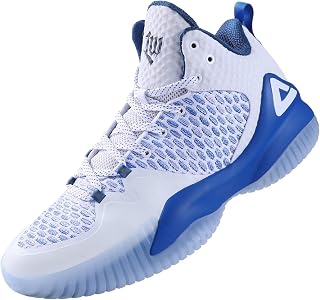
Pros
- High collar suits players who prefer a locked-in feel
- Breathable mesh upper helps on hot outdoor courts
- Leather heel counter holds the rear foot in place
- Cushioning support tuned for hard surfaces
- The only shoe here marketed specifically for streetball
Cons
- Outsole is a translucent rubber, which is usually softer indoor-style compound
- PEAK does not publish the compound, so outdoor durability is unverified
This is the high-top in the group and the only one marketed for streetball rather than for an indoor floor, which is why it gets recommended for outdoor courts. It is worth being careful with that recommendation, and we are correcting our own first draft here.
What PEAK actually publishes is a breathable mesh upper, a leather heel package, cushioning support and an anti-slip traction pattern. What it does not publish is the rubber compound, and its own product photography shows a translucent outsole. Translucent rubber is generally the softer indoor formulation, which grips beautifully on wood and wears fast on concrete. That may not be the case here, but nobody has stated otherwise and it would be dishonest to assume.
As a shoe it is well built for the money. The leather heel counter holds the rear foot better than a fabric collar alone, the mesh keeps it cool on a hot court, and the high cut suits players who dislike the exposed feeling of a low top.
Bottom line: a good value high-top with genuine outdoor styling, and a shoe to check owner wear reports on before you commit it to concrete.
- Type: basketball court shoe, high top
- Upper: breathable mesh
- Heel: leather heel package
- Outsole: full-length translucent rubber, anti-slip traction pattern
- Cushioning: cushioning support as stated
- Marketed for: streetball and outdoor use
- Rubber compound: not published by the manufacturer
Check the outsole after the first few sessions on concrete. Outdoor wear shows first at the forefoot pivot point, and how fast yours goes tells you what compound you actually bought.
Rinse grit off the outsole after playing on a dusty court. Embedded grit acts like sandpaper against the rubber and accelerates wear on the next session.
Players who want a high-top for the locked-in feel, and anyone drawn to streetball styling. Also a reasonable outdoor option provided you go in with realistic expectations about outsole life.
If outdoor durability is the whole reason for the purchase, buy on owner reports about wear rather than on the marketing, since no shoe in this category publishes its compound.

Pros
- Low cut and light for fast direction changes
- Grounded cushioning keeps court feel high
- Wide base gives stability despite the low collar
- Signature design aimed at explosive lateral movement
- Comfortable straight out of the box
Cons
- Grounded cushioning means less protection on heavy landings
- Low collar feels unfamiliar to players used to high-tops
Signature shoes reflect the athlete they were built for, and the design intent here is quickness and ground contact rather than maximum impact absorption. The cushioning sits low, which keeps your foot closer to the floor and preserves the feedback you use to change direction, and the base is wide enough that the low collar does not cost you stability.
For guards and quick forwards that combination is close to ideal. A shoe that sits high on soft foam feels slower and less connected, no matter how comfortable it is standing still.
The trade is on landings. Grounded cushioning transmits more impact through your legs, which is fine for a lighter player who lands often and lightly and less fine for a heavy player coming down from a rebound. Match the shoe to how you actually play rather than to who wears it.
Bottom line: an excellent guard shoe, and the wrong one if your knees already tell you about hard landings.
- Type: basketball court shoe, signature line
- Collar: low
- Cushioning: grounded, responsive
- Base: wide for lateral stability
- Intended surface: indoor courts
Guards, wings and quick forwards who value response over cushioning, and players who prefer the freedom of a low cut.
Heavier players, frequent rebounders and anyone with existing knee or heel complaints should look at a more cushioned model instead.
Low-cut shoes rely more on lacing to control the heel. Use the top eyelet properly rather than leaving it unused, since there is less collar holding the ankle in place.
Expect a short adjustment period if you have always worn high-tops. The reduced sensation around the ankle is unfamiliar rather than unsafe.

Pros
- Delivers the properties that matter at an entry price
- Wide supportive base and genuine court traction
- Mid collar suits most players without strong preferences
- Sensible choice for growing feet that will outgrow the shoe
- Durable enough for casual weekly play
Cons
- Cushioning is basic compared with the signature models here
- Materials are simpler and show wear sooner under heavy use
The best argument for this shoe is that most of what separates a basketball shoe from a running shoe is present here, and that is where the majority of the benefit lives. A wide outsole, a midfoot that resists twisting and a real court traction pattern do more for a casual player than any amount of proprietary foam.
It is also the right answer for a specific and common situation: a teenager whose feet are still growing. Buying an expensive shoe that will be outgrown before it is worn out is a poor use of money, and this covers the same fundamentals for a fraction of it.
The compromises are cushioning and materials. The midsole is basic, so heavy players and anyone playing several times a week will feel landings more, and the upper materials show wear sooner. For once-a-week recreational play neither matters much.
Bottom line: the value pick, and genuinely enough shoe for a large share of the people buying in this category.
- Type: basketball court shoe, team model
- Collar: mid
- Outsole: basketball traction pattern
- Cushioning: basic foam midsole
- Intended surface: indoor courts
Beginners, casual weekly players, and growing teenagers. Also a sensible second pair to keep in a bag for pickup games.
Not enough shoe for frequent competitive play or for heavier players who need real impact protection.
For a growing player, allow a thumbnail of space and no more. Buying a full size up to extend the life of the shoe leaves the foot sliding, which is the main mechanism behind blisters and rolled ankles.
Check the fit again after a few months rather than waiting for a complaint. Children rarely mention that shoes have become tight until they are painful.
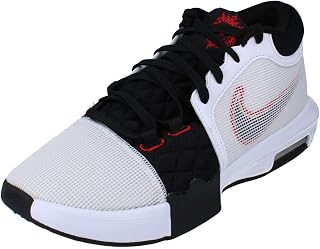
Pros
- Cushioning aimed at heavy repeated landings
- Supportive structure for larger and stronger players
- Mid collar with a substantial, planted feel
- Derived from a signature line built around a powerful forward
- Comfortable for longer sessions
Cons
- Heavier and less responsive than guard-oriented shoes
- Higher stack reduces court feel on quick direction changes
Cushioning requirements scale with body weight and with how you land, and this is the shoe in this group that acknowledges that. It is derived from a signature line built around a large, powerful forward, and the priorities show: more foam, more structure, a planted feel rather than a light one.
For heavier players, frequent rebounders and anyone whose knees and heels object after a long session, that is the correct set of trade-offs. Foam compresses in proportion to load, so a cushioning package that feels excessive to a small guard can be barely adequate for a bigger player.
The cost is response. A taller stack of softer foam puts your foot further from the floor, which slows the feedback you use when changing direction, and the shoe weighs more. Guards will find it sluggish.
Bottom line: the cushioning pick, and the right shoe if your complaint after a game is your joints rather than your first step.
- Type: basketball court shoe, signature line derivative
- Collar: mid
- Cushioning: high volume, impact focused
- Structure: supportive, wide base
- Intended surface: indoor courts
Forwards and centres, heavier players of any position, and older recreational players who feel repeated landings more than they used to.
Not the shoe for a light quick guard, who will find it heavy and disconnected from the floor.
Watch the midsole rather than the tread on a cushioned shoe. High-volume foam compresses over time, and a collapsed midsole tilts the platform under you on every landing.
Rotate pairs if you play several times a week. Foam recovers between sessions, and a shoe given a day to rebound lasts noticeably longer than one worn daily.

Pros
- Same balanced team-model approach as the Precision 7
- Mid collar for players who dislike low cuts
- Wide base with basketball-specific traction
- Reasonable price for a current-generation model
- Comfortable without a break-in period
Cons
- Mid collar adds a little weight and restricts range slightly
- Indoor rubber compound wears fast on outdoor concrete
This is the Precision approach with a taller collar, and it exists because collar height is largely a preference rather than a performance question. Players who have always worn mid or high cuts often feel exposed in a low top, and that feeling affects how confidently they move even though the mechanical difference is small.
Everything else that makes the Precision line a sensible recreational choice carries over: a wide base that keeps the platform under your foot, cushioning balanced between impact and feel, and a general-audience design rather than one built around a professional's preferences.
The costs are modest. A mid collar adds a little weight and slightly restricts ankle range, and the outsole compound is indoor-oriented so outdoor play will chew through it. Neither is a reason to avoid it if the higher cut is what you want.
Bottom line: pick this over the Precision 7 purely on collar preference, and expect the same behaviour otherwise.
- Type: basketball court shoe, team model
- Collar: mid
- Outsole: wide platform with court traction pattern
- Cushioning: balanced foam midsole
- Intended surface: indoor courts
Players who prefer a mid or high cut and want a sensibly priced team model, and anyone stepping up from a low-cut shoe they never felt secure in.
No advantage over the Precision 7 for players happy in a low cut, where the lighter shoe is the better choice.
Do not over-tighten the collar area to chase a locked-in feeling. Pressure across the front of the ankle restricts blood flow and does nothing to prevent a lateral roll.
Wear proper basketball socks. A mid collar rubbing against a thin ankle sock is a blister waiting to happen in the first session.
How to Choose Basketball Trainers
Shoe listings talk about technology names. These are the properties those names are trying to describe, and the ones worth checking.
Why a Running Shoe Is the Wrong Shoe
Three specific differences matter. A running shoe outsole is narrow because a runner’s foot lands and leaves along a line; a basketball outsole flares wider than the upper precisely so the platform stays under you when your weight shifts sideways. A running midsole is tall and soft for repeated vertical impact; a tall soft stack under a lateral cut lets the foot tip. And a running shoe is built to flex freely, while a basketball shoe adds torsional rigidity through the midfoot so the shoe does not twist under a crossover.
None of this means running shoes cause injury on their own. It means the shoe contributes nothing where basketball puts its loads, and the ankle absorbs what the shoe was supposed to.
The same argument works in reverse. Basketball shoes are heavy, stiff and hot, and they make poor everyday walking shoes. They are specialist equipment for one sport.
High-Top, Mid and Low, and What Ankle Support Really Does
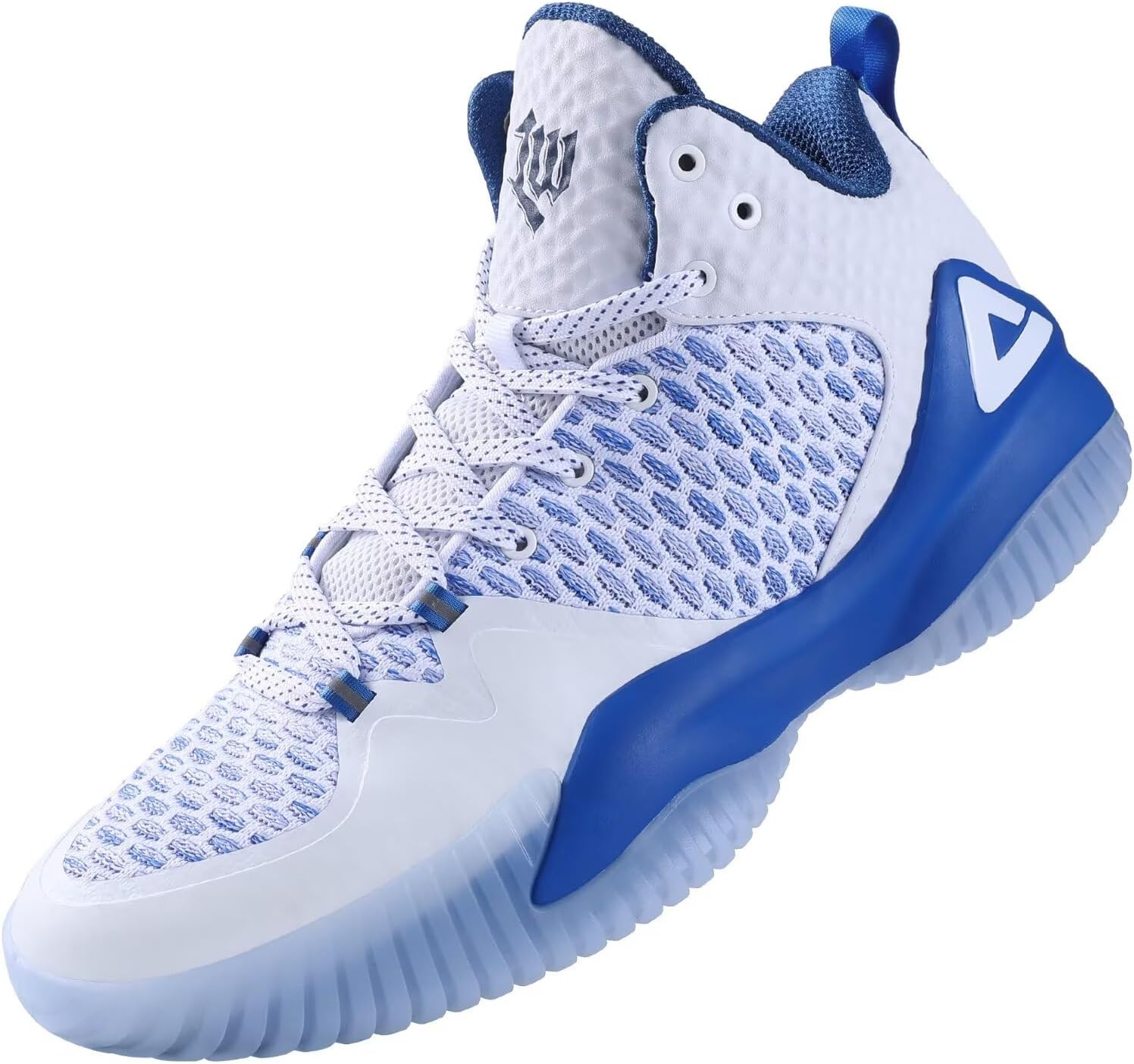
The traditional belief is that a high collar prevents ankle sprains. The evidence for that is weaker than most players assume, and the mechanism is not what people think. A fabric collar around the ankle provides very little mechanical restraint against the rolling motion that causes a lateral sprain; what it does provide is proprioceptive feedback, meaning your body knows sooner that the joint is moving.
What genuinely reduces rolling is a wide outsole that keeps the platform under your foot, a midsole that does not compress excessively on one side, and a rigid midfoot that stops the shoe twisting. Those properties exist in low-top shoes as easily as in high-tops. Players who have sprained an ankle before are better served by a proper brace or taping than by a taller collar.
Choose collar height by preference and position instead. High-tops feel locked in and restrict a little range of motion, mid-tops are the common compromise, and low-tops give the most freedom and the lightest feel, which is why many guards prefer them.
Traction, Rubber Compound and the Outdoor Problem

Traction comes from two things: the pattern and the compound. Herringbone remains the standard pattern because the alternating angles grip in every direction, and variations on it are what most outsoles use, though not all: the Under Armour Lockdown 7 uses a swirled maze pattern instead, which achieves the same multidirectional bite by a different route. Pattern depth matters too, since shallow patterns fill with dust quickly on an indoor floor and stop gripping until you wipe them.
Compound is where outdoor players get caught. Indoor rubber is soft, which is what makes it grip a polished floor. Put that same compound on concrete or asphalt and it wears down in weeks, because outdoor courts are abrasive in a way a wooden floor never is. Shoes intended for outdoor use have a harder, thicker rubber, which grips slightly less indoors and lasts far longer outside.
Here is the uncomfortable part: not one shoe in this group publishes its rubber compound. The PEAK Streetball Master is the only one marketed for outdoor streetball, and its own product images show a translucent outsole, which is usually the softer indoor-style rubber rather than a hardened outdoor compound. We are flagging that rather than repeating the marketing, because it is the difference between a shoe lasting a season on concrete and lasting a month. Judge outdoor durability by outsole thickness in the photos and by owner reports on wear, not by the word streetball.
Cushioning by Position and Body Weight
Cushioning is a trade against court feel. More foam absorbs more landing impact and puts your foot further from the floor, which slows the feedback you use to change direction. Less foam gives sharper response and transmits more impact into your legs.
The rough guidance: guards who change direction constantly and land relatively lightly generally prefer a lower, firmer setup. Forwards and centres, who land harder and more often from height, need more impact protection. Heavier players of any position need more cushioning than the marketing for a guard shoe assumes, because foam compresses in proportion to load.
Age matters as well, and nobody says so. Recreational players in their thirties and forties benefit from more cushioning than they would have chosen at twenty, because recovery from repeated impact takes longer even when nothing hurts during the game.
Fit, Width and Lockdown
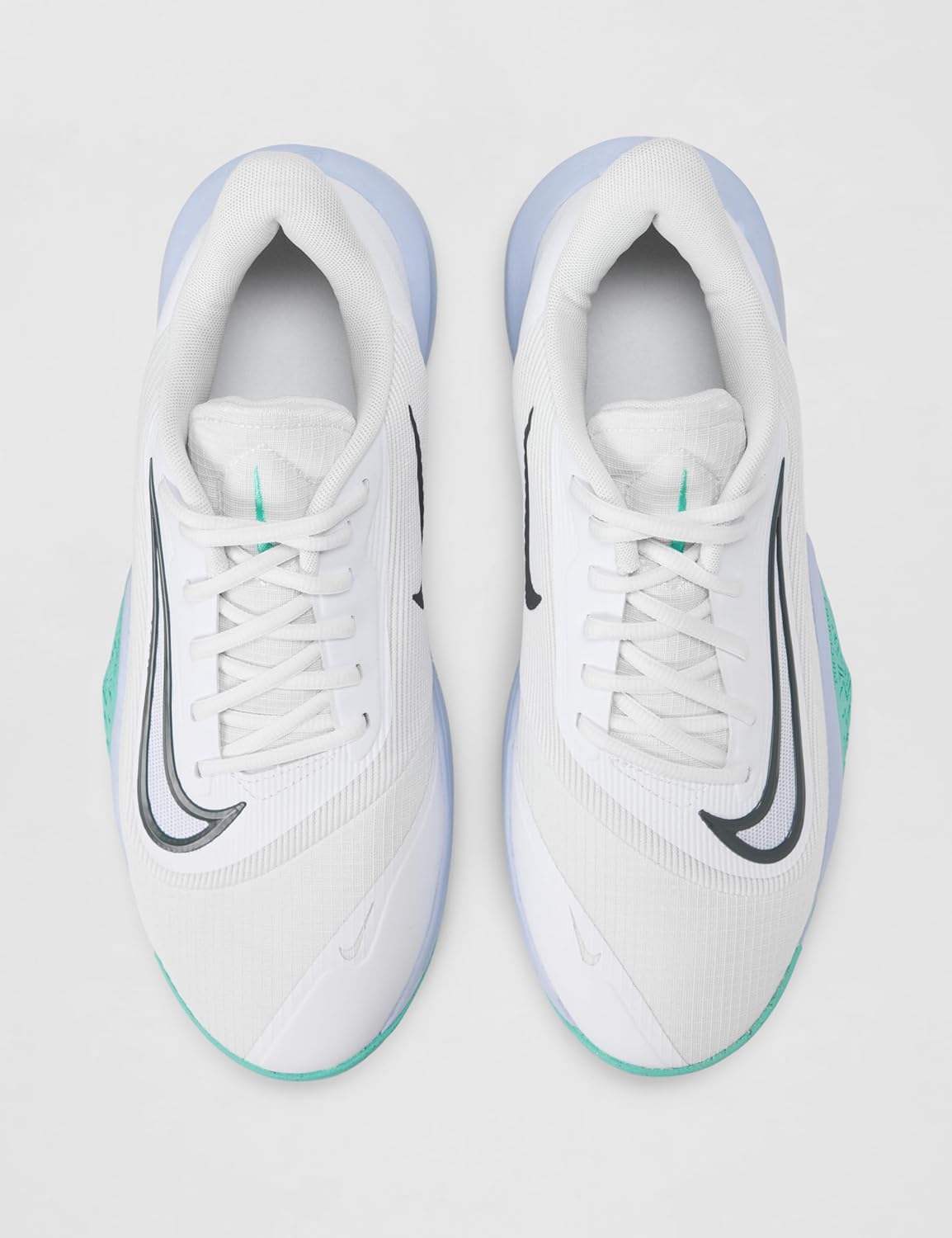
Basketball shoes should fit snugly with about a thumbnail of space at the toe, and no heel lift when you push off. Heel slip is the fit problem that causes blisters and the one most people tolerate for too long. If the heel moves, try lacing through the extra eyelet at the top, which locks the ankle without tightening the whole shoe.
Width varies more between models than between sizes. Many performance basketball shoes are built on a narrow last, and buying half a size up to fix a width problem makes it worse by adding length you then slide around in. Look for models available in wide fittings, or choose a brand whose shape suits your foot and stay with it.
Signature Models Versus Team Models
Signature shoes are designed around one professional player’s preferences, and those preferences are frequently specific. A signature shoe built for an explosive forward may have far more cushioning than a smaller guard wants, and one built for a shifty guard may have less support than a heavier player needs.
Team models, the non-signature lines such as the Precision series or Own The Game, are designed for a general audience and are usually the better recreational buy. They cost less, they are built around average requirements rather than one athlete’s, and they are frequently more durable because they are expected to be worn hard by people who are not given new pairs every month.
When to Replace Them
Two signals matter and neither is how the upper looks. The first is traction: when the outsole pattern has worn smooth in the forefoot, the shoe cannot grip regardless of how new the rest of it appears, and that is a slipping hazard on a polished floor.
The second is midsole compression. Stand the shoes on a flat surface and look at them from behind. If the midsole has collapsed to one side, usually the outside edge, the platform is no longer level and every landing is loading your ankle at an angle. At that point the shoe is actively working against you, and no amount of remaining tread justifies keeping it.
| Shoe | Collar | Leaning | Best for |
|---|---|---|---|
| Nike Precision 7 | Low to mid | Balanced team model | Most recreational players |
| Under Armour Lockdown 7 | Low | Support and lockdown | Players wanting a secure fit |
| PEAK Streetball Master | High | Marketed for streetball | Players who want a high-top for the feel |
| Nike Giannis Immortality 4 | Low | Signature, quick and grounded | Guards and quick forwards |
| adidas Own The Game 3.0 | Mid | Team model, value | Beginners and casual play |
| Nike LeBron Witness VIII | Mid | Signature, cushioned | Heavier players and hard landings |
| Nike Precision 8 Mid | Mid | Balanced with more collar | Players who prefer a higher cut |
Basketball shoes are poor choices for anything outside the court, so a second pair matters; our guides to running shoes and lightweight walking shoes cover the other half of an active week. More sports picks are in the Sports and Outdoors section.
Why You Should Trust Us
We check every product against its current listing, and this category needed that check more than most. Searches for basketball trainers return running shoes, football boots and training balls alongside actual basketball shoes, because trainers is a general word for athletic footwear in some markets and a word for training equipment in others. We removed everything that was not a basketball shoe, including several highly ranked results.
One correction we made while checking rather than after publishing: we had described the PEAK as built with an outdoor rubber compound, on the strength of its streetball marketing. Its own images show a translucent outsole, which is typically softer indoor rubber, and PEAK does not publish a compound anywhere. Nobody in this category does, and we have said so rather than inventing a specification.
One other thing worth stating plainly: four of the seven shoes here are Nike. That is not a preference on our part, it is what the top of this category looks like on rating and volume, and pretending otherwise by padding the list with weaker options from other brands would make it less useful. Under Armour, adidas and PEAK are all represented where they earn a place, and PEAK in particular covers outdoor durability better than the Nike team models do.
Final Thoughts
Best overall is the Nike Precision 7. As a team model rather than a signature shoe it is designed around what an average player needs rather than around one professional’s preferences, which is why it suits the widest range of people here. The base is wide, the cushioning is balanced between impact protection and court feel, and it costs a fraction of a signature release.
Best value is the adidas Own The Game 3.0. For a beginner, someone playing casually once a week, or a growing teenager who will outgrow the shoe before wearing it out, it delivers the properties that matter, a wide supportive base and real basketball traction, without paying for technology aimed at a professional workload.
Pick differently for specific needs. The PEAK Streetball Master is the high-top here and the only one marketed for outdoor streetball, with a breathable mesh upper, a leather heel counter and cushioning support, though note that its outsole looks like a translucent indoor-style rubber rather than a hardened outdoor compound, so do not assume concrete durability from the name. Heavier players and anyone landing hard from height should look at the Nike LeBron Witness VIII for its cushioning. Quick guards will prefer the low-cut Nike Giannis Immortality 4. The Under Armour Lockdown 7, a low cut with a swirled maze outsole, is the pick if a secure, locked-in fit is what you have been missing, and the Nike Precision 8 Mid gives the balanced Precision formula with a higher collar. More sports picks are in Sports and Outdoors, and everything new is in our latest articles.
Basketball Trainers FAQs
Do high-top basketball shoes prevent ankle sprains?
Far less than most players assume. A fabric collar provides little mechanical restraint against the rolling motion of a lateral sprain; what it mainly adds is proprioceptive feedback. The properties that genuinely help are a wide outsole, a midsole that resists compressing on one edge, and torsional rigidity through the midfoot, all of which exist in low-tops too. If you have a history of sprains, a brace or proper taping does more than collar height.
Can I play basketball in running shoes?
You can, and it is the wrong tool. Running shoes have narrow outsoles, tall soft midsoles and deliberate flexibility, all optimised for straight-line motion. Basketball loads the foot sideways, and those three properties leave your ankle doing work the shoe should be doing. If you play regularly, a basic team-model basketball shoe is a meaningful upgrade over an expensive running shoe.
Why do my basketball trainers wear out so fast outdoors?
Because indoor rubber is soft by design. That softness is what grips a polished wooden floor, and it is also what abrades away on concrete and asphalt within weeks. Genuinely outdoor shoes use a harder, thicker compound that grips slightly less indoors and lasts vastly longer outside. The catch is that almost no basketball shoe listing states its compound, including every shoe on this page, so treat outdoor claims as marketing and check owner reports on wear before spending.
How often should I replace basketball shoes in 2026?
By condition rather than by calendar. Replace them when the forefoot traction pattern has worn smooth, or when the midsole has visibly collapsed to one side viewed from behind. A collapsed midsole tilts the platform under you on every landing, which is worse than a worn upper by a wide margin. Playing twice a week, most recreational players get somewhere between six months and a year.
Are signature shoes better than team models?
Better for the athlete they were designed around, not necessarily for you. Signature shoes reflect one professional’s preferences on cushioning, cut and weight, which may be the opposite of what your body and position need. Team models are built for a general audience, cost less, and are often more durable. Buy a signature shoe because its specific characteristics suit you, not because of the name on it. More footwear guidance is in our walking shoe guide.
Write Your Review
No reviews yet. Be the first to share your experience!