

Ham is one of the few foods where the label carries a legal meaning that almost nobody reads. Four different phrases can appear on an American ham package, they are defined by protein content, and the difference between the first and the last is roughly the difference between meat and meat-flavoured water. Add the split between wet-cured and dry-cured and you have a shelf where two products called ham are barely the same food. This shortlist of 9 picks covers the ham categories worth knowing, from Hormel, Alma Gourmet, Goya and more.
Our top pick is the Holiday Ham Co. Honey Glazed Spiral Sliced Ham, because a bone-in spiral-sliced ham of 8.5 to 9.5 pounds serving 14 to 16 people is the single product that answers what most people are actually shopping for. If you want ham for sandwiches rather than a centrepiece, skip to the canned and cooked options. If you want the dry-cured European style, that is a different food and it gets its own section below.

Pros
- Bone-in for flavour and a bone worth saving for stock
- Spiral cut removes carving from the job entirely
- 8.5 to 9.5 pounds serves 14 to 16 as stated
- Honey glaze included rather than made separately
- Arrives fully cooked, so it only needs reheating
Cons
- Spiral cut surfaces dry out quickly if reheated uncovered
- A whole bone-in ham needs fridge space most people underestimate
When people search for a ham to buy, this is overwhelmingly the product they are picturing: a whole bone-in ham, glazed, already sliced to the bone so serving is a matter of lifting pieces off. At 8.5 to 9.5 pounds and a stated 14 to 16 servings it matches the standard planning figure of a third to a half pound per person with leftovers.
Bone-in matters for two reasons. Flavour is better because the bone and the surrounding connective tissue contribute during curing and reheating, and afterwards you have a ham bone, which is the basis of any decent pot of beans or split pea soup.
The spiral cut is a genuine convenience and its cost is surface area. Every cut face loses moisture, so this is a ham to reheat covered, at a moderate temperature, with a little liquid in the pan, and to glaze only in the last few minutes. Roast it uncovered like a fresh joint and it will be dry.
Bottom line: the right answer for a holiday table, provided you treat it as reheating rather than cooking.
- Style: wet-cured, fully cooked, honey glazed
- Cut: bone-in, spiral sliced
- Weight: 8.5 to 9.5 pounds
- Servings: 14 to 16 as stated
- Preparation: reheat only
Place cut side down in a roasting pan with a small amount of water or stock, cover with foil, and warm in a moderate oven until heated through rather than hot. Pushing the internal temperature higher is exactly what squeezes moisture out of the cut faces.
Apply the glaze in the last few minutes with the foil removed, then raise the heat briefly to set it. Glaze is sugar based and will burn if it goes on at the start.
Anyone hosting a holiday meal for a dozen or more, and households that want a week of sandwiches from one purchase.
Far too much ham for a small household, where a canned or boneless option makes more sense and wastes less.

Pros
- Single-serving cans mean no opened leftovers to use up
- Shelf stable, so it keeps in a cupboard for a long time
- Smoke flavouring gives it more character than plain canned ham
- 9 grams of protein per 2 ounce serving and gluten free
- Twelve cans covers a lot of quick meals with no preparation
Cons
- Labelled Water Added and made from ground ham patties, so it is a formed product
- 480 milligrams of sodium per 2 ounce serving, 20 percent of a daily value
Canned ham is not competing with a holiday ham and judging it that way misses the point. It is a pantry protein, and the reason to choose this particular one is portioning. Five ounce cans mean you open exactly what you need, which removes the most common failure of canned meat: half a large can sitting in the fridge for a week and then going in the bin.
The label is worth reading properly, because it is honest and it tells you exactly what this is. The front says Smoked Ham, Water Added, which places it in the second of the four label tiers, and the small print adds with smoke flavoring and ground ham patties. So it is a formed product made from ground ham rather than a solid piece, cured with water, salt, sugar, sodium phosphates, sodium erythorbate, smoke flavouring and sodium nitrite.
Judged as what it is, it works. Nine grams of protein per two ounce serving, gluten free, fully cooked and ready to eat. Sodium is 480 milligrams per serving, which is 20 percent of a daily value and is inherent to shelf-stable cured meat rather than a flaw of this brand.
Bottom line: the best-portioned canned ham here and an honestly labelled one, provided you understand you are buying a formed water-added product.
- Style: wet-cured, smoked, fully cooked
- Label tier: Ham, Water Added
- Composition: made with smoke flavouring and ground ham patties
- Format: canned, 5 ounces per can, 12 cans
- Serving: 2 ounces, 2.5 servings per can
- Per serving: 90 calories, 6 g fat, 9 g protein, 480 mg sodium
- Ingredients: cured with water, salt, sugar, sodium phosphates, sodium erythorbate, smoke flavouring, sodium nitrite
- Gluten free; shelf stable until opened
Slice and pan-fry briefly before using in a sandwich. A little colour on the surface transforms the flavour and firms the texture, which is the main weakness of canned ham straight from the tin.
Pair with something acidic. Mustard, pickles or a sharp cheese cuts through the salt and the softness, which is why those combinations became traditional in the first place.
Small households, camping and caravan pantries, emergency supplies, and anyone who wants protein available without refrigeration.
Not a substitute for a whole ham at a family meal, and not the choice if texture matters more to you than convenience.

Pros
- Sixteen ounces in one piece slices cleanly for sandwiches
- Firmer texture than most canned hams
- Shelf stable with a long pantry life
- No preparation needed beyond opening and slicing
- Straightforward flavour that works in cooking
Cons
- Once opened it needs using within a few days
- One large can is less convenient than single-serve portions
The reason to choose this over a multipack of small cans is that it comes out as a block you can actually slice. A lot of canned ham is soft enough that it breaks up as you cut it; this one holds together well enough to give you proper sandwich slices, which is most of what people want from canned ham.
Sixteen ounces is a useful quantity: enough for several sandwiches or a family dish, not so much that you are struggling to finish it. Fully cooked means it goes straight from can to plate, or into a pan for a minute if you want colour on it.
The trade against the small-can format is timing. Once open it needs refrigerating and using within a few days, so it suits households that will get through it rather than someone wanting a single portion.
Bottom line: the best value canned ham here, and the one to buy if slicing rather than spooning is the plan.
- Style: wet-cured, fully cooked
- Format: canned, single piece
- Size: 16 ounces
- Storage: shelf stable until opened, refrigerate after
Chill the can before opening. Cold ham slices far more cleanly than ham at room temperature, and this is the difference between neat slices and crumbs.
Dice the end pieces rather than forcing thin slices from an awkward shape. Diced ham goes into omelettes, fried rice and pasta without anyone noticing it was the last of the can.
Households that want sandwich ham without a deli counter, cooks who use ham as an ingredient, and anyone stocking a pantry for convenience rather than emergencies.
Less suited to a single person who will not finish an opened can within a few days.

Pros
- Average 18 month cure is at the serious end for Serrano
- Whole leg keeps for weeks once opened, unlike sliced ham
- Stand and knife included, which are otherwise separate purchases
- Cost per serving is low despite the outlay
- A genuine centrepiece for gatherings
Cons
- Carving a whole leg is a skill that takes practice
- Needs a permanent space in a cool room while you work through it
Buying a whole leg is a different kind of purchase from buying ham. It is a project. The leg sits on its stand in a cool room, you carve what you need, cover the cut face, and come back to it for weeks. Done that way the cost per serving is remarkably low, and the ham is better than any pre-sliced pack because it has not been sitting in a vacuum bag.
The 18 month average cure is the specification that matters. Serrano is graded largely by curing time, and longer curing concentrates flavour and firms the texture. Eighteen months is a serious figure rather than an entry-level one.
Two honest warnings. Carving a leg well takes practice, and the first attempt produces thick uneven slices; watch someone do it before you start. And the leg needs a dedicated space, since it will occupy a counter or side table for the duration.
Bottom line: excellent value and a genuine centrepiece, provided you are willing to learn to carve it.
- Style: Spanish dry-cured Serrano, slowly dry-cured
- Format: whole bone-in leg
- Weight: minimum 14 pounds
- Curing: 18 months average as stated
- Included: carving stand measuring 14 by 6 by 10 inches, and a carving knife
- Serving: sliced thin, eaten uncooked
Slice thin and against the grain, working in small areas rather than trying to take long slices. A long thin flexible knife and patience matter more than strength.
Cover the cut face with a piece of the ham's own fat, or a clean cloth, between sessions. That layer stops the exposed surface drying and darkening.
People who entertain regularly, anyone who already loves Spanish ham and wants better value than sliced packs, and cooks who enjoy the ritual.
Wrong purchase for a single occasion or for anyone without a cool spot to keep it for several weeks.

Pros
- IGP protected status ties the name to a defined production standard
- Light smoking gives a flavour prosciutto and Serrano do not have
- Whole piece slices to whatever thickness you prefer
- Keeps well as a whole piece compared with pre-sliced packs
- Works both on a board and as a cooking ingredient
Cons
- Around five pounds is a large commitment for occasional use
- Smoky character is not what everyone wants from cured ham
Speck is the interesting outlier among dry-cured hams. It comes from Alto Adige in northern Italy, a German-speaking region, and it sits exactly between the Italian tradition of air-dried prosciutto and the northern European tradition of smoking. The result is dry-cured ham with a gentle smoky note, boned and pressed into a rectangular shape rather than left on the leg.
The IGP designation is worth understanding rather than skipping. It is a protected geographical indication, meaning the name can only be used for ham produced to a defined specification within that region. It is a real quality guarantee rather than a marketing phrase.
Buying a whole five pound piece rather than a sliced pack lets you cut to the thickness you want, which matters more with speck than with softer hams: thin for a board, slightly thicker when you are cooking with it, where it renders and flavours a dish in a way prosciutto does not.
Bottom line: the most versatile dry-cured ham here, and the one to choose if you want smoke as well as cure.
- Style: dry-cured and lightly smoked
- Origin: Alto Adige, Italy, IGP protected
- Format: whole boneless piece
- Weight: approximately 5 pounds
- Serving: sliced thin, uncooked, or diced for cooking
Slice thin for a board and slightly thicker for cooking. Diced speck renders its fat into a pan and gives a dish a smoky depth that unsmoked cured ham cannot.
Keep it wrapped in paper rather than plastic in the fridge. Cured meat needs to breathe, and sealed plastic makes the surface damp and slippery.
Cooks as much as charcuterie enthusiasts, since speck earns its place both raw on a board and rendered into pasta, dumplings and vegetable dishes.
Too much for someone who wants a taste; a small sliced pack of prosciutto is the low-commitment way to start.
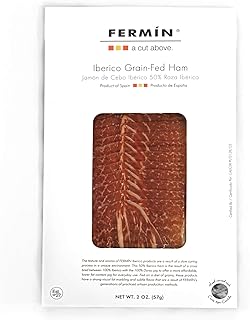
Pros
- Small pack is the low-risk way to try Iberico
- No nitrates or nitrites added, as stated on the product
- Gluten and lactose free
- Already sliced to the correct thinness by the producer
- Iberian breed pork rather than white-breed Serrano
Cons
- Two ounces disappears quickly on a board
- Costs considerably more per ounce than Serrano
Iberico sits above Serrano in the Spanish ham hierarchy, and the difference is the pig. Iberico comes from the Iberian breed, whose fat is softer and marbles through the muscle rather than sitting around it, which is why a slice becomes translucent and slightly glossy at room temperature.
Buying a small sliced pack is the sensible way to meet it. Slicing dry-cured ham to the correct thinness is genuinely difficult by hand, so having the producer do it removes the main way a first experience goes wrong. The stated absence of added nitrates and nitrites also appeals to buyers avoiding them, and traditional dry curing does not need them.
The limits are quantity and cost. Two ounces is a taste rather than a course, and Iberico is expensive per ounce compared with Serrano. That is the correct way to buy it though: a little, at the right thinness, at room temperature.
Bottom line: the right introduction to Iberico, and the pack to buy before committing to anything larger.
- Style: Spanish dry-cured Iberico
- Format: pre-sliced
- Size: 2 ounces
- Additives: no nitrates or nitrites added as stated
- Dietary: gluten free and lactose free as stated
Take it out of the fridge twenty minutes before serving. Iberico fat is soft and its flavour only opens up near room temperature; served cold it tastes flat and feels waxy.
Lay slices out separately rather than piling them. They stick together when cold and tear when you try to separate them on the plate.
Anyone curious about Iberico, hosts assembling a small board, and people avoiding added nitrates who still want traditional cured ham.
Not a value purchase; if you already know you like Spanish ham and want quantity, a Serrano leg costs far less per serving.

Pros
- Twelve full-size cans is genuine bulk stocking
- Fully cooked and ready to slice or dice
- Shelf stable, so storage is a cupboard rather than a freezer
- Consistent product for recipes that use ham as an ingredient
- Good cost per ounce at this quantity
Cons
- Twelve cans is far more than most households will get through
- Soft canned texture rather than deli-sliced firmness
This is the bulk option, and the case for it is straightforward: if ham is an ingredient you use regularly rather than an occasional treat, buying twelve full-size cans at once costs less per ounce and removes it from the shopping list for months.
Being fully cooked and consistent between cans matters more than it sounds for cooking. Recipes that call for diced ham, from split pea soup to fried rice to a quiche, work better with a product that behaves the same way every time than with whatever the deli counter had.
The obvious caveat is quantity. Twelve pounds of canned ham is a serious commitment of cupboard space and appetite, and the texture is the soft, uniform texture that comes from cooking in a can. Neither is a defect; both are things to be clear about before ordering.
Bottom line: sensible bulk buying for a household that genuinely cooks with ham, and far too much for anyone else.
- Style: wet-cured, fully cooked
- Format: canned
- Size: 16 ounces per can
- Quantity: 12 cans
- Storage: shelf stable until opened
Large households, people cooking for groups, and anyone stocking a pantry deliberately rather than incidentally. Also a reasonable choice for shared or communal kitchens.
Not the pick for a small household, where a single can or a multipack of small cans avoids waste.
Dice and freeze in portions once a can is opened if you will not use it quickly. Diced cooked ham freezes better than slices, which go watery on thawing.
Brown the dice before adding them to soups and rice dishes. Canned ham has little surface flavour of its own and a few minutes in a hot pan supplies it.

Pros
- Boneless and skinless, so everything in the tin is edible
- Sixteen ounces is a practical single-purchase quantity
- Fully cooked and ready to use
- Slices reasonably cleanly when chilled
- Straightforward flavour suited to cooking
Cons
- Boneless ham has less depth of flavour than bone-in
- Needs refrigeration and use within days once opened
Boneless and skinless is the whole proposition here, and it is a real one. With a bone-in ham a meaningful share of the weight you paid for is not food. With this, all of it is, which makes the comparison on price per usable ounce more favourable than the label suggests.
Sixteen ounces is the practical size: enough for a run of sandwiches or a family dish, small enough to finish. Fully cooked means no preparation, and the texture is firm enough to slice if you chill it first.
What you give up is flavour depth. Bone and skin contribute during curing and cooking, and a boneless formed ham is a simpler-tasting product. For sandwiches and cooking, where other ingredients carry the dish, that matters much less than it would on a plate.
Bottom line: the no-waste option, and a sensible single-can purchase when you do not need twelve.
- Style: wet-cured, fully cooked
- Cut: boneless and skinless
- Format: canned
- Size: 16 ounces
- Storage: shelf stable until opened
Small households that want a full-size can rather than a bulk pack, and anyone who values no waste over maximum flavour.
Not the choice for a centrepiece, and not the choice if you want the ham bone for stock afterwards.
Chill thoroughly before slicing. A cold block cuts cleanly; a room-temperature one tears.
Use it where ham is a component rather than the star: omelettes, croquettes, pasta, sandwiches with a strong mustard or a sharp cheese.

Pros
- Ready-seasoned, so a sandwich takes one step
- Small cans are the right size for a couple of servings
- Shelf stable with a long pantry life
- Works as a dip base as well as a sandwich filling
- Familiar flavour that children generally accept
Cons
- A spread rather than sliceable ham, so it is not interchangeable
- Salt and seasoning levels are high by design
This is a different product from everything else on the list and it belongs here because it answers a question people genuinely have: what ham do I keep in the cupboard for a fast sandwich. Ground, seasoned and spreadable, it needs no slicing, no chilling and no thought.
The small can size is right. A 4.25 ounce tin makes a couple of sandwiches, which means you open what you use rather than storing a half-empty can of spread in the fridge.
It is not a substitute for sliced ham and should not be judged as one. Seasoning and salt are high because that is the character of a deviled spread, and the texture is smooth by design. Used as intended, on toast, in a sandwich, folded into cream cheese as a dip, it does exactly what it is meant to.
Bottom line: a pantry staple rather than a ham purchase, and a good one within its own category.
- Style: seasoned ground ham spread
- Format: canned
- Size: 4.25 ounces per can
- Quantity: 4 cans
- Storage: shelf stable until opened
Fold it into softened cream cheese with a little lemon and black pepper for a quick dip that tastes considerably better than either component alone.
Balance the salt with something fresh: cucumber, lettuce or sliced radish in a sandwich stops it becoming heavy.
Households wanting a fast lunch option, packed lunches, picnics and camping, and anyone who grew up with it and wants it back.
Not what to buy if you were shopping for sliceable ham; the format is fundamentally different.
How to Choose the Best Ham
The categories below are genuinely different products rather than different qualities of the same thing. Getting the category right matters far more than getting the brand right.
City Ham Versus Country Ham
Nearly all supermarket ham in the United States is city ham: wet-cured in a brine of salt, sugar, nitrite and water, then usually smoked and fully cooked. It is moist, mildly salty and ready to eat, and it is what people picture when they think of a holiday ham.
Country ham is dry-cured, packed in salt and aged for months. It is intensely salty, firm, and traditionally soaked and simmered before serving. If you buy one expecting a city ham you will be shocked; they are not interchangeable and no amount of glaze fixes the difference.
The European dry-cured hams, Serrano, Iberico and Speck among them, belong to the same broad family as country ham but are sliced paper thin and eaten raw rather than cooked. Buying one to bake is an expensive mistake.
The Four Label Grades and What Added Water Means

This is the most useful thing on this page. United States labelling rules define four tiers of cured ham by how much water has been added, expressed through minimum protein content. In descending order of meat content they are: Ham, which has no added water at all; Ham with Natural Juices; Ham, Water Added; and Ham and Water Product, which must also state the percentage of added ingredients on the label.
The practical consequences are texture, flavour concentration and shrinkage. A ham with a great deal of added water gives up that water in the oven, so a package weight does not tell you how much ham lands on the table. It also has a softer, wetter, more uniform texture, which some people prefer in a sandwich and almost nobody prefers on a plate.
You do not need to buy the top tier every time. You do need to know which tier you are buying, because the same shelf price on two packages can represent very different amounts of actual pork. Read the phrase on the front, not the picture. The Hormel canned ham on this list is a clear worked example: its label reads Smoked Ham, Water Added, and elsewhere on the same can it says with smoke flavoring and ground ham patties, which tells you both the tier and that it is a formed product rather than a solid muscle. None of that is hidden, and none of it is on the part of the label people look at.
Spiral Sliced, Bone In, Boneless and Canned

Spiral slicing is a genuine convenience: the ham arrives cut in a continuous spiral to the bone, so serving is a matter of lifting slices rather than carving. The cost is surface area. All those cut faces dry out faster in the oven, which is why spiral hams should be reheated covered and gently rather than roasted like a fresh joint.
Bone-in ham carries more flavour and gives you a bone worth keeping for beans or stock, and it also means part of the weight you bought is not edible. Boneless ham is easier to carve and slice evenly and is usually more processed, being formed from muscle groups rather than cut from a whole leg.
Canned ham is a category of its own, shelf stable and fully cooked. It is not trying to be a centrepiece; it is a pantry protein for sandwiches, breakfasts, quick pasta dishes and emergency meals. Judge it on that basis and products such as the Hormel and DAK canned hams make complete sense.
Dry-Cured European Hams and What the Names Mean

Serrano is Spanish dry-cured ham, typically from white-breed pigs, aged for many months. The Altos de Iberia whole leg here publishes an average curing time of 18 months, which is at the serious end of the range and is why it comes with a stand and a knife: you are expected to carve it yourself over several weeks.
Iberico is the higher tier, from the Iberian pig breed, and the Fermin product here is sliced and states no nitrates or nitrites added along with gluten and lactose free. Acorn-fed Iberico, labelled de bellota, is the top grade and is characterised by fat that softens at room temperature and carries most of the flavour.
Speck Alto Adige IGP is the odd one out and worth understanding. It is dry-cured like prosciutto but also lightly smoked, a northern Italian style from a region with Austrian influence, and IGP is a protected geographical indication meaning the name can only be used for ham produced to that specification in that area. That protected status is a genuine quality signal rather than marketing.
How Much to Buy Per Person
The working figures are one third to one half a pound per person for bone-in ham and one quarter to one third of a pound for boneless, with the higher end of each range if you want leftovers, which with ham you generally do. A 9 pound bone-in ham serving 14 to 16 people, as the Holiday Ham Co. product states, lines up with that arithmetic.
For dry-cured ham the numbers are completely different because it is served in translucent slices as part of a board. Two to three ounces per person is generous as an appetiser, and a whole 14 pound Serrano leg is a months-long project rather than a single meal.
Reheating Without Drying It Out
Almost every supermarket ham is already fully cooked, so you are reheating rather than cooking. That means low and slow: a moderate oven, the ham cut side down in a pan with a little liquid, and a foil cover for most of the time. The target is warm through, not hot, because pushing the internal temperature up is exactly what squeezes out moisture.
Glaze goes on at the end, not the start. Every glaze worth eating is built on sugar, and sugar applied at the beginning of a long reheat burns before the centre is warm. Uncover, glaze, and give it a short blast at higher heat to set and caramelise.
Rest it before carving, the same as any large piece of meat. Fifteen minutes under loose foil lets the juices redistribute, and a spiral ham in particular loses far less onto the board.
Supermarket Versus Ordering Ahead
A supermarket ham has two advantages: you can see it, and you can buy it today. Around major holidays that second point matters more than anything else on this page, because the good bone-in hams sell out and what remains is the water-added tier.
Ordering ahead widens the choice enormously, particularly for whole spiral-sliced hams and for anything dry-cured, which few supermarkets stock beyond a small pack of prosciutto. The trade-off is planning and delivery timing, and the rule is simple: order perishable ham to arrive at least two days before you need it, not the morning of.
| Product | Style | Format | Best for |
|---|---|---|---|
| Holiday Ham Co. Spiral Sliced | Wet-cured, glazed | Bone-in, 8.5 to 9.5 lb | A holiday centrepiece for 14 to 16 |
| Hormel Canned Ham | Wet-cured, cooked | Canned, 5 oz multipack | Shelf-stable pantry protein |
| DAK Premium Ham | Wet-cured, cooked | Canned, 16 oz | Sandwiches and quick meals |
| Altos de Iberia Serrano | Dry-cured, 18 months | Whole leg with stand and knife | Carving over weeks at home |
| Alma Gourmet Speck Alto Adige IGP | Dry-cured and smoked | Whole piece, about 5 lb | Charcuterie with a smoky note |
| Fermin Jamon Iberico | Dry-cured Iberico | Sliced, 2 oz | Trying Iberico without a whole leg |
| Goya Cooked Ham | Wet-cured, cooked | Canned, 16 oz multipack | Bulk sandwich and cooking use |
| Iberia Boneless Cooked Ham | Wet-cured, cooked | Canned, 16 oz | Boneless slices with no waste |
| Underwood Deviled Ham | Seasoned ham spread | Canned spread, 4.25 oz | Sandwich filling and dips |
Ham generates leftovers by design, and how you store them decides whether they get eaten, so our guide to airtight food containers is a useful companion. More food picks are in the Grocery and Gourmet Food section.
Why You Should Trust Us
We check every product against its current listing and we group by category rather than ranking incomparable things against each other. A canned 5 ounce ham and a 14 pound Serrano leg are not competitors, and a list that ranks them in one order is not helping anybody decide anything. What we have done instead is cover each category that a search for the best ham legitimately includes, then say plainly which product leads within it.
We also excluded one product type that keeps appearing in these results: cured pork loin sold under Spanish names such as lomo. It is excellent and it is not ham, because ham comes from the hind leg. Precision matters here because the cuts cook, slice and taste differently, and a list that blurs them teaches the reader something false.
Final Thoughts
Best overall is the Holiday Ham Co. Honey Glazed Spiral Sliced Ham. Bone-in, glazed, spiral cut and sized at 8.5 to 9.5 pounds for 14 to 16 people, it is the product that matches what most people mean when they go looking for a ham to buy. Reheat it covered, glaze at the end, and it does the job it was designed for.
Best value is the DAK Premium Ham. A fully cooked 16 ounce canned ham is shelf stable, needs no planning, and turns into sandwiches, breakfast hash or a quick pasta without any of the logistics a whole ham demands. Goya and Iberia cover the same ground in slightly different formats, and Hormel’s 5 ounce multipack is the version to buy if you want single portions rather than an opened can in the fridge.
For dry-cured ham, start small. The Fermin sliced Jamon Iberico is the sensible way to find out whether you like it before committing to a leg, and it states no nitrates or nitrites added. If you already know you like it, the Altos de Iberia Serrano leg with stand and knife and an 18 month average cure is a genuine project worth taking on, and the Alma Gourmet Speck Alto Adige IGP is the one to buy if you want the dry-cured texture with a smoky edge. The Underwood deviled ham spread is a different thing again, and a good one for sandwiches. More food coverage is in Grocery and Gourmet Food, and everything new is in our latest articles.
Best Ham FAQs
What does Ham and Water Product actually mean on a label?
It is the lowest of four defined tiers of cured ham, and it means the product contains enough added water that it must declare the percentage of added ingredients on the label. Above it sit Ham, Water Added, then Ham with Natural Juices, then plain Ham with no added water at all. The distinction is set by minimum protein content, and it directly affects texture and how much shrinks away in the oven.
How much ham should I buy for a holiday dinner in 2026?
Plan on one third to one half a pound per person for bone-in ham, and one quarter to one third of a pound for boneless. Use the upper end if you want leftovers, which is usually the point of buying a ham. A 9 pound bone-in ham comfortably serves 14 to 16 people with sandwiches afterwards.
Do I need to cook a supermarket ham?
Almost always no. Most supermarket hams are fully cooked and you are reheating them to serving temperature, not cooking them through. The exception is anything labelled fresh ham, which is uncured raw pork leg and must be cooked properly. Check the label rather than assuming, and when in doubt a fully cooked ham will say so clearly.
Is Serrano the same as prosciutto?
They are close cousins rather than the same thing. Both are dry-cured raw hams sliced thin and eaten uncooked. Serrano is Spanish and generally cured a little longer with a firmer, more assertive character; prosciutto is Italian and typically softer and sweeter. Speck is a third variation, dry-cured like prosciutto but also lightly smoked.
How long does an opened ham keep?
Cooked ham keeps roughly three to five days refrigerated once cut, and freezes well for a month or two, though the texture softens slightly on thawing. Slice what you need and keep the rest in one piece, since a cut face dries out fast. A whole dry-cured leg is different: once opened it keeps for weeks at cool room temperature with the cut face covered by its own fat or a cloth. Storage gear is covered in our Home and Kitchen section.






Write Your Review
No reviews yet. Be the first to share your experience!