

Commercial drain products are not simply stronger versions of what sits under a domestic sink. They are different chemistries aimed at different blockages, and using the wrong one wastes money at best and damages pipework at worst. Our shortlist of 9 commercial drain cleaners is organised around that distinction rather than around raw strength. Our top pick is the Zep 10 Minute Drain Opener Gel, a professional grade gel sold by the gallon that clings to the pipe wall instead of running straight past the blockage.
The products below span Zep, Drano Max, CLR PRO and more, and they cover caustic openers, acid based cleaners, bacterial maintainers and grease trap treatments. The buying guide explains which chemistry suits which blockage, along with the safety rules that matter more in this category than in any other cleaning product. For a blockage further down the system, our guide to main line drain cleaners covers that case.

Pros
- Gel formulation works in standing water
- Manufacturer states safe for all pipes and septic tanks
- Ten minute contact time, 16 oz per drain
- Gallon packaging brings cost per drain right down
Cons
- A case of gallons is far more than one household needs
- Still a strong chemical requiring gloves and ventilation
Zep sells into the trade, and this product reflects that in two ways. It is a gel rather than a thin liquid, which matters because a liquid poured into a sink full of standing water dilutes and runs down the side of the water column instead of reaching the blockage. Zep states explicitly that the gel works in standing water, which is the single most useful property in this category.
The label also states it is safe for all pipes and for septic tanks, which is unusual for a fast acting opener and worth knowing if your property is not on a sewer. Zep lists the target soils as hair, grease, body oil, soap scum and toothpaste, which covers essentially every domestic bathroom and kitchen blockage.
The second trade characteristic is packaging. A gallon, sold in a case of four, is absurd for one slow bathroom sink and entirely sensible for anyone maintaining a building, a rental portfolio or a commercial kitchen, where the cost per treatment falls to a fraction of retail bottles.
Bottom line: the professional choice, and the right buy for anyone clearing more than one drain a year.
- Type: drain opener gel, professional grade
- Dose: 16 oz per drain, 10 minute wait, rinse with hot water
- Packaging: 1 gallon bottles, case of 4
- Pipes: manufacturer states safe for all pipes and septic tanks
- Dissolves: hair, grease, body oil, soap scum, toothpaste
- Works in standing water: yes
Building maintenance, landlords, commercial kitchens and anyone responsible for more than one or two drains. Excessive for a single household fixture, where a retail bottle costs less than a case you will never finish.
Wear eye protection and chemical resistant gloves and ventilate the room. Pour 16 oz into the drain, wait the stated 10 minutes, then rinse with hot water as the label directs. Never add any other drain product to a drain that already contains this one, and keep the labelled container so a plumber knows what is in the trap if the blockage persists.

Pros
- Formulated for stubborn organic blockages
- Long standing trade reputation
- Effective on grease and sludge buildup
- Straightforward directions and dosing
Cons
- Aggressive chemistry demands full protective equipment
- Not suitable for septic systems
Pequa has been supplying drain products through hardware and trade channels for decades, and the P-10232 is the heavy duty option in that line. It targets the organic blockages that defeat consumer products: accumulated grease, sludge and the soap and hair matrix that builds up in older waste pipes.
Products at this strength demand respect. Full protective equipment, good ventilation, and strict adherence to the stated dwell time are not optional, and this is not a product to keep under a sink in a house with children.
Used correctly on the blockages it is designed for, it succeeds where a supermarket bottle has already failed, which is precisely the situation it exists for.
Bottom line: the escalation product, for when a consumer opener has not worked and the blockage is known to be organic.
- Type: heavy duty drain opener
- Target: grease, sludge, organic blockages
- Channel: trade and hardware
- Septic safe: no
- Protective equipment: gloves and eye protection required
- Use: sinks, showers, floor drains
Property maintenance and experienced users dealing with a known organic blockage that lighter products have not shifted. Not a first choice, and not appropriate for anyone unsure what their pipes are made of.
Never combine with any other drain chemical, including one already poured in earlier the same day. Ventilate the space, wear eye protection and chemical resistant gloves, and add the product to the drain rather than the drain contents to a container. Store upright in the original labelled bottle, away from other cleaning chemicals.

Pros
- Bacterial action digests fat inside the trap
- Safe for septic systems and ongoing dosing
- Reduces the volume needing pumping out
- Commercial line from an established brand
Cons
- Not a drain opener, will not clear a blockage today
- Bacteria are killed by caustic products used elsewhere
This is a maintenance product and understanding that distinction is the whole point. It contains bacterial cultures that digest fat, oil and grease inside a drain line or trap over hours and days. It will not clear a blocked pipe this afternoon and it is not intended to.
What it does is reduce the rate at which a grease trap fills, which lowers pump out frequency and the risk of a main line blockage forming downstream. For a commercial kitchen that is a running cost saving rather than an emergency purchase.
The important operational constraint is compatibility. Caustic and acid cleaners kill the bacteria this product introduces, so a site using both needs to keep them in different parts of the system and allow a few days for cultures to re-establish after any chemical passes through.
Bottom line: the right product for preventing blockages, and the wrong one for clearing them.
- Type: bacterial drain line and grease trap treatment
- Action: digests fat, oil and grease over time
- Septic safe: yes
- Dosing: regular programme, typically overnight
- Line: CLR PRO commercial
- Not suitable for: clearing an existing blockage
Commercial kitchens, food service sites with grease traps, and households on septic systems wanting preventive maintenance. Not for anyone standing over a blocked sink right now.
Dose at the end of service when there is no flow through the system, so the bacteria have hours of contact time rather than being flushed straight through. Maintain a regular schedule rather than dosing occasionally, and restart the programme after any caustic product has been used in the same lines.

Pros
- Built for scheduled preventive dosing
- Suitable for ongoing use in occupied buildings
- Gentler on pipework than caustic openers
- Commercial sizing for multiple drains
Cons
- No effect on an existing blockage
- Needs a consistent schedule to be worthwhile
Instant Power's commercial maintainer belongs to the same category as the CLR PRO product: something you dose on a schedule so that blockages do not form, rather than something you reach for when one has.
The value case is straightforward for anyone maintaining a building. A caustic opener used repeatedly attacks rubber seals and can soften plastic pipework over years, while a maintenance product controls the organic buildup that causes blockages without that cost.
The requirement is discipline. A maintainer used occasionally does very little. Used weekly or monthly on a written schedule it changes how often a maintenance team gets called out to a slow drain.
Bottom line: a preventive product that pays back through avoided call outs, provided somebody keeps to the schedule.
- Type: commercial drain maintainer
- Purpose: preventive organic control
- Dosing: scheduled, repeated
- Pipework: gentler than caustic openers
- Scale: sized for multiple drains
- Not suitable for: emergency blockages
Facilities and maintenance teams with a written cleaning schedule, and landlords wanting to reduce call outs to slow drains. Not useful to someone with a blocked sink today.
Dose overnight or at the end of the working day so the product has contact time without flow washing it away. Record the schedule somewhere visible, since the most common reason maintenance products fail is that nobody remembers whose job it was.

Pros
- Enzyme producing bacteria digest fat at the source
- Works with manual application or automatic dosing systems
- Safe on pipes and plumbing, unlike caustic openers
- One gallon sizing suits a scheduled programme
Cons
- Works over time rather than immediately
- Ineffective if caustic cleaners are used in the same lines
Grease traps exist to stop fat entering the sewer, and treating one with a caustic opener defeats that purpose entirely: the grease is emulsified, flows past the trap, and re-solidifies further down the line, converting a full trap into a main line blockage.
This product does the opposite, working on the fat where it sits so that the volume requiring removal falls over time. For a kitchen paying for scheduled pump outs, that is a direct running cost.
It requires the same operational discipline as any biological product. Caustic cleaners used elsewhere in the same lines will undo the effect, and the treatment needs regular dosing rather than occasional use.
Bottom line: the correct product for a grease trap, and a direct answer to the most expensive mistake in commercial drain maintenance.
- Type: enzyme producing bacterial treatment
- Volume: one gallon
- Use on: grease traps, drains, pipes
- Dosing: manual application or automatic dosing systems
- Safe on pipes and plumbing
- Action: digests fats, oils and grease over time
Restaurants, canteens, and any site operating a grease trap under a trade effluent agreement. Not relevant to a domestic kitchen without a trap.
Dose after close when no water is flowing, giving the treatment overnight contact with the accumulated fat layer. Do not use caustic openers in the same drain lines, and if one has been used, expect the biological action to need several days to recover.

Pros
- Bleach free formula, thick enough to cling in the pipe
- Rated effective against flushable wipes and toilet paper
- Eight treatments per bottle
- Splash-free pouring design
Cons
- Not septic safe
- Stronger than needed for a mildly slow drain
Green Gobbler's industrial strength opener sits between the supermarket products and the trade gallons, targeting grease and hair specifically. Those two account for the large majority of kitchen and bathroom blockages, so a product formulated around them covers most real situations.
Packaging is the practical difference from the Zep product. This comes in a bottle rather than a case of gallons, which suits a household or a small site that needs an effective product occasionally rather than a maintenance supply.
It is still a strong chemical. Eye protection, gloves and ventilation apply, and it should never follow another product into the same drain.
Bottom line: the sensible middle option, and a good choice when a standard consumer product has not worked.
- Type: industrial drain clog dissolver
- Formula: bleach free, thickened
- Treatments: 8 per bottle
- Effective against: toilet paper, hair, soap scum, flushable wipes, organic material
- Pouring: splash-free design
- Use: sinks, showers, tubs, toilets
Households and small sites facing a blockage that a supermarket product has not cleared. A reasonable step up before escalating to trade chemistry or calling a plumber.
Use in a ventilated room with gloves and eye protection. Do not use in a drain that already contains another product, and do not use on a completely blocked pipe with standing water, where the product cannot reach the obstruction. Flush with cold water after the stated contact time.

Pros
- Septic safe, unlike caustic and acid openers
- Suitable for regular preventive use
- Gentler on pipework and seals
- Professional strength biological formulation
Cons
- Slower acting than a caustic opener
- Not an emergency solution for a blocked pipe
For a home on a septic system, most of this list is unusable. Caustic and acid products kill the bacterial population the tank depends on, and the resulting problem costs far more than the blockage being treated.
Bioda works biologically instead, which makes it appropriate both for the drains and for what happens downstream. The trade off is speed: biological action works over hours and days rather than in ten minutes.
Used as a scheduled treatment rather than an emergency response, it does the job the caustic products on this list do preventively, without the cost to seals and pipework that repeated chemical use brings.
Bottom line: the septic system answer, and a sensible routine treatment for any household that wants to avoid harsh chemistry.
- Type: biological drain cleaner
- Septic safe: yes
- Action: works over hours to days
- Use: regular preventive dosing
- Pipework: gentle on plastic and seals
- Not suitable for: immediate blockage clearing
Households on septic tanks, anyone with older pipework they would rather not expose to caustic chemistry, and people who prefer to prevent blockages rather than react to them.
Dose last thing at night so the product sits in the pipe rather than being flushed away, and repeat on the schedule stated on the label. Do not follow with a caustic opener, which will kill the cultures and waste the treatment.

Pros
- Formulated specifically for uric scale
- Addresses a deposit general openers cannot dissolve
- Commercial grade for facilities use
- Targets the cause of persistent urinal odour
Cons
- Single purpose product with no general drain use
- Requires careful handling and protective equipment
Uric scale is a mineral deposit rather than an organic blockage, which is why general drain openers have so little effect on it. It builds inside urinal waste lines, restricts flow, and is the usual reason a washroom smells despite being cleaned daily.
Brodi's product is formulated for that specific deposit, which makes it a facilities maintenance item rather than a general purpose cleaner. In a commercial washroom it addresses a problem that no other product on this list touches.
It is a targeted chemical and demands the same handling discipline as any commercial product: protective equipment, ventilation, and never following another product into the same line.
Bottom line: a single purpose specialist, and the correct answer when the problem is scale rather than a blockage.
- Type: uric scale remover
- Application: urinal drain lines
- Grade: commercial
- Target: mineral scale rather than organic matter
- Protective equipment: required
- General drain use: no
Facilities managers and cleaning contractors maintaining commercial washrooms. Not a product for a domestic bathroom, and not effective on ordinary organic blockages.
Ventilate the washroom and close it to users during treatment. Wear eye protection and chemical resistant gloves, and never introduce this product into a line that has recently received a different drain chemical. Store in the original labelled container away from other cleaning products.
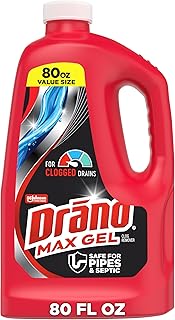
Pros
- Gel formulation reaches the blockage in standing water
- Manufacturer states safe for metal and plastic pipes, disposals and all septic tanks
- PipeProtect additive guards against pipe corrosion
- Available everywhere at short notice
Cons
- Consumer sizing is expensive per treatment at scale
- Insufficient on its own for grease trap maintenance
Included here as the reference point, because for one slow bathroom sink the supermarket product is genuinely the right answer and a case of trade gallons is not.
The gel formulation is the reason it works better than thin liquid products at the same price. It is dense enough to sink through standing water rather than dispersing above the blockage, which is the same principle that makes the professional Zep gel effective.
Its limits appear at scale. Heavy commercial grease buildup, a grease trap, or a septic system all need something else, and repeated use on the same drain suggests a problem that chemistry is not going to solve.
Bottom line: the best value for a single household drain, and the correct first attempt before escalating.
- Type: thick drain gel
- Size: 80 fl oz value size
- Pipes: metal, plastic, garbage disposals, all septic tanks per label
- Additive: PipeProtect corrosion protection
- Use: sinks, tubs, showers
- Format: gel, works through standing water
Households with an occasional slow drain. Not the product for a commercial kitchen, a grease trap, a septic system, or a building with many drains, all of which are better served elsewhere on this list.
Wear gloves, ventilate the room, and use the stated dwell time rather than leaving it longer. Never pour a second product into the same drain if this one has not worked. If the blockage persists after one treatment, remove the standing water mechanically and either clear the pipe physically or call a plumber, telling them what was used.
How to Choose a Commercial Drain Cleaners
Get the chemistry right and most blockages clear in minutes. Get it wrong and you have a pipe full of a product that cannot dissolve what is in it, which then has to be removed before anything else can be tried.
The Three Chemistries and What Each One Dissolves

Caustic cleaners are alkaline, usually built on sodium hydroxide or potassium hydroxide. They work by converting fats and grease into soap, and by breaking down hair and other proteins. Most heavy duty gels sold for kitchen and bathroom drains fall into this group, and it is the right choice for the two most common household blockages.
Acid cleaners, typically sulphuric acid based, attack organic matter by a different route and are notably effective on paper, tissue and organic sludge. They are also the most aggressive on pipework and the most hazardous to handle, which is why they are sold mainly into trade channels rather than supermarkets.
Bacterial and enzymatic products are the third group and they are not drain openers at all. They contain cultures that digest organic material over hours or days. They will not clear a blocked pipe today, and they are the sensible option for regular maintenance and for grease traps, where a caustic product would kill the bacteria the system depends on.
One assumption worth correcting: caustic does not automatically mean unsafe for a septic tank. Both the Zep gel and Drano Max Gel state on their labels that they are safe for septic systems, and Drano lists metal pipes, plastic pipes, garbage disposals and all septic tanks explicitly while adding a corrosion inhibitor it calls PipeProtect. The dose matters, since a measured amount diluted into a tank of many hundreds of gallons behaves differently from a concentrated pour. Read the specific label rather than applying a rule of thumb to the whole chemistry, and if you are dosing a septic system regularly rather than occasionally, a bacterial product is still the better routine.
| Chemistry | Clears | Speed | Septic safe | Example here |
|---|---|---|---|---|
| Caustic gel | Grease, hair, soap scum | Minutes | Check label, several state yes | Zep, Drano Max Gel |
| Acid based | Paper, organic sludge | Minutes | No | Pequa heavy duty |
| Thickened dissolver | Wipes, toilet paper, hair | Minutes | Check label | Green Gobbler Industrial |
| Bacterial or enzyme | Ongoing organic buildup | Hours to days | Yes | Bioda, Instant Power, CLR PRO |
| Grease trap treatment | Fat, oil and grease in traps | Ongoing | Yes | Black Diamond, CLR PRO |
| Scale remover | Uric scale in urinals | Minutes | No | Brodi CRETE |
Never Combine Products, and What to Do If You Already Have
This is the single most important rule in the category. Acid and caustic products react violently with each other, generating heat and, depending on the specific formulations, hazardous gases. Pouring one down a drain that already contains the other is genuinely dangerous, and it can happen accidentally when a first product fails to clear a blockage and a different one is tried an hour later.
The practical protocol is straightforward. Use one product. If it does not work, do not add a second chemical. Instead, wear eye protection and gloves, and where possible remove the standing water and the product mechanically, using a bucket and a cup rather than reaching in. Then either call a plumber or clear the blockage physically once the pipe is rinsed thoroughly with cold water.
Tell any plumber what you poured in before they open the trap. A trap full of caustic gel that nobody warned them about lands in their face when the fitting comes loose, and it is a common cause of chemical burns in the trade. Keeping the container is the easiest way to communicate exactly what is in there.
Pipe Material Sets the Limit
Modern domestic waste pipework is usually PVC or ABS plastic, which tolerates most drain products used as directed but softens under sustained heat. That heat is generated by the chemical reaction itself, which is why every label warns against leaving a product in longer than instructed. A blockage that has not cleared in the stated time will not clear in three hours, it will just cook the pipe.
Older buildings complicate this. Cast iron and galvanised steel are attacked by acid products, and chrome plated traps under basins mark permanently if a caustic gel is left sitting against them. If you do not know what your waste pipes are made of, a bacterial maintainer is the safe default, and a plumber is the correct answer for an actual blockage.
Rubber gaskets and seals sit in every push fit joint and compression fitting in the system, and they are the component most quietly damaged by repeated chemical use. A drain that gets treated monthly with a caustic product will develop weeping joints years earlier than one that does not.
Grease Traps Need Maintenance, Not Openers

Commercial kitchens run grease traps precisely so that fat, oil and grease do not enter the sewer. Pouring a caustic opener into one defeats the purpose: it emulsifies the grease so it flows past the trap and solidifies further down the line, which converts a trap that needed emptying into a main line blockage that needs a jetting crew.
Trap treatments such as the Get Serious product and the CLR PRO line work the other way, using bacteria to digest the fat inside the trap over time so that the volume needing removal falls. They are dosed regularly rather than poured in response to a problem, typically overnight when there is no flow through the system.
One consequence worth planning for: bacterial products are living cultures, so they are killed by the same caustic and acid cleaners used elsewhere in a kitchen. If a site uses both, they need to be used in different parts of the system, and a bacterial dosing programme needs a few days to re-establish after any caustic product has passed through.
Format, Volume and Contact Time

Gels outperform liquids on vertical pipe runs for a simple physical reason: a liquid poured into a standing sink dilutes and runs down the side of the water, while a gel is dense enough to sink through standing water and cling to the blockage. This is why professional products for sinks and showers are usually gels, and it is the main advantage of the Zep product at the top of this list.
Volume matters more than people expect. A domestic bottle holds enough for one or two treatments. Commercial packaging, such as a gallon or a case of gallons, brings the cost per treatment down dramatically for anyone maintaining several drains, and it is the practical reason to buy trade sizes even for a large household.
Contact time is stated on every label and is not a suggestion. Products designed for fifteen minutes have been formulated to complete their reaction in that window. Leaving them longer does not increase the effect, and with plastic pipework it increases the risk. Flush with cold rather than hot water afterwards unless the label says otherwise, since hot water can accelerate a reaction that should be finishing.
When a Chemical Is the Wrong Tool Entirely
There are three situations where these products struggle or fail. The first is a completely blocked pipe with standing water, and here the format decides the outcome: a thin liquid disperses in the water column and never reaches the obstruction, while a dense gel is specifically formulated to sink through standing water, which is what Zep and Drano both claim for their gels. If you have standing water, use a gel and not a liquid.
The second is a blockage caused by a solid object. A toy, a toothbrush or a build up of rigid plastic will not dissolve, and no chemistry on this list claims otherwise. Wipes are a partial exception worth knowing: Green Gobbler rates its industrial dissolver as effective against flushable wipes and toilet paper, which are cellulose based, while genuinely plastic items remain a mechanical problem.
The third is root ingress in an underground line, which needs either mechanical cutting or a specific root treatment rather than a drain opener. Repeated slow drainage across several fixtures at once points at the main line rather than at any individual trap, and that is a different job.
The cheapest diagnostic is free: run water in a second fixture. If one sink is slow and everything else is fine, the blockage is local and a suitable product will probably clear it. If the bath, the basin and the toilet are all slow, the problem is downstream of all of them and pouring anything into a single fixture is wasted.
Why You Should Trust Us
These products were selected from current Amazon listings using verified customer ratings and review volume as the first filter, then sorted by chemistry and intended application rather than by strength claims. We prioritised products that state their active chemistry and their intended use, because a label describing only how powerful something is tells you nothing about whether it suits your blockage or your pipework.
We have included one widely used consumer product as a reference point alongside the trade options, since for a single slow bathroom sink the supermarket product is often the correct and cheapest answer. Our editorial picks are independent. More maintenance guides are in our tools and home improvement section.
Final Thoughts
The Zep 10 Minute Drain Opener Gel is our best overall for commercial use. It is a professional grade gel, it sinks through standing water to reach the blockage, and buying it by the gallon brings the cost per drain down to a fraction of retail bottles for anyone maintaining a building rather than a sink.
Drano Max Gel remains the best value for a single household drain. It is the product most people already know, it is a gel rather than a thin liquid, and for one slow bathroom sink it costs a fraction of a trade pack you would never finish.
Beyond those, buy by problem. Pequa is the heavy duty option for stubborn organic blockages. The Black Diamond GetSerious treatment and CLR PRO are grease trap products rather than openers, and pouring an opener into a trap instead is the expensive mistake this guide exists to prevent. Instant Power and Bioda are maintenance products for septic systems and regular dosing. Brodi CRETE is for uric scale in urinals, which no general drain product touches. Our other buying guides cover the rest of the toolkit.
Frequently Asked Questions
Can I mix two different commercial drain cleaners?
No. Acid and caustic products react with each other violently, producing heat and potentially hazardous gases, and this is the most serious risk in the category. If one product has not worked, do not pour in another. Remove the standing water and product mechanically while wearing gloves and eye protection, flush thoroughly with cold water, then clear the blockage physically or call a plumber.
Are drain cleaners safe for PVC pipes?
Most are, when used strictly for the stated contact time. The risk comes from heat generated by the reaction, so leaving a product in far longer than the label allows can soften plastic pipework and damage rubber seals in push fit joints. Older cast iron and galvanised systems are more vulnerable to acid products specifically, and if you do not know what your pipes are, use a bacterial maintainer or call a professional.
What can I use with a septic tank?
Check the individual label rather than assuming. Several gels here, including Zep and Drano Max Gel, state that they are safe for septic tanks when used as directed, because a measured dose dilutes into a large volume. What a septic system cannot tolerate is repeated or heavy chemical use, which suppresses the bacterial population the tank depends on. For routine maintenance on a septic system, use a bacterial or enzymatic product such as Bioda, and keep any chemical opener for occasional use.
Why did the product not clear my drain?
Usually because it never reached the blockage. In a pipe full of standing water, a thin liquid dilutes and disperses before it gets there, which is why gels are preferred. The other common reasons are a solid object rather than an organic blockage, or a problem in the main line rather than the fixture. If several fixtures drain slowly at once, the blockage is downstream and no amount of product poured into one sink will reach it.
How should I store these products in 2026?
In the original labelled container, upright, in a locked or high cupboard away from children and pets, and separated from other cleaning chemicals so an accidental spill cannot bring two chemistries into contact. Keep them off metal shelving, since a slow leak from a corroded cap will destroy the shelf and anything below it. Never decant into an unlabelled bottle.









Write Your Review
No reviews yet. Be the first to share your experience!