

An aero road helmet buys you speed and charges you in heat. That is the entire decision, and every model in this category sits somewhere on that line. A smooth shell with few vents slips through the air better than an open one, and the same closed shell holds warmth against your head on a climb. Our top pick is the Giro Eclipse Spherical for landing closest to the middle of that trade, with a genuinely aero profile and enough internal channelling to stay tolerable when the road tilts up.
This shortlist of 7 aero road helmets covers models from Giro, KASK and Smith, and it deliberately includes both dedicated aero shells and well ventilated road helmets. The reason is in the buying guide below: for a large number of riders, the aero option is the wrong purchase, and knowing why saves both money and discomfort. More cycling and outdoor picks are in our sports and outdoors section.

Pros
- Genuine aero profile without sealing the shell completely
- Spherical construction addresses rotational impact
- Internal channelling keeps it usable on climbs
- Fits sunglasses and everyday road use
Cons
- Heavier than a pure climbing helmet
- Costs considerably more than a ventilated road helmet
The Eclipse is Giro's answer to the question of what an aero helmet should be when the rider is not on a time trial bike. The shell is smooth and closed at the front where drag is generated, and open through internal channels and rear exhausts where heat needs to escape.
Spherical construction is the safety story. Rather than a liner that slides inside the shell, the helmet uses two foam layers separated by an elastomeric interface so the outer shell rotates around the inner one during an angled impact. It is Giro's approach to the same problem MIPS addresses.
The compromises are the ones every aero helmet makes. It is heavier than a climbing helmet and warmer when the speed drops. Neither is severe enough to make it a specialist item, which is the point.
Bottom line: the aero helmet to buy if you only want to own one helmet.
- Category: aero road
- Rotational protection: Giro Spherical
- Ventilation: internal channelling with rear exhausts
- Retention: dial adjustment
- Certification: meets road cycling helmet standards
- Use: fast group riding and racing
Riders who race, ride fast group rides, or simply want the aero benefit without owning a second helmet for hot days. Less compelling for someone whose riding is mostly social and mountainous, where a lighter ventilated helmet is more comfortable and nearly as fast.
Set the helmet level with about two finger widths above the eyebrows, then tighten the cradle until the helmet stays put when you shake your head with the strap loose. Replace after any impact, and store indoors rather than in a car, since heat and ultraviolet age the foam and straps faster than use does.
Pros
- Aero shell designed around long day comfort
- Distinctive fit shape suits riders Giro does not
- Well regarded finishing details and strap comfort
- Proven design used at professional level
Cons
- Premium pricing
- Fit shape will not suit every head
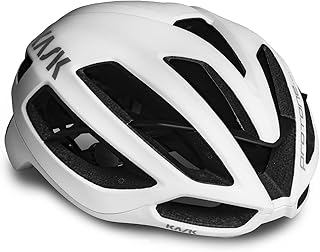
KASK approaches aero differently from most. The Protone is designed around the assumption that a rider will wear it for five hours, so the shape trades a little outright drag reduction for airflow and comfort details that matter over distance.
Fit is where it wins or loses. KASK shells run a distinct shape, and riders who have never found a comfortable Giro or Bell often find the Protone fits immediately. The reverse is equally true, which is why trying one on matters more here than with most brands.
The finishing details are part of what you pay for: a padded chin strap that does not chafe, a retention system that adjusts vertically as well as around, and a build that holds up.
Bottom line: the aero helmet for long days, and the one to try if other brands have never fitted you properly.
- Category: aero road
- Focus: long distance comfort
- Retention: adjustable cradle
- Strap: padded chin strap
- Shell: aerodynamic profile with vents
- Use: road racing and long rides
Distance riders, sportive and gran fondo participants, and anyone whose head shape has never suited mainstream American brands. Also a sensible choice for riders who prioritise comfort details over the last watt of drag saving.
Use the vertical adjustment on the cradle to set how low it cups the back of the skull before tightening the dial, since that setting does more for stability than circumference alone. Wash the pads by hand rather than in a machine, and replace them when they compress rather than replacing the helmet.

Pros
- Fastest shape here for a fixed head position
- MIPS rotational protection
- Designed for time trial and non drafting triathlon
- Integrated visor option keeps the front smooth
Cons
- Minimal ventilation, unsuitable for long hot rides
- Tail loses its advantage as soon as you turn your head
The Aerohead is the fastest helmet on this list and the least versatile, and those two facts are the same fact. The long tail is shaped to fill the low pressure area behind a rider's head in a fixed aerodynamic position, which is worth real time over a time trial distance.
Wear it in a group ride and the picture inverts. Every time you turn to check traffic or drop your head on a climb, the tail lifts into clean air and becomes a brake. Ventilation is minimal because the design assumes an effort measured in tens of minutes.
MIPS is included, which matters because time trial speeds are high and a crash at those speeds is not a gentle event.
Bottom line: excellent at one job, and the wrong helmet for every other job.
- Category: time trial and triathlon
- Rotational protection: MIPS
- Shell: extended tail, minimal venting
- Eyewear: designed around an integrated shield
- Position: optimised for a fixed head angle
- Use: time trials, non drafting triathlon
Time triallists and non drafting triathletes who ride alone against the clock. Not appropriate as a general road helmet, and specifically poor for group riding where head movement is constant.
Set your position on the bike first, then check the tail sits along your back rather than sticking up when you are in your usual aero posture. Practise looking ahead by rotating the eyes rather than lifting the chin, since head movement is what costs you the advantage the shell was designed to provide.

Pros
- Excellent ventilation for hot weather and climbing
- Spherical rotational protection
- Light for its protective coverage
- Premium finishing and retention system
Cons
- Less aerodynamic than a dedicated aero shell
- Flagship pricing
The Aries is what Giro builds when cooling takes priority over drag. Deep internal channels and generous exhaust ports move air across the scalp, which on a long summer climb saves more energy than an aero shell would.
It carries the same Spherical construction as the Eclipse, so the safety approach is identical and the difference between them is purely about airflow against aerodynamics. That makes the pair a clean illustration of the trade this whole category revolves around.
Cost is the reservation. This is a flagship helmet, and a mid range ventilated model delivers most of the cooling for considerably less.
Bottom line: the hot weather and climbing choice, and the counterpart to the Eclipse rather than a competitor to it.
- Category: ventilated road
- Rotational protection: Giro Spherical
- Ventilation: deep channels with large exhausts
- Weight: light for the coverage
- Retention: dial adjustment
- Use: climbing and hot weather riding
Riders in hot climates and anyone whose local roads go uphill more than they go fast. Also the sensible second helmet for a rider who owns an aero shell for flat fast days.
Check that the front rim sits about two finger widths above the eyebrows, then adjust the cradle height before tightening. Rinse salt out of the pads after hot rides, since dried sweat degrades foam and webbing faster than anything else in normal use.

Pros
- MIPS rotational protection at a mid range price
- Good ventilation for everyday road riding
- Comfortable retention system
- Widely available in multiple sizes
Cons
- Not an aero shell, so no drag benefit
- Finishing details are simpler than flagship models
The Agilis is the helmet most riders on this list should actually buy. It ventilates well, it carries MIPS, it fits the way Giro road helmets fit, and it costs a fraction of the flagship models above it.
What it does not do is reduce drag. That matters if you race or ride fast group rides, and it matters very little at the speeds most people average on a club run, which is exactly the calculation the buying guide above lays out.
Finishing is simpler than on premium models: the pads are less plush and the retention system less refined. Neither affects safety, and both are the correct places to save money.
Bottom line: the value pick, and the right helmet for the majority of riders regardless of what the category name says.
- Category: ventilated road
- Rotational protection: MIPS
- Retention: Giro Roc Loc system
- Ventilation: multiple vents with channelling
- Sizes: multiple
- Use: everyday road cycling
New road riders, club riders, commuters on drop bar bikes, and anyone who wants modern rotational protection without flagship pricing. Not the choice for racing, where an aero shell earns its keep.
Buy this instead of an aero helmet unless you regularly ride above thirty kilometres per hour. The money saved buys a decent pair of shoes or a set of tyres, both of which will do more for your average speed than a helmet shape at club pace.
Pros
- Different shell shape suits heads other brands do not
- MIPS rotational protection
- Good ventilation for road use
- Solid mid range value
Cons
- Not an aero design
- Fewer size options than the largest brands
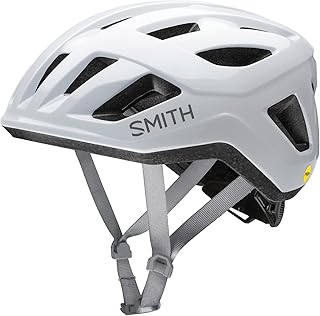
Smith comes to helmets from eyewear and snow sports, and its road helmets consistently fit differently from the American cycling brands. For riders who have spent years finding every helmet either too round or too oval, that alone is a reason to try one.
The Signal is a conventional ventilated road helmet with MIPS. It does not claim aerodynamic gains and does not need to, since it is aimed at the everyday end of the market where cooling and comfort decide satisfaction.
Eyewear integration is better thought out than most, which is unsurprising given the brand, and glasses park securely in the front vents.
Bottom line: a good everyday helmet, and the first one to try if fit has been your problem.
- Category: ventilated road
- Rotational protection: MIPS
- Sizes: XS 48-52, S 51-55, M 55-59, L 59-62, XL 61-65 cm
- Fit: alternative shell shape to mainstream cycling brands
- Eyewear: vents designed to hold glasses arms
- Retention: adjustable cradle
Riders who find mainstream helmet brands uncomfortable, and anyone who wears glasses on the helmet regularly. A sound everyday choice rather than a performance one.
Try this alongside a Giro or Bell of the same nominal size, since the shell shapes differ enough that the same measurement can fit very differently. Check for pressure points at the temples specifically, as that is where shape mismatches show up first.

Pros
- MIPS protection at an accessible price
- Comfortable everyday road fit
- Adequate ventilation for most conditions
- Simple, durable construction
Cons
- No aerodynamic benefit
- Basic pad and strap materials
The Persist is Smith's straightforward road helmet: MIPS, a comfortable shell, adequate vents, and nothing that inflates the price. It occupies the same territory as the Giro Agilis, with the Smith fit shape as the differentiator.
Nothing here is aerodynamic, and the listing does not pretend otherwise. For riders whose speeds do not justify an aero shell, that honesty is worth more than a marketing claim would be.
Pads and straps are basic rather than plush, which is visible next to a flagship helmet and irrelevant on a one hour ride.
Bottom line: a sensible entry point into MIPS protection, particularly if Smith helmets fit your head.
- Category: road
- Rotational protection: MIPS
- Retention: adjustable cradle
- Ventilation: standard road venting
- Materials: basic pads and straps
- Use: everyday road cycling
Riders buying a first proper road helmet, and anyone replacing an older helmet with no rotational protection. Not aimed at racers or at riders chasing aerodynamic gains.
Compare this directly against the Giro Agilis. They target the same rider at a similar level, and the deciding factor should be which shell shape fits your head rather than which specification list reads better.
How to Choose an Aero Road Helmets
Helmet marketing runs on two words, aero and safety, and both are measurable in ways the packaging rarely explains. These are the factors that decide whether a helmet is right for the riding you actually do.
How Much Speed an Aero Helmet Actually Buys
Manufacturer claims for aero helmets are usually expressed in watts saved or seconds gained over a set distance, and the honest range for a good aero road helmet against a well ventilated one is in the region of five to ten watts at racing speed. That sounds small and it is not nothing: at forty kilometres per hour, ten watts is a meaningful fraction of what an amateur rider produces.
The critical detail is that aerodynamic drag rises with the square of speed, so the benefit scales with how fast you ride. At twenty five kilometres per hour, the same helmet saves a fraction of that figure. Below roughly thirty, the difference is small enough that ventilation and comfort should decide your choice instead.
There is also a yaw angle effect worth knowing. Wind tunnel figures are quoted at a range of angles because real riding rarely happens in a pure headwind, and a helmet that tests well straight on can perform differently in a crosswind. Manufacturers that publish results across a yaw sweep are giving you more information than those quoting a single number.
Rotational Protection: MIPS, Spherical, and What They Do

Traditional helmet testing measured straight line impact. Most real crashes involve an angled impact that rotates the head, and rotational acceleration is strongly associated with brain injury. The technologies you see advertised all address that specific mechanism.
MIPS in its common form is a low friction liner that lets the shell move a few millimetres relative to your head during an impact. Giro’s Spherical construction, used on the Eclipse and the Aries, takes a different route: two layers of foam separated by an elastomeric interface, so the outer shell rotates around the inner one in a ball and socket arrangement. Both aim at the same outcome by different means.
For an independent read, the Virginia Tech helmet ratings publish a five star system based on laboratory impact testing across multiple locations and speeds. It is free to consult, it covers most mainstream models, and it is the closest thing to a neutral comparison in this category. Check it alongside the manufacturer’s own claims rather than instead of them.
| Model | Type | Rotational system | Best for |
|---|---|---|---|
| Giro Eclipse Spherical | Aero road | Spherical | Fast group rides and racing |
| KASK Protone Icon | Aero road | KASK system | Long days at speed |
| Giro Aerohead MIPS | Time trial and triathlon | MIPS | Solo efforts against the clock |
| Giro Aries Spherical | Ventilated road | Spherical | Climbing and hot weather |
| Giro Agilis MIPS | Ventilated road | MIPS | Everyday road riding |
| Smith Signal | Ventilated road | MIPS | Mixed road use |
Ventilation Is a Real Performance Specification
Overheating costs watts too, and on a long climb in summer it costs more than the aero shell saves. This is why the professional peloton switches helmets by stage rather than wearing the fastest shell every day, and it is why this list includes ventilated road helmets alongside aero ones.
Vent count is a poor proxy for cooling. What matters is internal channelling, the moulded ducts that carry air from the front vents across your scalp and out of the rear exhaust ports. A helmet with eight well designed channels can move more air than one with twenty holes and no path between them.
Aero helmets that work in warm weather generally do it by closing the front of the shell while keeping the internal channels and rear exhausts open, so air that does enter has somewhere to go. That is the difference between a helmet like the Eclipse, which is designed to be worn all day, and a time trial shell like the Aerohead, which is designed for efforts measured in minutes.
Time Trial Helmets Are Not Road Helmets

A time trial helmet has a long tail, a nearly sealed shell, and often an integrated visor. It is the fastest thing you can put on your head, and it is designed around a rider holding one position for a set distance with their head angle fixed. The tail only works while your head stays where the designer assumed it would be.
On a group ride, that same helmet is a liability. Looking around to check traffic, or dropping your head on a climb, lifts the tail into the airflow and turns an aerodynamic advantage into a brake. Ventilation is minimal because it was never meant to be worn for four hours. The Giro Aerohead belongs in this category and is excellent at its job, but its job is riding alone against the clock.
If you ride time trials or non drafting triathlon, buy one. If you ride in groups, an aero road helmet gives you most of the benefit without the constraints, and you can turn your head.
Where a Helmet Sits in the Aero Budget
Worth stating plainly, since no helmet manufacturer will: at road speeds, roughly three quarters of the total drag you fight is the rider, not the bike. That single fact sets the order in which money spent on going faster actually pays back, and a helmet is not first on the list.
Riding position dominates everything. Getting comfortable in the drops, or lowering the front end by a few centimetres if your flexibility allows it, changes frontal area more than any component can. It costs nothing beyond time and possibly a bike fit, and a rider who cannot hold a low position for an hour gains nothing from an aero helmet, because the helmet is optimised for a head angle they are not maintaining.
Clothing comes next. A flapping jersey costs more watts than a helmet shape saves, and a properly fitted jersey or a skinsuit is usually the cheapest meaningful aerodynamic purchase available. After that come wheels, then the helmet, then everything else. This is also why the ventilated helmets on this list are not a compromise for most readers: at club pace, with a jersey that fits and a position you can hold, the helmet is not where your speed is going.
The exception is the rider who has already done all of that. If your position is dialled, your kit fits, and you are riding fast enough for drag to dominate, then a helmet is one of the few places left to find watts, and the five to ten on offer are real. Aero helmets are a finishing purchase rather than a starting one.
Fit Is the Specification That Decides Everything Else
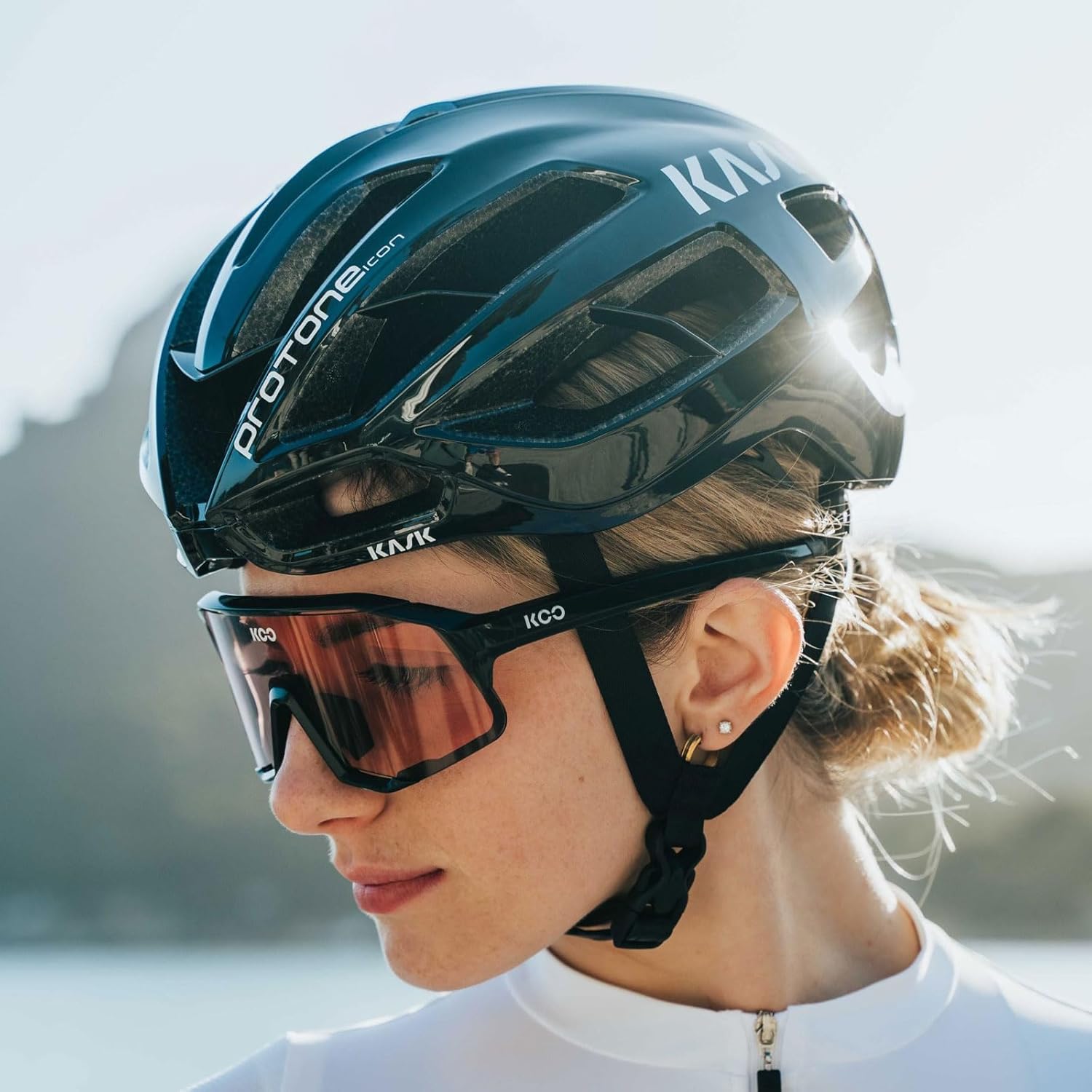
A helmet that does not fit your head shape is neither safe nor aerodynamic, because a shell sitting too high or rocking forward changes both its protective coverage and its profile in the wind. Head shapes vary more than sizes do, and manufacturers differ consistently: some brands run rounder, others more oval.
Judge fit by three checks. The helmet should sit level with roughly two finger widths between your eyebrows and the front rim. With the retention dial released, it should stay in place when you shake your head. And there should be no single pressure point, since a hot spot at the start of a ride becomes a headache after two hours.
Retention systems differ in one useful way: whether the cradle adjusts vertically as well as circumferentially. Vertical adjustment lets you set how low the cradle cups the back of your skull, which is the single biggest factor in whether a helmet feels stable. Systems that only tighten around the circumference are simpler and less adaptable to unusual head shapes.
Weight, Straps, and the Details That Show Up After Three Hours
A road helmet typically weighs between 250 and 320 grams, and aero models sit at the heavier end because a closed shell needs more material. The difference between the lightest and heaviest here is around 70 grams, which is imperceptible in the first hour and noticeable in the fourth, particularly on the neck during a long descent in an aggressive position.
Strap design matters more than weight for comfort. Look for splitters that lock in position rather than sliding, since straps that migrate under the ear are the most common irritation on long rides. Flat woven straps sit better against the face than round cord, and a buckle offset from directly under the chin avoids pressure on the jaw.
Two practical details round it out. Check that the front vents or the shell edge will hold sunglasses arms if you park glasses on the helmet, which is a genuine convenience feature some aero shells lose. And check certification: any helmet sold for road use in the United States must meet the CPSC standard, and European models carry EN 1078. Both are minimums rather than measures of quality, which is precisely why independent ratings are worth consulting.
Why You Should Trust Us
These helmets were selected from current Amazon listings using verified customer ratings and review volume as a first filter, then narrowed by category. Several high volume listings that surface in searches for aero road helmets are commuter helmets with integrated lights or mountain bike helmets with visors and extended rear coverage, and those were removed because they answer a different question entirely.
We have deliberately kept ventilated road helmets on the list alongside dedicated aero shells, because recommending an aero helmet to a rider who averages twenty five kilometres per hour on summer club rides would be recommending the wrong product. Our editorial picks are independent and we update this guide as listings change.
Final Thoughts
The Giro Eclipse Spherical is our best overall because it is the aero helmet you can wear on an ordinary ride. The shell is genuinely aerodynamic, the Spherical construction addresses rotational impact, and the internal channelling keeps it usable when the pace drops and the road rises.
The Giro Agilis MIPS takes best value. It is a ventilated road helmet rather than an aero one, and for the large majority of riders that is the correct purchase: comfortable, cool, protected by MIPS, and available for a fraction of what a flagship aero shell costs.
Choose the rest by discipline. The KASK Protone Icon is the aero option for riders who value all day comfort and a distinctive fit. The Giro Aerohead is the right tool for time trials and non drafting triathlon and the wrong one for anything else. The Giro Aries is the climbing helmet for hot weather. The Smith Signal and Persist both make sense as everyday road helmets from a brand with a different fit shape, which matters if Giro has never quite suited your head. Our other buying guides cover more cycling gear.
Frequently Asked Questions
Is an aero road helmets worth it for a regular rider?
It depends on your average speed. Drag rises with the square of velocity, so the five to ten watt saving quoted at racing speed shrinks substantially at twenty five kilometres per hour. If you ride fast group rides, race, or do time trials, the benefit is real. If your riding is social and hilly, a well ventilated helmet will make you faster overall by keeping you cooler.
What is the difference between MIPS and Spherical?
Both address rotational impact. MIPS is typically a thin low friction liner inside the helmet that allows a few millimetres of movement between shell and head. Giro’s Spherical construction uses two foam layers joined by an elastomeric interface so the outer shell rotates around the inner one. Neither is universally superior, and independent laboratory ratings are a better guide than the technology name.
Can I use a triathlon helmet for road riding?
You can, but it is a poor choice. A time trial shell is optimised for a fixed head position, so turning to look around lifts the tail into the airflow and costs you the advantage. Ventilation is minimal because the design assumes short efforts. For group riding, an aero road helmet delivers most of the benefit with none of those constraints.
How often should a helmet be replaced?
Immediately after any impact, even if the shell looks undamaged, because the foam is designed to crush once and does not recover. Absent a crash, manufacturers generally suggest replacement every three to five years, since foam and straps degrade with ultraviolet exposure, sweat and heat. A helmet stored in a hot car ages considerably faster than one kept indoors.
What should I check before buying in 2026?
Fit first, since a poorly fitting helmet is neither safe nor fast. Then check an independent safety rating rather than relying on the certification sticker, which is a minimum standard. Then decide honestly whether your average speed justifies an aero shell over a ventilated one. Weight and colour come last, in that order.



Write Your Review
No reviews yet. Be the first to share your experience!