

Commercial citrus juicers work on a different principle from the electric juicers sold for kitchens. A domestic machine spins a reamer inside a halved orange and scrapes the flesh out. A commercial press puts the fruit under a lever and squeezes it whole, which is faster, quieter, and produces juice with less of the bitterness that comes from grinding the pith. Our top pick is the Hamilton Beach Commercial 932 for combining a genuinely commercial lever mechanism with the build quality that comes from a manufacturer supplying professional kitchens.
This shortlist of 7 commercial citrus juicers covers Hamilton Beach Commercial, Nemco, Can-Can and more, and it deliberately includes both lever presses and electric machines because the right answer depends on volume. The buying guide below explains where the crossover sits, along with the certification that separates a machine built for a bar from one styled to look like it. If you want a machine for whole fruit and vegetables instead, our roundup of juicers covers that category.

Pros
- NSF certified, the standard health inspectors look for
- Enamel finish resists wear from citrus acid
- Extractor arm gives high yield with less skin oil and pulp
- Stainless strainer cone and funnel lift out for cleaning
Cons
- Requires hand strength over a long session
- Takes permanent worktop space rather than storing away
Hamilton Beach Commercial is a separate line from the company's domestic appliances, and the 932 carries the certification that proves it. NSF assessment covers materials, finish and cleanability in a food service setting, which is what a health inspector looks for and what most machines calling themselves commercial do not have.
The mechanism is the appeal. Cut fruit, place it in the cup, pull the handle, discard the shell. Hamilton Beach states that the force from the extractor arm delivers maximum juice with less skin oil and pulp residue, which is exactly the advantage a press holds over a spinning reamer.
Details show the commercial intent. The finish is enamel over metal specifically to resist citrus acid, the feet are designed to stop the machine sliding or tipping under load, and the stainless strainer cone and ABS funnel both lift out so the machine can be sanitised rather than wiped.
The cost is physical effort and permanent worktop space. Pulling a lever a hundred times in a morning is work, and this is not a machine you put away between uses.
- Certification: NSF
- Mechanism: manual lever press
- Finish: enamel over metal, resists citrus acid
- Removable parts: stainless steel strainer cone, ABS funnel
- Stability: Sure Grip feet
- Power: none required
Cafes, bars, juice counters and households that juice every morning. Less suitable for anyone who juices occasionally, where the worktop space and the price are hard to justify against a small electric machine.
Halve the fruit across the segments rather than through the poles, place it cut side down in the cup, and pull the lever smoothly. Stop when resistance rises sharply, since past that point you are crushing peel and peel oil is bitter. Rinse the cup, cone and strainer immediately after the last fruit.

Pros
- Cast iron mass keeps the press stable without bolting down
- Lever principle gives cleaner juice than a reamer
- Costs far less than certified commercial machines
- Simple to strip and rinse
Cons
- Heavy to move for storage
- No commercial certification
Zulay has become the default recommendation for home citrus presses, and the reason is straightforward: it delivers the mechanism that matters, in the material that matters, at a price a home kitchen can accept.
Cast iron is doing real work here rather than providing looks. A press generating serious downward force needs either mass or a bolt through the worktop to stay still, and mass is the only acceptable answer in a domestic kitchen. That is also why the machine is unpleasant to lift into a cupboard.
What you do not get is certification, published pressing force, or the finish of a machine built for a health inspection. For juicing a bag of oranges at a weekend, none of that changes the juice.
Bottom line: the best value here, and the right machine for a home kitchen that wants press juice rather than reamer juice.
- Mechanism: manual lever press
- Body: cast iron
- Stability: mass rather than bolt down
- Cleaning: removable parts, rinse immediately
- Power: none required
- Use: home kitchens at volume
Home cooks who juice regularly and want the taste difference a press delivers, without paying for commercial certification they will never need. Not the choice for a small kitchen with no permanent space, since this is not a machine you move often.
Rinse the cup, cone and strainer under hot water immediately after use, since dried citrus residue concentrates acid and attacks the finish. Do not put a coated cast iron body in a dishwasher, as alkaline detergent dulls the coating. Dry fully before storing to avoid rust where the coating has chipped.

Pros
- Crank action is less tiring than a lever over long sessions
- Heavy duty build intended for foodservice
- Consistent extraction across many fruits
- Foodservice manufacturer with parts support
Cons
- Crank cycle is slower per fruit than a fast lever pull
- Priced for commercial buyers rather than home kitchens
Nemco builds foodservice equipment, and the 55850 reflects that in a way the home focused presses here do not. The crank mechanism trades speed per fruit for a motion the operator can sustain, which is the correct trade when someone is juicing for an hour rather than for five minutes.
The other foodservice advantage is unglamorous: parts. A machine bought by restaurants has replacement cones, strainers and linkages available years later, which is not true of many consumer branded presses.
For a home kitchen this is more machine than the job requires, and the price reflects a commercial market rather than a domestic one.
Bottom line: the choice for continuous service, and overspecified for a household.
- Mechanism: manual crank
- Build: heavy duty foodservice
- Model: 55850
- Power: none required
- Support: foodservice parts availability
- Use: continuous commercial service
Restaurants, hotels and juice counters running long service periods, and anyone whose hands tire on a lever. Not sensible for occasional home use, where a simpler press does the same job for a fraction of the outlay.
Choose a crank over a lever when the operator will be juicing continuously rather than in bursts. Choose a lever when speed per fruit matters more than fatigue, such as a bar making a few drinks at a time. Both outperform an electric reamer on juice quality.

Pros
- NSF and CE certified rather than described as commercial
- 198 lb pressing force with published throughput figures
- 4.5 inch cup takes pomegranates and large citrus
- Fruit contact parts in stainless steel except the upper press
Cons
- Heavy and permanent once positioned
- More machine than a household needs for a few oranges
The Can-Can is the machine on this list that publishes the numbers a professional buyer would ask for. A pressing force of 198 pounds, throughput of roughly 110 pounds of fruit per hour, a 4.5 inch cup, and both NSF and CE certification. None of those figures can be invented, which is what makes them useful.
The cup diameter is the specification that sets it apart in practice. At 4.5 inches it takes pomegranates as well as large navel oranges, and pomegranate is a fruit most citrus presses simply cannot close over. The material split is equally deliberate: cast iron where the load is, stainless steel on every part that touches fruit except the upper press.
The costs are mass and permanence. This is not a machine that moves between a cupboard and a worktop, and for someone juicing two oranges at breakfast it is far more press than the job needs.
Bottom line: the certified commercial option, and the only one here built for pomegranate.
- Certification: NSF and CE
- Pressing force: 198 lb, around 90 kg
- Throughput: roughly 110 lb of fruit per hour
- Cup diameter: 4.5 in
- Materials: cast iron body, stainless fruit contact parts except upper press
- Model: CAN001
Juice bars, cafes serving pomegranate, and any business that needs certification for an inspection. Also the right choice for a serious home user who juices large fruit in quantity and has the space to leave it out.
Halve the fruit and load cut side down. Pull smoothly and stop when resistance climbs, since forcing past that squeezes peel oil into the juice. For pomegranates, roll the fruit firmly on a worktop first to loosen the arils, which noticeably increases yield per press.

Pros
- Extra large cup takes grapefruit and large navel oranges
- Cast iron mass keeps it stable in use
- Lever press gives cleaner juice than a reamer
- Solid finish for a home machine
Cons
- Large cup means less pressure on small fruit like limes
- Heavy to move and store
Eurolux positions this as the large fruit answer, and cup diameter is exactly the specification that decides whether a press suits your shopping. A machine sized for lemons is useless for grapefruit, and this one is built the other way round.
The mechanism and material are conventional for a good home press: cast iron for mass, a lever for force, removable parts for cleaning. What you are choosing here is capacity rather than a different principle.
The trade-off runs in the other direction. A large cup applies its force across a wider area, so small fruit such as limes yield less than they would in a press sized for them. Households that juice mostly limes are better served by a smaller machine.
Bottom line: the pick if grapefruit and large oranges are what you actually juice.
- Mechanism: manual lever press
- Body: cast iron
- Cup: extra large, sized for grapefruit
- Cleaning: removable cup, cone and strainer
- Stability: mass rather than mounting
- Use: home kitchens with large fruit
Anyone juicing grapefruit or large navel oranges regularly. Not the right choice for a lime heavy kitchen, where a smaller cup concentrates the pressure where it is needed.
Rinse immediately and dry fully. Keep an eye on the coating around the cup rim, since that is where chips start and bare cast iron rusts quickly under citrus acid. Avoid dishwasher cycles for coated parts.

Pros
- No hand strength required
- Stainless body resists citrus acid
- Faster than a manual press for small quantities
- Simpler to use for anyone with wrist problems
Cons
- Reamer grinds pith, which adds bitterness
- Motor housing needs careful cleaning around the shaft
This is the machine for people who read the case for lever presses and still want a motor to do the work. A spinning reamer takes the effort out of juicing entirely, which matters more than juice purity for many households, and a stainless body handles the acid properly.
The compromise is inherent to the mechanism. A reamer grinds against the white pith as it turns, and pith carries the bitter compounds that make juice taste harsher, particularly if it sits for a few minutes before drinking. Pressing lightly and lifting the fruit before the pith starts grinding reduces this considerably.
Cleaning needs attention around the drive shaft, since juice runs down the outside of the reamer and finds any gap in the housing. A machine that cannot be wiped down there will eventually smell.
Bottom line: the comfortable choice, and a reasonable trade if effort matters more to you than the last degree of flavour.
- Mechanism: electric reamer
- Body: stainless steel
- Operation: press fruit onto the spinning cone
- Cleaning: removable cone and strainer
- Power: mains electric
- Use: home kitchens, small to medium batches
Anyone with limited hand or wrist strength, and households where the effort of a lever would mean the machine goes unused. Also a sensible choice where worktop height makes a tall lever press awkward.
Press the halved fruit onto the cone with light, steady pressure and lift it away as soon as the flesh is emptied, before the reamer begins working on the white pith. Chill fruit beforehand so the peel releases less oil, and rinse the cone straight away rather than letting juice dry on it.

Pros
- Fully automatic, no pressing effort required
- Compact footprint for a countertop machine
- Consistent extraction between fruits
- Simple one button operation
Cons
- Slower than a lever press at volume
- More moving parts than a manual machine
Vinci automates the pressing motion itself rather than spinning a reamer, which puts it in a category of its own on this list. You load halved fruit, press a button, and the machine performs the squeeze.
For a household, that is a genuinely different proposition. There is no technique to learn, results are consistent between fruits, and nobody has to pull a lever. The extraction principle is closer to a press than to a reamer, so the juice is cleaner than a spinning cone produces.
Volume is where it gives way. A cycle takes as long as it takes, and a practised hand on a lever press will get through a crate of oranges considerably faster. There are also more moving parts than any manual machine here, which is the usual trade for automation.
Bottom line: the effortless option, and the right pick for a household rather than a business.
- Mechanism: automatic electric press
- Operation: one button, hands free
- Footprint: compact countertop
- Cleaning: removable parts
- Power: mains electric
- Use: household fresh juice
Households that want fresh juice daily with no effort and no technique, including anyone who cannot comfortably operate a lever. Not suited to commercial volume, where a manual press is faster and has nothing to break.
Remove and rinse the pressing parts after each session rather than at the end of the day, since dried pulp in an automatic mechanism is harder to clear than from an open press. Wipe around the housing where juice can run, and check the manual before putting any part in a dishwasher.
How to Choose a Commercial Citrus Juicers
The word commercial appears on a great many listings and means something specific on only some of them. These are the factors that separate a machine that will run a breakfast service from one that will not.
Lever Press Against Electric Reamer

A lever press works by hydraulic advantage. You cut the fruit in half, place it in a cup, and pull a handle that drives a cone down through it, forcing juice out under pressure. There is no motor, nothing to burn out, and the whole cycle takes a couple of seconds once you have a rhythm.
An electric reamer spins a ridged cone that you press the fruit onto. It is less physical, which matters over a long shift, and it is the better tool for anyone with limited hand strength. The trade-off is that a spinning reamer grinds against the white pith as it works, and pith carries the bitter compounds that make juice taste harsh when it sits.
Volume decides between them. Below roughly a dozen oranges at a time, an electric machine is more comfortable and the difference in taste is small. Above that, a lever press is faster per fruit, does not overheat, and produces cleaner juice. Machines like the Vinci automate the pressing motion entirely, which is a third path aimed at households rather than bars.
Certification Is the Only Reliable Signal of Commercial Grade
NSF certification means a machine has been assessed against a sanitation standard covering materials, surface finish, and whether the design can be cleaned in a commercial setting. It is the certification health inspectors look for, and it is expensive enough to obtain that manufacturers do not seek it for decorative reasons.
Two machines here carry it. The Hamilton Beach Commercial 932 is NSF certified, and the Can-Can carries both NSF and CE marks while publishing the numbers that go with them: a 198 pound pressing force and a throughput of around 110 pounds of fruit per hour. Those are the kind of figures a professional buyer needs and a marketing team would not invent, since they can be measured.
Absence of certification does not make a machine bad. Several excellent home presses have none, because their manufacturers are not selling into commercial kitchens. It does mean that the word commercial in the product title is describing an aspiration rather than a standard, and you should judge the machine on its materials and mechanism instead.
| Model | Mechanism | Material focus | Best for |
|---|---|---|---|
| Hamilton Beach Commercial 932 | Manual lever press | NSF certified, enamel finish | Bars and cafes |
| Can-Can CAN001 | Manual lever press | Cast iron, stainless contact parts | Pomegranate and high volume |
| Nemco 55850 | Manual crank | Heavy duty | Continuous service |
| Zulay Kitchen | Manual lever press | Cast iron | Home use at volume |
| Eurolux Ultra-Premium | Manual lever press | Cast iron, extra large cup | Large fruit |
| Vinci Electric | Automatic press | Stainless and plastic | Hands free home use |
Cup Diameter Has to Match Your Fruit
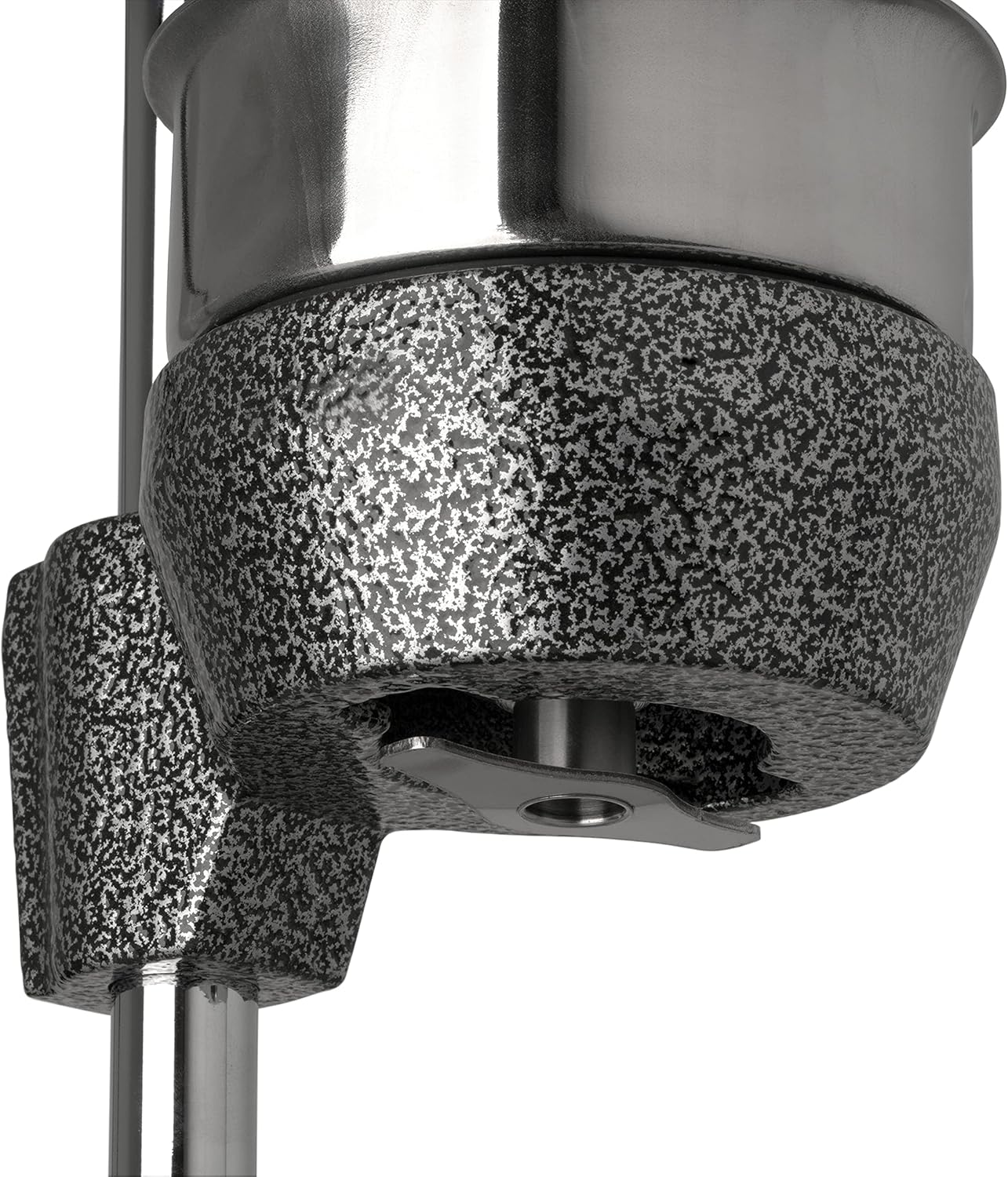
This is the specification that causes the most returns. A press sized for limes and lemons will not close over a large navel orange, and a press sized for oranges crushes a lime without extracting much. Cup diameter, usually quoted in inches, is the number to check against the fruit you actually buy.
The Can-Can quotes a 4.5 inch cup, which accommodates pomegranates as well as large citrus. Machines aimed at limes typically sit closer to three inches. If you juice a range of sizes, the larger cup is the safer purchase, since a smaller fruit in a large cup simply produces slightly less pressure while a large fruit in a small cup does not fit at all.
Height clearance matters alongside diameter. A lever press needs the handle raised fully to load fruit, and a machine tall enough to hit a wall cabinet cannot be used where you planned to put it. Measure the raised height rather than the resting height when planning a worktop position.
What Citric Acid Does to Metal
Citrus juice is acidic enough to attack unprotected metal, and this is where the material specification stops being cosmetic. Bare cast iron rusts on contact with juice, which is why quality presses either coat the casting in enamel or powder coat, or make every part that touches fruit from stainless steel.
Read the material description carefully, because many listings describe a cast iron body while the cup, cone and strainer are stainless. That is the correct arrangement: the iron provides mass and rigidity where the load is, and stainless handles the acid where the juice is. The Can-Can states explicitly that all fruit contact parts are stainless except the upper press. Hamilton Beach takes the other route on the 932, using an enamel finish over metal components chosen specifically to resist wear from citrus acids, with a stainless strainer cone where the juice actually runs. Both approaches work; a bare uncoated casting does not.
Whatever the material, rinse immediately after use. Dried citrus residue is far more aggressive than fresh juice because the acid concentrates as water evaporates, and a machine left overnight unwashed will show etching on a chrome finish within weeks.
Stability, Mounting, and the Force You Are Applying

A press generating around two hundred pounds of force needs somewhere for that force to go. Heavy cast iron machines rely on mass and rubber feet. Lighter machines usually provide bolt holes in the base or a clamp for the worktop edge, and skipping that step means the machine walks across the counter as you pull the lever.
For a home kitchen, mass is generally the better answer because nobody wants to drill a worktop. That is the practical argument for the cast iron presses here rather than lighter aluminium designs, and it is also why they are unpleasant to move for storage. A commercial press is a machine that lives where you put it.
One technique note that applies to every lever press: pull smoothly and stop when resistance rises sharply. Continuing past that point crushes the peel rather than the flesh, and peel oil is intensely bitter. The last few drops of juice you gain cost you the flavour of everything already in the glass.
How Much Juice You Should Actually Get
Yield is the figure nobody publishes and everybody cares about. As a working reference, a medium navel orange gives roughly two to three fluid ounces of juice, so a standard eight ounce glass takes three to four oranges. A lime gives about one ounce, and a lemon between one and two. Those numbers vary with variety and season far more than with the machine, which is worth knowing before you blame a press for a thin glass.
Where the machine does matter is at the margin. A lever press extracts more from the same fruit than a hand squeeze or a light pass on a reamer, simply because it applies far more force. The Can-Can quotes 198 pounds of pressing force, which is an order of magnitude beyond what a hand can generate, and that difference shows up as several extra millilitres per fruit rather than as a dramatic gain.
Three preparation habits raise yield more than any upgrade in machine. Bring fruit to room temperature rather than juicing it straight from a fridge, since cold flesh is stiffer and releases less. Roll each fruit firmly under your palm on a worktop before cutting, which ruptures the juice vesicles internally. And cut across the segments rather than through the poles, so the press works against the open ends of the vesicles instead of along them.
One economic note for anyone equipping a business. Throughput figures such as the 110 pounds of fruit per hour quoted for the Can-Can describe the machine, not the operator. In practice a single person cutting and loading fruit is the limit long before the press is, so a second cutting board and a helper raises output more than a faster machine does.
Cleaning Determines Whether It Gets Used
A press with three removable parts gets rinsed after every use. A machine with a fixed strainer basket and a moulded drip channel gets cleaned when someone has time, which in practice means it develops a sticky film. Count the parts that come apart before buying, and check whether the strainer lifts out or is riveted in place.
Electric machines add a second consideration: whether the motor housing is sealed against drips. Juice runs down the outside of a reamer and finds any gap in the housing, and a machine that cannot be wiped down around the shaft will eventually smell. This is a specific advantage of manual presses in a commercial setting, where there is no motor housing at all.
For daily use, the fastest routine is to rinse the cup, cone and strainer under hot water immediately, then run them through a dishwasher weekly if the manufacturer allows it. Check that first: enamel coated cast iron generally should not go in a dishwasher, because the detergent is alkaline enough to dull the finish over time.
Why You Should Trust Us
These machines were selected from current Amazon listings using verified customer ratings and review volume, then narrowed on mechanism, published certification, cup dimensions and the materials used for fruit contact parts. Where a manufacturer publishes measurable figures such as pressing force or throughput, we prioritised those listings over ones that describe performance only in adjectives.
We kept both manual and electric machines on the list because the honest answer to which is better depends on how many oranges you juice at once. Our editorial picks are independent. More kitchen equipment guides are in the home and kitchen section.
Final Thoughts
The Hamilton Beach Commercial 932 is our best overall because it comes from a manufacturer whose commercial division supplies professional kitchens, and that shows in the lever mechanism and the finish. For a cafe, a bar, or a household that juices every morning, it is the machine least likely to be the weak point.
The Zulay Kitchen cast iron press takes best value. It gives you the same lever principle and the same cast iron mass as machines costing considerably more, and for a home kitchen that juices a bag of oranges at a weekend it is all the machine required.
Choose the others by job. The Can-Can is the one to buy for pomegranates or for genuine commercial throughput, with the certification to match. The Nemco crank design suits continuous service where a lever becomes tiring. The Eurolux Ultra-Premium handles the largest fruit. And the Vinci is the answer for anyone who wants fresh juice without the physical effort at all. Our other buying guides cover the rest of the kitchen.
Frequently Asked Questions
Do commercial citrus juicers produce better juice than electric ones?
Generally yes, for a specific reason. A lever press squeezes the fruit rather than grinding it, so less of the bitter compound in the white pith ends up in the glass. That difference is most noticeable in juice that sits for a few minutes before drinking, where reamer juice turns harsher. Press juice also contains less foam and separates more slowly.
What does NSF certification actually mean?
It means the machine has been assessed against a sanitation standard covering materials, surface finish and cleanability in a commercial food setting. Health inspectors recognise it, so it matters if you are equipping a business. For home use it is not required, but it is a reliable signal that the manufacturer built to a documented standard rather than describing a machine as commercial in the listing title.
Will a citrus press handle pomegranates?
Only if the cup is large enough and the mechanism is strong enough. Pomegranates are bigger and denser than most citrus, which is why machines that handle them, such as the Can-Can with its 4.5 inch cup and 198 pound press, state it explicitly. Forcing a pomegranate into a lime sized press will bend the linkage rather than juice the fruit.
How do I stop the juice tasting bitter?
Stop pressing when the resistance rises sharply. Past that point you are crushing peel, and peel oil is the main source of bitterness in fresh citrus juice. With an electric reamer, press lightly and lift the fruit off before the white pith starts grinding. Chilling fruit before juicing also helps, since cold peel releases less oil.
Which type should I buy in 2026?
Count the fruit. Under a dozen at a sitting, an electric machine is more comfortable and takes up less space. Above that, a manual lever press is faster per fruit, cannot overheat, and gives cleaner juice. If you are equipping a business rather than a kitchen, start with certification and published throughput figures rather than with price, since a machine that fails an inspection costs more than the difference.







Write Your Review
No reviews yet. Be the first to share your experience!