

A frost blanket is insurance you buy for two or three nights a year, and on those nights it is the difference between a garden that carries on and a garden you start again in spring. It is also one of the most misunderstood products in gardening, because the fabric does almost nothing on its own: what keeps plants alive is the heat stored in the soil, and the cover’s job is simply to stop that heat escaping. Our shortlist covers 8 plant covers for winter picks from Agfabric, Homimp, NuVue and more, sorted by fabric weight and by the plants they suit.
Our top pick is the Agfabric 0.9 ounce frost blanket for sitting at the weight where protection becomes meaningful without blocking so much light that it cannot be left on through a cold spell. If your borders need defining as well as protecting, see our guide to landscape edging. This list is current for October 2026.

Pros
- 0.9 oz fabric is the practical sweet spot for frost protection
- Passes enough light to stay on through a cold spell
- Agfabric publishes fabric weights clearly
- Reusable across several winters if stored dry
Cons
- Fixed 48 x 55 inch size suits shrubs rather than beds
- Too heavy to leave on all season
Fabric weight is the specification that predicts protection, and 0.9 ounces per square yard is where frost fabric becomes genuinely useful. Lighter cloth buys a couple of degrees; this weight buys enough to carry a marginally hardy plant through a clear cold night.
It also still passes light, which matters more than it sounds. A cover you can leave in place for a three day cold snap without cooking or starving the plant underneath is far more practical than one that has to come off every morning.
Agfabric publishes its weights plainly, which in this category is unusual: several competing products state no fabric weight at all, leaving buyers comparing surface area and hoping. The drawstring base is the other reason to prefer it over a plain sheet: cinched around the trunk at soil level, it closes the gap that lets ground heat escape, which is where most frost covers actually fail.
Bottom line: the best-judged fabric weight here, from the brand that tells you what you are buying.
- Fabric weight: 0.9 oz per square yard
- Size: 48 in high x 55 in wide
- Type: drawstring shrub cover
- Properties: breathable, passes light and water
- Range: also available in 0.55, 1.2 and 1.5 oz
Take the fabric all the way to the soil on every side and weight the edges with stones, soil or ground staples.
Support it clear of the foliage on hoops or canes; anywhere fabric touches a leaf, that leaf gets little protection.
Store completely dry. Rolled up damp, spun fabric mildews and tears the following season.
Vent or remove once the next morning rises above freezing, particularly in sunshine.

Pros
- 10 x 50 ft covers a whole vegetable garden
- Light enough to leave in place for weeks
- Doubles as an insect barrier in spring
- Lowest cost per square foot here
Cons
- Only a few degrees of frost protection
- Large roll needs storing
This is the roll to buy if you garden in quantity. Ten feet by fifty covers a vegetable plot several times over, and at this fabric weight it does two jobs rather than one.
As frost insurance it buys a few degrees, which is enough for a light frost on hardy crops and not enough for tender plants in a real freeze. As a floating row cover in spring it earns its keep differently, warming soil for early sowings and keeping cabbage white butterflies off brassicas without any spraying.
Because it passes so much light and air, it can stay in place for weeks, which heavier fabric cannot. That flexibility is what makes it the value choice rather than simply the cheap one.
Bottom line: the most useful roll here for a working vegetable garden, provided you understand its limits on a hard night.
- Fabric weight: 0.55 oz per square yard
- Size: 10 x 50 feet
- Type: floating row cover and frost blanket
- Light transmission: high
- Uses: frost protection, season extension, insect barrier
Early spring sowings, where it warms soil and excludes pests as well as guarding against late frost.
Autumn crops that need a few extra weeks before the first hard freeze.
Weight the edges with soil or staples; light fabric lifts in the slightest wind.
Dry before storing and keep it away from rodents over winter.

Pros
- Four covers in two sizes suits a mixed garden
- Shaped covers are quicker than cutting a roll
- Ready to deploy at short notice
- Reusable
Cons
- Fabric weight is not published
- Fixed sizes limit which plants they fit
Most gardens do not need a whole bed covered; they need four or five specific plants protected on the three coldest nights of the year. That is the case for a multipack of shaped covers rather than a roll.
Two sizes in one pack is the sensible touch, because a garden rarely contains four plants of identical size. Shaped covers also go on far faster than cutting and weighting a sheet, which matters when a frost is forecast for tonight rather than next week.
The gap is that no fabric weight is published, so how much protection you are buying is unclear. Treat it as light to medium cloth and judge by the plants you are protecting: fine for a hardy shrub, uncertain for anything tender.
Bottom line: the convenient option for a handful of individual plants, with less information about the fabric than you would like.
- Quantity: 4 covers
- Sizes: 2 sizes supplied
- Type: shaped plant covers
- Fabric weight: not stated
- Use: winter freeze protection
Gardens with a few specimens that need protecting rather than a whole bed.
Not for vegetable plots, where a roll costs far less per square foot.
Bring the base of each cover right down to the soil and weight or pin it; a shaped cover left hanging around the plant loses the soil heat that protects it.
Support the fabric clear of foliage where you can.

Pros
- 1.1 oz is the heaviest fabric on this list
- Most protection fabric alone can offer
- Large roll covers whole beds
- Reusable over several seasons
Cons
- Blocks too much light to leave on for long
- Heavier fabric is bulkier to store
When a genuine cold snap is coming, this is the fabric to have. At 1.1 ounces per square yard it is the heaviest cloth on this list, and within the limits of what any blanket can do, it gives the most.
The trade is light. Heavy frost cloth blocks enough of it that plants underneath cannot be left covered for a week, so this is a deploy-and-remove product rather than a season-long row cover. Plan on taking it off once daytime temperatures recover.
The roll size is generous enough to cover beds rather than individual plants, and cutting it to length is straightforward. As with every sheet here, the protection depends entirely on getting the edges to the soil and weighting them.
Bottom line: the heavy artillery, for the two or three worst nights of the year.
- Fabric weight: 1.1 oz per square yard
- Size: 10 x 33 feet
- Type: frost cloth roll
- Deployment: short term over cold snaps
- Reusable: yes
Forecast cold snaps where you want the most protection fabric can give for two or three nights.
Not a season-long cover; light transmission is too low.
Remove or vent as soon as the sun is on it and temperatures rise; heavy cloth traps heat quickly.
Dry thoroughly before rolling for storage.

Pros
- Drawstring closes the base properly
- Five covers ready for a cold night
- Suits shrubs and small trees
- Faster than cutting sheets
Cons
- Fabric weight not published
- Fixed sizes limit which plants fit
The drawstring is the point. Every flat sheet on this list depends on you weighting the edges to the soil, and every one of them fails if you do not. A cover that cinches around the trunk or the pot closes the base without any stones or staples.
Five in a pack is the right quantity for a garden with a handful of shrubs, and having them ready in a box matters when a frost warning arrives the same afternoon.
The fabric weight is not published, which is the standard gap in this part of the category. Judge protection conservatively and pair them with watering the ground beforehand, which does more than an extra ounce of fabric would.
Bottom line: the practical choice for shrubs and small trees, chosen for the closure rather than the cloth.
- Quantity: 5 covers
- Size: 31 x 42 inches each
- Closure: drawstring
- Suits: shrubs and small trees
- Fabric weight: not stated
Cinch the drawstring around the trunk at soil level, not partway up the stem, so ground heat stays inside the cover.
For container plants, move the pot to the ground first and cinch below the rim.
Gardens with several shrubs or young trees that need covering repeatedly through winter.
Not suited to low bedding plants, where a sheet over hoops works better.

Pros
- Zip makes repeated on and off use quick
- Drawstring closes the base
- Four covers per pack
- Access without removing the whole cover
Cons
- Zips are a failure point over years
- Fabric weight not published
If your winter involves covering the same plants twenty times rather than twice, the zip earns its place. Fitting a drawstring cover over a shrub in the dark is a two-handed job; unzipping one is not, and being able to open a cover during a mild day without removing it entirely reduces the temptation to leave it closed and cook the plant.
The drawstring at the base does the important work of sealing ground heat in, and the four pack covers a typical set of vulnerable shrubs.
Zips are the weak point over several seasons, particularly cheap ones exposed to frost and grit, so treat this as a convenience feature with a service life rather than a permanent one. Fabric weight is again not published.
Bottom line: the pick for gardens where covers go on and off constantly through the winter.
- Quantity: 4 covers
- Closures: zipper and drawstring
- Type: shaped frost covers
- Fabric weight: not stated
- Use: frost protection
Choose this over plain drawstring covers only if you expect to open and close them frequently.
Otherwise the simpler covers have one less thing to fail.
Keep grit out of the zip and dry the covers before storing; frozen grit in a zip is what breaks it.
Open the zip on mild days rather than removing the whole cover.

Pros
- Sized for genuinely small shrubs
- Three per pack
- Quick to fit
- Inexpensive
Cons
- Lowest rating average on this list
- Too small for anything above knee height
These are small, and that is the point rather than a criticism. At roughly 20 by 39 inches they fit compact shrubs, young plants and container specimens that larger covers swamp.
Three in a pack is enough for a small garden, and the size means they store in a drawer rather than a shed. For a courtyard or balcony garden with a few pots, that is the right scale of purchase.
Their rating average is the lowest here, which in this category usually reflects fabric thinness and stitching rather than the concept. Set expectations at light frost protection and pair them with watering the soil beforehand.
Bottom line: the small-garden pick, appropriately sized and appropriately modest.
- Quantity: 3 covers
- Size: 19.6 x 39.3 inches
- Suits: small shrubs and container plants
- Fabric weight: not stated
- Use: winter frost protection
Courtyards, balconies and small gardens with a few compact plants.
Not for anything above knee height or for open beds.
Move container plants down to ground level before covering; a pot on a table has no soil heat beneath it to trap.
Tuck and weight the base against the ground or the pot rim.

Pros
- Rigid frame holds fabric clear of foliage automatically
- Sheds snow load that would crush a shrub
- No improvised hoops or canes needed
- Reusable season after season
Cons
- Bulky to store compared with fabric
- Fixed size and shape
This solves a different problem from every other product here. Fabric protects against cold; a frame protects against weight. In climates where wet snow builds on an evergreen and splays or snaps its branches, the structure matters more than the cloth.
It also removes the improvisation that flat covers require. Because the frame holds the material clear of the foliage automatically, you are not searching the shed for canes and an upturned pot in the dark, and foliage touching fabric is the usual cause of tip damage under a cover.
The costs are storage and flexibility: a rigid structure takes real space out of season and fits one size of plant. For a specimen shrub you care about, that is a reasonable trade.
Bottom line: the snow-country pick, and the only product here that protects against weight rather than just cold.
- Model: 22250
- Quantity: 2-pack
- Type: framed winter plant cover
- Included: 6 support rods, 4 ground stakes
- Protects against: snow and ice load, cold
- Assembly: minutes, reusable
Gardens in snow country with evergreen shrubs that suffer under snow load.
Not needed where winters are cold but dry.
Anchor the frame against wind; a rigid cover catches more wind than a fitted fabric one.
Brush heavy accumulation off rather than letting it build, even with a frame.
How to Choose Plant Covers For Winter
Two numbers and one habit decide whether a frost cover works. The numbers are fabric weight and coverage area. The habit is getting the edges to the ground, which more gardeners get wrong than any specification on the packet.
Fabric Weight Is the Specification That Matters

Frost fabric is sold by weight per square yard, and that figure predicts how much protection you get. The covers here run from 0.55 ounces on the lighter Agfabric through 0.9 ounces on the heavier Agfabric to 1.1 ounces on the Garutom. Agfabric makes the comparison unusually easy by publishing an image of the same fabric at 0.55, 0.95, 1.2 and 1.5 ounces held against a hand, and the difference in what you can see through is stark.
As a working guide, light fabric around 0.5 ounces buys you a few degrees and passes most light, which makes it suitable for leaving over crops for weeks as an insect barrier as well as frost insurance. Medium fabric around 0.9 ounces buys noticeably more and still passes usable light. Heavy fabric above 1 ounce buys the most protection and blocks enough light that it is meant for short deployments over a cold snap rather than a season.
Manufacturers publish temperature claims for these weights and they should be read as best case figures from still, clear conditions. Wind strips warmth from under a cover far faster than a calm night, and a blanket that gains eight degrees in a sheltered garden may gain half that in an exposed one.
The Edges Have to Reach the Ground
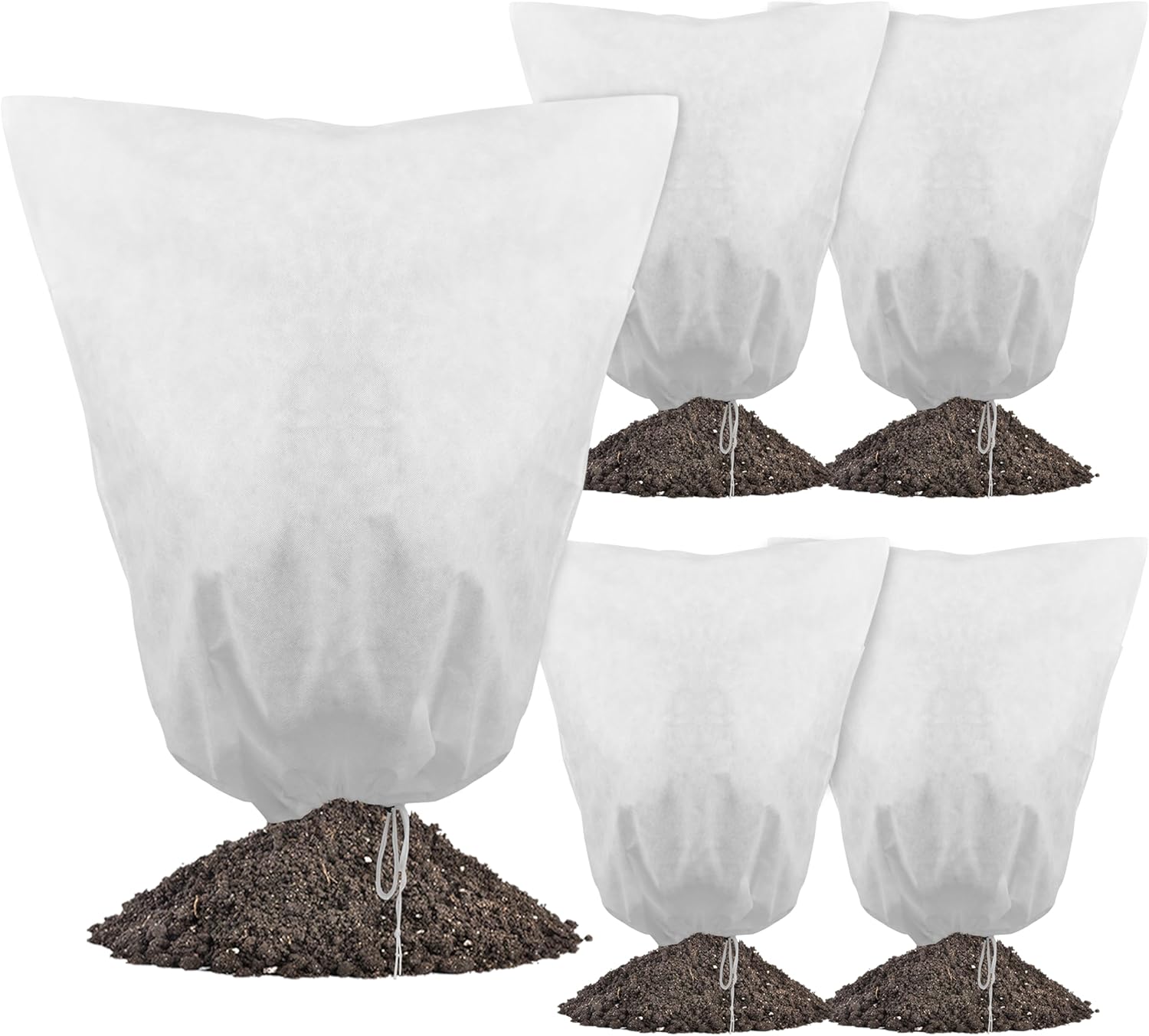
This is the single most common mistake and it defeats every product on this list. The warmth under a frost cover comes from heat radiating out of the soil, not from the plant and not from the fabric. If the cover is draped over a plant like a tent with a gap underneath, that heat escapes at the edges and the temperature under the fabric ends up within a degree of the air outside.
Take the cover all the way to the soil on every side and weigh the edges down with stones, bricks, soil or ground staples. Drawstring covers such as the Agfabric shrub cover, the Gardzen and the Homimp products solve this by cinching around the trunk or the pot, which is why they suit shrubs and small trees better than a flat sheet does.
The same logic explains why covering a hanging basket or a plant on a table achieves almost nothing. There is no soil underneath to supply heat. Move containers to the ground, ideally against a house wall, before covering them.
Keep the Fabric Off the Leaves

Anywhere the cover touches foliage, that foliage gets little protection, because the fabric conducts cold straight to it and any frost that forms on the outside forms on the leaf beneath as well. On a light frost this shows up as damaged tips exactly where the blanket rested.
The fix is a frame. Hoops, stakes, tomato cages or a few bamboo canes with an upturned pot on top all work, and the goal is only to hold the fabric an inch or two clear. The NuVue product on this list takes the opposite approach and supplies the frame itself as a rigid structure, which removes the improvisation entirely for shrubs and small specimens.
Frost, Freeze, and Knowing Which You Are Facing
A light frost is a night where the air reaches around freezing and ice forms on surfaces, often with clear skies and no wind. Covers are highly effective against this, because the loss is radiative and a blanket interrupts it directly.
A hard freeze, where air temperatures fall several degrees below freezing for hours, is a different problem. Fabric will not save tender plants from that; it buys a few degrees, which helps a marginally hardy plant and does nothing for a tropical one. If a genuine freeze is forecast, tender container plants should come indoors rather than be wrapped.
Watering the ground thoroughly the afternoon before a frost sounds counterintuitive and genuinely helps. Moist soil holds far more heat than dry soil and releases it slowly overnight, which is the heat your cover is there to trap.
When to Take Covers Off Again
Remove or vent covers once the temperature climbs above freezing the next morning, particularly with heavier fabrics and with any plastic. Sun on a closed cover raises the temperature underneath quickly, and cooking a plant is a real risk after a cold night rather than a theoretical one.
Lightweight fabric at around 0.5 ounces is the exception, since it passes enough light and air to be left in place for extended periods, which is why that weight doubles as a season-extending row cover and an insect barrier in spring. The heavier the fabric, the shorter the deployment it is designed for.
Sizing, Coverage and Reuse
Buy considerably more area than the footprint of the bed. A cover has to reach the ground on all sides and be weighted down, and a sheet cut exactly to the size of a bed leaves you holding the corners in the dark. Rolls here run from 6.5 by 16 feet up to 10 by 50 feet, and the larger rolls cost far less per square foot.
For individual shrubs and small trees, shaped covers with drawstrings are more practical than cutting a roll. The Gardzen five-pack and the Homimp four-pack exist for this, and having several ready to go matters when a frost is forecast for that night rather than next week.
Store fabric dry. Rolled up damp, spun polypropylene fabric mildews and tears the following season, which turns a multi-year product into an annual purchase. Fold it loosely into a bag with the ground staples in a separate tub, and it will last several winters.
Fabric, Plastic, and Why Old Sheets Are a Bad Idea
Two materials that are not on this list get used every autumn and both cause problems. Plastic sheeting traps moisture, does not breathe, and conducts cold straight through wherever it touches a leaf, so foliage under plastic is frequently worse off than foliage left bare. If plastic is all you have, it must be held well clear of the plant on a frame and taken off first thing in the morning, because the temperature underneath climbs alarmingly fast in sun.
Old bed sheets and towels work better than plastic and worse than proper frost fabric. They breathe, which is the important part, but they absorb water, and a wet sheet freezing overnight becomes a cold, heavy blanket lying on the plant. They also block far more light than spun frost cloth, so they cannot be left in place.
Purpose-made frost fabric is spun polypropylene, which passes light and air, sheds water rather than soaking it up, and weighs little enough to rest on sturdy foliage without crushing it. The reason to buy it rather than improvise is not that it protects dramatically better on the night; it is that it can stay on for several days without harming the plant, and that is what covers most cold snaps.
| Pick | Type | Fabric weight | Size | Best for |
|---|---|---|---|---|
| Agfabric 0.9 oz | Drawstring shrub cover | 0.9 oz/yd² | 48 x 55 in | Shrubs and small trees |
| Agfabric 0.55 oz | Floating row cover | 0.55 oz/yd² | 10 x 50 ft | Season extension, large areas |
| MIXC 4 Pack | Shaped plant covers | Not stated | 2 sizes, 4 pieces | Individual plants |
| Garutom | Frost cloth roll | 1.1 oz/yd² | 10 x 33 ft | Maximum protection, short use |
| Gardzen 5-Pack | Drawstring tree covers | Not stated | 5 pieces, 31 x 42 in | Shrubs and small trees |
| Homimp 4 Pack | Zippered drawstring covers | Not stated | 4 pieces | Repeated on and off use |
| ANPHSIN 3 Pcs | Shrub covers | Not stated | 19.6 x 39.3 in | Small shrubs |
| NuVue 22250 | Rigid frame cover | Not stated | 2-pack, rods and stakes | Snow and ice load |
Frost protection is one part of winter garden work; our patio, lawn and garden section covers the rest of the season.
Why You Should Trust Us
Every product here was checked against its live listing for fabric weight where it is published, coverage dimensions, and whether the cover is a flat sheet, a shaped drawstring cover or a framed structure. Fabric weight is the specification that predicts protection, and several products in this category do not publish it at all, which we have marked as not stated rather than estimating.
We have not measured overnight temperatures under these covers, and we do not claim to have. What we can do is explain where the warmth under a frost blanket actually comes from, which determines how the cover must be installed, and set out honestly what fabric cannot do against a hard freeze. More seasonal guides are collected in our articles section.
Final Thoughts
The Agfabric 0.9 ounce frost blanket is our best overall pick. It sits at the weight where protection becomes meaningful while still passing enough light to leave in place through a cold spell, and Agfabric publishes its fabric weights clearly, which in this category is less common than it should be.
For best value, the 0.55 ounce Agfabric roll at 10 by 50 feet covers an entire vegetable garden for the price of a few shaped covers, and its lighter weight makes it usable as a season-extending row cover in spring as well as frost insurance in autumn.
After that, buy to the plant. The Garutom 1.1 ounce cloth when a serious cold snap is forecast and you want the most protection fabric can give, the Gardzen or Homimp drawstring covers for shrubs and small trees, the MIXC or ANPHSIN multipacks for individual plants dotted around a garden, and the NuVue framed cover where snow load would otherwise crush a shrub. Whatever you choose, take the edges to the ground and water the soil the afternoon before.
Frequently Asked Questions
How many degrees of protection do plant covers for winter actually give?
It depends on fabric weight and on conditions. Light fabric around 0.5 ounces buys a few degrees, medium 0.9 ounce fabric noticeably more, and heavy cloth above 1 ounce the most. Published figures assume still, clear nights; wind strips warmth from under a cover and can halve the benefit.
Should the cover touch the ground?
Yes, on every side, and it should be weighted down. The heat that protects the plant radiates from the soil, so a cover draped like a tent with gaps at the bottom lets that heat escape and achieves almost nothing. This is the most common reason frost covers disappoint.
Can I leave frost covers on all winter?
Only the lightest fabrics. Around 0.5 ounces passes enough light and air to stay in place for weeks, which is why it doubles as a row cover. Heavier cloth blocks too much light and traps heat on sunny days, so it is designed for short deployments over a cold snap and should be removed or vented once temperatures rise.
Will a cover save tender plants from a hard freeze?
No. Fabric buys a few degrees, which rescues a marginally hardy plant from a light frost and does nothing for a tropical one during a sustained freeze. If a hard freeze is forecast, move tender container plants indoors rather than wrapping them and hoping.
Does watering before a frost help in 2026?
Yes, and it is free. Moist soil stores considerably more heat than dry soil and releases it slowly overnight, which is precisely the heat your cover is trapping. Water the ground thoroughly in the afternoon, not the foliage, and cover before dusk while the soil still holds the day’s warmth. More garden guides are in our category index.

Write Your Review
No reviews yet. Be the first to share your experience!