

Vacuum sealing is one of the few kitchen upgrades that pays for itself in a measurable way. Freezer burn is caused by air reaching the surface of frozen food, and a machine that removes the air removes the problem, which turns a bulk pack of chicken thighs from a race against time into six neatly dated portions. Our shortlist covers 6 FoodSaver machines and supplies, sorted by how much sealing you actually do rather than by feature count.
Our top pick is the FoodSaver V4400 for its automatic bag detection, which removes the single most common source of failed seals, namely a human being choosing the wrong setting. Before you buy, one thing worth knowing: these machines only work with textured or channelled bags, so the running cost of the bags matters as much as the price of the machine. This list is current for October 2026.
Pros
- Automatic bag detection removes the main cause of failed seals
- Retractable handheld sealer built into the body
- Built-in roll storage and cutter make custom bags fast
- Moist and dry settings plus a removable drip tray
Cons
- Takes more counter space than the compact model
- Bags remain an ongoing cost
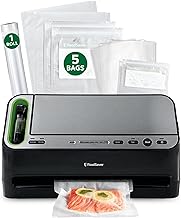
The V4400 is the model to buy if sealing is going to become a habit rather than an occasional novelty. Automatic bag detection is the reason: the machine senses the bag and runs the correct cycle without you holding anything in place or picking a mode, and mode selection is where most failed seals originate.
The built-in roll compartment and cutter is the second reason. Cutting a bag to length becomes a two second operation rather than a job with scissors on a worktop, and that changes how often you bother. Anyone sealing irregular shapes, whole fish, a chicken, a bunch of herbs, will use this constantly.
A retractable handheld sealer is built into the body, which covers canisters and zipper bags without a second device to store, and moist and dry settings handle the wet food problem that defeats simpler machines.
It is a full size countertop machine, so it occupies real space, and like every sealer here the ongoing cost lives in the bags rather than the hardware. Buy rolls rather than pre-cut bags and that cost roughly halves.
Bottom line: the best all-round FoodSaver, and the one that makes sealing frequent enough to be worth owning.
- Model: V4400
- Dimensions: 20 x 11 x 12 inches
- Bag detection: automatic
- Handheld: retractable, built in
- Settings: moist and dry
- Roll storage: built in with cutter
- Drip tray: removable
- Starter kit: 11 in x 10 ft roll, 3 quart bags, 2 gallon bags, 3 quart zipper bags, 2 gallon zipper bags
Bulk buyers, hunters and fishers, batch cooks, and anyone who freezes portions weekly.
Less suited to a small kitchen where counter space is the binding constraint.
Leave at least three inches of empty bag above the food and wipe the inside of the opening before sealing; fat on the plastic prevents a weld.
Respect the cooling interval between consecutive bags, or the sealing element overheats and welds get weaker.

Pros
- Smallest footprint of the machines here
- Ships with bags and a roll
- Sous vide friendly
- Lowest price of entry into the range
Cons
- Lowest rating average on this list
- No stated automatic bag detection
The Compact exists for kitchens where counter space is the real constraint. It does the fundamental job, pulling air out and welding the bag shut, in a body small enough to live in a cupboard between uses, and it arrives with both pre-cut bags and a roll so nothing else is needed on day one.
Its rating average is the lowest of the machines here, and the pattern in this category is usually seal consistency on wet food rather than outright failure. That is largely manageable: freeze anything that weeps solid on a tray first, then seal it. Doing so removes the liquid from the sealing area and the problem with it.
There is no stated automatic bag detection, so expect to hold the bag in position and select the cycle yourself. For occasional use that is a small ask.
Bottom line: the value pick, best paired with the habit of freezing wet food before sealing.
- Type: compact countertop vacuum sealer
- Included: airtight bags and roll
- Sous vide: friendly
- Bag detection: not stated
- Finish: white
Choose this for small kitchens and occasional use. Step up to the V4400 if you expect to seal weekly.
Budget for rolls rather than pre-cut bags once the supplied stock runs out.
Freeze wet or marinated food solid before sealing to keep liquid out of the seal area.
Vacuum sealed food still needs refrigerating or freezing; sealing is not a substitute for cold storage.

Pros
- Automatic bag detection
- Accessory hose drives canisters and bottle stoppers
- Moist and dry settings
- Drip tray with bag alignment tool
Cons
- Accessory hose is a separate part to store
- Needs compatible canisters to use the port
This model pairs the automatic bag detection of the higher end machines with a handheld unit, and the handheld is the part most buyers underestimate before owning one and use constantly afterwards.
The reason is that a full vacuum in a bag destroys soft food. Berries collapse, bread rolls compress into pucks, cooked pasta turns to paste. A handheld sealer evacuating a zipper bag or a canister applies far gentler suction and keeps the shape, which extends what you can sensibly seal well beyond meat and cheese.
Note that what ships here is an accessory hose rather than a separate handheld unit; it reaches the same canisters and bottle stoppers, but it is a part to keep in a drawer rather than one clipped into the machine. A drip tray with a bag alignment tool rounds out the practical touches.
Bottom line: the pick for households that want to seal soft food as well as freezer portions.
- Type: countertop vacuum sealer
- Dimensions: 16.3 x 9.2 x 4 inches
- Bag detection: automatic
- Settings: moist and dry, one-touch
- Accessory port: yes, hose supplied
- Drip tray: with bag alignment tool
- Starter kit: accessory hose, 11 in x 10 ft roll, 3 quart bags, 2 gallon bags
Use the handheld for anything that would crush under full vacuum: soft fruit, baked goods, cooked pasta.
Use the countertop machine for meat, fish, cheese and anything going into long freezer storage.
Households that batch cook and want to keep leftovers as well as raw ingredients.
Less relevant if everything you seal is destined for the freezer anyway.

Pros
- Express bag maker speeds up custom bag creation
- Handheld sealer included
- Bags and roll supplied
- Sous vide friendly
Cons
- No stated automatic bag detection
- More moving parts to keep clean
If most of what you seal is an awkward shape, the express bag maker is the feature that matters. Making a bag from a roll normally means cutting, squaring the end by eye and sealing it, and doing that dozens of times a season is where people quietly give up on vacuum sealing.
This model compresses those steps, and it arrives with a handheld unit as well, so canisters and zipper bags are covered alongside vacuum bags. Between them the two devices handle nearly everything a home kitchen throws at them.
Automatic bag detection is not stated, so you will still be selecting cycles yourself, and the extra mechanism means slightly more to wipe down after messy jobs. Neither is significant against the time the bag maker saves.
Bottom line: the pick for anyone sealing irregular shapes constantly, such as fish, game or garden produce.
- Type: countertop vacuum sealer with express bag maker
- Included: handheld vacuum sealer, sealer bags, roll
- Bag detection: not stated
- Sous vide: compatible
- Finish: black
Batch processing sessions: a fishing trip, a bulk meat order, or a glut of garden produce all favour fast bag making.
Respect the cooling interval between bags during long sessions or seals weaken as the element heats.
Wipe the drip tray and sealing bar after any wet job; residue baked onto the bar produces failed seals later.
Vacuum packed food still requires cold storage.

Pros
- Simple proposition with little to learn
- FoodSaver bag ecosystem and accessory support
- Good rating average
- Compatible with the brand's rolls and bags
Cons
- Listing publishes very little specification
- Smallest rating sample on this list
This is the plainest entry in the FoodSaver line-up on this list, and the listing reflects that with very little published detail. What you are buying is access to the same bag and accessory ecosystem as the more expensive machines, in the simplest possible package.
That ecosystem is worth more than it sounds. FoodSaver rolls, bags, canister lids and bottle stoppers are widely stocked and interchange across the range, so a machine bought now can still be supplied in five years. Generic sealers frequently cannot make that claim.
The caveats are honest ones: the specification is thin, and this listing carries by far the smallest number of ratings here, so there is less accumulated evidence about long term reliability than for the V4400 or the Compact.
Bottom line: the simplest way into the FoodSaver ecosystem, for buyers who want no features to learn.
- Type: fresh food preservation system
- Bags: FoodSaver bags and rolls
- Bag detection: not stated
- Handheld: not stated
- Roll storage: not stated
Confirm the exact model contents with the seller before ordering, since the listing gives little away.
If you want documented features, the V4400 or the automatic detection model are the safer choices.
Use only channelled or embossed bags; smooth bags will not evacuate in any external sealer.
Refrigerate or freeze sealed food as normal.

Pros
- Cutting to length wastes far less material than pre-cut bags
- Lowest cost per seal
- BPA-free and sous vide rated
- Highest rating of anything on this list
Cons
- Supplies rather than a machine
- Requires sealing one end before filling
This is the entry on the list that is not a machine, and it earns its place because bag cost, not machine cost, determines what vacuum sealing actually costs you over a year.
Rolls let you cut a bag to the exact length of what you are sealing. Pre-cut bags force you to use a standard size for a pork chop and for a whole chicken alike, and the wasted plastic adds up quickly. Cutting to length typically brings the cost per seal down substantially.
They are BPA-free and rated for sous vide, so they cover both freezer storage and cooking. The only extra step is sealing one end before filling, which takes a few seconds and becomes automatic quickly.
Bottom line: buy these alongside whichever machine you choose. Over a year the saving exceeds the price difference between any two machines here.
- Type: vacuum sealer rolls
- Size: 11 inches x 16 feet
- Quantity: pack of 3
- Material: BPA-free
- Rated for: airtight storage and sous vide
Cut the roll about three inches longer than the food needs, seal one end, fill, then vacuum and seal the other.
Keep offcuts; short lengths are useful for herbs, spices and small portions.
Store rolls away from heat so the plastic does not deform before use.
Do not reuse a bag that held raw meat, even after washing.
How to Choose a FoodSaver Vacuum Sealer
Machines in this range differ less than the marketing suggests. All of them pull air out and weld the bag shut. What separates them is how much they automate, whether they can make custom bags from a roll, and what accessories they can drive. Match those to how you cook, not to the longest specification list.
The Bag Is the Real Product
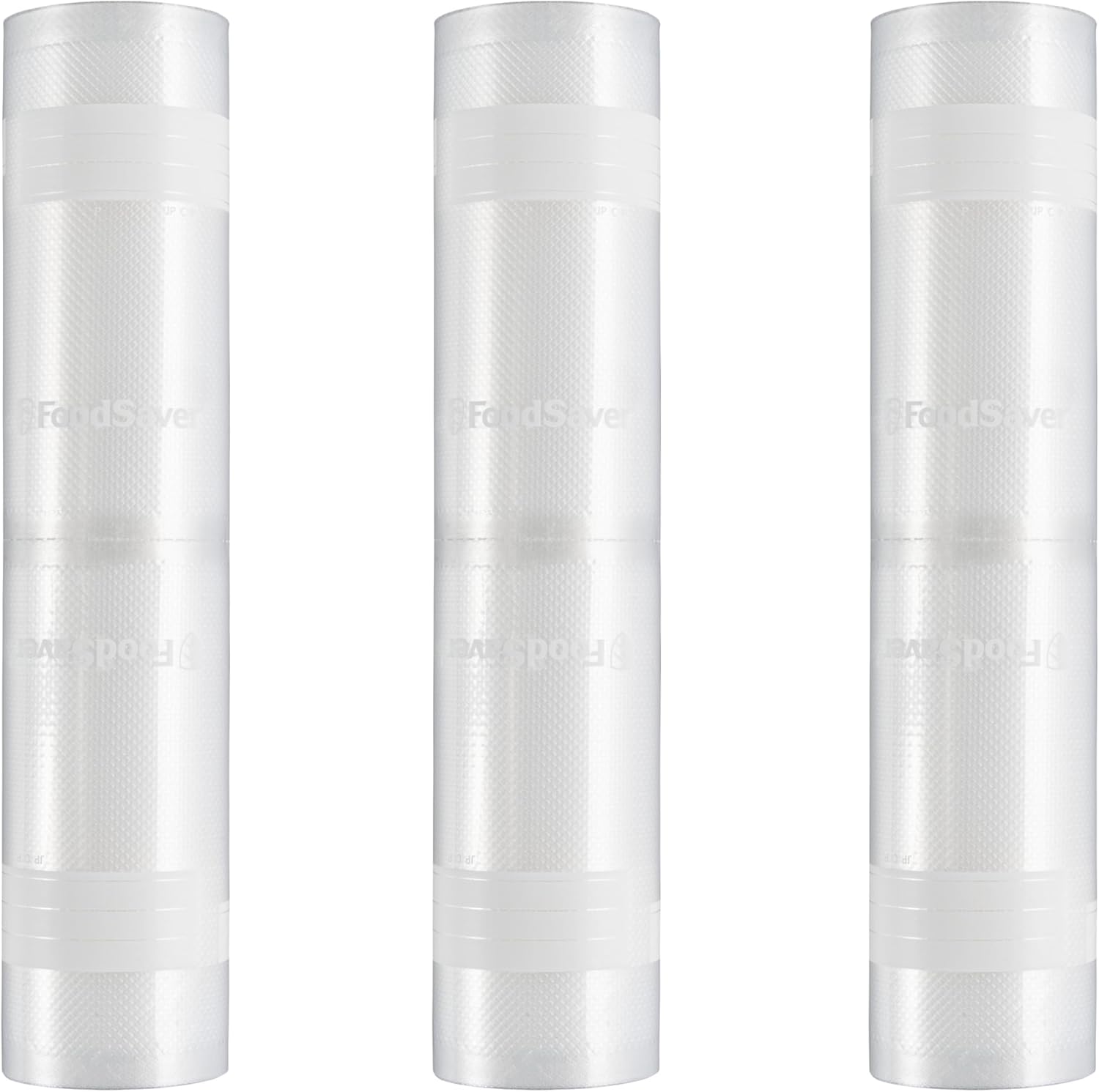
This is the thing nobody tells first-time buyers. An external vacuum sealer cannot draw air out of an ordinary smooth plastic bag, because as soon as suction begins the two walls collapse against each other and seal off the air behind them. The bags used with these machines have an embossed or channelled texture on one side, and those channels are what keep a path open for the air to escape.
The practical consequence is that your running cost is set by bag price, not machine price. Buying pre-cut bags is convenient and expensive; buying rolls, such as the FoodSaver Custom Fit rolls on this list, lets you cut a bag to the exact length of what you are sealing and typically works out considerably cheaper per seal. Anyone sealing weekly should buy rolls and treat pre-cut bags as a convenience item.
Automatic Bag Detection and Moist Settings
The most common failure in vacuum sealing is a seal that looks fine and lets go in the freezer a week later. Two features address it. Automatic bag detection, on the V4400 and the model with automatic detection further down this list, senses that a bag has been inserted and starts the cycle without you holding it in place or choosing a mode.
A moist setting matters just as much and is more often misused. Any liquid drawn into the seal area prevents the plastic welding to itself properly, so wet food needs a longer, hotter seal. If your machine has a moist mode, use it for marinated meat and anything that weeps. If it does not, freeze wet items solid on a tray first and seal them afterwards, which sidesteps the problem entirely.
Built-In Roll Storage and Cutters
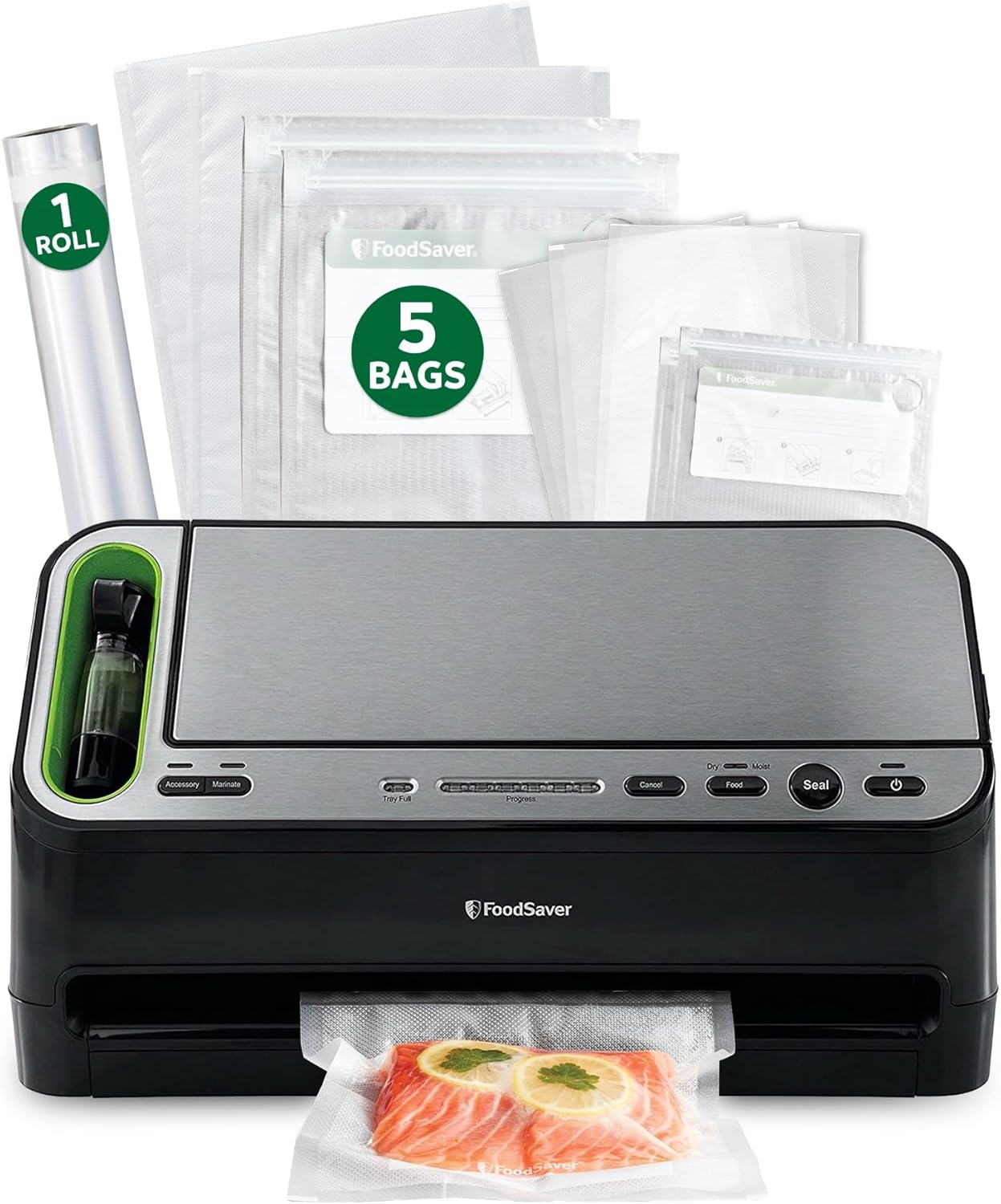
A machine with an internal roll compartment and a sliding cutter turns bag making into a two second job: pull out the length you want, slide the cutter across, seal one end. Without it you are cutting rolls with scissors on a work surface and squaring the end by eye, which produces crooked seals and wasted material.
The V4400 and the Express bag maker on this list both include this, and it is the feature that most changes daily use. If you expect to seal irregular shapes such as fish fillets, whole chickens or bunches of herbs, it is close to essential.
Accessory Ports, Jars and Handheld Sealers

Several machines here ship with a handheld unit or an accessory hose port, and this is the feature buyers most often overlook and later use most. The port drives canister lids, marinating containers and stoppers for wine bottles, none of which involve bags at all. The distinction is worth reading carefully in the listings: the V4400 carries a retractable handheld sealer built into the body, while the automatic detection model supplies a separate accessory hose in its starter kit. Both reach the same accessories, but one lives in the machine and one lives in a drawer.
The handheld attachment is also the correct tool for anything a bag would crush. Berries, bread rolls, and cooked pasta all collapse under full vacuum in a bag, whereas a zipper bag or canister evacuated gently with the handheld keeps its shape. If you plan to seal soft food, treat the handheld as a requirement rather than a bonus.
Sous Vide, and What Vacuum Sealing Does Not Do
All of these machines are described as sous vide friendly, which means the bags tolerate prolonged immersion at cooking temperatures without seams failing. If sous vide is your reason for buying, check that whatever bags you settle on are rated for it, since not every generic roll is.
The important safety point is what vacuum sealing does not achieve. Removing air slows oxidation and stops freezer burn, and it does slow the growth of many spoilage organisms. It does not sterilise food, and it does not protect against the organisms that thrive without oxygen. Clostridium botulinum in particular grows in low oxygen conditions, which is precisely what you have just created.
The rule is simple: vacuum sealed food still needs refrigerating or freezing exactly as it would otherwise. Sealing extends the useful life of chilled and frozen food, it does not move anything from the fridge to the cupboard. Treat any advice suggesting otherwise with suspicion.
What Not to Seal, and How to Get Longer Seals
Some foods should never go under full vacuum. Soft cheeses, raw mushrooms, fresh garlic in oil and any soft item you want to keep intact are poor candidates, the first three for food safety reasons and the last because a bag at full vacuum applies remarkable pressure.
Three habits improve results more than any machine upgrade. Leave at least three inches of empty bag above the food so the sealing bar has clean plastic to work with. Wipe the inside of the bag opening before sealing, since a smear of fat is enough to prevent a weld. And let the sealing element cool for the interval stated in the manual between consecutive bags; running a machine continuously overheats the element and produces weak seals, which is a common cause of a machine seeming to fail after the fifth bag.
Finally, label and date everything with a marker before sealing. Frozen vacuum packs are remarkably anonymous, and the whole point of the exercise is knowing what you have.
Where an External Sealer Stops, and Chamber Machines Begin
Every machine on this list is an external sealer: the bag sits outside the unit and a pump draws air out through the open end. That design has one hard limit, and it is worth knowing before you buy rather than after. External sealers cannot handle liquids. Soup, stock, marinade and anything with free liquid will be pulled up the bag and into the sealing area, where it prevents the weld and, in the worst case, gets drawn into the pump.
The professional answer is a chamber vacuum sealer, in which the whole bag sits inside a sealed box and the air is evacuated from the chamber rather than from the bag. Because pressure is equal inside and outside the bag, liquids stay put. Those machines are heavy, expensive and aimed at restaurants and serious charcuterie, and none of them belongs on a list at this price.
For a home kitchen the workaround costs nothing. Freeze liquid in a container first, then transfer the frozen block into a bag and seal it, or freeze soup flat in a zipper bag on a tray and vacuum seal it once solid. That handles almost every liquid case without a chamber machine, and it is what most experienced home sealers actually do.
| Pick | Type | Bag detection | Roll storage | Handheld included |
|---|---|---|---|---|
| FoodSaver V4400 | 2-in-1 countertop | Automatic | Yes, with cutter | Yes, retractable |
| FoodSaver Compact | Compact countertop | Not stated | Roll supplied | Not stated |
| FoodSaver with Auto Detection | Countertop, 16.3 x 9.2 x 4 in | Automatic | Roll supplied | Accessory hose |
| FoodSaver Express Bag Maker | Countertop | Not stated | Yes, express bag maker | Yes |
| FoodSaver Fresh Food System | Preservation system | Not stated | Not stated | Not stated |
| FoodSaver Custom Fit Rolls | Supplies, 11 in x 16 ft | Not applicable | Not applicable | Not applicable |
Sealing is only useful if what goes in the bag is worth keeping; our home and kitchen guides cover the rest of the food storage question.
Why You Should Trust Us
Every item here was checked against its live listing for the features that decide daily use: automatic bag detection, whether a roll and cutter are built in, whether a handheld attachment or accessory port is included, and sous vide compatibility. Where a listing does not state a feature we have said so in the table rather than assuming a machine has it, because in this range the same brand sells several models that look nearly identical and differ in exactly these details.
We have not run these machines through a sealing endurance trial, and we do not claim to. What we can do is explain why smooth bags do not work in external sealers, why the running cost of bags matters more than the price of the machine, and where the food safety limits of vacuum packing sit. That last point is the one most often glossed over in this category. More kitchen guides are collected in our articles section.
Final Thoughts
The FoodSaver V4400 is our best overall pick. Automatic bag detection removes the most common cause of failed seals, the built-in roll storage and cutter make custom bags a two second job, and the starter kit means you can use it the day it arrives. For anyone who expects to seal regularly, this is the model to buy.
For best value, the FoodSaver Compact does the fundamental job in less counter space and at a lower price, and it arrives with both bags and a roll. Its rating average is the lowest here, which in this category tends to reflect seal consistency on wet foods, so freeze wet items solid before sealing and you will avoid most of that.
Beyond those, choose by workflow. The model with automatic bag detection and a handheld sealer if you want to seal canisters and zipper bags as well as vacuum bags, the Express Bag Maker if you seal irregular shapes constantly, and the Fresh Food Preservation System if you want the simplest possible proposition. Whichever machine you choose, buy the Custom Fit rolls rather than pre-cut bags: over a year that single decision saves more than the difference between any two machines here.
Frequently Asked Questions
Can I use regular plastic bags in a FoodSaver vacuum sealer?
No. External vacuum sealers need bags with an embossed or channelled texture, because a smooth bag collapses against itself as soon as suction starts and traps the air behind it. Any bag sold for use with these machines has that texture, and generic smooth bags will not work regardless of thickness.
Does vacuum sealing mean food can be stored at room temperature?
No, and this is the most important thing to understand. Removing air slows oxidation and prevents freezer burn, but it does not sterilise anything, and some dangerous organisms grow specifically in low oxygen conditions. Vacuum sealed food still needs refrigerating or freezing exactly as it would otherwise.
Why does my seal keep failing on wet food?
Liquid drawn into the sealing area stops the plastic welding to itself. Use the moist setting if your machine has one, or freeze wet items solid on a tray first and seal them afterwards. Also leave three inches of empty bag above the food and wipe any fat off the inside of the opening before sealing.
Are rolls cheaper than pre-cut bags?
Usually by a considerable margin, and they also waste less material because you cut each bag to the length of the item. The trade is a few extra seconds per bag to seal one end first. Anyone sealing weekly should default to rolls and keep pre-cut bags for convenience.
Why does my sealer stop working after several bags in 2026?
It is almost always the sealing element protecting itself from overheating rather than a fault. Manuals specify a cooling interval between consecutive seals, and running continuously produces progressively weaker welds. Pause for the stated interval and the machine will keep going. More kitchen advice is collected in our category index.




Write Your Review
No reviews yet. Be the first to share your experience!