

Rust does not wait for a convenient weekend. Once it starts eating into a porch railing, a trailer frame, or a set of hand tools, the metal underneath keeps corroding until something seals it off from air and moisture. The right rust prevention paint does that in one step, sometimes converting the rust itself into a stable surface instead of asking you to sand a project down to bare steel first.
Rust also spreads faster than most people expect, because iron oxide is more porous than the metal underneath it, so it holds moisture against the surface and accelerates its own growth. A coating that seals that surface off, whether by converting the rust chemically or by bonding a protective film over it, is what actually stops that cycle rather than just hiding it under a fresh color for a season.
We compared 8 rust prevention paint options for October 2026, covering aerosol converters, brush-on enamels, and gallon-size pro coatings so there is an option whether you are touching up a gate hinge or protecting a whole equipment bed. Our top pick is the Rust-Oleum Stops Rust Reformer Black Spray Paint for how directly it turns existing rust into a paintable black finish without a separate primer step. If you are also tackling broader exterior surfaces on the same project, our exterior paint and primer picks are worth a look too.

Pros
- Converts existing rust into a paintable black surface in one step
- No sanding down to bare metal required before spraying
- Comfort-tip nozzle sprays evenly from multiple angles
- Dries to the touch quickly for same-day recoating
- Widely available and backed by a well-known brand
Cons
- Best suited to touch-up size jobs rather than large surfaces
- Strong solvent odor calls for spraying outdoors or in a ventilated space
This is a one-step rust reformer spray that converts light-to-moderate surface rust directly into a paintable black finish, aimed at homeowners who want to treat railings, tools, patio furniture and other rusted metal without stripping the piece down to bare metal first.
The reformer chemistry bonds to rust itself rather than fighting it, so prep work is limited to wire-brushing loose flakes. The comfort-tip nozzle lets you spray upside down or at odd angles, which matters on railings and machinery, and it dries to the touch quickly enough to apply a second coat the same afternoon.
It is a small aerosol can, so it is really built for touch-ups and mid-size pieces rather than a fence line or a vehicle frame. The oil-based solvent smell is strong enough that spraying should happen outdoors or with a respirator in an enclosed space.
Bottom line: for anyone who wants a single can that stops active rust and leaves a finished black coat without a separate primer step, this is the most dependable starting point in the lineup.
- Form: Aerosol spray can
- Finish: Gloss black
- Base: Oil-based rust reformer
- Application: Direct-to-rust, no separate primer needed
- Best for: Railings, tools, patio furniture, small to mid-size metal repairs
- Recoat: Same-day recoat once tack-free
Start by knocking off any loose, flaking rust with a wire brush; the reformer only needs a stable rust layer to bond to, not bare metal. Shake the can for a full minute, then hold it 10 to 16 inches from the surface and apply light, even coats rather than one heavy pass, which helps avoid drips on vertical surfaces like railings. Let the first coat flash off until it is dry to the touch before deciding whether a second pass is needed for full black coverage.
Spray in a well-ventilated area or outdoors, since the oil-based solvent carries a strong odor while wet. Keep the can away from open flame or heat sources during and after use, and let treated pieces cure fully before stacking or covering them so the finish does not stick to itself.

Pros
- Forms a hard, non-porous barrier that seals out moisture and air
- No topcoat required for a finished, weatherproof look
- Well suited to heavy rust on frames, trailers, and industrial equipment
- One can covers substantially more area than an aerosol
Cons
- Cures very hard and fast, so brushes and tools must be cleaned immediately
- Pours and brushes rather than sprays, so it needs more hands-on application time
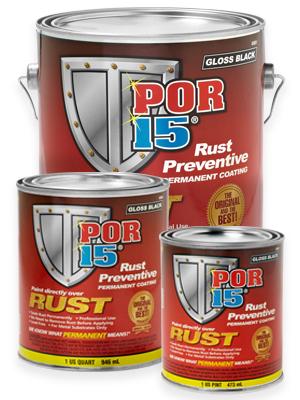
This is a brush-on rust preventive coating built for people dealing with real structural rust, think trailer frames, equipment beds, and undercarriages, rather than a patio chair. It is sold as a moisture-cure coating rather than a conventional paint.
Once cured, it forms a genuinely hard, plastic-like shell that keeps air and water off the metal, which is why it shows up so often on restoration and trailer projects. A single can covers a lot more real estate than a spray can, so it is more economical for bigger jobs.
The coating cures by reacting with moisture in the air rather than just evaporating, so it sets up firm quickly, and any brushes or rollers used with it need to be cleaned or discarded right after use. Because it goes on by brush or roller rather than spray, larger or oddly shaped parts take more time to cover evenly.
Bottom line: for frames, equipment, and other pieces that see real weather exposure and mechanical stress, this is the coating to reach for when a thin aerosol layer will not hold up.
- Form: Brush-on liquid coating, pourable
- Finish: Semi-gloss black
- Container: 32 fluid ounces
- Cure type: Moisture-cure, no topcoat required
- Best for: Trailer frames, equipment, undercarriages, heavy rust
- Application tools: Brush or roller, clean immediately after use
This coating is built for owners of trailers, equipment, and vehicles who are dealing with rust that has already eaten into the metal, not light surface spotting on a porch rail. It fits best in a garage or shop setting where a project can sit undisturbed while the coating cures.
Work in a ventilated space, since the coating releases fumes as it cures, and keep a rag with mineral spirits on hand to catch drips before they set. Because the finish cures hard within a few hours, plan the whole job in one sitting rather than pausing partway through.

Pros
- Clear finish protects metal without changing its existing color
- Rust-inhibiting formula suited to both indoor and outdoor pieces
- Comfort-tip spray nozzle for even coverage
- Fast-drying so a project can be handled again the same day
Cons
- Clear coatings show surface imperfections more than a solid color would
- Provides less build than a pigmented coat, so heavily pitted metal may need a base coat first
This is the clear version of the Stops Rust spray line, aimed at people who want to protect a painted, plated, or decoratively finished metal piece, think light fixtures, hardware, or hand tools, without covering up the original look.
Because it lays down clear rather than a solid color, it works well as a final protective layer over an existing finish, and the rust-inhibiting formula is the same core chemistry the pigmented Stops Rust cans use. The spray dries quickly enough that most household projects can be handled again within a day.
A clear coat has nowhere to hide surface flaws, so any dents, scratches, or old rust staining will still show through. On metal that already has active pitting, a clear coat alone will not build up enough film to fully seal the surface the way a pigmented rust converter would.
Bottom line: for protecting metal that already looks the way you want it to, this is a straightforward way to add a rust-resistant layer without changing the color.
- Form: Aerosol spray can
- Finish: Matte clear
- Container: 12 oz
- Base: Rust-inhibiting spray formula
- Best for: Hardware, tools, light fixtures, finished metal pieces
- Use case: Protective topcoat over existing color or plating
Clean and dry the piece fully before spraying, since a clear coat will trap any dust or grease under the finish. Apply two to three light passes rather than one heavy coat, holding the can roughly a foot from the surface and keeping it moving to avoid pooling, which is more visible on a clear finish than on a solid color.
Spray in a ventilated area and away from open flame, and give the piece a full day to cure before handling it roughly or stacking anything on top of it. Check a small hidden spot first if the piece has a plated or powder-coated finish, since clear coats can react differently across finish types.

Pros
- Water-based formula with low odor compared to solvent coatings
- Doubles as a rust converter and a primer in one product
- Gallon size suits larger surfaces like trailers and equipment
- Can be top-coated with a wide range of finish paints once cured
Cons
- Water-based cure is more sensitive to humidity and temperature during application
- A full gallon is more product than most single small repairs need
Corroseal is a water-based rust converter that also functions as a primer, aimed at contractors and serious DIYers dealing with rust on cars, trucks, trailers, marine hardware, or industrial equipment rather than a single small tool.
Being water-based means cleanup is soap and water rather than solvent, and the odor is noticeably lower than oil-based converters, which matters when working in a garage or enclosed shop. Because it primes as well as converts, most projects can go straight to a top coat of finish paint once it cures, cutting out a separate primer step.
Water-based converters are more sensitive to humidity, temperature, and dry time than solvent-based ones, so cold or damp conditions can slow the cure noticeably. A full gallon is a lot of product for a single railing or tool, so it makes more sense as a shared can for ongoing projects than a one-off fix.
Bottom line: for anyone converting rust across multiple parts, or a genuinely large surface like a trailer frame, the combination of low odor and built-in priming makes this one of the more practical gallon-size options.
- Form: Liquid, brush or roller applied
- Container: 1 gallon
- Base: Water-based rust converter and primer
- Best for: Cars, trucks, trailers, marine hardware, industrial equipment
- Top coat: Compatible with most finish paints once cured
- Cleanup: Soap and water
This is aimed at people tackling rust across several parts at once, automotive frames, marine fittings, fences, or shop equipment, rather than a single small tool. The gallon size and primer function make it a practical shared product for a garage that handles ongoing metal repairs.
Remove only loose, flaking rust before applying, since the converter needs a stable rust layer to react with rather than bare metal. Apply with a brush or roller in a temperate, dry space, and give the coating the full cure window on the label before adding a top coat of finish paint.

Pros
- Rubberized formula absorbs road vibration and cushions gravel impact
- Sold as a 6-pack, enough for a full vehicle undercarriage in one purchase
- Paintable finish if a color coat is wanted afterward
- Fast-drying between coats
Cons
- Rubberized texture is built for undercarriages, not visible or decorative surfaces
- Spraying a full underside means working in tight, awkward spaces
This is an automotive-focused rust-resistant coating built specifically for vehicle undercarriages, wheel wells, and other spots that take constant road grime, moisture, and gravel impact rather than general household metal.
The rubberized formula stays slightly flexible once cured, so it absorbs vibration and gravel hits instead of cracking the way a rigid coating can, and buying it as a 6-pack means most cars or trucks can be fully undercoated from a single order rather than running out mid-project. It can also be top-coated with regular paint if a finished color is wanted.
The textured, rubberized look is meant to be hidden under a vehicle, so it is not a fit for railings, tools, or anything that will be seen. Because it targets the underside of a vehicle, applying it evenly means working on your back in a tight space, which takes more setup than a typical spray job.
Bottom line: for anyone treating a vehicle's undercarriage or wheel wells against road salt and moisture, the rubberized coating and multi-can quantity make this a purpose-built option rather than a general-use spray.
- Form: Aerosol spray, 6-pack
- Texture: Rubberized, semi-flexible finish
- Best for: Vehicle undercarriages, wheel wells, frame rails
- Paintable: Yes, once cured
- Application: Multiple light coats for full coverage
Clean and dry the undercarriage first, since trapped dirt or moisture under the coating can lead to rust forming underneath it later. Apply in thin, even coats, letting each one dry before adding the next, and work in sections so the spray has time to tack up before it can drip onto tools or the shop floor below.
Wear eye protection and a respirator when spraying overhead, since aerosol mist falls back down while working underneath a vehicle. Ventilate the garage or work outdoors, and keep the vehicle raised securely on stands rather than a jack alone while the coating cures.

Pros
- Formulated for professional-grade rust repair on larger surfaces
- Gallon size fits fences, tanks, and equipment beds
- Converts rust chemically rather than just covering it
- Can be top-coated once cured for a finished look
Cons
- Not sold in smaller sizes, so it is not economical for a single small repair
- Best results depend on following prep and dry-time steps closely
FDC's Rust Converter Ultra is a professional-grade converter aimed at larger rust jobs, storage tanks, fencing, equipment beds, and other surfaces where a spray can would run out long before the job is done.
It chemically reacts with rust to change it into a stable, paintable surface rather than just sealing over it, and the gallon size makes it realistic to treat a whole fence line or piece of equipment from one container. Once cured, it accepts a standard top coat if a specific finish color is wanted.
It only comes in the larger size, so it is not the most economical choice for a single small tool or bracket. Because it is a converter chemistry rather than a simple paint, getting the best result means following the prep and dry-time steps on the label rather than treating it like a quick spray-and-done product.
Bottom line: for anyone facing a genuinely large rusted surface, a fence, tank, or piece of equipment, this is built for that scale in a way a spray can is not.
- Form: Liquid, brush or roller applied
- Container: 1 gallon
- Type: Professional-grade rust converter
- Best for: Fencing, storage tanks, equipment beds, large surfaces
- Top coat: Accepts standard finish paint once cured
This suits property owners and contractors dealing with rust across a large, continuous surface rather than a single small part. A fence line, a storage tank, or an equipment bed are the kind of jobs where a gallon of converter gets used efficiently instead of sitting mostly unused.
Clear away loose scale and flaking rust before applying, then brush or roll the converter on according to the label's coverage rate. Allow the full recommended dry time before adding a top coat, since rushing this step is the most common reason a converter coating underperforms.

Pros
- Brush-on quart is inexpensive relative to project coverage
- Rust-resistant enamel works on metal, wood, and other surfaces
- Satin finish looks at home both indoors and outdoors
- No spray equipment or overspray to manage
Cons
- Brush application takes longer than spraying and can show brush marks if rushed
- Enamel needs a longer full-cure window than a quick aerosol coat
This is the brush-on version of the Stops Rust line, a can-and-brush option for people who want to protect railings, furniture, tools, or trim without setting up spray equipment or worrying about overspray drifting onto nearby surfaces.
A quart covers a meaningful amount of surface for a modest price, which is why it comes up so often as the practical choice for porch rails, patio furniture, and garden gates. The enamel formula resists rust and holds up outdoors, and because it is brushed rather than sprayed, there is no drift to mask off nearby windows, plants, or cars.
Brushing takes longer than spraying and can leave visible brush marks if the coat is applied too thick or too fast. Enamel needs a longer stretch of dry time before it is fully cured and handling-tough compared with a quick aerosol layer.
Bottom line: for everyday outdoor metal, railings, gates, furniture, where a spray can is overkill or impractical, the brush-on quart delivers solid rust protection at a price that is easy to justify for the coverage.
- Form: Brush-on liquid enamel
- Finish: Satin black
- Container: 1 quart
- Base: Rust-resistant enamel
- Best for: Railings, gates, patio furniture, trim, tools
- Surfaces: Metal, wood, and other paintable materials
Stir the can thoroughly before starting, and apply with a natural or synthetic bristle brush in thin, even strokes rather than one heavy layer, which is what causes visible brush marks. Two thin coats, allowed to dry between passes, generally lay down smoother and last longer than a single thick coat.
Work in a ventilated area while brushing and while the coat dries, since enamel gives off fumes as it cures. Give furniture and railings the full cure time listed on the can before regular use or exposure to rain, since a coat that feels dry to the touch is not always fully cured underneath.

Pros
- Thick 2X formula builds coverage in fewer coats
- Works on metal, wood, and plastic, so it suits mixed-material projects
- Sprays from multiple angles thanks to the comfort-tip nozzle
- Widely available and inexpensive per can
Cons
- Not a dedicated rust converter, so it works best on lightly rusted or already-primed metal
- Flat finish shows fingerprints and wear more than a gloss coat
This is a general-purpose spray paint rather than a dedicated rust converter, aimed at people painting a mix of materials, metal railings alongside wood trim or plastic fixtures, where one can needs to cover more than just bare steel.
The thicker 2X formula lays down more coverage per coat than a standard spray paint, so fewer passes are usually needed to reach full opacity, and the same can works across metal, wood, and plastic, which is handy on a project with mixed materials. The comfort-tip nozzle sprays evenly even upside down, which comes in handy on the underside of railings or furniture.
Because it is a general spray paint rather than a rust-specific formula, it works best on metal that is only lightly rusted or already primed, not on pieces with heavy, flaking corrosion. The flat finish shows fingerprints, water spots, and general wear more readily than a gloss or satin coat would.
Bottom line: for a mixed-material project or light touch-ups where a dedicated rust converter is more than what is needed, this is a practical, budget-friendly can to keep on the shelf.
- Form: Aerosol spray can
- Finish: Flat black
- Base: Oil-based, 2X coverage formula
- Surfaces: Metal, wood, plastic
- Best for: Mixed-material projects, light rust touch-ups
- Application: Multiple angles via comfort-tip nozzle
This fits best on projects with light surface rust or mixed materials, a metal mailbox post next to a wood trim piece, or plastic and metal fixtures being refreshed together, rather than a piece with heavy corrosion that needs a converter first.
Spray outdoors or in a ventilated space, and shake the can for the full time listed on the label so the thicker 2X formula sprays evenly instead of sputtering. Allow full cure time before stacking or heavy handling, since the flat finish can mark easily while still soft.
How to Choose the Right Rust Prevention Paint
Not every rusted surface needs the same fix. A porch railing with a few surface spots is a different job from a trailer frame with real pitting, and the product built for one will underperform on the other. Here is what actually matters when you are picking a can or gallon off the shelf.
Paint, Primer, or Rust Converter: Know the Difference

These three terms get used loosely, but they describe different chemistry. A dedicated rust converter reacts with the iron oxide already on the surface and chemically changes it into a stable, paintable compound, usually dark gray or black. A rust-inhibiting primer is built to stop corrosion underneath a separate topcoat rather than serve as the finished layer on its own. A true rust prevention paint tries to do both jobs in one can, combining rust-inhibiting pigment with a finish coat so it can go straight onto lightly rusted metal without a separate primer step.
Which one you need depends on how far the rust has already gone. Light surface rust on a railing or tool usually responds well to a one-step paint. Heavier, pitted, or flaking rust on a frame or tank generally holds up better with a dedicated converter or primer first, followed by a topcoat once that layer cures.
Oil-Based vs. Water-Based Formulas
Oil-based formulas tend to bond more aggressively to bare and rusted metal and cure into a tougher, more chemical-resistant shell, which is part of why they show up so often in dedicated rust converters and automotive coatings. The tradeoff is a stronger solvent odor while wet and cleanup that calls for mineral spirits rather than soap and water.
Water-based formulas cut the odor down substantially and clean up easily, and newer formulas have closed much of the old durability gap with oil-based coatings. They are more sensitive to humidity and temperature while curing, though, so a cold or damp garage can slow the process more than it would with an oil-based can.
Spray, Brush, or Roller Application
Aerosol sprays are the fastest option and work well on railings, tools, and other pieces with awkward angles, especially with a comfort-tip nozzle that can spray upside down. Brush and roller-applied coatings, usually sold by the quart or gallon, suit larger or flatter surfaces like fences, frames, and equipment beds where a can would run out long before the job is finished.
If the project is genuinely large, a fence line, a shed, or a stretch of exterior trim, a dedicated sprayer can lay down primer or paint far faster than working through aerosol cans one at a time. Our handheld HVLP sprayer picks cover that equipment if brushing an entire structure by hand is not realistic.
Surface Prep Before You Paint

Even direct-to-rust products need some prep. Knock off loose, flaking rust with a wire brush so the coating has a stable layer to bond to, and wipe down any grease or grime, since it will trap moisture underneath the new coating and cause rust to start again from below. This step takes a few minutes and makes a real difference in how long the finish holds up.
How much prep a project needs scales with how bad the rust already is. Light surface spotting needs little more than a wipe and a wire brush pass. Heavy, scaled corrosion on a frame or tank usually benefits from a wire wheel, and in stubborn cases light grinding, before any converter or paint goes on.
Weather matters at application time too. Most coatings in this category want a dry surface and a moderate temperature range to cure properly, so painting a frame or railing right after rain, or in the middle of a cold snap, tends to produce a softer, less durable finish even if the can itself is a good one.
Indoor Use, Outdoor Use, and Automotive Exposure
Outdoor and automotive parts deal with UV exposure, road salt, and constant moisture cycling, which is why rubberized undercoatings and gallon-size converters built for frames and trailers exist as their own category. Choosing a coating rated for that kind of exposure matters more than picking whatever can is closest on the shelf.
Indoor hardware and tools have more finish options available, since UV breakdown is not a factor. Clear protective coats work well here, since they add rust resistance without changing the look of plated or decorative pieces. For more projects in this same category, our tools and home improvement picks cover other DIY jobs around the house.
Finish and Color Options
Gloss, satin, flat, and clear finishes each show up in this category, and the right one depends on whether the piece is meant to be seen or hidden. A gloss or satin black works well on visible railings and furniture, while flat finishes hide imperfections on tools and utility pieces. Clear coats are the choice when the goal is protection without changing an existing color.
Brush-on enamels generally offer the widest color range, since they are marketed as a finished paint rather than an industrial coating. Dedicated converters and pro-grade coatings tend to stick to black, gray, or clear, since they are built to be functional first and are often top-coated later if a specific color is needed.
One more thing worth planning for: sheen affects how well a repair blends in later. A satin or flat finish tends to hide the seam between old paint and a fresh touch-up better than a high-gloss coat, which reflects light in a way that makes any unevenness in the surface more obvious. If a piece is likely to need spot repairs down the road, a lower-sheen finish is usually the easier one to maintain.
| Product | Type | Application | Best For |
|---|---|---|---|
| Rust-Oleum Stops Rust Reformer | Converter and paint in one | Aerosol spray | Small to mid-size touch-ups |
| POR-15 Rust Preventive Coating | Non-porous moisture-cure coating | Brush or roller | Heavy rust on frames and equipment |
| Rust-Oleum Stops Rust Matte Clear | Clear protective spray | Aerosol spray | Hardware and finished metal |
| Corroseal Rust Converter and Metal Primer | Converter and primer | Brush or roller | Cars, trailers, marine, industrial |
| Rust-Oleum Rubberized Undercoating | Rubberized rust-resistant coating | Aerosol spray | Vehicle undercarriages |
| FDC Rust Converter Ultra | Professional-grade converter | Brush or roller | Fences, tanks, large surfaces |
| Rust-Oleum Stops Rust Brush-On Enamel | Rust-resistant enamel | Brush | Railings, gates, furniture |
| Rust-Oleum Painter’s Touch 2X | General-purpose spray paint | Aerosol spray | Mixed-material, light touch-ups |
Why You Should Trust Us
We built this list by comparing real customer ratings and review volume across a wide range of rust-prevention products, favoring coatings and converters that show a consistent track record from verified buyers rather than newer listings with only a handful of reviews. We also checked brand names against manufacturer information so the details here, application method, finish, and best use case, reflect what is actually in the can rather than what a listing title claims.
We grouped products by how they are meant to be used, spray versus brush, small touch-up versus gallon-size job, household versus automotive, so this guide can point you toward the format that fits your project instead of ranking every can against every other one on star rating alone.
We also read through the pros and cons buyers reported for each product, not just the star rating, since a coating can carry a strong average rating while still drawing repeated complaints about a specific issue like odor, cure time, or coverage per can. Where a real pattern showed up, we reflected it in the notes for that product rather than smoothing it over.
Final Thoughts
If you only remember one product from this list, make it the Rust-Oleum Stops Rust Reformer Black Spray Paint. It converts existing rust into a paintable finish from one aerosol can, which covers the situation most people are actually dealing with: a railing, tool, or gate that already has some surface rust and needs a fast fix without a separate primer step.
For a lower-cost option that still delivers dedicated rust protection, the Rust-Oleum Stops Rust Brush-On Protective Enamel is worth stretching a budget toward first. A single quart covers a meaningful amount of railing, fencing, or patio furniture without the per-can cost of building out an aerosol lineup.
If the project is bigger than a spray can or a quart can realistically handle, a trailer frame, equipment bed, or vehicle undercarriage, reach for the POR-15 Rust Preventive Coating or the Corroseal Rust Converter and Metal Primer instead. Both are built to cover more square footage and hold up to ongoing weather and mechanical stress rather than a single touch-up.
Metal is not the only surface that benefits from picking the right coating. If a project also involves refinishing a kitchen or bathroom surface, our countertop paint picks cover that ground with the same focus on real durability, and our full category directory is there for browsing other projects around the house.
FAQs
What is the difference between rust prevention paint and a rust converter?
A rust converter reacts chemically with the rust already on the surface and turns it into a stable, paintable compound, and many converters need a separate topcoat once that reaction finishes. A rust prevention paint combines rust-inhibiting pigment with a finish coat in one product, so it protects and finishes the surface in a single layer rather than two.
Can I apply rust prevention paint directly over rust without sanding it off first?
Most one-step and converter formulas are made to go directly over existing rust as long as loose, flaking material is brushed away first. Heavily pitted or scaled rust usually needs a wire wheel, and in stubborn cases light grinding, before any coating will bond and hold up long term.
Is oil-based or water-based rust prevention paint better for outdoor metal?
Oil-based formulas typically bond more aggressively to metal and hold up longer under continuous outdoor exposure, which is why they dominate dedicated rust converters. Water-based formulas have narrowed that gap in recent years and are easier to clean up, with the tradeoff being more sensitivity to humidity and temperature while curing.
Do I need a separate primer under rust prevention paint, or does it work alone?
Most rust prevention paints are formulated to skip a separate primer on lightly to moderately rusted metal. If the same project involves broader exterior surfaces, our exterior paint and primer picks walk through when a dedicated primer step still pays off, and our full library of buying guides covers related projects as well.
How long does rust prevention paint take to fully cure in 2026?
Most aerosol formulas are dry to the touch within 20 to 30 minutes and ready for a light second coat the same day. Full cure, the point where the coating reaches its maximum hardness and weather resistance, typically takes anywhere from about a day for a thin spray coat up to several days for a thick brush-on or moisture-cure coating. Following the specific cure window on each label matters more than trusting a general dry-to-touch feel.
Write Your Review
No reviews yet. Be the first to share your experience!