
Working artists judge face paint for makeup artists by a short list of hard questions: does it load enough pigment to cover in one pass, does it stay put through a long shift under hot lights, and can a client wash it off without scrubbing their skin raw. Hobby kits rarely survive that checklist. The 9 palettes and pro pans below come from Mehron, TAG Body Art, CCbeauty and more, the names that keep showing up in kit bags at festivals, theater call rooms, and Halloween booths, and every one of them earned its spot on real customer ratings rather than marketing copy. Our top pick is the Mehron Paradise Makeup AQ 8 Color Basic Palette for its water-activated formula, crisp linework, and refillable magnetic pans that let you rebuild the palette instead of replacing it.
This roundup for July 2026 covers three formats that behave very differently on skin: water-activated cakes, oil and cream palettes, and wet or dry pressed powders. We also flag what each brand actually states about skin safety, because face paint sits on the body for hours and label claims matter more here than in most of the beauty and personal care category. Whatever you pick, patch a small amount on the inner forearm and leave it for a day before you use a new product on a client’s face.

Pros
- Water activated cake sets itself, no powder step needed
- Holds a crisp line for one stroke and detail work
- Magnetic pans lift out so you can refill single colors
- Eight core shades cover most party, stage, and fair jobs
- Washes off with warm water and a mild cleanser
Cons
- Pan size is small compared with dedicated white and black refills
- Heavy sweat can soften a design without a setting spray
The Paradise Makeup AQ basic palette is the piece of kit that turns a hobby setup into a working one. Each of the eight pans holds a hard water activated cake that you wake up with a damp brush or sponge, and within about a minute of application the color has dried to a matte film you can safely layer over. That behavior is the entire reason water activated paint dominates queue work at fairs and parties: you can lay a base, move on, and come back for line detail without dragging the color underneath.
Pigment load is the other reason artists stay with this line. The colors read true on a range of skin tones in one or two thin passes rather than the four coats a hobby paint demands, and thin coats are what stop a design from cracking when the wearer smiles or a child rubs their cheek. The palette is magnetic and refillable, so a color you never touch can be pulled out and replaced with a shade your bookings actually need, and a spent pan is a refill rather than a whole new palette.
The honest limitations are size and sweat. Pans in a basic palette are modest, and white in particular will run down faster than the rest, so most painters pair this with a large single white refill. And while the dried film resists smudging well indoors, an outdoor summer booth or a hot stage light will soften it eventually, at which point a setting spray designed for makeup earns its place in the bag.
Bottom line: if you buy one palette to work from, buy this one. It gives crisp line work, easy removal, and a refill path that keeps it useful for years instead of seasons.
- Format: water activated cake
- Colors: 8 shade basic palette
- Palette: magnetic, refillable pans
- Intended use: face and body paint
- Application: damp brush or damp sponge
- Removal: warm water and mild cleanser
- Origin: made in the USA per the manufacturer
Dip a brush or sponge in clean water, shake off the excess, then work the cake in small circles until the paint loads like soft cream. Too much water gives a translucent, streaky pass; too little skips across the skin. Lay your base first, let it flash dry for about a minute, then come back with a round brush for line work. Rinse brushes between colors so your white stays white through a long shift.
Patch a small amount on the inner forearm and wait a full day before using it on a new client, especially anyone with sensitive or reactive skin. Keep the paint out of the immediate eye and lip area unless the label states approval for it, and never share a sponge between clients without washing it. Let pans dry fully with the lid open after a session so moisture does not sit in the palette.

Pros
- Twenty shades in one palette covers a whole Halloween season
- Oversized black and white pans match how artists actually paint
- Creamy formula blends smoothly for special effects gradients
- High opacity in a single pass on most colors
- Large capacity for the money compared with pro single pans
Cons
- Oil based paint must be set with translucent powder or it transfers
- Needs an oil based remover or cleansing balm to come off cleanly
- Softer edges than a water activated cake on fine line work
The Athena palette is the workhorse a lot of artists reach for when the job is not delicate line work but full coverage character makeup. It is an oil based cream, so the pigment loads heavily and blends under a sponge or a finger the way traditional cream makeup does. For a skull, a full color alien skin, a bruise gradient, or a stage character that has to read from the back of a theater, that opacity is exactly what you want.
The layout deserves credit. Twenty shades is generous, but the oversized black and white pans are the real design decision, because those two colors carry most of the work in special effects and get consumed several times faster than any color in the rainbow. Pans are deep enough that a sponge sits flat without dragging the neighboring shade, which keeps your white usable through a long night.
The trade off is the setting step, and it is not optional. Until you press translucent powder over a finished cream design, it will transfer to hands, collars, costumes, and furniture. Removal also asks for an oil based remover, micellar water, or a cleansing balm rather than a splash of water. Plan the whole chain, and the palette rewards you.
Bottom line: the best value pick here. If you want maximum pigment and color range without spending professional single-pan money, this is the palette to keep in the Halloween bin and pull out year round.
- Format: oil based cream paint
- Colors: 20 shades
- Total weight: 168g
- Pan layout: oversized black and white pans plus 18 colors
- Intended use: face and body paint
- Setting: translucent powder required
- Removal: oil based remover or cleansing balm
Cream paint is the right choice when a look needs weight: prosthetic blending, bruise and wound color, full coverage skin changes, and clown or skeleton bases. Build in thin layers, powder between stages, and use a stipple sponge rather than a brush for texture. The large black pan is what makes deep shadow work practical without stopping to reorder mid season.
Patch a small amount on the inner forearm a day ahead before a first use on a client. Because this formula stays workable until powdered, keep it away from the immediate eye area and out of the hairline where it is hardest to remove. Clean brushes with a proper brush cleanser rather than water alone, since cream pigment builds up at the ferrule and destroys the point.

Pros
- Very high opacity white in one or two thin passes
- Large single pan lasts far longer than a palette well
- Water activated, so no setting powder is needed
- Fits the refillable Paradise palette system
- Removes with warm water and a mild cleanser
Cons
- Single color only, so it is a supplement rather than a kit
- Applied too thickly it can crack on expressive areas
Ask any working face painter which color they reorder most and the answer is white, usually followed by black. This large single pan exists for exactly that reason. It is the same water activated Paradise AQ formula as the palette, just in a size that survives a season of skeletons, tiger stripes, and one stroke highlights instead of a single weekend.
Coverage is the selling point. A properly loaded damp sponge lays down an opaque white in one or two passes on most skin tones, which matters because thin coats flex with the face while thick coats crack. Once it flashes dry, roughly a minute, you can run line work straight over the top without lifting the base, and that layering behavior is what separates this from craft-grade white.
Its limitation is obvious and fair: it is one color. Nobody builds a kit on a single pan. Treat it as the refill that keeps your palette honest, and pair it with a large black for skeleton season. If you are painting outdoors in heat, add a setting spray, because water activated paint will soften under heavy sweat regardless of brand.
Bottom line: the smartest second purchase after a palette. Buy the large white, use it hard, and your palette white stops being the bottleneck.
- Format: water activated cake
- Color: white
- Type: single refill pan for the Paradise palette system
- Finish: matte once dry
- Intended use: face and body paint
- Removal: warm water and mild cleanser
- Origin: made in the USA per the manufacturer
This pan is for the painter who already owns a palette and keeps running the white dry: fair and festival painters, theater makeup teams doing full white bases, cosplayers building skeleton or porcelain doll looks, and anyone who paints in volume. If you are buying your very first product, start with a palette and add this pan next.
Patch a small amount on the inner forearm and wait a day before a first use on a new client. Keep the surface of the pan clean by rinsing your sponge between colors, since a dirty sponge turns a white pan grey fast. Store with the pan fully dry and the lid on so the cake does not stay damp between sessions.
Pros
- Water activated, so no setting powder is required
- Extra large black and white pans reduce midseason reorders
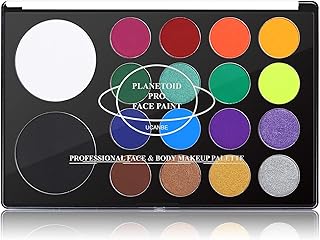
- Eighteen shades cover character work and bright party designs
- Brand states a non toxic formula
- Washes off with warm water and a mild cleanser
Cons
- Some lighter shades need an extra pass for full opacity
- Palette is bulky in a compact kit bag
Water activated paint at an accessible price is a genuinely useful thing, and this palette is aimed squarely at painters who want the self setting behavior without professional single-pan spending. Load a damp brush, work the cake, and the color goes on as a workable cream that dries matte in about a minute. From there you can layer, which is the entire point of the format.
The pan layout is the smart part. White and black are sized noticeably larger than the color wells, matching how paint actually gets used: a full white base for a skeleton or a heavy black outline eats through pigment at several times the rate of a purple accent. Eighteen shades on top of that is enough range for character work, fair designs, and stage looks in the same box.
Where it gives ground to premium lines is in the lighter and pastel shades, which can want a second pass for full opacity on darker skin tones, and in bulk, since a palette this size is not a pocket kit. The brand states a non toxic formulation, which is the claim on the listing and the claim we repeat here, nothing more.
Bottom line: strong choice if you want water activated behavior and a big color range without building a palette one refill at a time. Bring patience for the pale shades.
- Format: water activated cake
- Colors: 18 shades
- Pan layout: extra large white and black pans
- Stated attribute: non toxic formula
- Intended use: face and body paint
- Application: damp brush or sponge
- Removal: warm water and mild cleanser
Theater and stage looks need color that reads at distance and survives a costume change. Build the base with a damp sponge, let it flash dry, then sharpen edges with a round brush so the shape holds under strong lighting. Because the film sets itself, actors can dress without the paint transferring to a collar, which is the practical advantage over cream paint backstage.
Run a patch on the inner forearm a full day before a first use on a client, and skip the immediate eye and lip area unless the label states approval. Wash sponges after every session and dry them completely, since a damp sponge sealed in a kit bag is a hygiene risk. Let the palette air dry with the lid open before closing it.

Pros
- Large 90g cake sized for heavy base work
- Opaque matte finish that layers cleanly
- Brand states it is safe for sensitive skin
- Wax based body blends smoothly for one stroke work
- Made for special effects, theater, and event painting
Cons
- Single color, so it supplements rather than replaces a palette
- Matte finish needs a sealer if a look calls for shine
White is the color that decides whether a design looks professional, and a large professional cake solves the two problems hobby whites create: weak opacity and a pan that runs out mid event. This 90g cake is sized for real base work, the kind where you are covering an entire face for a mime, a skeleton, or a porcelain character and then painting detail on top.
The finish is matte and dense, which is what you want under color, because a glossy or greasy base makes fine line work skate rather than bite. The wax based body blends well for one stroke and split cake style techniques, and the brand describes it as safe for sensitive skin, which is a meaningful note for painters who work with children or clients who react to heavier cream products.
The obvious constraint is that it is one color, so it belongs next to a palette rather than instead of one. And because the finish is intentionally matte, a look that needs sheen will want a separate sealer or gloss on top. Neither of these is a flaw so much as a design choice aimed at working painters.
Bottom line: the coverage specialist. If your white is the weak link in your kit, this cake fixes it and lasts through a season of heavy base work.
- Format: wax based cake, activated with water
- Color: regular white
- Size: 90g
- Finish: large opaque matte
- Stated attribute: safe for sensitive skin
- Intended use: special effects, theater, and event body art
- Role: blending and base paint
Aimed at painters doing full coverage bases in volume: theater makeup teams, event and festival painters, cosplayers building high contrast characters, and anyone whose clients include sensitive skin. If you paint mostly small cheek art, a palette white will serve you and this cake is more than you need.
Even with a sensitive skin claim on the label, patch a small amount on the inner forearm a day before a first client use. Load with a clean damp sponge and keep the surface of the cake free of colored pigment so the white stays true. Dry the cake fully before closing the container so the surface does not stay tacky.

Pros
- Very dense, full coverage cream in a single pass
- Smooth to apply with a sponge over large areas
- Long standing professional standard for clown and mime work
- Blends easily for special effects layering
- Generous 2.25 oz pot for heavy base use
Cons
- Must be set with translucent powder or it transfers
- Needs an oil based remover or cleansing balm to come off
- Feels heavier on skin than a water activated base
Clown White is one of those products that has stayed in kit bags for decades because nothing replaced it. It is a dense cream that goes on with a sponge and covers in a single confident pass, giving the flat, complete white that clown, mime, and skeleton characters depend on. Unlike a water activated cake, it stays workable until you decide to lock it down, which means you can soften an edge or correct a hairline before committing.
That working time is both the appeal and the discipline. A cream design that has not been powdered will transfer to hands, costumes, and every surface the performer leans on. Press translucent setting powder over the finish with a puff, dust off the excess, and the same base becomes stable enough for a full show. Skip that step and you will regret it within minutes.
Removal asks for an oil based remover, micellar water, or a cleansing balm rather than soap and water, and the finish sits heavier on skin than a water activated base, which some clients notice on a hot day. Those are the fair trade offs for coverage this complete.
Bottom line: if your work involves a full white face, this is the cream to reach for, provided you carry powder and a proper remover.
- Format: cream face and body paint
- Color: clown white
- Size: 2.25 oz
- Coverage: full, opaque
- Setting: translucent powder required
- Removal: oil based remover or cleansing balm
- Intended use: face and body
Warm a small amount on the back of your hand, then stipple it onto the face with a damp makeup sponge rather than dragging it. Build thin and even instead of thick, work outward from the center, and check the jawline and hairline in good light. Press translucent powder over the finished base with a puff, wait a moment, then dust the excess away with a soft brush before you paint detail on top.
Patch a small amount on the inner forearm a day ahead of a first client use. Keep cream paint out of the immediate eye area, and remove it at the end of a shift rather than leaving it on overnight. Scoop product out with a clean spatula instead of fingers so the pot stays hygienic between clients.

Pros
- Six brushes included, so you can paint straight out of the box
- Deep pans keep a sponge from muddying neighboring shades
- Creamy, high pigment formula for full coverage looks
- Brand states a non toxic formulation
- Twelve shades cover most costume and stage character work
Cons
- Oil based paint requires setting powder to stop transfer
- Bundled brushes are fine for blocking in but not for fine detail
- Needs an oil based remover rather than plain water
Kits that include brushes are usually a compromise, but this one gets the important half right: the paint. Twelve oil based cream shades sit in deep pans, load heavily onto a sponge or brush, and blend the way traditional cream makeup does, which makes them well suited to costume characters, gradients, and coverage rather than delicate line work.
Deep pans matter more than the color count. A shallow well forces a sponge across the neighboring shade and your white turns grey by the second client. These pans give a sponge room to sit flat, which keeps the palette usable through a long night. The brand states a non toxic formulation, which is the claim on the listing.
The six wooden brushes are the part to be realistic about. They are perfectly serviceable for blocking in color, stippling texture, and general blending, and they let a beginner start immediately. Detail line work eventually wants a proper round brush that holds a sharp point, and most painters upgrade the brushes long before the paint runs out. As with any oil based paint, powder it down and remove it with an oil based cleanser.
Bottom line: a sensible first special effects kit. Keep the paint, replace the brushes when your line work outgrows them.
- Format: oil based cream paint
- Colors: 12 shades
- Included tools: 6 wooden brushes
- Pan design: deep pans
- Stated attribute: non toxic, high pigment
- Setting: translucent powder required
- Removal: oil based remover or cleansing balm
This kit suits the artist building a first special effects setup, a cosplayer who needs coverage and blending more than fine line work, and anyone assembling a Halloween station that has to be usable by more than one pair of hands. Established painters may buy it purely as a spare color set for messy jobs.
Patch a small amount on the inner forearm a full day before a first use on someone else. Wash the wooden brushes with a brush cleanser rather than soaking the handles, since prolonged water exposure loosens the ferrule. Powder every cream design before the wearer dresses, and remove it at the end of the event rather than leaving it on overnight.

Pros
- Large capacity pans of the two most used colors
- Setting powder included, so the cream is usable out of the box
- Three brushes cover blocking in and basic detail
- High coverage cream suited to high contrast characters
- A focused kit rather than colors you will never touch
Cons
- Only black and white, so it needs a color palette alongside it
- Oil based cream transfers until it is powdered
- Removal requires an oil based cleanser
Most kits sell you a rainbow you will never finish and skimp on the two colors that actually run out. This one inverts that. It is built around large capacity black and white cream paint, which is precisely the consumption pattern of anyone painting skeletons, clowns, vampires, or any high contrast character through October.
Including the setting powder is the other good decision. Oil based cream is not usable without it, and a beginner who buys cream paint alone finds that out the hard way when the design transfers to a costume collar. Having the powder and three brushes in one box means the kit works the moment it arrives, and the cream itself covers densely enough that a full black eye socket or a white skull base goes down without fighting it.
What it is not is a complete palette. There is no color here, so it lives next to a color set rather than replacing one. Removal follows the usual cream rules: an oil based remover, micellar water, or a cleansing balm, never a dry wipe scrubbed across the face.
Bottom line: a smart focused buy for high contrast character work, particularly as a Halloween season kit that will not strand you halfway through a queue.
- Format: oil based cream paint
- Colors: black and white, large capacity
- Included: setting powder and 3 artist brushes
- Intended use: face and body paint
- Target looks: clown, skeleton, vampire, and character makeup
- Setting: powder included and required
- Removal: oil based remover or cleansing balm
Stipple the white base on with a damp sponge in thin layers rather than one thick pass, then press the included setting powder over it with a puff and dust off the excess. Only then go in with black for sockets, outlines, and shadow, because black over an unpowdered white will smear into grey. Keep one brush dedicated to black so you never carry that pigment back into the white pan.
Patch a small amount on the inner forearm a day before a first use on a client. Black pigment is the hardest to remove, so keep it out of the hairline and away from the immediate eye area, and use an oil based cleanser at the end of the night. Clean brushes with a brush cleanser so black does not contaminate later jobs.

Pros
- Covers large body areas in seconds with a dry puff
- Turns intense and cream-like when applied with a damp sponge
- Lightweight on skin compared with heavy cream paint
- No drying time between passes
- Works well over bald caps and prosthetic edges
Cons
- Single color, so it is a specialist addition to a kit
- Loose powder kicks up if you load the puff too heavily
- Applied dry it is sheerer than a cream or water activated paint
Pressed powder is the format most people forget exists, and it is the fastest way to color a large area of body. Loaded onto a dry puff, StarBlend lays a smooth wash of green across an arm or a chest in seconds with no drying time and no waiting between passes. Loaded onto a damp sponge, the same pan turns dense and almost cream-like, so one product covers both the soft background and the saturated feature.
That adjustability is the real argument for keeping one in the kit. Creature and character work often needs a soft transition rather than a hard edge, and powder blends at the border in a way cream and water activated paint have to be coaxed into. It is also comfortable to wear, which matters when a performer is in paint for a full show.
The limitations are format specific rather than quality problems. It is one color, so it supplements a palette. Loose product can kick up if you overload the puff, so tap off the excess and work in light layers. And applied dry it is deliberately sheerer than cream, which is a feature when you want a wash and a drawback when you want opacity.
Bottom line: a specialist that earns its space. For fast body coverage and soft blending, nothing in a standard kit does the job faster.
- Format: wet or dry pressed powder
- Color: green
- Size: 2 oz
- Dry application: soft, sheer wash
- Damp application: intense, cream-like coverage
- Intended use: face and body paint
- Removal: warm water and mild cleanser
When the brief is a fully green arm, a creature torso, or a bald cap that needs to match the face, powder is faster than any brush technique. Work with a velour puff for flat areas and a damp sponge where the color needs to intensify, then feather the boundary with a clean dry puff so there is no hard line between painted and bare skin.
Patch a small amount on the inner forearm a day before a first client use. Tap excess powder off the puff away from the face so nothing is inhaled, and keep the product out of the immediate eye area. Wash puffs and sponges after every session and dry them fully before they go back in the kit.
How to Choose the Best Face Paint For Makeup Artists
Face paint is one of the few products where the format decides your whole workflow. A water-activated cake asks for a damp brush and a steady hand. An oil based cream asks for a sponge, a powder puff, and a plan for setting. A pressed powder asks for almost nothing and gives you a soft finish that will not survive rain. Getting the format right matters more than chasing color counts, so start there and work down the rest of the criteria below.
Water Activated, Cream, or Pressed Powder
Water-activated paint is the format most face painters build a business on. The pigment sits in a hard cake, you wake it up with a damp brush or sponge, and it dries down to a matte film that resists smudging within a minute or two. That fast set is what lets you paint line work over a base without dragging color, which is why one-stroke butterflies and tiger stripes at a fair are almost always water-activated. The Mehron Paradise line and the UCANBE water-activated palette in this list both work this way.
Oil and cream paints load far more pigment per pass and give you a saturated, slightly waxy finish that blends like traditional cream makeup. They never fully dry on their own, so they need a translucent powder on top before anything touches them. That extra step buys you the deep opacity that special effects work demands: a solid black skull, a clown white base, an alien skin tone that reads from the back row. The UCANBE Athena, CCbeauty, and BOBISUKA kits here all sit in this camp.
Wet or dry pressed powder is the quiet third option and it is underrated for body work. Applied dry with a puff it lays down a sheer wash of color over a large area in seconds, and applied with a damp sponge it turns intense and almost cream-like. Mehron StarBlend is the classic example, and it is a fast way to color an arm, a chest, or a bald cap without waiting for layers to dry.
Pigment Load and Opacity

Opacity is where hobby paint and professional paint separate hardest. A cheap white that needs four coats to cover a forearm will crack the moment the model moves, because you have effectively built a thick shell instead of a thin film. Professional whites and blacks are formulated with a much higher pigment percentage precisely so one or two thin passes do the job, and those two colors are the ones you will burn through fastest no matter what style you paint.
That is why several of the picks here are single-color pans rather than palettes. The TAG regular white cake and the Mehron Paradise AQ white refill exist because working painters run out of white long before they run out of purple. If you buy only one large pan this year, make it white, and keep a large black next to it. Palettes with oversized black and white pans, like the UCANBE water-activated set, solve the same problem in one purchase.
Skin Safety and Ingredient Labels

Face paint is a cosmetic that sits on skin for hours, often on children, so read the label rather than the product photo. Look for cosmetic-grade pigment, a clear statement about intended use on face and body, and manufacturer information you can actually contact. In this roundup, the TAG white pan states that it is safe for sensitive skin, the UCANBE water-activated palette and the CCbeauty kit both state a non-toxic formulation, and the Mehron Paradise items state that they are made in the USA. Those are the claims the brands themselves put in writing, and we have not implied any certification beyond that.
Two habits protect you and your client. First, patch a small dot on the inner forearm and wait a full day before a new product goes near anyone’s face, especially for clients with eczema, rosacea, or known pigment sensitivities. Second, never use craft paint, poster paint, or anything sold for paper and canvas on skin, no matter how bright it looks in the pan. If a client reacts, remove the product immediately with a gentle cleanser and cool water, and keep the packaging so you can identify the ingredient later.
Setting, Sealing, and Wear Time
Wear time is a function of three things: the formula, the setting step, and the environment. Water-activated paint sets itself and holds well through a dry afternoon, but heavy sweat will soften it, and a client wiping their forehead will lift color. Cream and oil paint holds beautifully once powdered and will otherwise transfer to every collar it touches. A translucent setting powder pressed on with a puff, then dusted off, is the single step that turns a fragile cream job into something that survives a shift.
For outdoor events, stage work under hot lights, or anything involving costumes rubbing against painted skin, add a setting spray designed for makeup on top of the powder. Budget your kit for the whole chain rather than the paint alone, and check our other buying guides if you are building out brushes, sponges, and removal supplies at the same time.
Palette Size, Pan Layout, and Refills

A palette that fits your working style saves more time than an extra ten colors. Deep pans let a sponge sit flat without hitting the neighboring shade, which keeps your white from turning grey by the end of the day. Magnetic or removable pans let you pull a dead color out and drop in the shade you actually use, so the palette evolves with your bookings. The Mehron Paradise basic palette is built exactly this way, which is why it stays useful for years rather than seasons.
Large kits with brushes included are a reasonable starting point when you are learning, and the CCbeauty and BOBISUKA sets both bundle tools. Understand what you are getting: bundled wooden brushes are fine for blocking in color and blending, but detail line work eventually wants a proper round brush with a sharp point. Many painters replace the bundled brushes within a few months and keep using the paint for years. If you like sourcing tools separately, the arts and crafts aisle is where a lot of painters find their favorite handles.
Removal and Cleanup
Removal is part of the service, and a bad removal experience is what clients remember. Water-activated paint comes off with warm water, a soft cloth, and a mild cleanser, which is why it dominates the family-event market. Oil and cream paint needs an oil-based remover, micellar water, or a cleansing balm, and scrubbing dry skin with a wipe is the fastest way to leave a client red and irritated. Bring the correct remover for whatever you are painting with.
Cleanup also covers your tools. Brushes used with cream paint need a proper brush cleanser, not just water, or the pigment builds up at the ferrule and ruins the point. Sponges used with water-activated paint should be washed after every session and dried completely, because a damp sponge left in a closed kit is a hygiene problem waiting to happen. Dedicating separate sponges to face work and body work is a small habit that pays off.
| Format | Best for | Needs setting powder | Removal | Learning curve |
|---|---|---|---|---|
| Water activated | Line work, one-stroke designs, kids events | No | Warm water and mild cleanser | Moderate, brush control matters |
| Oil and cream | Special effects, full coverage bases, stage characters | Yes | Oil-based remover or cleansing balm | Low to start, powder step is essential |
| Pressed powder, wet or dry | Large body areas, soft washes, bald caps | Optional | Warm water and mild cleanser | Low |
| Single large pan, white or black | Base coats, skeletons, clown and mime looks | Depends on formula | Matches the base formula | Low |
Why You Should Trust Us
We build these lists from live marketplace data rather than press samples. Every product here was pulled from current Amazon listings, filtered for a strong average rating backed by a large body of verified customer feedback, then scored with the same weighted system we use across the site so that ratings, feedback volume, and listing quality all count. We read what buyers say about the parts that fail: whether a white cracks, whether a cream transfers, whether the bundled brushes hold a point.
We then curated the shortlist by hand. Duplicate variants of the same palette, accessory items that are not paint, and listings whose feedback did not clearly relate to professional use were removed, which is why this roundup is shorter than the raw pool we started with. Where a brand makes a specific safety claim, we quote that claim and nothing more, and we do not invent certifications a product does not state. Our editorial picks stay independent of any affiliate arrangement.
Final Thoughts
Best overall goes to the Mehron Paradise Makeup AQ 8 Color Basic Palette. It is water-activated, it takes a crisp line, the pans are magnetic and refillable so the palette grows with you, and it covers the eight shades most jobs actually need. If you paint faces for a living and want one palette that will still be in your kit in three years, this is it. Pair it with a large white refill and you have a working setup for fairs, parties, and theater calls alike.
Best value goes to the UCANBE Athena Face and Body Paint Oil Palette. Twenty shades with oversized black and white pans covers a Halloween season, a cosplay build, and a photo shoot without touching your Mehron pans, as long as you commit to powdering it down. For pure coverage in a single color, the TAG Body Art regular white cake and the Mehron Clown White cream are the two workhorses: TAG for a matte, sensitive-skin-friendly base you can paint over, Mehron for the classic dense cream finish. For large body areas the Mehron StarBlend pressed powder in green does in seconds what a brush would take twenty minutes to do.
If you are just starting out, the CCbeauty 12 color kit and the BOBISUKA black and white kit both get you painting on day one with brushes and, in the BOBISUKA case, a setting powder in the box. Upgrade the brushes when you outgrow them and keep the paint. Browse more product roundups in our beauty and personal care section, or see the full list of shopping categories if you are stocking a whole kit.
Frequently Asked Questions
Is face paint for makeup artists safe to use on children
Products made and labeled as face and body paint are formulated for skin contact, and several in this roundup state a non-toxic formulation or suitability for sensitive skin. That said, no paint is right for every person. Patch a small amount on the inner forearm and wait a full day before painting a child’s face for the first time, avoid the immediate eye and lip area unless the label says the product is approved for it, and never substitute craft or poster paint. Stop immediately and rinse with cool water if any redness or itching appears.
How long does face paint for makeup artists last during an event
A water-activated design will comfortably hold for a full afternoon indoors and will start to soften with heavy sweat or repeated touching. A cream or oil design that has been pressed with translucent setting powder will hold longer and resist transfer, which is why stage and film work leans on that combination. Heat, humidity, costume friction, and how much the wearer touches their face all shorten wear time more than the brand does.
What is the difference between water-activated and oil based face paint
Water-activated paint is a hard cake you wake up with a damp brush; it dries down matte on its own and washes off with warm water and a mild cleanser. Oil based paint is a cream that stays workable until you powder it, gives heavier opacity, and needs an oil-based remover or cleansing balm to come off cleanly. Most working artists carry both: water-activated for line work and quick queues, cream for special effects and full coverage characters.
Do I need setting powder and setting spray
You need setting powder for any cream or oil based paint, without exception, or the design will transfer to hands, collars, and furniture. Water-activated paint sets itself and does not require powder, though a light dust can reduce shine for photography. Setting spray is the optional third layer and it earns its place outdoors, under hot stage lights, or whenever a costume rubs against painted skin.
How much face paint for makeup artists should a working artist stock for 2026
Stock by color rather than by palette. Plan on burning through white and black several times faster than any other shade, so buy those in the largest pan you can, then keep one balanced palette for everything else and add single refills for whatever your bookings demand. A skeleton-heavy October needs black and white; a fair season needs bright primaries plus a good split cake for one-stroke work. You can compare more kit essentials across our beauty and personal care guides.






Write Your Review
No reviews yet. Be the first to share your experience!