

A garden hose delivers whatever is already in the pipe, and in most yards that means chlorine, sediment, and mineral scale along with the water. That is fine for rinsing a driveway, but it is a problem when the same hose is filling a pool, watering vegetable beds, running a misting system, or feeding a pressure washer. An outdoor water filter sits inline between the spigot and whatever you are filling, stripping out chlorine, rust, and grit before the water ever reaches the plant, pool, or nozzle. Our top pick is the iSpring WSP-50 Spin-Down Sediment Water Filter for its reusable brass body and flushable cartridge, which make it the easiest of this group to maintain long term without buying replacement filters every season. Below we cover 7 outdoor filters from iSpring, M MINGLE, AQUA CREST and more, each suited to a different job around the yard, from pool fills to garden beds to misting lines. For the water you actually drink on the road, our guide to RV water filters covers that separately.

Pros
- Reduces chlorine and odor before water reaches the pool
- Simple garden hose thread connection, no tools needed
- Rated for roughly 8,000 gallons of use
- Works for pools, hot tubs, spas, and ponds
Cons
- Cartridge needs replacing once its rated capacity is reached
- Not intended for sediment-heavy well water
This GLACIER FRESH pre-filter is built for one job: cleaning up the water going into a pool, spa, or inflatable pool before it arrives. It threads onto a garden hose the same way any hose attachment does, so filling a pool for the season does not require any plumbing work.
It is best suited to pool owners who fill or top off a pool from an outdoor spigot several times a season and want to reduce chlorine and odor going in, rather than adjusting chemicals after the fact. Reviewers who use it for hot tubs and inflatable pools note that water going in tastes and smells noticeably cleaner than straight tap water.
The main limitation is that it is a carbon pre-filter, not a sediment filter, so it will not do much for grit or rust in well water. It is also a consumable cartridge rather than a reusable screen, so it needs replacing once its rated capacity is used up.
Bottom line: a straightforward, low-effort way to improve the water going into a pool or spa without changing your fill routine.
- Connection: standard 3/4 inch garden hose thread
- Capacity: approximately 8,000 gallons
- Reduces: chlorine, odor, and sediment
- Use: pools, hot tubs, spas, inflatable pools, ponds
- Pack size: 1
Best for pool, spa, and hot tub owners who fill or top off from a garden hose and want cleaner starting water without adjusting chemical balance afterward. Less useful for households whose main concern is sediment or hard water rather than chlorine.
Screw the filter onto the spigot or hose end in the direction shown by the arrow on the housing, connect the fill hose to the other end, and run water as normal. Replace the cartridge once it reaches its rated gallon capacity or if flow noticeably slows.

Pros
- Reusable and flushable, no replacement cartridges needed
- Lead-free brass housing holds up to outdoor use
- Clear housing lets you see sediment buildup
- 50-micron rating catches sand, rust, and grit
- Well suited to whole-yard or well-water setups
Cons
- Uses MNPT/FNPT pipe threads, may need an adapter for a standard hose
- Does not reduce chlorine or odor on its own
The iSpring WSP-50 takes a different approach than most hose-end filters on this list: instead of a disposable cartridge, it uses a reusable spin-down mesh screen housed in lead-free brass. Water passes through a fine 50-micron mesh, and sediment collects at the bottom of a clear bowl where you can see it building up.
That clear housing is the standout feature. Rather than guessing when a filter needs attention, you can see exactly when it is time to open the flush valve and clear out accumulated sand, rust, or grit, typically in seconds and without removing the filter from the line. For well water or any outdoor supply that runs sediment-heavy, that reusability adds up to real savings over a season of cartridge replacements.
It is built with 1 inch MNPT and 3/4 inch FNPT threads rather than standard hose thread on both ends, so households running it straight off a typical garden hose spigot may need a simple thread adapter, which is worth checking before ordering. It also focuses on sediment rather than chlorine or odor, so pairing it with a carbon filter downstream is worth considering if taste and smell matter for your use.
Bottom line: the most durable, lowest-maintenance option here for anyone dealing with sediment-heavy outdoor or well water on a regular basis.
- Filtration: 50-micron reusable mesh screen
- Housing: lead-free brass, clear polycarbonate bowl
- Connections: 1 inch MNPT plus 3/4 inch FNPT
- Reduces: sediment, sand, and rust particles
- Maintenance: flush valve, no cartridge replacement needed
Open the flush valve at the bottom of the bowl periodically to clear collected sediment; frequency depends on how much grit your water source carries. The brass housing and clear bowl are built for continuous outdoor installation, but draining the unit before a hard freeze protects it from cracking in cold climates.
Choose a spin-down filter like this one if your water source carries visible grit or sediment, such as a well or older municipal line, and you want a long-term filter rather than a recurring cartridge purchase. If chlorine or odor is the main concern instead, a carbon or GAC pre-filter is the better starting point.

Pros
- Inexpensive way to protect a pressure washer inlet
- Dual 40 and 100 mesh screens catch fine and coarse debris
- Reusable, rinses clean instead of needing replacement
- Includes spare O-rings for the connection
Cons
- Mesh screen only, does not reduce chlorine or odor
- Needs periodic rinsing to keep flow steady
The Twinkle Star inline filter is about as simple as this category gets: a small housing with dual mesh screens, one at 40 mesh and one at 100 mesh, that catches sand and rust before it reaches whatever is downstream. It is aimed squarely at protecting a pressure washer inlet, though it works just as well ahead of a hose nozzle or RV connection.
Its value comes from being cheap, small, and reusable. There is no cartridge to replace: when flow starts to slow, you unscrew the housing, rinse the mesh under a tap, and put it back together. Reviewers who use it ahead of pressure washers report it noticeably reduces the grit that would otherwise reach the nozzle and pump.
The tradeoff for that simplicity is that it only filters physical sediment. It does nothing for chlorine, odor, or dissolved minerals, so it should not be mistaken for a carbon filter if taste or chemical reduction is the goal.
Bottom line: a cheap, effective way to keep sand and rust out of a pressure washer or hose line, and a reasonable starting point if budget is the priority.
- Filtration: dual 40 mesh and 100 mesh screens
- Connection: standard garden hose thread
- Included: 2 pieces plus spare O-rings
- Reduces: sand, rust, and sediment
- Maintenance: reusable, rinse to clean
Screw the filter between the spigot and hose, or between the hose and pressure washer inlet, matching the flow arrow on the housing. Unscrew and rinse the mesh screens under running water whenever flow noticeably drops.
Check the O-ring seal each time you reassemble the housing after rinsing to avoid leaks at the connection. Replace an O-ring if it looks worn, using one of the spares included in the pack.

Pros
- Dual 40 and 100 mesh screens for layered filtration
- Reusable, no cartridge to replace
- Fits garden hoses, pressure washers, and sprinklers
- Compact and easy to install without tools
Cons
- Sediment filtration only, no chlorine or odor reduction
- Small housing can need frequent rinsing in gritty water
The M MINGLE filter covers similar ground to other mesh-screen sediment filters on this list, using layered 40 and 100 mesh screens to catch grit before it reaches a pressure washer, sprinkler, or garden hose fixture. It is a straightforward accessory rather than a specialized filter, which is part of its appeal.
It is a reasonable pick for anyone who wants a second option or backup filter to keep on hand for different hoses around the property, since it works across pressure pumps, sprinklers, and general outdoor water systems rather than being locked to one specific use. Its reusable mesh means the ongoing cost after purchase is essentially nothing beyond occasional rinsing.
Like other mesh-only filters, it will not reduce chlorine, odor, or dissolved minerals, so households chasing those specifically should pair it with a carbon filter or look at a dedicated chlorine-reduction filter instead.
Bottom line: a solid, no-frills sediment filter that is easy to keep as a spare across multiple hoses and outdoor water tasks.
- Filtration: dual 40 mesh and 100 mesh screens
- Connection: standard garden hose thread
- Reduces: sediment and particulate debris
- Use: garden hoses, pressure pumps, sprinklers, RV outdoor systems
- Maintenance: reusable, rinse to clean
A good fit for households that want an inexpensive, reusable sediment filter to move between a pressure washer, sprinkler system, or general hose use, rather than a filter dedicated to one appliance.
If you already own a mesh sediment filter and are comparing a second brand, differences between models in this category tend to come down to housing durability and how easily the mesh separates for rinsing rather than filtration performance, which is similar across dual-mesh designs.

Pros
- Targets hard water spots specifically for car and window washing
- Softens water to reduce mineral residue after drying
- Comes as a 2-pack for spares or multiple hoses
- Fits standard garden hose connections
Cons
- Not designed for chlorine or sediment reduction
- Softening capacity is limited compared to whole-house systems
AQUA CREST built this filter around a single, specific problem: the white spots hard water leaves behind after a car or window air-dries. Rather than general chlorine or sediment reduction, it is aimed at softening the minerals responsible for spotting.
It is a good fit for anyone who washes a car by hand regularly and finds spots reappearing no matter how carefully they dry the surface, since the issue is usually mineral content in the water rather than technique. Reviewers who detail cars or wash windows for a living note it noticeably reduces the streaking and spotting that hard water leaves behind.
Its scope is intentionally narrow. It will not reduce chlorine odor or filter out sediment, and its softening capacity is modest compared to a whole-house softener, so it is best understood as a task-specific accessory rather than a general water filter.
Bottom line: a focused, effective pick for anyone whose main complaint with hose water is hard water spots on cars, windows, or outdoor glass.
- Function: hard water softening for spot reduction
- Connection: standard garden hose thread
- Use: car washing, window cleaning, outdoor surfaces
- Pack size: 2
Screw the filter between the spigot and hose, or between the hose and a spray nozzle, then wash as usual and dry the surface promptly for the best spot-free result. Replace the cartridge once softening performance noticeably declines.
Best for households in hard water areas who wash a car by hand or clean windows and outdoor glass regularly and are tired of mineral spots reappearing after every wash.

Pros
- NSF/ANSI certified chlorine and odor reduction
- Includes a flexible hose protector to reduce kinking at the connection
- Suited to gardens, farming setups, and pet water use
- Simple screw-on installation
Cons
- Cartridge needs periodic replacement
- Does not address sediment or hard water minerals
This AQUA CREST filter is built specifically for gardeners: an inline chlorine and odor reduction filter carrying NSF/ANSI certification, with a flexible hose protector at the connection to reduce kinking and strain over repeated use.
It is aimed at anyone watering vegetable beds, flower gardens, or potted plants who wants to reduce the chlorine and chloramine that municipal water carries, since those can affect soil microbes and root health over a season of regular watering. The listing also notes it is suited to water used around farm animals and pets, which is a reasonable use case for the same reduction in chlorine and odor.
As with other carbon-based filters on this list, its focus is chlorine and odor rather than sediment or mineral hardness, so it should be paired with a mesh or spin-down filter if grit is also a concern for your water source.
Bottom line: a purpose-built, certified option for gardeners who want cleaner water reaching their plants without adding chemicals or changing their watering routine.
- Certification: NSF/ANSI
- Reduces: chlorine, chloramine, and odor
- Connection: standard garden hose thread with flexible protector
- Use: gardens, farming, potted plants, pet water
Best for home gardeners, small farm setups, and pet owners who water regularly from an outdoor spigot and want to reduce chlorine reaching plants, soil, and animals without changing their existing watering routine.
The certified chlorine reduction makes this a reasonable choice around edible plants and animals, but the cartridge should still be replaced on the schedule noted by the manufacturer to keep reduction performance consistent through the growing season.

Pros
- Purpose-built to prevent calcium scale in misting nozzles
- Compact size fits easily into a patio misting line
- Simple inline installation
Cons
- Very narrow use case, not a general water filter
- Lower review volume than the other picks in this guide
Misting systems have a narrow but real problem: the tiny nozzle openings that create a fine mist are exactly the size that calcium scale likes to clog. The Mornajina filter is built for that specific job, sitting inline on a patio misting system to cut down on the mineral buildup before it reaches the nozzles.
It is a good fit for anyone running an outdoor misting or mist-cooling system who has noticed nozzles clogging or spraying unevenly over time, since that is usually a sign of calcium scale rather than a defective nozzle. Reviewers running patio misting setups note nozzles stay clearer for longer once this filter is added to the line.
It is a niche accessory rather than a general-purpose water filter, so it will not do anything for chlorine, sediment, or the broader water quality concerns covered by the other filters in this guide. Its review volume is also smaller than the more widely used products here, which is worth factoring in if broad user feedback matters to your decision.
Bottom line: a specialized, affordable fix for anyone whose specific complaint is a misting system that keeps clogging.
- Function: calcium and scale inhibitor
- Connection: standard garden hose thread, inline with misting system
- Use: patio misting systems, mist-cooling nozzles
Install inline between the water supply and the misting system tubing, following the flow direction on the housing. Replace the cartridge on the manufacturer's recommended schedule to keep scale reduction effective through the season.
This is worth adding specifically if you run a patio misting or mist-cooling system and have noticed nozzles clogging over time. For general garden or pool water needs, one of the broader carbon or sediment filters in this guide is a better starting point.
How to Choose an Outdoor Water Filter
Not every hose-end filter is built for the same job, and matching the filter to the task matters more than chasing the highest micron rating on the box. Here is what to weigh before you buy.
What You’re Filtering For
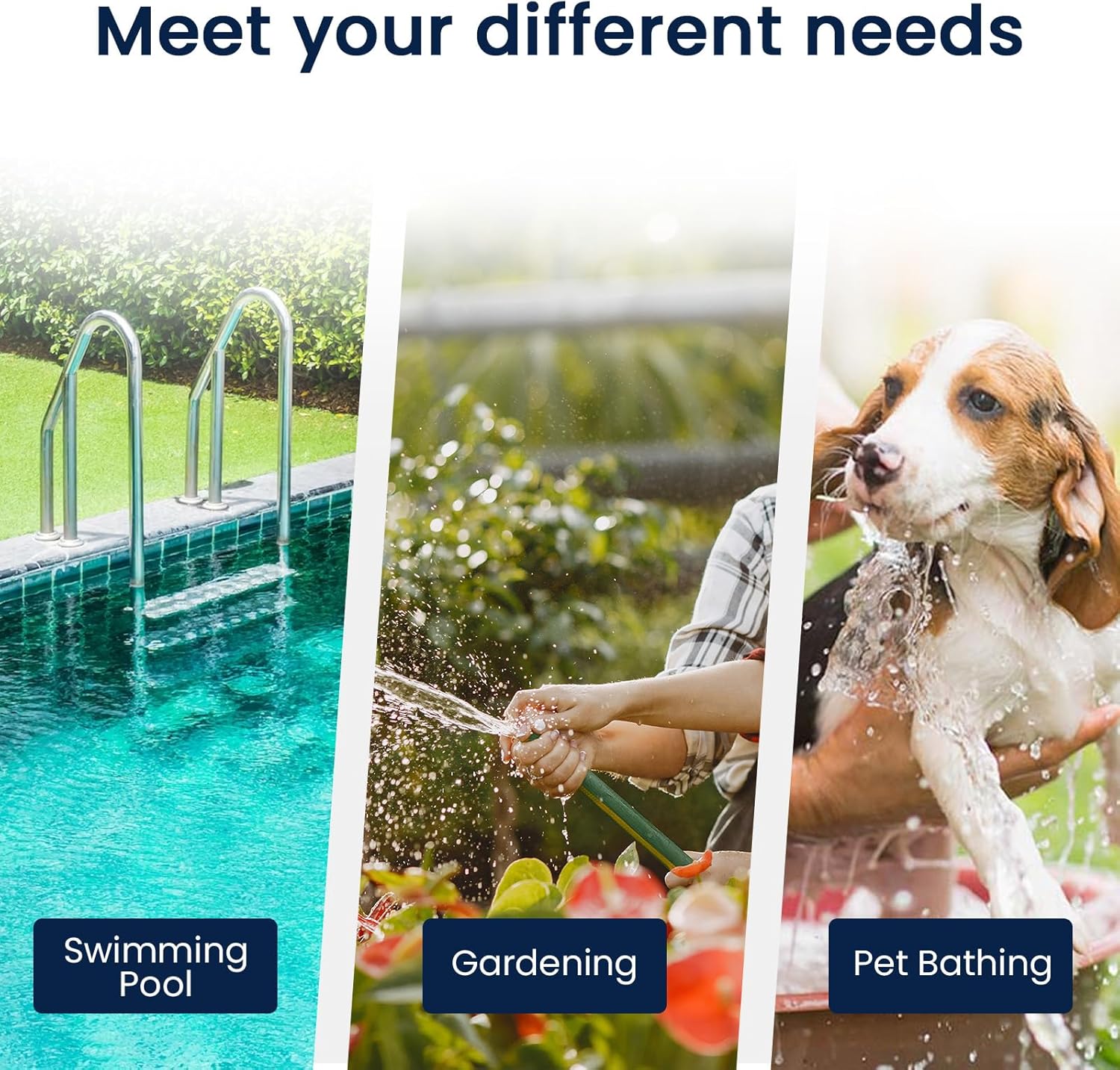
Pool and spa fills mostly need chlorine and odor reduction so the water does not throw off your chemical balance on day one. Garden and plant watering benefits more from chlorine and chloramine reduction, since chlorinated tap water can stress root systems and beneficial soil microbes over a season of regular watering. Pressure washers and car washing care most about sediment and dissolved minerals, since grit can scratch a finish and hard water leaves spots as it dries. Misting systems have the narrowest need of all: they mainly need calcium and scale control so the tiny nozzle openings do not clog.
Reading the product description for the specific contaminants it targets, rather than assuming any filter does everything, saves you from buying a sediment strainer when what you actually needed was a carbon filter for chlorine.
Filtration Method and Micron Rating
Mesh and screen filters use a physical barrier, typically rated in mesh count (40 or 100 mesh is common), to catch sand, rust flakes, and other visible debris. They are simple, cheap, and easy to inspect, but they do nothing for chlorine or dissolved minerals. Carbon and GAC/KDF filters add a chemical stage that reduces chlorine, odor, and some heavy metals as water passes through, which is what you want for plant and pool water. Spin-down sediment filters use a fine mesh housed in a clear, flushable body, so you can see debris building up and clear it with a valve instead of replacing a cartridge.
A lower micron number means finer filtration and, usually, a shorter interval between cleanings or replacements. For most outdoor uses, 40 to 100 mesh or a 5 to 50 micron rating is a reasonable middle ground between filtration quality and how often you have to service the filter.
Fitting and Hose Thread Compatibility

Nearly all of these filters use standard 3/4 inch garden hose thread (GHT) on both ends, so they screw directly onto a spigot or between two hose sections without adapters. A handful of whole-yard or well-water units use pipe thread (MNPT/FNPT) instead, meant for a hose bib or irrigation line rather than a standard hose connector, so it is worth checking the listing before you order if your setup is not a typical outdoor spigot.
Flow direction also matters. Nearly every filter in this category has an arrow molded into the housing showing which way water should pass through it; installing one backward reduces flow and can shorten the filter’s working life.
Reusable vs. Replaceable

Spin-down and mesh-screen filters are reusable: you flush or rinse the screen and put it back to work, with no ongoing cost beyond the occasional replacement O-ring. Carbon and GAC/KDF cartridges are consumable, rated for a set number of gallons or months of use, after which filtration quality drops even though water still flows through. If you water a large garden daily or fill a pool multiple times a season, a reusable or high-capacity filter usually costs less over a year than a low-capacity cartridge you have to replace every few weeks.
Flow Rate and Pressure Drop
Any inline filter restricts flow to some degree, and finer filtration generally means a bigger pressure drop. That trade-off barely matters for a slow pool fill or drip watering, but it can matter for a pressure washer, where reduced inlet flow can affect the washer’s output pressure. Filters built specifically for pressure washer inlets are designed to keep restriction low while still catching grit, so it is worth choosing a filter marketed for that use rather than repurposing a plant-watering filter for a power tool.
A rated flow of at least a few gallons per minute is usually enough for hand watering or filling a small pool, but if you plan to run soaker hoses or a sprinkler zone through the same filter, check the manufacturer’s flow rate against your irrigation setup so the filter is not the bottleneck on watering day.
Climate and Seasonal Storage
Anywhere winters drop below freezing, water left inside a hose filter can expand and crack the housing, plastic or brass alike. Disconnecting the filter, draining it, and storing it indoors over the cold months protects the investment the same way winterizing a hose bib does. In warmer climates where a filter stays connected outdoors year-round, look for housings rated for UV exposure so the plastic does not become brittle after a summer or two in direct sun.
Certifications and Build Materials
NSF/ANSI certification on a filter means the manufacturer has submitted the product for independent evaluation of its contaminant-reduction claims, which is a useful signal when a listing promises to reduce chlorine or improve water taste. It matters most for filters used on plants you eventually eat from or water you might splash on your hands and face while washing a car.
Housing material is worth a glance too. Lead-free brass fittings hold up to UV exposure and repeated hose connections better than plastic threads, which can crack after a season or two left attached to an outdoor spigot. If a filter is going to live outside year-round rather than get stored between uses, a brass or reinforced housing is the more durable choice even at a slightly higher price.
| Use Case | Best Filter Type | Typical Thread | Service Style |
|---|---|---|---|
| Filling a pool or spa | Carbon/GAC pre-filter | 3/4″ GHT | Cartridge, replace seasonally |
| Watering a garden or houseplants | Carbon/GAC inline filter | 3/4″ GHT | Cartridge, replace by gallon rating |
| Well water or whole-yard supply | Spin-down sediment filter | MNPT/FNPT or GHT | Reusable, flush as needed |
| Pressure washing or car washing | Mesh sediment filter | 3/4″ GHT | Reusable mesh, rinse clean |
| Patio misting systems | Calcium/scale inhibitor filter | 3/4″ GHT | Cartridge, replace by season |
If you are shopping for a broader home filtration setup rather than a single hose attachment, our countertop water filtration guide covers indoor options that pair well with an outdoor pre-filter.
Why You Should Trust Us
We built this list by comparing publicly available specifications, certifications, and verified customer ratings for hose-end and yard water filters currently sold on Amazon, then narrowing the field to models with strong review volume and a rating of at least 4.0 stars. We cross-checked filtration method, thread compatibility, and stated capacity against each manufacturer’s own listing so the details here match what you would see on the product page.
We did not include filters marketed primarily for RV or camper drinking water, since that is a distinct use case we cover in our dedicated RV water filter guide. This list focuses specifically on filters for pools, gardens, misting systems, and outdoor cleaning tasks where the water is not meant for drinking straight from the tap.
Final Thoughts
For most yards, the iSpring WSP-50 Spin-Down Sediment Water Filter is our best overall pick. Its reusable brass housing and flushable cartridge mean it keeps working season after season without a subscription to replacement filters, and it handles whole-yard sediment duty whether it is feeding a hose bib, irrigation line, or well-fed spigot.
If you want something simple and inexpensive for occasional use, the Twinkle Star Garden Hose Inline Sediment Filter is our best value pick. It is a basic dual-mesh screen that catches sand and rust before it reaches a pressure washer or hose nozzle, at a price low enough to keep a spare on hand.
For pool and spa owners specifically, the GLACIER FRESH Garden Hose Filter Pre-Filter is worth a look before your next fill, since chlorine and odor reduction on the way in makes balancing the water afterward noticeably easier. Gardeners who water often should consider the AQUA CREST Garden Hose Water Filter for Plants, and anyone chasing hard water spots on a car or window should look at the AQUA CREST Hard Water Filter for Hose. Whichever you pick, an inline filter is a small, one-time investment that keeps chlorine, grit, and scale out of jobs where clean water actually matters. For a broader look at what else this category covers, our Patio, Lawn & Garden hub has more picks for the yard.
None of these filters require plumbing changes or a professional installation. Every model here screws onto a standard 3/4 inch hose thread by hand, so setup is a five-minute job the first time you connect one and a habit after that. Keeping even one filter on hand for whichever task comes up, whether it is topping off a kiddie pool or rinsing a car, is a low-effort way to protect the surfaces and plants that hose water eventually touches.
FAQs
Do I really need an outdoor water filter if my tap water is already treated?
Municipal treatment makes tap water safe to drink, but it does not remove everything that can affect a specific outdoor job. Chlorine that is harmless to drink can still stress plant roots over repeated watering, and treated water still carries sediment and dissolved minerals that leave spots on a car or clog a misting nozzle. An outdoor filter targets those specific side effects rather than general safety.
How often should I clean or replace an outdoor water filter in 2026?
It depends on the filter type. Reusable mesh and spin-down filters just need a rinse or flush every few weeks of regular use, more often in areas with sandy or sediment-heavy water. Carbon and GAC/KDF cartridges are rated for a set number of gallons, usually printed on the packaging, after which the chlorine-reducing capacity drops even if water still flows through cleanly.
Can I use the same filter for my pool and my garden?
A general carbon or GAC/KDF pre-filter can usually handle both, since chlorine and sediment reduction benefit either use. The main thing to check is the connection: as long as the filter has standard 3/4 inch garden hose threads on both ends, it can move between the pool hose and the garden hose as needed, though keeping a dedicated filter for each reduces wear on any single unit.
Will an outdoor water filter reduce my hose’s water pressure?
Some reduction is normal with any inline filter, and finer filtration generally means a bigger pressure drop. For slow tasks like drip watering or a pool fill, this is rarely noticeable. For pressure washers, choosing a filter designed specifically for that inlet, rather than a general garden filter, keeps the drop small enough that it does not meaningfully affect the washer’s output.
Are these filters safe for watering vegetables or herbs?
Yes. Filters marketed for garden and plant use, like the ones in this guide, are designed to reduce chlorine and improve water quality for edible plants, not to add anything to the water. For more general growing tips, our categories hub has additional home and garden guides worth browsing.
Write Your Review
No reviews yet. Be the first to share your experience!