

Brooks built its reputation on running, but a large share of the people wearing the brand never break into a jog. They walk: neighborhood loops after dinner, twelve-hour hospital shifts, airport terminals, farmers markets, and the slow lap around the block that a knee replacement allows. That is why picking among brooks shoes for walking comes down to different questions than picking a race-day trainer. Our top pick is the Brooks Adrenaline GTS 24 for its GuideRails support system, which keeps tired ankles tracking straight through long, slow miles instead of letting them roll inward. Below we compare 11 models from across the lineup so you can match cushioning level, pronation control, and width to the way you actually move.
The shortlist covers the five families walkers reach for most: the support-focused Adrenaline GTS, the balanced neutral Ghost, the plush Glycerin, the leather Addiction Walker, and the maximum-support Beast. Every entry is a genuine Brooks model carrying a strong customer rating, and each one notes who it suits along with where it gives ground. If you would rather see how the brand stacks up against everyone else before you commit, start with our wider roundup of walking shoes, then come back here to settle on a Brooks model and width for October 2026.

Pros
- GuideRails steady a wobbling ankle without forcing a gait correction
- DNA LOFT v2 foam stays soft without collapsing over long walks
- Offered in wide and extra wide fittings
- Removable sockliner leaves room for a custom orthotic
- The most broadly suitable model in the Brooks range for walkers
Cons
- Support structure adds weight next to neutral models
- Mesh upper gives no protection on wet floors or in rain
- More shoe than a straight-tracking foot needs
The Adrenaline GTS is the shoe most people mean when they say they walk in Brooks. It sits in the support half of the catalog, which means it carries GuideRails: two firmer foam walls that run along the heel and hold the rearfoot in line. Unlike an old-style medial post, they stay out of the way while your stride is neutral and only engage when your ankle starts drifting inward, which typically happens late in a long walk when the muscles that hold your arch up get tired.
Underfoot the 24 uses DNA LOFT v2 foam. For walking this is a better balance than the softest options in the range, because a walking stride keeps the heel loaded far longer than a running stride does and a very soft foam bottoms out under that sustained pressure. The 24 feels cushioned on the first step and still feels cushioned an hour later, which is the harder trick.
The weak points are predictable. All that structure costs weight, so it feels more substantial than a Ghost or a Revel on your foot. The engineered mesh breathes beautifully and is useless the moment the ground is wet. And if your feet already track straight, you are paying for support you will never call on.
Bottom line: if you are buying one pair of Brooks for walking and you are not certain which camp your feet belong to, this is the safest possible answer. It suits the widest range of walkers, comes in the fittings most people need, and does not punish neutral feet for choosing it.
- Support type: GuideRails support for overpronation
- Cushioning level: balanced, mid-stack
- Midsole: DNA LOFT v2 foam
- Upper: engineered mesh
- Outsole: rubber, road and pavement tread
- Width options: standard, wide, extra wide
- Sockliner: removable, orthotic friendly
- Intended use: daily walking, standing shifts, easy running
Buy this if the inner edge of your last pair wore down first, if your arches ache after a long walk, or if a clinician has told you that you overpronate. It is also the right default for anyone who walks several miles a week on pavement and does not want to think hard about the decision.
Skip it if your feet are genuinely neutral and you want the lightest, most flexible thing Brooks makes. The Ghost or the Revel will feel freer without giving up much cushioning.
Order the fitting before the colorway. Wide and extra wide sell out in the popular colors first, and walking feet swell more than most buyers expect over an hour on the road.
If you already use custom orthotics, pull the stock sockliner out before you judge the fit. The shoe has enough volume to take an aftermarket insole in standard width, but adding one without removing the original will make it feel a full size small.

Pros
- Built on a women's last rather than a scaled-down men's shoe
- GuideRails hold the heel in line as the arch tires
- Narrow through extra wide fittings available
- Familiar fit that changes little from one generation to the next
- Handles both walking and light running without complaint
Cons
- Heavier than the neutral models in the range
- Mesh upper wets through quickly
- Support is wasted on a genuinely neutral foot
This is the same design brief as the men's Adrenaline GTS 24 built on a women's last, which matters more than the marketing usually explains. Brooks tunes heel volume, forefoot width, and midsole foam density separately for the women's line, so the support arrives at a different point in the stride than it would in a scaled-down men's shoe.
For walking the payoff is stability that shows up when you need it. GuideRails sit quietly while your gait is centered and firm up when the heel starts to roll, which is the pattern most walkers experience in the second half of a long outing rather than at the start. DNA LOFT v2 underfoot keeps the ride cushioned without the sinking feeling that makes some plush shoes tiring over distance.
The compromises match the men's version. It is not a light shoe, the mesh upper offers nothing against weather, and a neutral foot gets no benefit from the support walls. The fit also runs true and narrow through the midfoot, which is a plus for slim feet and a reason to size into a wide fitting for everyone else.
Bottom line: the most reliable everyday walking pick in the women's Brooks range, and the one to choose when arch fatigue or ankle roll is your main complaint.
- Support type: GuideRails support for overpronation
- Cushioning level: balanced, mid-stack
- Midsole: DNA LOFT v2 foam, women's tuning
- Upper: engineered mesh
- Outsole: rubber road tread
- Width options: narrow, standard, wide, extra wide
- Sockliner: removable
- Intended use: daily walking, work shifts, easy running
The women's Adrenaline fits true to length but snug through the midfoot. If you normally size up half a size in athletic shoes to make room for swelling, try a wide fitting in your true size instead. Length that is too generous lets the heel slip, which undoes the point of buying a support shoe.
Shop or measure late in the day. Feet spread measurably after several hours upright, and a walking shoe fitted in the morning is the classic reason people report hot spots on the outside of the forefoot.
Ideal for women walking daily on pavement, standing through long shifts, or returning to activity after a foot injury with instructions to wear supportive shoes.
Less suited to anyone with high, rigid arches that supinate outward. That foot type usually does better in a plush neutral shoe such as the Glycerin.

Pros
- Smooth, predictable ride that suits walkers and runners alike
- DNA LOFT v3 foam is soft without feeling unstable
- Lighter and more flexible than the support models
- Wide fittings available in most colorways
- Understated enough to wear with everyday clothes
Cons
- No support structure for feet that roll inward
- Mesh upper is not suited to rain or wet floors
- Less underfoot volume than the plush tier for very long walks
The Ghost is Brooks at its most useful. It is a neutral shoe, so there are no GuideRails and no rollbar, just a balanced platform and a midsole tuned to feel the same on step one and step ten thousand. That makes it the natural counterpart to the Adrenaline GTS: same everyday brief, different foot type.
Version 17 rides on nitrogen-infused DNA LOFT v3, which is softer than the foam in the support models without the wallowing feeling that very plush shoes can produce. For a walking stride the result is forgiving under the heel and stable enough that you are not fighting the shoe on uneven pavement. Transitions are the quiet strength here, and it is why so many walkers stay on this model for years.
What it does not do is correct anything. If your ankles roll inward, the Ghost will let them. It also has less foam under you than the Glycerin, so walkers logging very long sessions on concrete may want the extra stack. And like almost everything in the range, the mesh upper gives up immediately in the rain.
Bottom line: the default neutral choice for men who walk daily and do not need pronation control. Buy it when your only complaint about your current shoes is that they feel flat and lifeless.
- Support type: neutral
- Cushioning level: balanced
- Midsole: nitrogen-infused DNA LOFT v3
- Upper: engineered mesh with reinforced saddle
- Outsole: rubber road tread
- Width options: standard and wide
- Sockliner: removable
- Intended use: daily walking, gym, easy running
The Ghost is at its best on repeatable everyday distances: a two to five mile loop, a dog walk twice a day, a commute that involves a lot of pavement. It has enough cushioning to absorb those miles and enough structure to stay composed when you pick up the pace on a hill.
It is less convincing as a standing-all-day shoe. If you spend eight hours upright on a hard floor before you go walking, the plush tier will treat you better.
Check the wear pattern on your current shoes before you choose neutral. If the inner edge of the heel and forefoot is noticeably more worn than the outer edge, you are likely overpronating and the Adrenaline GTS is the better buy.
The Ghost fits true to size with a slightly roomier forefoot than the Adrenaline. Wide fittings exist but are stocked in fewer colorways, so check the specific listing.
Pros
- Balanced cushioning that works for walking and running
- Women's last with a secure midfoot hold
- Lighter than any support model in the range
- Wide fittings available
- Comfortable from the first wear with little break-in
Cons
- Offers no help to feet that roll inward
- Mesh soaks through in wet weather
- Not enough stack for walkers who want maximum plushness
If the Adrenaline GTS is the support answer in the women's range, the Ghost is the neutral one. It leaves your gait alone entirely and puts the effort into cushioning and a clean roll from heel to toe. For a walker with feet that track straight, that is exactly the right division of labour.
DNA LOFT v3 is nitrogen-infused, which in practice means it is softer than the foam in the support shoes while staying resilient enough not to pack out early. Walking loads the heel hard and holds it there, and this midsole handles that better than a firmer everyday foam would. The women's build also holds the midfoot a little more closely, which keeps the foot from sliding forward on downhills.
The honest limits: no support structure of any kind, an upper that offers nothing against weather, and less underfoot volume than the Glycerin for walkers who want to be truly insulated from concrete. It also wears out on the usual timeline, so treat it as a consumable rather than a shoe you keep for years.
Bottom line: the everyday neutral pick for women, and the model to buy when the Adrenaline feels like more shoe than you need.
- Support type: neutral
- Cushioning level: balanced
- Midsole: nitrogen-infused DNA LOFT v3, women's tuning
- Upper: engineered mesh
- Outsole: rubber road tread
- Width options: standard and wide
- Sockliner: removable
- Intended use: daily walking, travel, easy running
The right pick for women with neutral or high arches who want cushioning without correction. It is also a strong travel shoe, since it is light enough to pack and neutral enough to wear for a full day of walking a city.
Not the shoe if your arches flatten under load or you have been advised to wear stability footwear. Move to the Adrenaline GTS or the Glycerin GTS instead.
The Ghost needs very little break-in, but the foam does firm up slightly for the first week before settling. Wear them for short walks over two or three days before committing to a long outing, and lace them with the heel seated properly at the back of the shoe rather than pulling the laces tight over the forefoot.
If your heel slips, use the extra eyelet at the top for a heel lock lacing before you consider sizing down. Length that is too short is the more common cause of black toenails among walkers.

Pros
- Full-grain leather upper meets most workplace dress codes
- Slip-resistant outsole designed for wet floors
- Extended rollbar gives the strongest motion control in the range
- Reaches the widest fittings Brooks offers
- Wipes clean instead of staining like mesh
Cons
- Heavier and warmer than any mesh model here
- Leather needs a genuine break-in period
- Looks like a work shoe, not a modern sneaker
This is the one shoe in the guide Brooks actually built for walking rather than adapted from running. The differences are obvious the moment you pick it up. The upper is full-grain leather instead of mesh, the outsole is formulated for slip resistance on hard indoor floors, and the midsole carries an extended rollbar rather than GuideRails.
That rollbar is the most controlling structure Brooks makes. It runs further along the medial side than the support walls on an Adrenaline and resists inward collapse more firmly, which is why this model turns up so often on recommendation lists for flat feet and for people who have been told to stop walking in soft, unstructured shoes. Underfoot, BioMoGo DNA is a firmer, more traditional cushioning than the newer foams elsewhere in the range, and it holds up well to the sustained heel loading of a walking stride.
The costs are real. Leather is heavier than mesh and runs hotter in summer. It needs a week or two of wear before it moulds to your foot, unlike the Ghost, which is comfortable out of the box. And nobody will mistake it for a modern trainer, which matters if you want one shoe for the ward and the weekend.
Bottom line: the pick when your walking is work. If you need leather, slip resistance, and serious motion control in one shoe, nothing else in the Brooks catalog does the job.
- Support type: motion control, extended rollbar
- Cushioning level: moderate, firmer feel
- Midsole: BioMoGo DNA
- Upper: full-grain leather
- Outsole: slip-resistant rubber
- Width options: standard through extra wide
- Sockliner: removable
- Intended use: work shifts, uniform dress codes, everyday walking
Leather rewards small amounts of maintenance. Wipe the upper down with a damp cloth after a shift, let the shoes dry away from direct heat, and use a leather conditioner every few months to stop creases from cracking. Drying wet leather on a radiator is the fastest way to ruin a pair.
The slip-resistant outsole is designed for hard indoor floors and works best when the tread is clean. Grease and flour build up in the grooves and reduce grip, so give the sole a scrub when the pattern starts to look filled in.
Built for nurses, kitchen and warehouse staff, teachers, and anyone whose dress code rules out mesh. It is equally a good fit for walkers with flat feet who want the firmest control Brooks offers.
Not the right choice for hot-weather fitness walking or for anyone chasing a lightweight feel. A Ghost or a Revel will be far cooler and far lighter.

Pros
- Leather upper suits uniform and workplace dress codes
- Slip-resistant outsole holds on wet hard floors
- Strong motion control for flat or collapsing arches
- Available in wide fittings
- Durable enough to outlast several pairs of mesh shoes
Cons
- Warm and heavy compared with the mesh models
- Stiff until the leather softens
- Styling is firmly practical rather than fashionable
The women's Addiction Walker 2 exists for a specific reader: someone who walks for a living, on hard floors, in a place where mesh trainers are not allowed. It answers all three problems at once with leather up top, a slip-resistant compound underneath, and a rollbar in the midsole that resists arch collapse more firmly than the GuideRails on a standard support shoe.
Compared with the rest of this guide it feels traditional. BioMoGo DNA is a firmer cushioning than the nitrogen-infused foams in the newer models, and the shoe rides lower and more planted as a result. Many walkers prefer exactly that, particularly anyone who finds tall, soft midsoles unsteady. The trade is a ride that transmits more of the floor to you than a Glycerin does.
Fit needs patience. Leather does not stretch on the first wear the way engineered mesh accommodates a foot immediately, and the shoe can feel unyielding for the first week. It is also warmer than mesh, which is a genuine consideration for a twelve-hour shift in summer. Order a wide fitting if your feet swell noticeably by the end of a shift.
Bottom line: the most durable and the most controlling option here, and the obvious choice for women whose walking happens at work rather than on a fitness route.
- Support type: motion control, extended rollbar
- Cushioning level: moderate, firmer feel
- Midsole: BioMoGo DNA
- Upper: full-grain leather
- Outsole: slip-resistant rubber
- Width options: standard and wide
- Sockliner: removable
- Intended use: healthcare and hospitality shifts, everyday walking
Keep the leather clean and conditioned and this shoe will outlast several pairs of mesh trainers. Wipe spills off promptly, dry the shoes at room temperature, and rotate between two pairs if you work consecutive long shifts so the midsole has time to recover.
Check the outsole tread every few months. Slip resistance depends on the tread pattern staying open, and a sole worn smooth at the heel no longer grips a wet floor regardless of the compound underneath.
Buy this only if you need what it does. Leather, slip resistance, and heavy motion control all come with weight and warmth attached, and a walker on dry pavement gets none of the benefit and all of the cost.
If you use custom orthotics, remove the stock sockliner first. This is a lower-volume shoe than the plush models, and stacking an orthotic on top of the original insole will make it feel a size too small.

Pros
- The softest neutral ride Brooks offers without a rocker
- Deep stack takes the sting out of concrete
- Plenty of volume to accommodate a custom orthotic
- Plush interior with a well-padded collar
- Excellent for long walks and long days on hard floors
Cons
- Heavier and bulkier than the Ghost
- No support structure for feet that roll inward
- Soft foam can feel unsteady on uneven ground
The Glycerin is where Brooks stops worrying about weight and concentrates on softness. Version 22 uses nitrogen-infused DNA Tuned foam, and the practical effect for a walker is a noticeably deeper, more forgiving platform than the Ghost provides. On concrete, on tile, on the kind of surfaces that make your heels ache by the afternoon, that extra volume is the difference between finishing a walk comfortably and cutting it short.
It is a neutral shoe, so all of that cushioning arrives without any correction. That is ideal for a foot that tracks straight and a liability for one that does not, since soft foam gives a collapsing ankle more room to collapse. Brooks sells the Glycerin GTS for precisely that reason, and choosing between the two is the single decision that matters most in this family.
The drawbacks are the usual price of plushness. It is heavier and taller than the Ghost, which some walkers find sluggish. The soft platform is less confident on gravel or a rutted trail than a firmer shoe would be. And the mesh upper, generous and comfortable as it is, still offers nothing in the rain.
Bottom line: the pick for men whose walks are long, whose surfaces are hard, or whose feet simply want more foam than the Ghost provides.
- Support type: neutral
- Cushioning level: plush, high stack
- Midsole: nitrogen-infused DNA Tuned
- Upper: engineered mesh with plush collar
- Outsole: rubber road tread
- Width options: standard and wide
- Sockliner: removable, generous volume
- Intended use: long walks, standing shifts, recovery days
This is the model to reach for when the outing runs past an hour or when the route is unbroken pavement. The deeper foam keeps working long after a mid-stack shoe has started to feel thin, and the padded collar prevents the rubbing that shows up on long days.
It is also a strong choice for the walk you take after a long shift on your feet, when your legs are already loaded and you want the shoe to do more of the work.
Right for neutral or high-arched men who want maximum comfort and are willing to carry a little extra weight for it. Also a sensible pick for heavier walkers who do not need pronation control but do need foam that will not bottom out.
Wrong for anyone who overpronates. Take the Glycerin GTS 22 instead and keep the same cushioning with support added.

Pros
- Combines maximum cushioning with GuideRails support
- Deep foam handles long walks on hard surfaces
- Plush upper and collar reduce rubbing over distance
- Enough volume for a custom orthotic
- Solves the plush-versus-support dilemma in one shoe
Cons
- One of the heavier shoes in the range
- Tall stack takes a few walks to feel natural
- Mesh upper offers no weather protection
The Glycerin GTS 22 answers a question a lot of walkers ask and few shoes solve: what if you need maximum cushioning and you overpronate? Most brands make you choose. Brooks takes its plushest neutral shoe and adds GuideRails, so the foam depth stays and the heel gets held in line.
For walking on hard surfaces this is a compelling combination. Nitrogen-infused DNA Tuned foam gives you real insulation from pavement, and the support walls keep that soft platform from becoming unstable as your arch tires. The women's version is built on a women's last with its own foam tuning, so the support engages at the point in the stride where it is actually needed.
You pay for it in weight and height. This is one of the more substantial shoes here, and the tall stack takes a couple of outings before it feels normal underfoot. It is also, like everything else in mesh, defenceless against rain. And if your feet track straight, the plain Glycerin will give you the same cushioning with less bulk.
Bottom line: the best single shoe here for women who want plush cushioning and genuinely need support, particularly for long walks or long days standing on concrete.
- Support type: GuideRails support
- Cushioning level: plush, high stack
- Midsole: nitrogen-infused DNA Tuned
- Upper: engineered mesh with plush collar
- Outsole: rubber road tread
- Width options: standard and wide
- Sockliner: removable
- Intended use: long walks, all-day standing, supportive daily wear
Made for women who overpronate and want the softest ride available rather than the balanced feel of an Adrenaline. It suits long-distance walkers, retail and healthcare workers on hard floors, and anyone carrying extra weight who needs foam that will not pack out.
If your walks are short and you value a light shoe, this is more than you need. The Adrenaline GTS delivers the same support with less bulk.
The choice between Glycerin and Glycerin GTS is not about comfort, it is about pronation. Look at the wear pattern on an old pair: heavier wear on the inner edge points to the GTS, even wear points to the plain Glycerin.
Give a tall, plush shoe a fair trial. The first walk in a high-stack midsole often feels odd to someone coming from a flat shoe, and most walkers stop noticing it by the third or fourth outing.
Pros
- The most supportive shoe Brooks builds for men
- Deep, structured cushioning that resists bottoming out
- Reaches the widest fittings in the catalog
- Well suited to heavier walkers and long standing shifts
- Substantial build that holds its shape over months
Cons
- Heavy and bulky by any standard
- Far more support than an average walker needs
- Mesh upper is no help in wet conditions
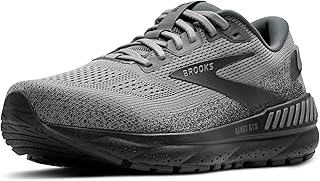
The Beast is the end of the support scale. Where the Adrenaline offers GuideRails as a gentle backstop, the Beast builds the whole shoe around holding your foot in line: a broader, more structured platform, deeper foam, and a substantial upper that keeps everything seated. Brooks has kept this model in the line for decades because a specific group of walkers has nothing else to buy.
That group is heavier walkers, people with severe overpronation, and anyone who needs a very wide fitting with real structure rather than a wide version of a soft shoe. For them the Beast works where lighter stability shoes give up. DNA LOFT v2 underfoot provides cushioning that does not collapse under sustained load, which is exactly the failure mode heavier walkers report in thinner shoes.
For everyone else it is too much shoe. It is heavy, it is bulky, and the support structure that makes it valuable to one walker makes it feel restrictive to another. There is no reason to buy the Beast as an upgrade over an Adrenaline unless you specifically need what it adds.
Bottom line: a specialist, and an excellent one. Buy it if you need maximum support or the widest fitting available, and skip it otherwise.
- Support type: maximum GuideRails support
- Cushioning level: plush and structured
- Midsole: DNA LOFT v2 on a broad platform
- Upper: engineered mesh with reinforced structure
- Outsole: rubber road tread
- Width options: standard through the widest fittings Brooks offers
- Sockliner: removable
- Intended use: maximum support walking, long standing shifts
Built for men who are heavier, who overpronate severely, or who need a fitting wider than a standard wide. It is also a reasonable choice for anyone who has worn out lighter stability shoes unusually quickly, since the structure here lasts longer under load.
Women looking for the same level of support should look at the Ariel GTS, which is the equivalent model built on a women's last rather than a scaled version of this one.
A shoe this substantial deserves a rotation. Wearing the same pair every day gives the midsole no chance to decompress, and heavier walkers compress foam faster than average, so alternating between two pairs will noticeably extend the life of both.
Watch the outsole at the heel. On a support shoe, uneven heel wear is an early sign that the midsole has lost its structure, and continuing past that point is how a supportive shoe quietly stops being supportive.

Pros
- Rockered sole reduces how far ankles and toes have to bend
- Very tall stack absorbs hard pavement
- Broad platform feels stable despite the height
- Roomier toe box than the standard Ghost
- Popular with walkers managing arthritis or plantar fascia pain
Cons
- Bulky, and it looks it
- Rocker feels strange for the first few walks
- Neutral only, with no support structure
The Ghost Max is the Ghost with the volume turned up and a rocker added. That rocker is the interesting part for walkers. A curved sole rolls you from heel to toe rather than asking your ankle and big toe to bend through the full range on every step, which matters enormously if either joint is stiff or painful.
Version 3 sits on a tall nitrogen-infused DNA LOFT v3 midsole and a platform that is noticeably wider than a standard Ghost. That width is what keeps a high shoe from feeling tippy, and it is the reason this model works for walkers who have tried other maximalist shoes and found them unstable. The toe box is also more generous, which suits swollen feet and bunions.
It is not subtle. This is a big shoe and it looks like one, so it does not disappear under a pair of jeans the way a Revel does. The rocker also takes adjustment: the first few walks feel like the shoe is pushing you forward, and walkers who dislike that sensation usually know within a week. And it is a neutral shoe, so it offers no pronation control.
Bottom line: the pick when joints rather than muscles are the limiting factor. For stiff ankles, forefoot arthritis, or heel pain, the rocker is the most useful feature in this entire guide.
- Support type: neutral with a broad, stable platform
- Cushioning level: maximum
- Midsole: nitrogen-infused DNA LOFT v3
- Geometry: GlideRoll rocker sole
- Upper: engineered mesh with a roomy toe box
- Outsole: rubber road tread
- Sockliner: removable
- Intended use: walking with joint pain, long days on hard surfaces
A rockered sole is curved rather than flat, so the shoe pivots you forward through the step instead of relying on your ankle and toe joints to flex. Less required flexion means less strain on stiff or painful joints, which is why rockers are a standard recommendation for forefoot arthritis and for people recovering from plantar fascia trouble.
The adjustment period is real. Expect a few walks where the shoe feels like it is tipping you forward. If it still feels wrong after a week, a rocker is probably not right for your stride.
Best for women dealing with stiff ankles, arthritis in the forefoot, heel pain, or swelling that makes a standard toe box uncomfortable. Also a good fit for anyone who wants the most cushioning available and does not need pronation control.
Skip it if you want a low, connected feel, if you need support for a collapsing arch, or if you want one shoe that also passes as everyday footwear.

Pros
- The most affordable route into a genuine Brooks fit
- Lighter and lower than the plush models
- Knit upper looks at home with everyday clothes
- Firm ride suits walkers who dislike sinking into foam
- Easy to justify as a second pair for a rotation
Cons
- Noticeably less cushioning than the Ghost or Glycerin
- Neutral only, with no support structure
- Not enough shoe for very long walks on concrete
The Revel is the shoe Brooks makes for people who want the brand's fit and outsole quality without the premium midsole. Version 8 is a neutral shoe with DNA cushioning, a knit upper, and a lower, firmer ride than anything else in this guide. For short daily walks and general wear, that is often exactly right.
What you keep is the part most buyers care about: a last that fits like a Brooks, a rubber outsole that grips wet pavement, and a heel that holds your foot properly. What you give up is underfoot volume. Stand these next to a Glycerin and the difference is obvious the first time you walk on concrete for an hour.
There is a group of walkers for whom the firmer ride is a feature rather than a compromise. If tall, soft midsoles make you feel unsteady, or if you want a shoe that feels connected to the ground, the Revel solves a problem the plush models create. It is also the easiest model here to wear casually, since the knit upper does not shout athletic shoe.
Bottom line: the value pick, and a genuinely good one for short walks, errands, and casual wear. Just do not ask it to carry you through a long walk on pavement.
- Support type: neutral
- Cushioning level: firm, lower stack
- Midsole: DNA cushioning
- Upper: knit with a casual finish
- Outsole: rubber road tread
- Width options: standard, with wide in selected colorways
- Sockliner: removable
- Intended use: short walks, errands, casual daily wear
Treat the Revel as a second pair rather than a replacement for a cushioned walking shoe. Many walkers keep one plush model for long outings and a Revel for errands, dog walks, and travel, which also extends the life of both by giving each midsole time to recover.
Check the fitting availability before you fall for a colorway. Wide options exist but are stocked in fewer versions than in the Ghost or Adrenaline lines.
Right for women walking modest daily distances, for anyone who prefers a firmer shoe, and for buyers who want the Brooks fit at the friendliest price in the range.
Not the shoe for long-distance walking, all-day standing on hard floors, or any foot that needs pronation control. Move up to the Ghost, the Glycerin, or the Adrenaline GTS.
What to Look For in Brooks Shoes For Walking
Brooks names its models after cushioning families rather than activities, which is why the walking shoe you need is often filed under running on the product page. Once you understand the four levers the brand pulls, the catalog stops looking like an alphabet soup of Ghosts, Glycerins, and GTS suffixes. Work through the criteria below in order, because the first one narrows the field faster than anything else.
Start With Pronation Control, Not Cushioning
Every Brooks model splits into one of two camps, and the letters GTS are the tell. GTS stands for Go-To Support and signals that the shoe carries GuideRails, a pair of firmer foam walls that sit alongside the heel. They do nothing while your stride stays centered. The moment your ankle starts to collapse inward or your heel wobbles late in a walk, they push back. That is a very different design goal from a rigid medial post, which corrects your gait whether you asked it to or not.
If you overpronate, have flat or fallen arches, or notice the inner edge of your old shoes wearing down first, look at the Adrenaline GTS, the Glycerin GTS, or the Beast GTS. If your feet track fairly straight and you simply want comfort, the neutral side of the house is a better fit: the Ghost, the Ghost Max, the Glycerin, and the Revel. Choosing a support shoe you do not need is the most common mistake walkers make, and it usually shows up as a sore arch after the first week.
Worth knowing: the walker-specific Addiction Walker 2 handles pronation a third way, with an extended rollbar built into the midsole rather than GuideRails. It is the most controlling shoe in this guide, which is exactly why it lands on so many podiatrist recommendation lists. If arch collapse is your main complaint, our guide to orthopedic walking shoes covers the same problem from the medical side.
Match Cushioning Level to Your Weekly Distance
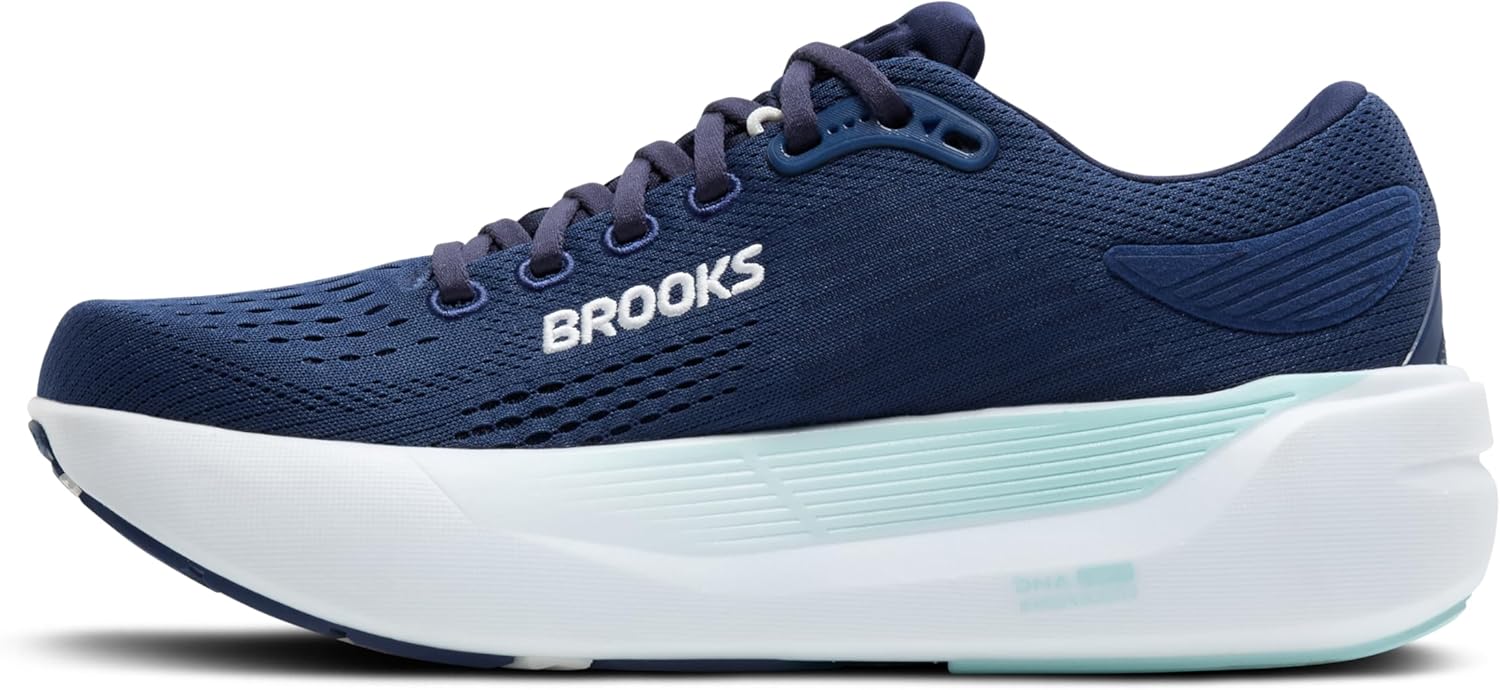
Brooks stacks its foam in three broad tiers, and walkers benefit from a different tier than runners do. Walking loads the heel harder and for longer, since your foot spends more time on the ground per step and never leaves it entirely during the gait cycle. That makes underfoot volume more valuable than a snappy toe-off.
The Revel sits at the firm, lighter end and suits short daily walks, casual wear, and anyone who dislikes the sensation of sinking into a shoe. The Ghost occupies the middle and is the safest default for someone walking a few miles most days. The Glycerin and Ghost Max sit at the plush end, with taller stacks that soak up concrete and pavement. If your walks routinely run past an hour, or if you stand on hard floors for a living before you ever go walking, the plush tier earns its keep.
Width Matters More for Walkers Than Runners

Feet swell during long, slow activity, and they swell more in the afternoon than the morning. A shoe that felt fine at the shop can feel like a vise on mile three. Brooks is unusually generous here compared with most athletic brands, offering standard, wide, and extra wide across much of the lineup rather than reserving extra widths for a token model or two.
The Addiction Walker 2 and the Beast GTS 24 reach the widest fittings in the catalog, which is why they show up so often on the feet of nurses, warehouse staff, and anyone dealing with bunions or swelling. The Ghost Max takes a different route to the same comfort, using a broader platform and a roomier toe box in standard widths. A practical rule: shop late in the day, keep a thumb’s width past your longest toe, and size up before you squeeze into a narrower fitting.
Leather or Mesh Depends on Where You Walk

Almost everything Brooks makes uses engineered mesh, which breathes well, dries quickly, and keeps weight down. That is the right call for fitness walking and warm weather. It is the wrong call if your walking happens on a hospital floor with a dress code, in a kitchen, or anywhere a spill is likely.
The Addiction Walker 2 is the exception, with a full-grain leather upper and a slip-resistant outsole that passes as work footwear while still riding on a running-grade midsole. Leather also shrugs off light rain that mesh soaks up in seconds, although none of these models are sealed against real weather. For walking in genuinely wet conditions, a membrane-lined option from our waterproof walking shoes guide will serve you better than any of the mesh models here.
Check Whether Your Insoles Come Out
Plenty of walkers already own custom orthotics or over-the-counter arch supports. Every model in this guide ships with a removable sockliner, so an orthotic can drop straight in. The important detail is volume: a plush shoe like the Glycerin swallows an aftermarket insole without changing the fit much, while a lower-volume shoe can feel cramped once you add one. If you walk with orthotics, favor the plush tier or order a wide fitting to buy back the space.
Several of these families also carry the American Podiatric Medical Association Seal of Acceptance, a marker some buyers look for when a doctor has told them to stop walking in flat, unsupported shoes. It is not a substitute for medical advice, but it does indicate the shoe was reviewed for foot health rather than styled purely for looks.
Men’s and Women’s Versions Are Not Color Swaps
Brooks builds men’s and women’s shoes on different lasts, with different heel volumes and different foam densities calibrated to average body weight. Ordering the men’s version of a shoe because the colorway looks better is a real trade-off, not a cosmetic one. That is why this guide lists both versions of the models where the fit difference matters most.
The clearest example is the maximum-support tier, where the two sides of the catalog do not even share a name. Men get the Beast GTS; women get the Ariel GTS, which is the same design intent built on a women’s last. Everywhere else the names match and only the sizing and tuning change. Browse the wider shoes and apparel category if you want to compare fits across brands before you settle.
| Model | Support Type | Cushioning | Best Suited To |
|---|---|---|---|
| Adrenaline GTS 24 | GuideRails support | Balanced | Everyday walkers who overpronate |
| Ghost 17 | Neutral | Balanced | Straight-tracking feet, daily miles |
| Addiction Walker 2 | Extended rollbar, motion control | Moderate, firmer | Work shifts, leather dress codes |
| Glycerin 22 | Neutral | Plush | Long walks on concrete |
| Glycerin GTS 22 | GuideRails support | Plush | Long walks plus arch collapse |
| Beast GTS 24 | Maximum GuideRails support | Plush, structured | Heavier walkers, widest fittings |
| Ghost Max 3 | Neutral, rockered | Max | Sore joints, easy rolling stride |
| Revel 8 | Neutral | Firm, lighter | Short walks and all-day casual wear |
Why You Should Trust Us
We build these guides from verified retail listings rather than press releases. For this roundup we pulled the current Brooks catalog as it appears on Amazon, kept only models with a strong average rating from a meaningful number of real customer reviews, and stripped out the duplicate listings that clutter shoe searches, where the same model appears four times under different colorways. What survived is one entry per genuinely different shoe.
From there we sorted the survivors by what actually separates them for a walker: pronation control, cushioning tier, upper material, and width availability. We do not claim to have walked a thousand miles in each pair, and we are wary of guides that do. What we can do is read the specifications honestly, weigh them against the pattern of customer feedback each model has accumulated, and tell you plainly where a shoe gives ground. Every drawback listed on the cards above is one buyers report repeatedly, not a manufactured negative.
Final Thoughts
Best overall goes to the Brooks Adrenaline GTS 24. It is the shoe that suits the widest slice of walkers, because GuideRails support helps the majority of people whose ankles drift inward late in a walk while staying quiet enough that neutral feet are not fighting it. The women’s build of the same generation earns the same recommendation on a women’s last. If you want the neutral equivalent, the Ghost 17 is the answer, and it is the model to buy when your only complaint about your current shoes is that they feel flat.
Best value is the Brooks Revel 8. It gives up the premium foam and some of the underfoot volume, but it holds the fit and outsole quality the brand is known for, and it doubles as a casual sneaker in a way the chunkier models do not. On the other end, the Brooks Glycerin 22 and the Brooks Ghost Max 3 are the picks when pavement is beating you up, the Ghost Max adding a rockered sole that rolls you through each step with less demand on stiff ankles and big toes.
Two specialists close things out. The Brooks Addiction Walker 2 is the one to buy if your walking is work, since the leather upper and slip-resistant outsole cover dress codes and wet floors that mesh cannot. The Brooks Beast GTS 24 is the maximum-support end of the range, built for heavier walkers and the widest fittings Brooks offers, with the Ariel GTS filling the same role on the women’s side. Whichever you land on, order the width before you order the colorway. For more buying guides in this category, browse our full articles archive.
Frequently Asked Questions
Are Brooks running shoes actually fine for walking?
Yes, and for most people they are the better choice. Walking and running load the foot differently, but the cushioning, support structures, and outsole rubber that make a Brooks trainer work for running all carry over. The one adjustment worth making is toward more cushioning rather than less, because a walking stride keeps the heel loaded longer. The only genuinely walking-specific model in the range is the Addiction Walker 2, and its advantage is the leather upper and slip resistance rather than anything about the gait.
Which Brooks model should I choose for flat feet or fallen arches?
Stay on the GTS side of the catalog. The Adrenaline GTS 24 is the standard starting point, the Glycerin GTS 22 does the same job with far more cushioning, and the Beast GTS 24 goes furthest for people who need firm structure or a very wide fitting. The Addiction Walker 2 takes an even more controlling approach with its extended rollbar. If a podiatrist has already given you guidance, our roundup of walking shoes covers comparable options from other brands worth checking against your prescription.
How long do brooks shoes for walking last before they need replacing?
Plan on three hundred to five hundred miles of walking, which for most people works out to somewhere between six and twelve months. Walkers often stretch this further than runners do because the impact is lower, but the midsole foam compresses on a timeline of its own regardless of pace. The reliable warning signs are creases running across the midsole, an outsole worn smooth at the heel, and aches that appear in your feet or knees after walks that never used to bother you.
Do Brooks walking shoes come in wide and extra wide?
Most of the lineup does, which is one of the strongest arguments for the brand if your feet are not standard width. Wide fittings are available across the popular families, and the Addiction Walker 2 and Beast GTS 24 reach the widest options Brooks offers. Availability varies by colorway and size, so check the specific listing before you settle on a look. Ordering a wide fitting is also the simplest way to make room for a custom orthotic.
What is the difference between the Ghost and the Glycerin in 2026?
Both are neutral shoes, so neither includes GuideRails support unless you buy the GTS version. The difference is underfoot volume and softness. The Ghost is the balanced everyday option, firm enough to feel connected to the ground and light enough to wear all day. The Glycerin sits above it with a taller, softer stack aimed at longer sessions and harder surfaces. If you are choosing between them for walking, pick the Glycerin when your walks are long or your route is all concrete, and the Ghost for everything else.
Is the Ghost Max worth it over the regular Ghost?
It depends entirely on your joints. The Ghost Max 3 pairs a taller stack with a rockered sole that helps roll you from heel to toe, which reduces how much your ankle and big toe have to flex on each step. For walkers with stiff ankles, arthritis in the forefoot, or a history of plantar fascia trouble, that rocker is the single most noticeable upgrade in the range. If your feet and ankles move freely, the standard Ghost 17 is lighter, cheaper to replace, and easier to wear casually.

Write Your Review
No reviews yet. Be the first to share your experience!