

Protein bars promise a lot: quick fuel after a workout, a desk-drawer backup when lunch falls through, and a sweet bite that will not wreck your macros. The catch is that plenty of bars on the shelf are closer to candy than nutrition, so for September 2026 we sorted the field and picked the 7 protein bars that genuinely earn a spot in your gym bag. Our top pick is the Pure Protein Bars Variety Pack for its 20 grams of protein per bar, low sugar count, and consistently strong customer ratings across all three chocolate flavors. Every product in this lineup comes from Quest Nutrition, RXBAR Protein, ALOHA and more, established names in the grocery and gourmet food aisle rather than mystery labels.
Because the search that brought you here usually has a second half, the worst bars, we also break down exactly how to spot a protein bar that is not worth your money. Below the reviews you will find a full buying guide with a red flag checklist: sugar hiding under three different names, cheap protein blends that inflate the label, and sugar alcohols that can turn a snack into a stomachache. If a bar looks great on the front of the wrapper but fails those checks, skip it, no matter how loud the marketing shouts.

Pros
- Around 20 grams of protein in a bar under 200 calories
- Three well-liked chocolate flavors in one box
- Low sugar at roughly 2 to 3 grams per bar
- Gluten free with a satisfying candy-bar style coating
- 18-count box suits daily snacking without constant reordering
Cons
- Sugar alcohols can bother sensitive stomachs in quantity
- Whey and milk protein base rules out vegan and dairy-free diets
- Chocolate coating can soften in hot-weather shipping
The Pure Protein Variety Pack is the bar most people picture when they hear protein bar: a compact, chocolate-coated brick that reads like a candy bar but eats like a supplement. Each 1.76 ounce bar carries around 20 grams of a whey and milk protein blend for under 200 calories, which is the kind of ratio that usually costs twice as much in fancier wrappers. The 18-count box mixes the three flavors the brand is best known for, all of them chocolate-forward.
Its greatest strength is consistency. Ratings across the flavors sit remarkably close together, which is rare for variety packs, and the macros barely move from flavor to flavor. That makes it easy to build a habit around: one bar after the gym or mid-afternoon, no label math required. The low sugar count, roughly 2 to 3 grams depending on flavor, means it fits most structured diets without gymnastics.
The trade-offs are the classic ones for this style of bar. Sweetness comes partly from sugar alcohols, which some stomachs handle poorly in multiples, and the texture is dense and firm rather than soft. In hot months the coating can arrive soft if the box sits on a truck all day, so cool-season stocking or indoor delivery helps.
Bottom line: the best overall pick in this lineup. It nails the protein-to-calorie math, tastes like a treat without the sugar load, and the 18-count variety format is the most practical way to keep a real protein habit going.
- Protein: around 20 to 21 grams per bar (whey and milk protein blend)
- Calories: roughly 190 to 200 per bar
- Sugar: about 2 to 3 grams, with sugar alcohols
- Bar size: 1.76 ounces (50 grams)
- Count: 18 bars per variety box
- Flavors: Chocolate Peanut Butter, Chewy Chocolate Chip, Chocolate Deluxe
- Gluten free: yes
- Diet notes: contains milk and soy; not vegan
The classic 18-count assortment leans fully into chocolate: Chocolate Peanut Butter, Chewy Chocolate Chip, and Chocolate Deluxe. Chocolate Peanut Butter is the crowd favorite and usually the first flavor to disappear from the box, with a peanut butter core that reads closer to a peanut butter cup than a health food.
Chocolate Deluxe is the straight-chocolate option, rich enough to stand in for dessert, while Chewy Chocolate Chip is the lightest of the three with a softer bite. Because all three share nearly identical macros, you can grab whichever mood dictates without rerunning your numbers for the day.
This bar earns its keep around workouts. Roughly 20 grams of fast-digesting whey blend protein within a couple of hours after lifting is squarely in the range most training plans call for, and the bar format survives a gym bag far better than a shaker bottle of powder.
On heavy training days it also works as a pre-session bite 60 to 90 minutes out: enough carbohydrate to take the edge off, not so much fat or fiber that it sits heavy. If your goal is muscle gain on a tight food budget of calories, the high protein-per-calorie ratio lets you hit protein targets without blowing through your daily allowance on snacks.

Pros
- 20 grams of protein for about 190 calories
- Chocolate peanut butter flavor that genuinely tastes like a treat
- Only around 3 grams of sugar per bar
- Gluten free and easy to find in stock
- Full box of the fan-favorite flavor with no pack filler
Cons
- Sucralose and sugar alcohol sweetness is noticeable to some palates
- Coating melts easily in warm shipping weather
- Dense texture is not for fans of soft granola-style bars
If the variety pack is Pure Protein's handshake, the Chocolate Peanut Butter 12-count is the committed relationship. This is the flavor that tops the brand's own popularity charts, sold as a full box for people who already know their order: 20 grams of whey blend protein, about 3 grams of sugar, roughly 190 calories per bar.
The flavor is the selling point. Chocolate and peanut butter cover each other's weaknesses, the chocolate masking any protein chalkiness and the peanut butter adding fat-driven richness that low-sugar bars usually lack. Customer feedback consistently ranks it among the most dessert-like bars in the low-sugar category, which is exactly what you want when a sweet tooth threatens a good diet week.
Weak spots are inherited from the format rather than the flavor. The sweeteners announce themselves to palates sensitive to sucralose, the dense chew rewards small bites, and summer shipping can soften the coating. None of these are deal breakers; all of them are worth knowing before you buy twelve at once.
Bottom line: the right pick once you have taste-verified Pure Protein through the variety pack, or if chocolate peanut butter is simply a known constant in your life. Same excellent macros, zero flavor roulette.
- Protein: 20 grams per bar (whey and milk protein blend)
- Calories: about 190 per bar
- Sugar: around 3 grams, with sugar alcohols
- Bar size: 1.76 ounces (50 grams)
- Count: 12 bars, single flavor
- Flavor: Chocolate Peanut Butter
- Gluten free: yes
- Diet notes: contains milk, soy, and peanuts; not vegan
This box suits three buyers. The first is the gym regular who wants a post-training protein hit that feels like a reward instead of a chore. The second is the desk snacker trying to break a vending machine habit: the bar delivers the candy experience with a fraction of the sugar and four times the protein. The third is the household restocker whose variety pack keeps running out of this one flavor first.
It is the wrong pick for anyone avoiding dairy, peanuts, or artificial sweeteners, and granola-bar loyalists who want a light, soft chew should look at the Nature Valley option in this list instead.
Treat it as a planned snack, not a free-for-all: one bar mid-afternoon heads off the 4 p.m. crash, or one within a couple of hours after training covers the protein window. Paired with a piece of fruit it stretches into a credible mini-meal when lunch is a lost cause.
Storage matters more than most people expect. Keep the box somewhere cool; a bar that has softened in a hot car firms right back up in the fridge, and ten minutes chilled actually improves the texture, giving the coating a clean snap. Frozen, it turns into a dense, slow-eating dessert that makes one bar last twice as long.

Pros
- 21 grams of complete whey and milk isolate protein
- Just 1 gram of sugar and about 4 grams of net carbs
- Very high fiber content for a bar
- Cookie dough flavor with real chocolate chips
- Keto friendly and gluten free
Cons
- Dense, chewy texture divides opinion straight from the wrapper
- Erythritol and allulose sweetening does not suit every stomach
- Costs more per bar than mainstream drugstore options
Quest built its reputation on an equation nobody else was solving at the time: real dessert flavors, 20 plus grams of quality protein, and almost no sugar. Chocolate Chip Cookie Dough is the flavor that carried that reputation, and the current recipe holds the line at 21 grams of protein from whey and milk isolates, a single gram of sugar, and about 4 grams of net carbs once the hefty fiber count does its subtraction.
The bar leans hard on fiber, which does two useful things: it keeps net carbs keto-legal and it makes one bar genuinely filling in a way lighter bars are not. Protein quality is a quiet strength too. Isolates are complete, fast-absorbing proteins, so the label number represents muscle-usable protein rather than collagen padding, a distinction our buying guide's red flag section explains in detail.
Texture is the honest weakness. Straight from the wrapper it is a firm, chewy slab, and the erythritol cooling effect is noticeable if you eat it slowly. Ten seconds in a microwave transforms it into something startlingly close to warm cookie dough, a trick so standard among fans it may as well be printed on the box. Sensitive stomachs should also start with one bar a day while the fiber load introduces itself.
Bottom line: the definitive keto and low-carb pick in this lineup. If your priority is maximum protein with minimum sugar and carbs, this is the bar the rest of the category still measures itself against.
- Protein: 21 grams per bar (whey and milk protein isolates)
- Calories: about 190 to 200 per bar
- Sugar: 1 gram; about 4 grams net carbs
- Fiber: very high, in the low teens of grams
- Bar size: 2.12 ounces (60 grams)
- Count: 12 bars, single flavor
- Keto friendly: yes; gluten free: yes
- Diet notes: contains milk and almonds; sweetened with erythritol and allulose
This is the rare mainstream bar that fits a strict ketogenic day without footnotes. About 4 grams of net carbs leaves room in even a tight 20 gram daily carb budget, and the sweeteners, erythritol and allulose, have minimal blood sugar impact for most people, which is why they dominate serious low-carb formulation.
The 21 grams of isolate protein also matters for keto eaters specifically, since protein targets get harder to hit when beans, grains, and most convenience foods leave the menu. One bar covers a meaningful slice of the day's protein without dragging hidden starches along. As with any high-fiber, sugar-alcohol product, spread intake out rather than stacking bars back to back.
The microwave trick is mandatory knowledge: ten to fifteen seconds on a plate softens the bar into warm, gooey cookie dough with melted chips, and it is the single biggest upgrade you can make to the eating experience. Fans go further, baking the bar for a few minutes into a passable protein cookie.
Cold, it rides in a gym bag or glovebox without melting, one practical advantage of the low-sugar, coating-free design over chocolate-dipped competitors. For long afternoons, split the bar in half; the fiber and protein are filling enough that half a bar with coffee often does the job of a full lesser snack.

Pros
- Ingredient list short enough to print on the front of the wrapper
- No added sugar; sweetness comes entirely from dates
- 12 grams of complete protein from egg whites
- No whey, soy, or gluten in the recipe
- Sea salt keeps the chocolate flavor from reading flat
Cons
- Sticky, dense date texture is polarizing
- 12 grams of protein trails the 20 gram sports bars
- Natural date sugar still adds up for strict low-carb diets
RXBAR's whole pitch fits on the front of the wrapper: 3 egg whites, 6 almonds, 5 cashews, 2 dates, no B.S. In a category built on proprietary blends and ingredient lists that read like chemistry finals, that transparency is the product. Chocolate Sea Salt is the brand's signature flavor, adding cocoa and a visible sprinkle of salt to the core formula.
The bar eats like what it is: pressed dates and nuts with egg white protein binding it together. Sweetness is real but earthy, nothing like the candy-adjacent bars in this list, and the sea salt does noticeable work keeping the chocolate from tasting muddy. Twelve grams of protein will not max out a post-lift window, but it is complete, high-quality protein, and the fat and fiber from nuts and dates make the bar more filling than its size suggests.
Know the texture before committing to a dozen: dense, chewy, and genuinely sticky, the kind of bar that asks for a glass of water. People tend to land hard on either side of it. And while there is no added sugar, dates are still sugar as far as a strict keto plan is concerned, so this is a whole-food pick rather than a low-carb one.
Bottom line: the cleanest label in the lineup and the obvious pick for anyone whose first move on a new bar is flipping to the ingredient list. Buy it for the recipe honesty, stay for the sea salt.
- Protein: 12 grams per bar (egg whites)
- Core ingredients: 3 egg whites, 6 almonds, 5 cashews, 2 dates
- Added sugar: none; sweetened by dates
- Calories: about 200 per bar
- Bar size: 1.83 ounces (52 grams)
- Count: 12 bars, Chocolate Sea Salt
- Gluten free: yes; no whey, no soy
- Diet notes: contains egg and tree nuts; not vegan
The formula is the famous part. Egg whites supply a complete protein with every essential amino acid, dates handle binding and sweetness in one move, and almonds plus cashews bring fat, fiber, and crunch. Chocolate Sea Salt adds unsweetened cocoa and coarse salt on top of that base. There are no sugar alcohols, no artificial sweeteners, and no protein padding, which is precisely the checklist our buying guide's red flag section tells you to run.
That simplicity has a practical benefit beyond ideology: with so few ingredients, people managing sensitivities can actually see what they are eating. The flip side is that egg and tree nuts are both major allergens, so this is transparency, not universality.
This bar is for the label reader: the shopper who has been burned by health-branded bars hiding twenty grams of syrup, and who would rather have 12 honest grams of protein than 20 asterisked ones. It also fits paleo-leaning eaters, whey-avoiders, and anyone who wants a bar that doubles as trail food, since the recipe is essentially compressed hiking rations.
Skip it if you need maximum protein per bar for serious training volume, if dates and nut chew are a known texture enemy, or if egg or tree nut allergies are in play. For those buyers, the whey-based or plant-based picks elsewhere in this list are better matches.
Pros
- Soft chewy granola texture with zero protein-bar chalkiness
- 10 grams of protein for around 190 calories
- Three flavors in one 15-count box
- Gluten free and widely stocked
- Pantry-staple pricing makes daily snacking painless
Cons
- 10 grams of protein is snack-level, not post-workout level
- Around 6 grams of sugar, higher than the sports bars here
- Bars are on the small side and easy to overeat
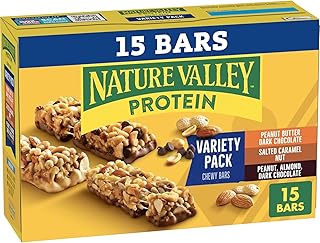
Nature Valley's protein line answers a simple question: what if a protein bar just tasted like a good granola bar? Each bar in this 15-count variety pack delivers 10 grams of protein in a soft, chewy, nut-studded format across three flavors: Peanut Butter Dark Chocolate, Salted Caramel Nut, and Peanut Almond Dark Chocolate.
The eating experience is the headline. There is none of the dense chew or sweetener aftertaste that defines traditional sports bars; this is straightforwardly pleasant food, which is exactly why it works. The bar you actually enjoy eating every day beats the technically superior bar abandoned in a drawer. At around 190 to 200 calories with 5 to 6 grams of fiber-adjacent nut content, it makes a legitimate mid-morning or lunchbox snack.
Be honest about what it is not. Ten grams of protein is half what the Pure Protein and Quest picks deliver, sugar sits around 6 grams, and the compact size makes a second bar tempting, which quietly doubles the math. This is a protein-enriched snack bar, priced like one, and judged on those terms it is excellent.
Bottom line: the best value pick and the right first protein bar for skeptics, kids, and anyone building the habit gently. Just match your expectations, and your training needs, to its snack-tier protein count.
- Protein: 10 grams per bar
- Calories: about 190 to 200 per bar
- Sugar: around 6 grams
- Texture: soft chewy granola with whole nut pieces
- Count: 15 bars, three flavors
- Flavors: Peanut Butter Dark Chocolate, Salted Caramel Nut, Peanut Almond Dark Chocolate
- Gluten free: yes
- Diet notes: contains peanuts, almonds, and soy; not vegan
The 15-count box splits across three nut-and-chocolate combinations. Peanut Butter Dark Chocolate is the reliable crowd-pleaser, essentially a chewy peanut butter cookie with a dark chocolate drizzle. Peanut Almond Dark Chocolate doubles down on whole nut texture and eats the most like classic trail granola.
Salted Caramel Nut is the wildcard and the one people either ration or trade away: sweeter, with a caramel note that pushes it closest to dessert territory of the three. All three share the same soft chew and similar macros, so the choice is pure mood, not math.
This is the bar for protein-bar skeptics: people who tried a dense sports brick once, hated it, and concluded the category was not for them. It is also the easy answer for families, since the texture and flavors are genuinely kid-friendly, and for budget-minded shoppers who want daily protein snacking without specialty-store spending.
Serious lifters chasing 20 plus post-workout grams should treat it as a supplement to their routine rather than the centerpiece, and keto eaters should pass entirely; the honest granola recipe carries honest granola carbs. For everyone in between, it is the least intimidating door into the category.

Pros
- Sampler format solves the which-flavor-first problem
- Roughly 20 to 21 grams of isolate protein per bar
- About 1 gram of sugar across every flavor
- Keto friendly and gluten free lineup-wide
- High fiber makes each bar genuinely filling
Cons
- Per-bar cost runs above single-flavor boxes
- Flavor mix varies and favorites are not guaranteed
- Same dense texture and cooling sweeteners as all Quest bars
The Ultimate Variety Pack is Quest's answer to commitment anxiety: twelve bars spanning the brand's most popular flavors, typically the chocolate-leaning fan favorites such as Chocolate Chip Cookie Dough and Cookies and Cream, so a first-time buyer can find their flavor before buying twelve of anything.
Macros stay remarkably uniform across the assortment, which is the quiet advantage of Quest's formula-first approach. Whichever bar comes out of the box, you are getting roughly 20 to 21 grams of whey and milk isolate protein, about a gram of sugar, keto-workable net carbs, and the brand's signature fiber load. Meal planning does not care which flavor you grabbed, and that predictability is worth a lot on structured diets.
The compromises are the same ones covered in our Cookie Dough review: dense chew, noticeable erythritol cooling, and a fiber count that rewards moderation on day one. The sampler-specific caveat is cost and composition; per bar you pay a little more than single-flavor boxes, and the exact flavor mix can shift between production runs.
Bottom line: the correct first Quest purchase. Sample four flavors, crown a favorite, then graduate to the cheaper single-flavor box of your winner. As an ongoing strategy it also suits households where no two people agree on anything.
- Protein: roughly 20 to 21 grams per bar (whey and milk isolates)
- Sugar: about 1 gram per bar
- Net carbs: about 4 to 5 grams, keto friendly
- Fiber: high across all flavors
- Count: 12 bars, mixed flavors
- Typical flavors: Chocolate Chip Cookie Dough, Cookies and Cream, and other chocolate-leaning favorites
- Gluten free: yes
- Diet notes: contains milk and almonds; sweetened with erythritol
Assortments center on Quest's greatest hits, usually including Chocolate Chip Cookie Dough, the brand flagship reviewed separately in this list, and Cookies and Cream, the flavor most often cited as the closest thing to an actual candy experience in the low-sugar world. The remaining slots rotate among chocolate-forward favorites depending on the production run.
The practical play is to eat the first four bars as a tournament, one flavor per day, and note which wrapper you reach for on day five. That winner becomes your single-flavor reorder, and the variety box becomes your occasional boredom insurance.
Quest bars work well 60 to 90 minutes before training precisely because of what they leave out: with about a gram of sugar there is no spike-and-crash cycle, just steady fuel from protein and fiber. The bar digests slowly, so give it that hour of lead time rather than eating it walking into the gym.
For early sessions where a full meal is impossible, half a bar with water is a workable compromise that will not sit heavy. Post-workout, the 20 plus grams of fast isolate protein does exactly what a recovery snack should. One habit to avoid: stacking multiple bars on training days, since the fiber and sugar alcohols accumulate faster than hunger warns you.

Pros
- 14 grams of complete plant protein from pumpkin seed and brown rice
- Certified organic, vegan, soy free, and non-GMO
- No stevia and no sugar alcohols to upset stomachs
- Soft, cookie-like texture unusual for vegan bars
- Low sugar for a plant-based recipe
Cons
- 14 grams trails the 20 gram whey bars for heavy training
- Premium organic positioning shows in the per-bar cost
- Earthy plant protein undertone, mild but present
Plant-based protein bars have historically asked eaters to accept a trade: your values honored, your taste buds punished. ALOHA's Peanut Butter Chocolate Chip is the strongest counterargument in the mainstream aisle, a certified organic, vegan bar that people demonstrably buy again for the flavor rather than the philosophy.
The formula does several smart things at once. Fourteen grams of protein come from a pumpkin seed and brown rice blend that forms a complete amino acid profile, solving plant protein's classic incompleteness problem without soy. Sweetness stays low and comes without stevia or sugar alcohols, a rare combination that sidesteps both the bitter aftertaste camp and the upset stomach camp in one move. Texture lands soft and dense, closer to a peanut butter cookie than the extruded cardboard of early vegan bars.
The honest limits: 14 grams is a strong snack, not a heavy training recovery dose, and the organic certification is priced like an organic certification. A faint earthy note from the seed protein is detectable if you go looking for it, though the peanut butter does most of the covering work.
Bottom line: the clear plant-based pick of this lineup, and not only for vegans. Anyone avoiding dairy, soy, stevia, or sugar alcohols ends up here by process of elimination and stays because the bar is simply good.
- Protein: 14 grams per bar (organic pumpkin seed and brown rice blend)
- Calories: about 230 per bar
- Sugar: about 5 grams; no stevia, no sugar alcohols
- Fiber: high for the category
- Bar size: 1.98 ounces
- Count: 12 bars, Peanut Butter Chocolate Chip
- Certifications: organic, vegan, gluten free, soy free, non-GMO
- Diet notes: contains peanuts; made without dairy or egg
Organic certification on a protein bar is partly about the ingredients themselves, grown without synthetic pesticides and free of GMO sourcing, and partly about what the certification forbids downstream: the cheap filler sweeteners and lab-bench additives that pad out conventional bars. For a product eaten daily, that ingredient ceiling is the practical benefit.
It also functions as a shortcut through our red flag checklist. A certified organic, soy-free recipe cannot lean on the usual cost-cutting levers, which is why ALOHA's ingredient list stays short and legible. You still pay for that discipline at the register, and whether the premium is worth it is a values call, but at least the label math is honest.
Vegans get the obvious nod, but the wider audience is anyone eliminating things: dairy from a whey intolerance, soy from preference or allergy concern, stevia from taste aversion, sugar alcohols from hard digestive experience. This bar is the rare option that clears all four filters simultaneously while remaining genuinely pleasant to eat.
It also suits parents stocking snacks for mixed-diet households and office snackers who want something that feels less like sports equipment and more like food. Heavy trainers using bars as primary recovery protein should either pair it with another protein source or look to the 20 gram whey picks in this list.
Protein Bars Buying Guide: What Actually Matters
A protein bar is a packaged food first and a supplement second, which means the label tells you almost everything you need to know before the first bite. The five criteria below separate a genuinely useful bar from an overpriced candy bar, and the final section shows you the warning signs we treat as automatic disqualifiers.
Protein Content and Protein Quality

Start with the number, then check where it comes from. For a post-workout replacement, look for 15 to 21 grams of protein per bar: the Pure Protein and Quest Nutrition options in our lineup all land in that zone. For a between-meals snack, 10 to 14 grams is plenty, which is where the Nature Valley, RXBAR, and ALOHA picks sit. A bar under 10 grams can still be a fine granola snack, but it should not be doing protein duty in your day.
Quality matters as much as quantity. Whey and milk protein isolates are complete proteins that your body absorbs quickly, and they dominate the sports-style bars here. RXBAR takes a whole-food route with egg whites, while ALOHA builds a complete amino acid profile from a pumpkin seed and brown rice blend for plant-based eaters. Whatever the source, it should appear at or near the top of the ingredient list. If the protein source shows up after three kinds of syrup, the bar is telling you what it really is.
Sugar, Sweeteners, and Sugar Alcohols
Added sugar is where most bars quietly fall apart. A sports-style bar should keep it to 5 grams or less: Pure Protein holds the line at about 2 to 3 grams and Quest gets down to 1 gram. The exception that proves the rule is RXBAR, which skips added sugar entirely and sweetens with whole dates, so its sugar is the kind that comes packaged with fiber and minerals rather than sprayed on as syrup.
Low-sugar bars get their sweetness somewhere, so read the fine print. Sucralose, stevia, and monk fruit are common and most people tolerate them well. Sugar alcohols such as erythritol are gentler than maltitol, which is notorious for digestive drama in larger amounts, and ALOHA sidesteps the category completely with no sugar alcohols at all. If you are already cutting sugar elsewhere in your routine, our roundup of the best sugar-free energy drinks pairs naturally with the low-sugar bars in this list.
Texture and Taste

Texture is the reason most abandoned boxes of protein bars die in a pantry, because a bar you dread eating is a bar you stop eating. The lineup covers the full spectrum. Quest bars are dense and chewy in the classic sports-bar way, and ten seconds in a microwave turns them close to fresh-baked. Pure Protein lands in the middle: firm, chocolate-coated, candy-bar adjacent. Nature Valley protein bars are soft, chewy granola through and through, the easiest entry point for anyone who dislikes the traditional protein bar chew. RXBAR is sticky and dense from dates, a texture people tend to either love or leave.
Two practical notes from long-running customer feedback patterns. First, chocolate-coated bars can arrive soft or melted in hot months, so plan storage accordingly in summer. Second, flavor fatigue is real: a variety pack such as the Pure Protein 18-count or the Quest Ultimate pack lets you rotate flavors and find a favorite before you commit to a full box of one.
Calories and Macro Balance
Most bars in this lineup land between 190 and 240 calories, which is the sweet spot for a snack that satisfies without becoming a second lunch. The ratio is what counts: Pure Protein delivers 20 grams of protein in a 190-calorie bar, one of the strongest protein-per-calorie ratios in the grocery aisle. Fiber is the quiet bonus stat, and the Quest and ALOHA bars carry roughly 10 grams or more per bar, which helps a small snack feel like it did its job.
| Bar | Protein | Sugar profile | Best for |
|---|---|---|---|
| Pure Protein Variety Pack | 20g to 21g | 2g to 3g, uses sugar alcohol | All-around gym snacking |
| Pure Protein Chocolate Peanut Butter | 20g | 3g, uses sugar alcohol | Peanut butter loyalists |
| Quest Chocolate Chip Cookie Dough | 21g | 1g, erythritol based | Keto and low-carb diets |
| RXBAR Chocolate Sea Salt | 12g | No added sugar, sweetened with dates | Whole-food ingredient lists |
| Nature Valley Protein Variety Pack | 10g | Around 6g, conventional sugars | Budget everyday snacking |
| Quest Ultimate Variety Pack | 20g to 21g | About 1g, erythritol based | Sampling keto-friendly flavors |
| ALOHA Peanut Butter Chocolate Chip | 14g | About 5g, no sugar alcohols | Vegan and organic buyers |
Dietary Needs: Vegan, Gluten Free, and Keto

Every bar in this roundup is gluten free, which removes the most common filter right away. Beyond that, the picks split cleanly by diet. Keto and low-carb eaters should head straight for Quest, where 1 gram of sugar and about 4 grams of net carbs are the whole point of the recipe. Vegans get ALOHA, which is organic, plant-based, soy free, and non-GMO. RXBAR suits anyone chasing a short, recognizable ingredient list, though its egg white base means it is not vegan.
Allergies deserve a slower read than diets. Nearly every bar here involves peanuts or tree nuts, the whey-based options contain milk, and RXBAR contains egg, so the allergen line on the wrapper is non-negotiable reading for shared households. If you stock a snack shelf for mixed diets, keeping one whey option and one plant option side by side covers almost everyone, and our health and household section has more staples for the same shelf.
Red Flags: How to Spot a Bar Worth Skipping
This is the worst-bar checklist the second half of your search was looking for. We are not going to dunk on specific brands, because formulas change and yesterday’s offender sometimes cleans up its recipe. Instead, these are the objective warning signs that a bar is a candy bar wearing gym clothes, and they apply to any label you pick up.
First, sugar wearing a disguise. Manufacturers can split sweeteners into brown rice syrup, tapioca syrup, cane juice, honey, and fruit concentrate so that no single one tops the ingredient list, while the total quietly reaches 15 grams or more. Ignore the split and read the added sugar line on the nutrition panel. If two or three of the first five ingredients end in the word syrup, put the bar back.
Second, cheap protein padding. Collagen and gelatin are inexpensive proteins that inflate the gram count but lack the complete amino acid profile your muscles actually use, and vague proprietary protein blends make it impossible to know what you are paying for. A related trick is the granola bar with 7 grams of protein shouting protein packed on the front: that is protein-washed marketing, not a protein bar. Third, a heavy hand with sugar alcohols. Maltitol in the double digits is a well-known recipe for bloating and urgent regret, so check the sugar alcohol line, not just the sugar line. Finally, run the ratio: a bar pushing 250 or more calories while delivering under 10 grams of protein is a dessert with a marketing budget, and dessert is fine, but you should get to choose it knowingly.
Why You Should Trust Us
We build every shortlist the same way: read the nutrition panel and ingredient list line by line, compare protein source and quality rather than just the number on the front, and then weigh months of verified customer feedback for the patterns a spec sheet cannot show, such as melted shipments, texture complaints, and flavors that people quit after one box. Bars that lean on sugar disguises, padded protein blends, or double-digit sugar alcohols are cut before ranking begins, using the same red flag checklist we published above.
Our recommendations are independent: no brand pays for placement in this list, and no ranking is for sale. We may earn a commission if you buy through our links, at no extra cost to you, and that commission never changes which products make the cut or where they land.
Final Thoughts
If you want one box that works for almost everyone, the Pure Protein Bars Variety Pack is the best overall protein bar here: 20 or more grams of protein in a bar under 200 calories, low sugar, three well-liked chocolate flavors, and a price per bar that makes daily snacking realistic. Peanut butter devotees can commit to the single-flavor Pure Protein Chocolate Peanut Butter box and lose nothing in the trade.
The rest of the podium splits by priority. The Nature Valley Protein Variety Pack is the best value pick, a soft granola-style bar that costs pantry-staple money and asks nothing of your taste buds while still landing 10 grams of protein. Quest Nutrition Chocolate Chip Cookie Dough is the keto and low-carb winner at 21 grams of protein and a single gram of sugar, with the Ultimate Variety Pack as the smarter first order for anyone new to the brand. RXBAR Chocolate Sea Salt owns the cleanest label with its egg white and date formula, and ALOHA Peanut Butter Chocolate Chip is the organic, plant-based pick that skips both stevia and sugar alcohols entirely.
Whichever direction you go, buy one box, not four, and confirm the texture suits you before stocking up. Pair your pick with something from our guide to the best energy drink brands for the full gym-bag loadout, and browse the rest of our buying guides when the snack shelf needs company.
FAQs
What separates good protein bars from candy bars in disguise in 2026?
Three lines on the label tell you most of the story: added sugar at 5 grams or less, a named complete protein such as whey, milk isolate, egg white, or a balanced plant blend near the top of the ingredient list, and a calorie count that stays under about 240 for 10 or more grams of protein. A bar that fails two of those three checks is a candy bar with better fonts, whatever the front of the wrapper claims.
How much protein does a bar need to count as a real protein bar?
A useful floor is 10 grams per bar, and that is snack territory. For post-workout recovery, aim for 15 to 21 grams, which is where Pure Protein and Quest live. Below 10 grams you are holding a granola bar, which is a perfectly fine food that simply should not be priced or trusted like a protein bar.
Are protein bars good for weight loss?
They can help in a specific way: a 190 to 210 calorie bar with 20 grams of protein blunts hunger better than almost any snack of the same size, which makes it easier to hold a calorie deficit without grazing. They stop helping when they become extra dessert on top of normal meals, so treat a bar as a planned snack or a small meal component, not a free food.
When should I eat a protein bar, before or after a workout?
Either works, so let your stomach decide. A bar 60 to 90 minutes before training gives you steady fuel, while a bar within a couple of hours afterward supports muscle repair, and total daily protein matters far more than exact timing. If you prefer your pre-workout kick in liquid form, our roundup of the best sports energy drinks covers that side of the gym bag.
Can protein bars replace a meal?
Occasionally, yes; routinely, no. At roughly 200 calories, even the strongest bar here is about a third of a typical meal, so it works as a bridge when lunch is impossible, ideally alongside a piece of fruit or a handful of nuts. Bars marketed specifically as meal replacements run 350 calories or more with added vitamins, and that is a different product category with different rules.







Write Your Review
No reviews yet. Be the first to share your experience!