

City water arrives at your shower head carrying whatever the utility added to keep it safe on the way there, and chlorine is usually at the top of that list. It does its job in the pipes, then hits your skin and hair as warm spray for ten minutes a day. That is why a shower filter to remove chlorine and fluoride has become one of the easiest upgrades in the bathroom: no plumber, no permanent changes, just a cartridge between the arm and the head. Our top pick is the AquaHomeGroup 20-Stage Shower Filter for its dense KDF-55 and activated carbon stack, its steady flow at normal household pressure, and the second cartridge that ships in the box. Below we break down 9 options from AquaBliss, Aqua Earth, FEELSO Shower and more, updated for September 2026, and we explain exactly where the marketing claims stop matching the science.
One thing to settle before you shop, because almost nobody says it plainly: shower filters are very good at chlorine and very limited on fluoride. The media that strips chlorine is not the media that captures fluoride, and the half second of contact time inside a shower cartridge is nowhere near enough for the resins that do. Several products in this roundup put fluoride on the label anyway. We keep those claims in quotation marks rather than treating them as fact, and the buying guide tells you what to do if fluoride is genuinely your reason for shopping. If you want more upgrades in this category, browse our full home and kitchen deals.

Pros
- Dense KDF-55 and calcium sulfite core targets free chlorine where it matters most, in hot water
- Vitamin C layer also addresses chloramine, which plain carbon does not
- Second cartridge included, so the first replacement is already paid for
- High output housing keeps flow close to the unfiltered feel
- Works with any standard half inch shower arm and any head you already own
Cons
- The listing claims fluoride reduction, which no shower filter standard certifies
- Adds a few inches of length that can lower spray angle in a low ceiling shower
- Cartridge life drops well below six months in heavily chlorinated water
This is the classic inline shower filter format: a canister that threads onto the shower arm, with your current head screwing onto the other end. AquaHomeGroup counts twenty stages, which sounds like marketing until you read what is actually in the stack. The layers that do the work are KDF-55 and calcium sulfite, both of which convert free chlorine through a redox reaction and both of which keep performing at shower temperature, where cheap carbon starts to lose ground.
The vitamin C pellets are the reason this one ranks first. Ascorbic acid neutralizes chloramine as well as free chlorine, and a growing number of municipal systems have switched to chloramine disinfection, which standard carbon handles poorly. That layer is small and depletes faster than the rest, so treat it as a useful bonus rather than the backbone, but it is a real functional difference against filters that skip it.
The honest caveat is the fluoride line on the listing. There is no certification behind it, and the contact time inside a shower cartridge is far too short for the media that genuinely captures fluoride. Buy this for chlorine, chloramine byproducts, sediment and the metallic smell of older pipes. Length is the other tradeoff, since the canister pushes your head a few inches lower, which some tall users notice.
Bottom line: the most complete media stack in this roundup, in a high output housing, with a spare cartridge in the box. If you want one filter that covers both chlorine and chloramine without replacing your shower head, this is the one to start with.
- Type: inline shower filter, mounts between arm and head
- Media: KDF-55, calcium sulfite, activated carbon, vitamin C, ceramic and mineral layers
- Cartridges included: 2
- Rated life: about 6 months or 10,000 gallons per cartridge
- Connection: standard half inch NPT thread
- Certified for: free chlorine reduction is the standard claim in this class; fluoride claims are manufacturer stated only
Anyone who already owns a shower head they like, especially a rain head or a fixed ceiling mount, and does not want to change the spray. It is also the pick for households on chloraminated municipal water, since the vitamin C layer covers a gap that carbon only filters leave open.
It is less ideal in a shower with a low ceiling or a very short arm, where the extra length gets in the way, and it is the wrong buy for anyone whose main goal is fluoride removal at any fixture.
Unscrew the existing head, wrap two or three clockwise turns of plumber tape on the arm threads, hand tighten the filter, tape the filter outlet, then reattach the head. Run hot water for one to two minutes to flush loose carbon fines, which is normal on any new cartridge.
Mark the install date on the housing with a marker. When the chlorine smell returns in a hot shower, the media is spent, and that is a more reliable signal than the calendar.

Pros
- Enormous review base, which makes its consistency easy to judge
- Compact housing adds less length than most inline filters
- Sold in chrome, brushed nickel, matte black and oil rubbed bronze to match fixtures
- Replacement cartridges are widely stocked and easy to find
- Keeps whatever shower head you already have
Cons
- Cartridges are proprietary, so ongoing cost is tied to one brand
- No vitamin C layer, so chloramine is not specifically addressed
- Product copy leans heavily on skin and hair outcomes that are not measurable claims
If this category has a default, the SF100 is it. It has accumulated a review count that dwarfs everything else here, which is genuinely useful information: a product that stays above four stars across that many buyers is not coasting on a launch burst. The design is deliberately simple, a short chrome canister with a multi-stage cartridge inside that leans on KDF-55 and calcium sulfite for chlorine.
The compact housing is the underrated feature. Inline filters usually push your shower head three or four inches lower and forward, and in a standard height shower that is the difference between spray hitting your shoulders and spray hitting your face. The SF100 is shorter than most, and it comes in four finishes on the same body, so it does not look like an afterthought bolted to your fixtures.
Two things to weigh. The cartridge is proprietary, so you are committing to AquaBliss refills for the life of the unit, though they are stocked in one and three packs at reasonable prices. And the marketing copy is written around skin, hair and nail outcomes, which is language about how the water feels rather than a certified performance number. The certified job here, as with every filter in this class, is chlorine.
Bottom line: the safest pick in the category if you want an inline filter with a long track record and matching finishes. Choose the AquaHomeGroup instead if your utility uses chloramine.
- Type: inline shower filter, model SF100
- Media: multi-stage cartridge with KDF-55, calcium sulfite and carbon layers
- Cartridges included: 1
- Rated life: about 6 months or 10,000 gallons
- Finishes: chrome, brushed nickel, matte black, oil rubbed bronze
- Connection: standard half inch NPT thread
Pick the finish before you order, since all four share the same internals and the same cartridge, and a chrome puck under a matte black arm is the kind of mismatch you see every morning. Buy the three pack of SFC100 cartridges up front if you plan to keep the unit, because per cartridge cost drops noticeably.
If your shower arm sits low or your ceiling is under eight feet, measure before ordering. Even a compact inline filter moves the head down, and that is the single most common reason people return one.
Do not overtighten the plastic collar. Hand tight plus a light quarter turn with a cloth wrapped wrench is enough, and forcing it is what strips threads and starts drips. Two or three wraps of plumber tape on each male thread solve almost every leak in this product class.
A saturated cartridge is not neutral, it can release captured sediment back into the spray, so replace on schedule rather than running it until flow drops.

Pros
- Three cartridges included, which is the lowest long term cost per month here
- Metal housing collar where the threads engage, so the wear point is not plastic
- Multi-stage media with KDF and calcium sulfite for chlorine
- Polished chrome finish matches common fixtures
- Straightforward five minute install on any half inch arm
Cons
- The listing advertises fluoride removal, a claim no shower filter standard supports
- Housing is longer than the compact AquaBliss puck
- No vitamin C layer for chloramine
Cost of ownership in this category is decided by cartridges, not by the housing, and this kit is the clearest example. Three cartridges ship in the box, which at the standard six month interval covers roughly eighteen months of use before you spend anything else. Against a competitor that includes one cartridge and sells proprietary refills, that gap adds up faster than the sticker price suggests.
The filter itself is a conventional multi-stage inline unit with KDF and calcium sulfite doing the chlorine work, wrapped in a polished chrome housing with a metal collar at the threads. That collar matters more than it sounds, because the threaded joint is the part that strips when someone overtightens, and metal there is the difference between a five year unit and a cracked one.
Two caveats. The housing is longer than the compact pucks, so measure your arm height first. And SR SUN RISE puts fluoride removal directly in the product title, which is the strongest version of a claim that no third party standard covers. The chemistry does not support it at shower flow rates, so ignore that line and judge this on chlorine and on cartridge economics, where it wins.
Bottom line: the best money per month in this roundup, provided you have the clearance for a slightly taller canister and you buy it for chlorine rather than the fluoride line on the box.
- Type: inline shower filter kit
- Media: 20-layer stack including KDF, calcium sulfite, carbon and mineral balls
- Cartridges included: 3
- Rated life: about 6 months per cartridge
- Finish: polished chrome with metal thread collar
- Connection: standard half inch NPT thread
Households that want the cheapest honest path to filtered showers over several years, and anyone who has already learned that replacement cartridges are where this category quietly takes your money. It suits a family bathroom well, since heavy use burns through cartridges faster and having spares on the shelf keeps the filter from sitting saturated.
Skip it if clearance above your shower arm is tight, or if you specifically need chloramine coverage, in which case a vitamin C equipped filter is the better fit.
Store the two spare cartridges somewhere you will find them, ideally taped inside the vanity, because the whole value case collapses if they go missing before month twelve. Write each install date on the housing.
Compare the three pack kit against the single cartridge version of the same filter before ordering, since the price gap is usually smaller than the cost of buying two cartridges later.

Pros
- Media lives inside the head, so nothing hangs off the shower arm
- Five spray settings, including a concentrated mode that helps on weak pressure
- Single joint install means one fewer place to leak
- Cartridge is user replaceable without tools
- Strong review base for an all-in-one unit
Cons
- You are committed to this head's spray pattern for the life of the unit
- Smaller media chamber than a dedicated inline canister, so cartridges run out sooner
- Replacement cartridges are proprietary to the head
The all-in-one approach solves the two things people dislike about inline filters: the extra length and the extra joint. FEELSO puts the cartridge inside the head, so the whole assembly threads onto the arm in one connection and looks like a normal shower head from the outside. If your bathroom is tight or you simply do not want a visible canister, that is a real advantage.
Five spray settings is more than a spec sheet flourish here. The concentrated mode narrows the outlet holes, which raises perceived pressure, and that is genuinely useful in a home where the filter media would otherwise make a weak shower feel weaker. The wide setting is the one to use for rinsing, and the pulse setting is the one most people try once.
The tradeoffs follow from the format. The media chamber inside a shower head is smaller than a standalone canister, so the same six month rating means less real capacity, and heavy use will push you to replace sooner. Cartridges are specific to this head, and you cannot mix in a different brand later. And once installed, the spray pattern is whatever FEELSO designed, which is fine if you like it and permanent if you do not.
Bottom line: the cleanest install in this roundup and a sensible pick for a small bathroom or a rental, as long as you are comfortable retiring your current head.
- Type: all-in-one filtered shower head
- Media: 15-stage cartridge with KDF, calcium sulfite and mineral layers
- Spray settings: 5
- Cartridges included: 1
- Rated life: about 3 to 6 months depending on water and use
- Connection: standard half inch NPT thread
Because there is no canister on the arm, the head stays at its original height and angle, which is the main reason to choose this format in a shower with a low ceiling or a short arm. It also reads as a normal fixture rather than an add on, which matters in a rental where you plan to swap the original head back before moving out.
Keep the original head in a bag under the sink. It takes two minutes to reinstall.
Flush the new cartridge for a minute or two before your first shower, since fresh carbon releases fines that can tint the water briefly. Descale the face plate with a vinegar soak if you have hard water and the nozzles start spraying crooked.
Do not run the head without a cartridge installed. Unfiltered water through an empty chamber can carry loose media residue into the nozzles.

Pros
- Same media family as our top pick, in a single piece format
- One connection to the arm, so fewer leak points
- Chrome finish suits most standard bathroom fixtures
- Cartridge swaps without tools
- No added length below the shower arm
Cons
- Fixed head, so there is no hose for rinsing or cleaning
- Smaller media chamber than the brand's inline canister
- Fluoride language carries over from the brand's listings and is not certified
This is what happens when the brand behind our top pick puts the same media philosophy into a shower head instead of a canister. The stack is familiar, KDF and calcium sulfite for chlorine with supporting layers, and the appeal is that you get it without anything protruding from the arm. For a shower where the head sits low already, that is the deciding factor.
Build is straightforward chrome, sized like a standard fixed head, and it threads on in one connection. Nothing about the install is unusual, and the cartridge pulls out by hand when it is time. The spray is a conventional wide pattern rather than anything adjustable, which keeps the internals simple and the pressure loss modest.
The compromises are the ones inherent to the format. A head sized chamber holds less media than a dedicated inline puck, so effective life is shorter under the same water conditions. There is no hose, so tub rinsing and pet washing are off the table. And the fluoride language that appears across this brand's listings applies here too, with the same answer: unverified, and not something the shower filter standard covers.
Bottom line: pick this over our top choice only if the extra length of an inline filter is a problem in your shower. Otherwise the canister version holds more media and lets you keep the head you already like.
- Type: all-in-one filtered shower head, fixed mount
- Media: 20-stage stack with KDF, calcium sulfite, carbon and mineral layers
- Cartridges included: 1
- Rated life: about 3 to 6 months depending on use
- Finish: chrome
- Connection: standard half inch NPT thread
Showers with low clearance, and anyone replacing a tired original head anyway. If you were going to buy a new shower head this year regardless, folding the filter into that purchase is the efficient move.
Not the right pick if you want a handheld hose, or if you want maximum cartridge life, since the inline format simply holds more media.
Wrap the arm threads with plumber tape, hand tighten the head, and run water for a minute to clear carbon fines. Angle the head before the tape sets its grip so you are not twisting a tightened joint later.
Rinse the cartridge chamber when you swap cartridges, since sediment collects at the base and can shorten the life of the new one.

Pros
- Handheld hose makes rinsing a tub, a child or a dog far easier
- Six spray modes cover everything from a soft rinse to a concentrated jet
- High pressure design compensates for the resistance the media adds
- Bead cartridges target scale as well as chlorine
- Wall bracket included, so it works as a fixed head too
Cons
- Bead media is aimed at scale and chlorine, not at any certified fluoride claim
- More moving parts and joints than a fixed head, so more potential leak points
- Bead cartridges need replacing more often than a full multi-stage canister
The Cobbe answers a different question from the rest of this list. It is a handheld first and a filter second, which is exactly right if your shower doubles as the place you rinse a tub, wash a dog, or shower a child who does not enjoy water in the face. The hose and bracket combination means you can also use it as a normal fixed head when you want to.
Six spray modes is more range than most people need, but two of them earn their place: the concentrated jet for cleaning the tub, and the soft rain for everyday showering. Cobbe designs the nozzle plate for high pressure, which is the sensible engineering response to adding media to the water path, and it is why this head does not feel choked the way cheap filtered heads often do.
The filtration is the part to be clear eyed about. This uses bead cartridges aimed at chlorine and at scale rather than a deep KDF canister, so it sits below the dedicated inline filters on pure chlorine capacity, and the beads deplete faster. It also markets softening, which is a loose use of the term: real softening is ion exchange in a whole house appliance, not beads in a shower head. What you get is less scale and less chlorine, which is worthwhile but not the same thing.
Bottom line: buy it for the handheld versatility and treat the filtration as a solid bonus. If chlorine reduction is the whole reason you are shopping, an inline unit does more.
- Type: handheld filtered shower head with hose and bracket
- Media: mineral and softening bead cartridges
- Spray modes: 6
- Cartridges included: filter beads preinstalled
- Finish: chrome
- Connection: standard half inch NPT thread
A hose changes what a shower can do. Rinsing shampoo from a toddler, washing a dog without filling the tub, and cleaning the enclosure itself all get easier, and the concentrated mode makes the last one genuinely quick.
The bracket lets you park it overhead for normal showers, so you are not giving anything up for the flexibility.
Check the hose connections after the first week, since a handheld has two extra joints and both can settle. A wrap of plumber tape at the hose fitting stops the most common drip.
Rinse the bead chamber when you replace it and wipe the nozzle face with vinegar if hard water leaves the spray uneven.
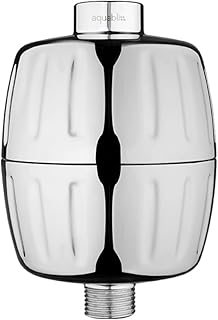
Pros
- Larger media volume than the SF100, so longer service intervals
- Same trusted inline format and universal fit
- Aimed at heavier chlorine loads and higher usage households
- Keeps your existing shower head
- Chrome housing with a solid feel
Cons
- Noticeably larger, so clearance matters more than with the SF100
- Cartridges are proprietary and cost more than the SF100 refills
- No vitamin C layer for chloramine
The SF500 is the answer to the most common complaint about compact shower filters: not enough media. AquaBliss enlarged the housing and the cartridge, which means more contact time with the KDF and calcium sulfite layers and a longer stretch between replacements. In a household where four people shower daily, or where the utility runs chlorine high, that extra capacity is the difference between changing cartridges twice a year and changing them four times.
Everything else follows the SF100 formula. It threads onto the arm, your head goes on the other side, and the install takes five minutes with plumber tape. The chrome housing feels substantial rather than hollow, and the cartridge comes out by hand.
The size that makes it better also makes it harder to fit. This is the tallest inline unit here, and in a shower with a low arm it will push the head into your line of sight. Refills also cost more than the SF100 cartridges, though on a per month basis they land close since they last longer. And like the rest of the AquaBliss range, there is no vitamin C layer, so chloramine is not specifically addressed.
Bottom line: the right AquaBliss for a busy bathroom or heavily chlorinated water, provided you measure your clearance before ordering.
- Type: inline shower filter, model SF500
- Media: multi-stage cartridge with KDF-55, calcium sulfite and carbon
- Cartridges included: 1
- Rated life: longer than the SF100 under the same conditions
- Finish: chrome
- Connection: standard half inch NPT thread
Larger households, long showers, and homes where the chlorine smell is obvious at the tap. Anyone who has already worn out a compact filter faster than the rated six months is the exact buyer for this one.
Not for tight showers. Measure from the arm to your comfortable spray height before ordering, because this housing takes up more of that gap than any other unit here.
Confirm which cartridge your unit takes before reordering, since AquaBliss sells different cartridges for the SF100 and SF500 lines and the packaging looks similar at a glance.
If your ceiling is low, the SF100 in the same brand family is the safer physical fit and shares the same install method.

Pros
- Nine spray modes, the widest range in this roundup
- Detachable design with hose and bracket included
- High pressure nozzle plate keeps the spray firm
- Filter beads target chlorine and scale in one chamber
- Simple single connection to the shower arm
Cons
- Bead media holds less capacity than a full inline cartridge
- Nine modes is more than most people will ever use
- Softening language refers to scale control, not true ion exchange
SR SUN RISE builds the handheld counterpart to its inline filter here, and the pitch is flexibility. Nine spray modes, a detachable head, a hose, and a wall bracket cover essentially every way a person uses water in a bathroom. In practice you will settle on two modes and ignore the rest, but the concentrated jet and the soft rain are both well executed.
The filtration is bead based, sitting in a chamber inside the head. That handles chlorine and helps with scale, and the nozzle plate is built for pressure so the spray does not feel choked the way it can on cheaper filtered heads. The chrome finish is standard fare and matches most fixtures without drawing attention.
The honest limitation is capacity. Beads in a shower head chamber cannot hold what a dedicated inline canister holds, so if your water is heavily chlorinated you will be replacing them more often than a six month cycle suggests. The word softening on the listing also deserves a note: it means scale reduction, not the ion exchange that a whole house softener performs. Hardness minerals stay in the water.
Bottom line: the most versatile handheld here, best suited to households that want the hose first and filtration second.
- Type: detachable handheld filtered shower head
- Media: mineral and softening filter beads
- Spray modes: 9
- Included: hose, wall bracket, one filter
- Finish: chrome
- Connection: standard half inch NPT thread
A detachable head earns its keep in a shared bathroom, where one person wants a firm massage spray and the next wants a gentle rinse. The bracket means it still works as a fixed overhead unit when nobody needs the hose.
It is also the easiest way to clean the shower enclosure itself, which is a small thing that quietly saves time every week.
Tape the hose threads at both ends on install. Handhelds leak at the hose long before they leak at the arm, and a wrap of plumber tape is the whole fix.
Soak the face plate in vinegar if hard water clogs nozzles, and replace the bead chamber when the chlorine smell returns rather than waiting for flow to drop.

Pros
- Vitamin C and E layers alongside the standard chlorine media
- Targets sediment, rust and odor as well as chlorine, which suits older plumbing
- Inline format keeps your existing shower head
- Simple tool free cartridge change
- Long standing listing with a large review base
Cons
- Listing says the filter helps reduce fluoride, which is not a certified claim
- Vitamin layers deplete faster than the KDF core
- Adds length below the shower arm like any inline canister
Aqua Earth aims this filter at older housing stock, and the media list reflects it. Alongside the KDF and carbon that handle chlorine, the stack is built to catch sediment, rust particles and the metallic odor that comes out of aging galvanized or iron pipe. If your shower water occasionally runs faintly orange after the utility flushes a main, that is the problem this one is designed around.
The vitamin C and E layers are a genuine addition rather than a spec sheet flourish, since ascorbic acid neutralizes chloramine that carbon leaves behind. As with every vitamin equipped cartridge in this class, that layer is small and depletes ahead of the rest, so it is a supporting player and not the reason to buy.
The listing also says the filter helps reduce fluoride. It is the same manufacturer claim that appears across this category, and the same answer applies: no independent data supports fluoride reduction at shower flow rates, and the standard for shower filters covers chlorine only. Physically, this is a conventional inline canister, so it adds the usual few inches below the arm.
Bottom line: a sensible choice for homes with older pipes where rust and sediment ride along with the chlorine, as long as you read the fluoride line as marketing.
- Type: inline shower filter
- Media: 20-stage stack with KDF, carbon, vitamin C and vitamin E layers
- Cartridges included: 1
- Rated life: about 6 months or 10,000 gallons
- Targets: chlorine, sediment, rust, odors
- Connection: standard half inch NPT thread
Older homes and older municipal lines, where sediment and rust show up alongside chlorine. It is also a reasonable pick for anyone on chloraminated water who wants the vitamin C layer without switching to a filtered shower head.
Less compelling if your water is clean and simply chlorinated, where a bigger KDF core matters more than the extra layers.
Flush the new cartridge for two minutes before your first shower, longer than usual, since a stack this dense carries more loose fines. Run it hot to seat the media.
If you are on a well or the utility flushes mains in your area, check the cartridge early. Sediment loading shortens life faster than chlorine does.
How to Choose a Shower Filter for Chlorine and Fluoride
Shower filters look interchangeable on a listing page. Almost all of them are a plastic or metal canister, a threaded fitting on each end, and a stack of granular media inside. The differences that matter are what that media is, how long it lasts in your water, and whether the housing keeps decent pressure while it works. Here are the six things worth weighing before you buy.
Start With What a Shower Filter Can Actually Remove
The industry standard that covers this product class is NSF/ANSI 177, and it certifies exactly one thing: reduction of free available chlorine. There is no shower filter standard for fluoride, and no mainstream shower filter carries third party certification for fluoride removal. That is not a conspiracy, it is chemistry. Fluoride is captured by activated alumina, bone char, or a reverse osmosis membrane, and all three need either a large media bed or minutes of contact time at low flow. A shower cartridge gives water a fraction of a second at two gallons per minute.
So when a listing says a 20-stage cartridge “helps reduce fluoride,” read it as a marketing claim rather than a verified spec. Some units include a small amount of media that has some affinity for fluoride, and the manufacturer is describing that, but nobody publishes independent lab data showing a meaningful percentage reduction at shower flow rates. We name the products that make the claim, because you deserve to know which ones do, and we stop short of repeating the claim as a result you should expect.
If fluoride is the actual reason you are shopping, the honest answer is that the fix lives at the tap you drink from, not the shower arm: a countertop or under sink system with activated alumina, bone char, or reverse osmosis. Buy the shower filter for chlorine, chloramine byproducts, sediment, rust, and the metallic smell that comes with older municipal pipes. Those are the jobs it genuinely does.
Filter Media: KDF-55, Activated Carbon, and Vitamin C

Three media do most of the work in this category. KDF-55 is a copper and zinc alloy that converts free chlorine into a harmless chloride through a simple redox reaction, and it holds up well in hot water, which is where cheap carbon starts to fail. Activated carbon adsorbs chlorine plus the organic compounds behind that swimming pool smell, and it also catches some of the taste and odor carryover. Calcium sulfite is a third common layer that reacts quickly with chlorine and keeps working across a wide temperature range.
Vitamin C, listed as ascorbic acid, shows up in the newer multi-stage cartridges. It is the one media that neutralizes chloramine as well as free chlorine, which matters if your utility switched to chloramine disinfection, and plenty of them have. The tradeoff is that vitamin C depletes fast and usually sits in a small pellet layer, so treat it as a bonus rather than the backbone of the cartridge.
Ignore stage counts as a ranking system. A “20-stage” cartridge is a marketing count of distinct layers, including cotton pads and ceramic balls that do very little for chlorine. Look for KDF-55 and calcium sulfite named explicitly, in that order of prominence, and treat everything after that as supporting cast.
| Media | What it targets | Hot water performance | Typical role |
|---|---|---|---|
| KDF-55 | Free chlorine, some heavy metals | Excellent | Main workhorse layer |
| Calcium sulfite | Free chlorine | Very good | Fast acting primary layer |
| Activated carbon | Chlorine, odors, organics | Fair, degrades in heat | Polishing layer |
| Vitamin C (ascorbic acid) | Chlorine and chloramine | Good but short lived | Bonus layer |
| Activated alumina or bone char | Fluoride | Needs long contact time | Not practical in a shower |
Inline Filter or All-in-One Filtered Shower Head

An inline filter is a puck that threads onto the existing shower arm, with your current head screwing onto the other side. You keep the spray you already like, and the filter is the only thing you ever replace. This is the right call if you have a rain head, a fixed ceiling mount, or any head you paid real money for. It adds a few inches of length, which can drop the spray angle slightly in a low ceiling shower.
An all-in-one filtered shower head puts the media inside the handheld or wall mounted head itself. Fewer joints means fewer places to leak, the install is a single connection, and handheld versions add a hose you can aim, which is genuinely useful for rinsing a tub or washing a dog. The catch is that you are married to that spray pattern, and the media chamber is usually smaller than a dedicated inline canister, so cartridges run out sooner.
There is a third option worth knowing: an inline filter plus a filtered head, stacked. It works and some people do it, but two media chambers in series will cost you noticeable pressure, so only try it if your home runs on the high side to begin with. For most bathrooms, pick one or the other based on whether you care more about your existing head or about a clean single piece install.
Cartridge Life and Replacement Cost
Manufacturers quote six months or roughly 10,000 gallons, and both numbers assume average municipal water and a household of two. Heavy chlorine, high sediment, or four people showering daily will cut that meaningfully, sometimes in half. The tell that a cartridge is spent is the return of the chlorine smell, or a slow decline in flow as the media packs with sediment.
This is where the real cost of ownership hides. A unit that ships with a single cartridge and takes proprietary refills can quietly cost more over two years than a pricier kit that includes three. Look at what is in the box, then check that replacements are actually stocked. Multi-cartridge bundles such as the SR SUN RISE 20-Stage kit and the two-cartridge AquaHomeGroup package are doing exactly this math for you.
Write the install date on the housing with a marker or set a calendar reminder. Nobody remembers when they changed a shower cartridge, and a saturated one is not just neutral, it can start releasing captured sediment back into the spray. If you are refreshing more of the bathroom at the same time, our roundup of the best washing machines covers another appliance that hard water quietly wears down.
Water Pressure and Flow Rate

Any media bed adds resistance, so a filter will change your shower feel to some degree. Well designed units with a wide internal channel lose very little, and some filtered heads actually feel stronger because they restrict the outlet holes to concentrate the spray. Cheap ones with a narrow inlet act like a partly closed valve, and that is the single most common complaint in this category.
US shower heads are capped at 2.5 gallons per minute by federal rule, and several states set 1.8 as the limit. If your existing shower already feels weak, add a filter that advertises high output construction, and consider a head with fewer, tighter nozzles rather than a wide rain face. If your home has strong pressure, this criterion barely matters and you can shop on media and cartridge life instead.
Installation, Fit, and Build Quality
Nearly every shower filter sold in the US uses the same half inch NPT thread, so fit is rarely the problem. Leaks are, and they almost always come from skipping the plumber tape or overtightening a plastic collar until it deforms. Two or three wraps of tape on each male thread, hand tight plus a light quarter turn with a cloth wrapped wrench, and you are done in five minutes.
On build quality, look for a metal housing or at least a metal collar where the threads engage, since that is the part that strips. Check that the cartridge is user replaceable without tools, and that the housing opens without a proprietary key. Finish matters more than people expect too, because a chrome puck under a brushed nickel arm is the kind of small mismatch you notice every single morning. Most of these brands offer chrome, brushed nickel, matte black, and oil rubbed bronze on the same body.
Why You Should Trust Us
We build these lists from the data buyers actually leave behind. Every product here was pulled from live Amazon listings, filtered to a minimum four star rating with a substantial review base, and scored on rating strength, review volume, and how consistent recent feedback looks against older feedback. That last part matters in this category, where a brand can change its cartridge supplier and quietly turn a good product into a mediocre one.
We then read the specifications against what the media can chemically do, which is why this guide separates certified chlorine reduction from unverified fluoride claims instead of repeating both in the same breath. We do not accept product samples, we do not take payment for placement, and we do not describe results we cannot support. When a listing claims something the standard does not cover, we say so on the page rather than burying it. You can see how we cover the rest of the category on our articles hub and across our shopping categories.
Final Thoughts
Best overall goes to the AquaHomeGroup 20-Stage Shower Filter. It pairs a dense KDF-55 and calcium sulfite core with a vitamin C layer for chloramine, keeps flow honest at normal household pressure, and includes a second cartridge so your first replacement is already handled. It is also one of the units that puts fluoride on the label, so buy it for its chlorine performance and treat anything beyond that as unproven.
Best value is the SR SUN RISE 20-Stage Shower Filter, which ships with three replaceable cartridges and therefore covers roughly a year and a half of typical use in a single purchase. If you would rather not touch your existing shower head at all, the AquaBliss SF100 is the most established inline puck in the category and comes in four finishes to match your fixtures. For a single piece install with a hose you can aim, the Cobbe Filtered Shower Head and the FEELSO Shower Head and 15-Stage Filter Combo both fold the media into the head itself.
Whichever you pick, the upgrade is small, reversible, and takes five minutes with a roll of plumber tape. Set a reminder for the cartridge, keep your expectations pinned to chlorine rather than fluoride, and you will get exactly what this product class is good at. More ideas for the rest of the house are waiting in our home and kitchen picks.
Frequently Asked Questions
Can a shower filter to remove chlorine and fluoride really remove fluoride?
Not in any way that has been independently verified. Fluoride removal requires activated alumina, bone char, or reverse osmosis, and those media need far more contact time than water gets while passing through a shower cartridge at full flow. Several listings in this roundup say their cartridge helps reduce fluoride, and that language is the manufacturer’s, not a certified result. The NSF/ANSI 177 standard that governs shower filters covers free chlorine reduction only. If fluoride is your priority, address it at your drinking water instead.
How often should I replace the cartridge in 2026?
Plan on every six months, or every 10,000 gallons, whichever comes first. Cut that to three or four months if your water is heavily chlorinated, carries visible sediment, or serves a busy household. The practical signal is your nose: when the chlorine smell comes back in a hot shower, the media is saturated. A noticeable drop in flow is the second signal, and it usually means sediment rather than spent chlorine media.
Will a shower filter reduce my water pressure?
A little, and how much depends on the housing rather than the media. Units marketed as high output use a wider internal channel and typically cost you very little. The bigger drops happen with a clogged cartridge that is past its service life, or when someone stacks an inline filter behind an already restrictive shower head. If your home has weak pressure to begin with, choose an all-in-one filtered head with concentrated nozzles rather than adding a second component to the line.
Does a shower filter soften hard water?
No, not in the technical sense. Softening means ion exchange that swaps calcium and magnesium for sodium, and that requires a resin tank and a brine cycle, which is a whole house appliance. Some filtered heads include mineral or polyphosphate beads that reduce scale buildup and can make water feel less harsh, but the hardness minerals are still in the water. What a shower filter does reliably is take out chlorine, and since chlorine is a large part of why hard water feels drying, many people describe the result as softer water even though the chemistry says otherwise.
Do I need a plumber to install a shower filter to remove chlorine and fluoride?
No. Unscrew your shower head by hand or with a cloth wrapped wrench, wrap two or three turns of plumber tape clockwise around the shower arm threads, thread on the filter, tape the filter’s outlet threads, and screw the head back on. Run the water for a minute or two to flush loose carbon fines, which is normal on a new cartridge. If you see a drip at a joint, tighten a quarter turn or add one more wrap of tape rather than forcing it. See more small home upgrades in our home and kitchen section.



Write Your Review
No reviews yet. Be the first to share your experience!