

A good pressure washer turns a weekend of scrubbing into an afternoon of satisfying work, blasting away the grime that dulls driveways, decks, siding, and cars. But the market runs from tiny corded units to roaring gas machines, and the right choice depends entirely on the jobs you have in mind. To sort it out, we compared the most trusted pressure washers on real customer ratings, cleaning power, build quality, and value.
Our top pick is the Westinghouse ePX3500 for its balance of strong 2500 PSI output, a stabilizing anti-tipping base, and a complete five-nozzle kit that covers nearly every household surface. Below you will find our full shortlist of 7 pressure washers for September 2026, drawn from trusted names like Sun Joe, CRAFTSMAN, Simpson and more and spanning quiet electric units, compact grab-and-go models, and heavy-duty gas machines. If you clean outdoor spaces often, our patio, lawn, and garden picks pair well with any of them.
Pros
- Strong 2500 PSI output handles cars, fences, and driveways with ease
- Anti-tipping base keeps the unit steady as you move around
- Onboard soap tank makes detergent application simple
- Five quick-connect nozzles cover gentle rinsing to concentrated blasting
- Pro-style steel wand feels sturdier than plastic alternatives
Cons
- Corded design limits how far you can roam from an outlet
- Not built for the toughest industrial-grade grime
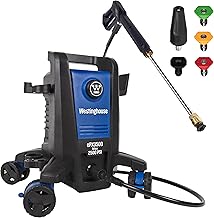
The Westinghouse ePX3500 sits in the sweet spot for homeowners who want real cleaning power without the noise, fumes, or upkeep of a gas engine. Its 2500 PSI rating and 1.76 GPM flow are enough to lift road film off a car, clear green algae from a fence, and cut through the grime that builds up on a concrete driveway over a season.
What sets it apart from cheaper electric units is the build. The pro-style steel wand feels solid in hand, the five-nozzle set covers everything from a wide rinse to a pinpoint jet, and the anti-tipping base keeps the machine planted when you tug the hose from across the yard. The onboard soap tank means you can foam a surface and rinse it without swapping bottles.
The trade-offs are the ones common to every corded washer. You are tethered to an outlet and an extension setup, so large properties can feel cramped. It also will not match a gas unit on the heaviest jobs like stripping old paint or clearing a large commercial lot.
Bottom line: for the majority of driveway, siding, patio, and vehicle jobs a household throws at it, the ePX3500 is the most complete all-round pick here, and it earns its Best Overall spot on balance rather than raw numbers.
- Power source: Corded electric
- Max pressure: 2500 PSI
- Max flow: 1.76 GPM
- Nozzles: 5-piece quick-connect set
- Detergent: Onboard soap tank
- Wand: Pro-style steel
- Stability: Anti-tipping base
This model suits the homeowner who cleans a mix of surfaces a few times a season and wants one machine that does it all. If your list is cars, fencing, patio stones, siding, and the odd deck refresh, the ePX3500 covers it without overkill. Renters and anyone bothered by engine noise will appreciate the quiet corded operation.
Store the unit indoors where it stays above freezing, since trapped water can crack internal parts. After each session, run the machine for a few seconds with the trigger released to relieve pressure, then coil the hose loosely to avoid kinks. A quick rinse of the nozzles keeps mineral buildup from clogging the tips.

Pros
- Proven across a huge range of everyday home jobs
- Two onboard detergent tanks let you switch cleaning solutions fast
- Five quick-connect nozzles for different surfaces
- Light enough to wheel around the yard
- Total Stop System shuts the pump off when the trigger is released
Cons
- Plastic connections need care to avoid cross-threading
- 2030 PSI is modest for the heaviest caked-on grime
The Sun Joe SPX3000 is the machine that introduced a lot of people to pressure washing, and it remains the value benchmark for a reason. At 2030 PSI and 1.76 GPM it handles the bread-and-butter jobs, cars, patio furniture, grills, decks, and sidewalks, without asking much of your budget.
The headline feature is the pair of removable detergent tanks. You can load two different solutions, say a car soap and a deck cleaner, and swap between them without stopping to rinse a single reservoir. The five-nozzle set and the Total Stop System, which cuts the pump when you let go of the trigger, round out a package that punches above its class.
Where it shows its price is in the fittings. The plastic hose connections reward a careful hand, and the modest pressure means truly stubborn, years-deep stains take patience. For the money, though, few machines are this capable straight out of the box.
Bottom line: if you want the most cleaning per dollar and your jobs are typical household chores, the SPX3000 is the easy Best Value call.
- Power source: Corded electric
- Max pressure: 2030 PSI
- Max flow: 1.76 GPM
- Detergent: Two removable tanks
- Nozzles: 5 quick-connect tips
- Safety: Total Stop System
- Cord: 35 ft with GFCI
Reach for the SPX3000 on cars and trucks, patio sets, wooden decks, grimy sidewalks, and vinyl siding. Its dual tanks shine when a single afternoon mixes tasks, for example washing the car with one detergent and treating the deck with another. It is less suited to large gravel lots or paint stripping, where a gas unit earns its keep.
Thread the hose and wand fittings by hand first to avoid cross-threading the plastic collars, then snug them gently. Prime the pump by running water through with the trigger open before you start the motor, which clears trapped air and protects the seals. Begin every job with the widest nozzle and step down only if a surface needs more bite.
Pros
- Brushless motor delivers gas-like 3400 PSI without fumes
- 2.0 GPM flow rinses large areas quickly
- Onboard soap tank and five-nozzle set included
- Runs far quieter than any gas machine of similar power
- Brushless design is built for a longer service life
Cons
- Higher pressure demands a steady hand on delicate surfaces
- Still corded, so range depends on outlet placement
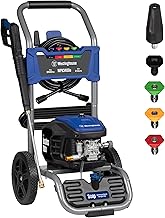
The Westinghouse WPX3400e is proof of how far electric pressure washers have come. Its brushless motor pushes a rated 3400 PSI and 2.0 GPM, numbers that used to be gas-only territory, yet it starts with a switch and produces no exhaust. For anyone who wants serious cleaning power in a garage or on a covered patio, that combination is hard to beat.
The extra flow is what you feel most. At 2.0 GPM it clears a driveway or a stretch of siding noticeably faster than the lighter electric units, because water volume, not just pressure, is what carries dirt away. The onboard soap tank and five-nozzle set mean you are ready for both foaming and rinsing out of the box.
That power comes with responsibility. At full pressure this machine can etch soft wood or lift loose paint, so you keep the wide nozzles on hand for delicate surfaces. And like every electric unit it stays tethered to an outlet, so you plan your reach around the cord.
Bottom line: the WPX3400e is the pick for a homeowner who wants gas-class output but refuses to deal with oil, fuel, and pull-starts.
- Power source: Corded electric, brushless motor
- Max pressure: 3400 PSI
- Max flow: 2.0 GPM
- Detergent: Onboard soap tank
- Nozzles: 5-piece set
- Wand: Spray gun and extension wand
This is the electric for big-property owners and demanding jobs: long driveways, multi-car garages, large decks, and siding that has gone years without a wash. If you have wanted gas power but hate engine upkeep, the WPX3400e is aimed squarely at you. Lighter, occasional users will not need this much output.
The five-nozzle set steps from a zero-degree pinpoint jet for tough spots up through 15, 25, and 40-degree fans for general cleaning, plus a low-pressure soap nozzle for detergent. Match the fan angle to the surface: wider for wood and paint, narrower for concrete and stubborn stains, and always start wide to gauge the effect.

Pros
- Gas engine roams anywhere with no cord to manage
- 3400 PSI and 2.5 GPM tackle the toughest home jobs
- AAA axial cam pump is a proven, serviceable design
- Low-profile frame with a 25-foot hose and five nozzles
- Handles large driveways and long fence lines without slowing
Cons
- Engine needs oil, fuel, and seasonal maintenance
- Louder and heavier than any electric unit here
When the job outgrows an outlet, the Simpson Clean Machine steps up. Its CRX engine and AAA axial cam pump combine for 3400 PSI and 2.5 GPM, and that extra water volume is what lets it strip a season of grime from a long driveway or a two-story stretch of siding far faster than any electric unit.
Simpson built this one for homeowners rather than pros, which shows in the sensible touches: a low-profile frame that will not tip on a slope, a 25-foot hose that keeps you moving, and a five-nozzle set for surface-matched cleaning. The AAA pump is a known quantity that owners can service rather than replace.
The costs are the usual gas ones. You take on engine maintenance, store fuel, and accept the noise and weight that come with a combustion engine. On a small patio job that overhead is not worth it, but on big outdoor work it pays for itself in time saved.
Bottom line: for large properties and the heaviest recurring jobs, the Clean Machine is the most sensible gas pick for a homeowner.
- Power source: Gas, CRX engine
- Max pressure: 3400 PSI
- Max flow: 2.5 GPM
- Pump: AAA axial cam
- Hose: 25 ft
- Nozzles: 5-piece set
- Compliance: 49-state
This machine earns its keep on long concrete driveways, large patios, extensive fencing, farm equipment, and two-story siding. The high flow rate makes short work of wide areas where an electric unit would have you standing in one spot too long. Skip it for quick, delicate jobs that a small electric handles more conveniently.
Check the engine oil before each use and change it on the schedule in the manual. Never run the engine in an enclosed space, since exhaust is dangerous indoors. Before winter, stabilize or drain the fuel and add pump saver to protect the seals, and always keep the spray away from people, pets, and electrical fixtures.

Pros
- Trusted DeWalt name with a rugged homeowner build
- 3300 PSI and 2.4 GPM for heavy outdoor cleaning
- AAA axial cam pump is durable and serviceable
- Ergonomic spray gun eases long cleaning sessions
- 25-foot hose and five nozzles cover varied surfaces
Cons
- Premium gas unit carries a higher price
- Requires fuel handling and routine engine care
The DeWalt DXPW3300-S brings a familiar toolbox name to the gas pressure washer aisle, and it backs the badge with a genuinely capable machine. At 3300 PSI and 2.4 GPM it sits right alongside the other heavy hitters here, ready for driveways, siding, decks, and equipment that a light electric could not touch.
Two details stand out in daily use. The AAA axial cam pump is one of the more respected designs at this level, valued because owners can rebuild it rather than toss the whole unit, and the ergonomic spray gun genuinely reduces hand fatigue on the long jobs where gas units shine. The 25-foot hose and full nozzle set keep you productive across a big yard.
You pay for the name and the build, so this is not the budget choice. And as with any gas unit, you take on oil changes, fuel storage, and the noise that comes with an engine.
Bottom line: choose the DeWalt when you want a heavy-duty gas washer from a brand you already trust and plan to keep for years.
- Power source: Gas engine
- Max pressure: 3300 PSI
- Max flow: 2.4 GPM
- Pump: AAA axial cam
- Hose: 25 ft
- Nozzles: 5-piece set
- Gun: Ergonomic spray gun
This model fits the owner of a larger property who values a known brand and long-term serviceability over saving on the sticker. If you already run DeWalt cordless tools and want the same reliability in a washer, it slots right in. Casual, small-job users will find a light electric more practical.
Warm the engine briefly before heavy work, and check the oil level at the start of every session. Flush the pump with clean water after using detergent so residue does not gum up the seals. At season end, run pump saver through the inlet and stabilize any fuel left in the tank so the unit starts cleanly next spring.

Pros
- High 2.6 GPM flow rinses wide areas quickly
- 3400 PSI handles caked-on driveway and siding grime
- Onboard soap tank simplifies detergent application
- Five-nozzle set and spray gun included
- Accessible entry into full-power gas cleaning
Cons
- Gas engine adds noise, weight, and upkeep
- Soap tank capacity is modest for very large jobs
The Westinghouse WPX3400 makes the case that gas power does not have to carry a premium price. It pairs a 3400 PSI rating with a strong 2.6 GPM flow, the highest volume in this group, which translates to fast work on wide surfaces where throughput matters more than raw pressure.
For the outlay, the feature set is generous. You get an onboard soap tank, a spray gun and wand, and a five-nozzle set, so you are equipped for both foaming and detailed cleaning without buying extras. It is a straightforward way for a homeowner to get gas performance without stepping up to a pro-priced unit.
Being a value gas machine, it asks for the same engine care as any other, and the soap tank is on the small side for marathon sessions. But the fundamentals, pressure and flow, are all here.
Bottom line: if you want genuine gas throughput and are watching the budget, the WPX3400 is the value gas pick of the group.
- Power source: Gas engine
- Max pressure: 3400 PSI
- Max flow: 2.6 GPM
- Detergent: Onboard soap tank
- Nozzles: 5-piece set
- Wand: Spray gun and wand
Its high flow makes the WPX3400 a natural for large driveways, long fence lines, patios, and siding, anywhere covering ground quickly matters. The strong GPM helps sheet away loosened dirt in fewer passes. It is more machine than a small balcony or a single car really needs, so match it to bigger outdoor work.
The bundled nozzles range from a zero-degree jet for the most stubborn spots to wider fans for general washing, plus a soap nozzle that drops pressure for detergent. On gas power the pressure builds fast, so begin with a wider angle and a foot of distance, then close in only as a surface allows.

Pros
- Compact and light enough to carry with one hand
- Simple corded operation with quick setup
- Great for cars, bikes, patio furniture, and small decks
- Takes up little room in a garage or closet
- Backed by the trusted CRAFTSMAN tool brand
Cons
- 1700 PSI is modest for heavy driveway grime
- Shorter hose limits reach on bigger jobs
Not every job needs a big machine, and the CRAFTSMAN CMEPW1700 is built for the ones that do not. At 1700 PSI and 1.2 GPM it is the lightest, most maneuverable unit here, the kind you carry out with one hand, use for twenty minutes, and tuck back on a shelf.
That convenience is the whole point. It is ideal for rinsing a car, freshening patio furniture, cleaning bikes and trash bins, or spot-washing a small deck or entryway. For apartment dwellers and anyone short on storage, its compact footprint is a real advantage over the bigger units.
The limits are honest ones. The lower pressure and flow mean deep-set driveway stains or large siding jobs will try your patience, and the shorter hose keeps you close to the work. Within its lane, though, it is easy to like.
Bottom line: pick the CMEPW1700 when your jobs are small and frequent and you value grab-and-go convenience over raw power.
- Power source: Corded electric
- Max pressure: 1700 PSI
- Max flow: 1.2 GPM
- Design: Compact, lightweight
- Water: Cold water
- Use: Cars, patios, garages
This one is for apartment and townhome owners, anyone tight on storage, and buyers whose cleaning list is light: a car or two, some patio furniture, bikes, and bins. If you rarely face a full driveway of ground-in grime, its size and simplicity are exactly right. Heavy-duty users should look to the gas or high-PSI electric picks.
Connect a standard garden hose to the inlet and let water run through with the trigger open before switching on, which purges air and protects the pump. Keep the machine on level ground so it does not tip, and store it indoors above freezing. A quick nozzle rinse after each use keeps the tips clear.
How to Choose the Best Pressure Washers
The best machine for your neighbor may be the wrong one for you. Before you buy, weigh how you plan to use it against the six factors below, which are the ones that separate a tool you love from one that sits forgotten in the garage. Get these right and every job afterward feels easier.
Electric vs. Gas: Match the Machine to Your Jobs

The first fork in the road is the power source, and it shapes everything else. Electric pressure washers start with the flip of a switch, run quietly, produce no exhaust, and need almost no upkeep, which makes them ideal for cars, patios, furniture, and routine home cleaning. Their catch is the cord, which tethers you to an outlet and an extension setup.
Gas machines trade convenience for raw capability. They roam anywhere without a cord, push more water, and chew through the heaviest jobs like long driveways, farm equipment, and two-story siding. In return you accept engine maintenance, fuel storage, real weight, and noise. If your work is close to the house and moderate, electric wins; if it is big, remote, and stubborn, gas earns its keep. Cleaning vehicles is one of the most common uses, and our automotive section covers the accessories that go with it.
Cleaning Power: Understanding PSI and GPM
Two numbers describe how a washer cleans, and both matter. PSI, or pounds per square inch, measures the force of the spray, the part that breaks a stain loose. GPM, or gallons per minute, measures water volume, the part that carries that loosened dirt away. A machine strong in one and weak in the other will leave you frustrated.
As a rough guide, light electric units around 1700 to 2000 PSI handle cars and furniture, mid-range electrics from 2000 to 2500 PSI cover most siding and deck work, and gas or high-output electric machines from 3000 PSI up tackle driveways and the toughest grime. Flow tells the other half of the story: a unit with higher GPM finishes a wide surface in fewer passes even at the same pressure, which is why the gas picks here feel so much faster on big areas.
Do not chase the highest numbers for their own sake. More pressure than a surface needs simply raises the risk of etching wood or stripping paint, so buy for the jobs you actually face and rely on nozzle selection for the rest.
Nozzles, Wands, and Foam Cannons
The nozzle at the end of the wand changes a washer from gentle to ferocious, so the tips a machine includes matter as much as its pressure rating. Most quality units ship with a color-coded set: a zero-degree pinpoint jet for the most stubborn spots, wider fans at 15, 25, and 40 degrees for general cleaning, and a soap nozzle that drops pressure to apply detergent.
An onboard soap tank or a foam cannon adds real convenience, letting you coat a surface in cleaner before you rinse. A sturdy steel wand outlasts plastic, and a longer, kink-resistant hose keeps you moving without dragging the whole machine behind you. Match the fan angle to the surface, wider for soft wood and paint, narrower for concrete, and you protect what you clean while still cutting through the mess.
If your machine did not come with the angle you need, quality replacement nozzles are inexpensive and quick to swap thanks to the standard quick-connect fitting. A rotating turbo nozzle is a popular add-on that combines the punch of a zero-degree jet with the coverage of a wider fan, making fast work of concrete without gouging it.
Portability, Storage, and Hose Length

A washer you dread hauling out is a washer you will not use. Weight, wheel quality, onboard cord and hose storage, and overall footprint decide how painless a session feels from setup to cleanup. Compact electric units carry with one hand and stash on a shelf, which suits apartments and small garages, while gas machines ride on a frame and need real floor space.
Hose and cord length quietly set your working radius. A 25-foot hose plus a generous power cord lets you clean a driveway or a car without constantly repositioning the base, whereas a short hose keeps you tied close to the work. If you have a large property, prioritize reach; if storage is tight, prioritize a small footprint. Many buyers pick up a washer alongside other tools and home improvement gear for seasonal projects.
Think about where the machine will live between jobs, too. A unit with hooks for the hose, a slot for the wand, and a spot to wind the cord returns to its shelf in seconds, while one that leaves you wrestling loose parts invites the kind of clutter that makes you skip cleaning day. Small design touches like these decide whether a washer stays handy or gets buried in the back of the garage.
Durability, Pump Type, and Warranty

A pressure washer lives a hard life, so the pump and the build quality determine whether it lasts a decade or a single season. On gas units, an axial cam pump like the widely used AAA design is prized because owners can service or rebuild it rather than replace the whole machine. On electric units, a brushless or induction motor runs cooler and lasts longer than a cheap universal motor.
Look, too, at the frame, the fittings, and the warranty. Metal connections and a steel wand shrug off drops that crack plastic, and a longer warranty signals a maker that stands behind the tool. Spending a little more on a serviceable pump and a solid build usually costs less over the life of the machine than replacing a bargain unit that fails early.
Detergents and Surface-Safe Cleaning
How a machine applies soap is easy to overlook until you are standing over a dirty car with nowhere to put the cleaner. Some units carry an onboard tank you fill directly, others draw detergent through a siphon hose, and many rely on a low-pressure soap nozzle that must be fitted before the cleaner will flow. A built-in tank or a bundled foam cannon is the most convenient, letting you lay down an even coat and let it dwell before you rinse.
Just as important is using a cleaner rated for pressure washers and for the surface at hand, since the wrong formula can streak siding or harm the plants nearby. Look for a machine whose detergent system is simple to fill and rinse, because leftover soap that dries in the lines can clog the pump over time. Matching the right solution to each job does as much for the result as the force behind it.
| Model | Power Source | Max PSI | Max GPM | Best For |
|---|---|---|---|---|
| Westinghouse ePX3500 | Electric | 2500 | 1.76 | All-round home cleaning |
| Sun Joe SPX3000 | Electric | 2030 | 1.76 | Value and everyday jobs |
| Westinghouse WPX3400e | Electric brushless | 3400 | 2.0 | High-power electric cleaning |
| Simpson Clean Machine | Gas | 3400 | 2.5 | Large driveways and siding |
| DeWalt DXPW3300-S | Gas | 3300 | 2.4 | Premium heavy-duty use |
| Westinghouse WPX3400 | Gas | 3400 | 2.6 | Value gas throughput |
| CRAFTSMAN CMEPW1700 | Electric | 1700 | 1.2 | Compact, quick jobs |
Why You Should Trust Us
We build every shortlist by starting with the machines real buyers actually use and rate highly, not the ones with the biggest marketing push. For this guide we gathered current listings for popular pressure washers, then filtered for models with strong verified customer ratings and a meaningful number of owner reviews, so a single glowing opinion never sways a pick.
From that pool we compared power source, PSI and GPM, nozzle and detergent systems, pump and motor type, portability, and long-term durability, weighing each against the value a buyer receives. Our goal is a lineup where every entry is the clear right answer for a specific kind of user, so you can find your match quickly and clean with confidence.
We revisit these lineups as new models arrive and as owner feedback builds up, swapping in a better option whenever one proves itself. That way the shortlist reflects what is genuinely worth buying now, not simply what happened to be popular when the guide first went live.
Final Thoughts
The right pressure washer comes down to the jobs on your list. For the widest range of household cleaning, the Westinghouse ePX3500 is our Best Overall, blending a stabilizing base, a soap tank, and a full nozzle set with enough pressure for cars, fences, and driveways alike. If you want the most cleaning for the money, the Sun Joe SPX3000 is the Best Value, a proven electric with dual detergent tanks that covers the everyday jobs most homes throw at it.
For specific needs, the picks sort themselves. Choose the Westinghouse WPX3400e when you want gas-class power without the fumes, the Simpson Clean Machine or the DeWalt DXPW3300-S when a big property demands true gas muscle, the value-minded Westinghouse WPX3400 gas unit when throughput matters and budget is tight, and the compact CRAFTSMAN CMEPW1700 when your jobs are small and storage is short. Whatever you pick, pair it with the right detergent and you will clean faster and safer. For more home and outdoor upgrades, browse our latest articles and home and kitchen guides.
Frequently Asked Questions
What PSI do I need for pressure washers at home?
For most household work, 2000 to 2500 PSI hits the sweet spot, enough to clean cars, siding, decks, and patios without risking damage. If your main jobs are concrete driveways or years of built-up grime, 3000 PSI and up will save you time. Light tasks like vehicles and furniture are fine at 1700 to 2000 PSI.
Are electric or gas pressure washers better?
Neither is universally better; they suit different jobs. Electric units are quieter, cleaner, and nearly maintenance free, which makes them ideal for close-to-home cleaning. Gas units deliver more power and roam without a cord, so they win on large driveways, remote areas, and the heaviest grime. Pick the one that matches the work you do most.
Can a pressure washer damage my car or deck?
Yes, if you use the wrong nozzle or get too close. Always start with a wide fan nozzle, keep the tip a foot or more from the surface, and never point a zero-degree jet at soft wood, paint, or a vehicle finish. Try a small area first and step down in pressure only as a surface allows. Keep the spray moving in smooth, overlapping passes rather than dwelling on one spot, which is how most accidental damage happens.
How do I maintain a pressure washer through the year?
Relieve pressure and drain water after each use, and rinse the pump when you have run detergent. Store the unit indoors above freezing so trapped water cannot crack internal parts. Before winter, add pump saver to protect the seals, and on gas models change the oil on schedule and stabilize any fuel left in the tank. Our appliances guides cover similar seasonal care.
What accessories are worth adding in 2026?
A foam cannon or extra soap nozzle makes detergent jobs faster and more even, and a surface cleaner attachment turns streaky driveway work into smooth, uniform passes. A longer hose extends your reach on big properties, and a set of quality replacement nozzles keeps your spray angles sharp. An angled or telescoping wand helps with gutters and second-story siding, while a bottle of pump saver protects the machine through the off-season. Choose accessories that fit your machine’s connector and flow rating.


Write Your Review
No reviews yet. Be the first to share your experience!